The story of the prayer at the walls of Jericho is one of the most inspiring tales in history. Bible, A testimony to the power of faith and obedience. Dive with us into this in-depth study to understand the context, meaning and theological lessons that this miraculous passage offers for your spiritual life today.
Jericho: The Ancient City and Its Strategic Significance
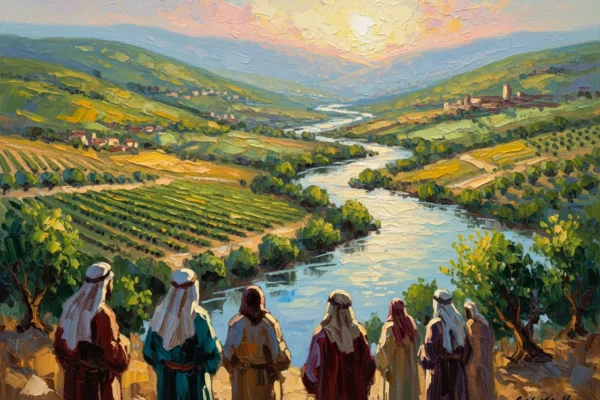
The city of Jericho occupied a vital geographical position in the Jordan Valley, acting as the gateway to the Promised Land. The scriptures indicate that this was a militarily advanced fortress by Late Bronze Age standards.
Geographical Location and Historical Context
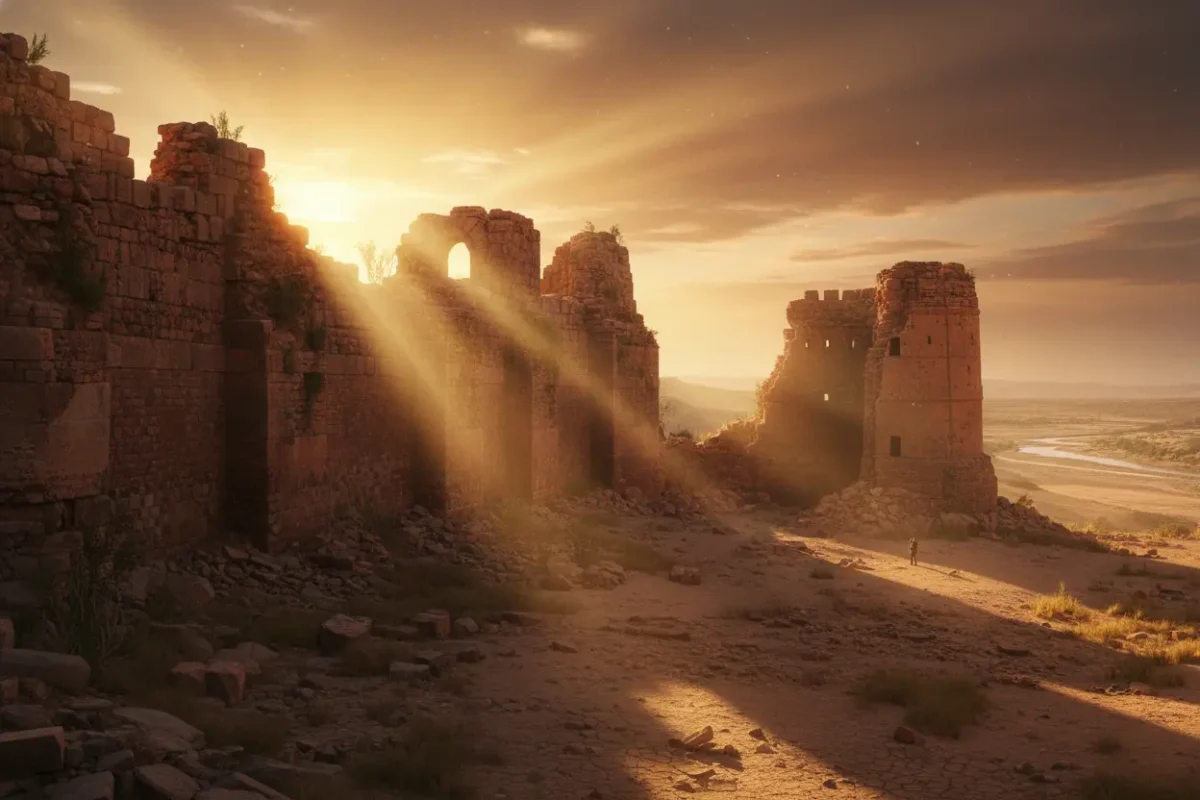
The archaeological evidence reveals that Jericho was surrounded by an extremely sophisticated double defense system. A fortified city had a stone retaining wall and an upper wall made of mud bricks.
This system created an almost insurmountable psychological and physical barrier for a people who had no siege weapons. Tradition has it that Jericho controlled the trade routes and water sources of the arid region.
The Walls as a Symbol of Canaanite Resistance
For the Canaanites, the walls represented absolute security against any outside invaders. The walls were wide enough for houses to be built on them, as reported in Raabe suggests.
The fall of these structures would not only be a military victory, but a demonstration of God's supremacy. Studying this architecture makes me admire even more the courage Joshua had to obey.
The divine strategy to conquer this fortress began with a direct revelation to Israel's new leader.
Joshua and God's Unusual Order
The military command Joshua received completely defied the logic of conventional warfare at the time. Instead of ladders or towers, the prayer of the walls of Jericho would be accompanied by an act of public worship.
Meeting the Prince of the Lord's Army
Before the battle, Joshua met a man with a drawn sword who identified himself as the commander of God's army. This sacred event, described in Joshua 5:13-15, He established that the struggle was not human, but spiritual.
“Then the Lord said to Joshua, ‘Know that I have given into your hand Jericho, its king and its men of war. (Joshua 6:2 - NIV)
This encounter served to align the leader's heart with the sovereign will of the Creator. The holiness of the moment required Joshua to take off his sandals, recognizing the divine presence on the battlefield.
The Instruction for the Silent Siege
The order was clear: surround the city once a day for six days in total silence. The priests were to carry the Ark of the Covenant in front of the people, symbolizing God's presence.
This strategy tested the patience and confidence of each Israelite soldier in the face of the mockery of their enemies. The text suggests that silence was a form of consecration and absolute focus on the promise received.
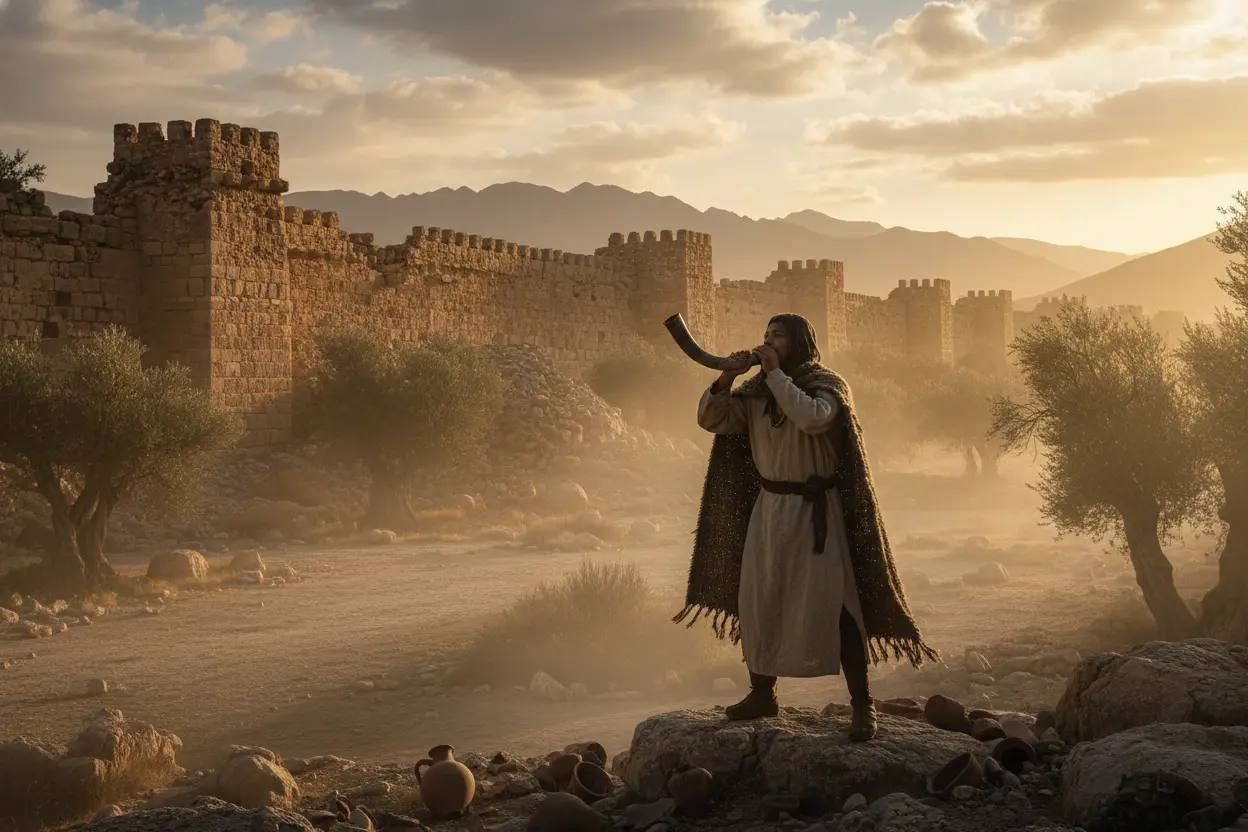
The faith of the people of Israel manifested in the silence before the great victory.
After the spiritual preparation, the people began the ritual that would culminate in one of the greatest miracles in biblical history.
The Strategy of Prayer: The Seven Days of Siege and the March of Faith
The march around Jericho was an exercise in spiritual discipline and collective perseverance under the desert sun. Every step taken around those walls was an affirmation that God was in control of the situation.
The Theological Meaning of the Number Seven
The number seven appears repeatedly in the story, symbolizing the perfection and completeness of God's work. Seven priests blowing seven ram's horn trumpets in front of the Ark set the pace for the journey.
🙏 This repetition teaches that victory often requires constancy before it is visibly manifested. The text indicates that the presence of the Lord, represented by the Ark, was the real engine of that march.
The Seventh Day and the Intensification of the Outcry
On the seventh day, the routine changed and the people surrounded the city seven times since dawn. The tension grew with each lap, while the prayer of the walls of Jericho strengthened Joshua's spirit.
At the end of the seventh lap, the long blast of the trumpets signaled the moment to break the guarded silence. That cry was not just noise, but the vocal expression of a faith that already saw the walls falling.
The physical manifestation of God's power occurred only when the people's obedience reached its fullness.



The Power of Obedience: How Faith and Action Tore Down Walls
The fall of the walls of Jericho was not a geological accident, but a direct intervention by the Most High. Biblical archaeology discusses how the walls fell outwards, creating ramps for the invaders.
The Synchronicity between the Scream and the Miracle
When the people shouted with all their might, the foundations of the city shook before the divine power. This event demonstrates that prayer of the walls of Jericho involves the active participation of the faithful.
“By faith the walls of Jericho fell down after being surrounded for seven days.” (Hebrews 11:30 - NIV)
Faith did not eliminate the effort of marching, but gave purpose and effectiveness to each step taken. Often, we stop on the sixth lap due to tiredness, losing the miracle which was reserved for the seventh.
Preserving Rahab and her Family
In the midst of the chaos and destruction, the promise made to the woman who helped the spies was fully fulfilled. Rahab's house, situated on the wall itself, remained standing while the rest of the structure collapsed.
⚠️ A common mistake is to focus only on destruction and forget that God protects his own in the midst of judgment. Tradition points out that divine mercy always finds a way for those who show genuine faith.
The historic moment when physical barriers gave way to spiritual power.
To understand the depth of this event, we need to analyze how the Scriptures connect this miracle to other themes.
What the Bible Teaches: Key Passages on the Jericho Wall Prayer
A systematic study of the related passages reveals that the victory at Jericho is a biblical pattern. God uses what seems weak to confound the strong and establish His Kingdom on earth.
Below, I present a table of references that help put the power of intercession and obedience into context. These texts show how prayer of the walls of Jericho echoes in different moments of sacred history.
Related Passages
| Book | Verse | Central theme |
|---|---|---|
| Joshua | 6:20 | The physical fall of walls through the power of shouting. |
| Hebrews | 11:30 | Faith as the main driving force behind the victory at Jericho. |
| 2 Corinthians | 10:4 | The weapons of our militia are not carnal. |
| Psalms | 44:3 | Victory comes not by the sword, but by the face of God. |
The Centrality of Praise in Battle
The use of trumpets (shofars) indicates that the battle was, in essence, an act of liturgical worship. The sound of the shofar was used to summon the people and announce the presence of the King of Kings.
Jewish tradition associates this sound with the awakening of conscience and total surrender to God's will. Whenever I read about the priests at the front, I remember that praise must precede our struggles.
The spiritual principles applied by Joshua remain valid for the challenges we face today.
Practical Application: Lessons for Your Personal ‘Walls’ Today
We all face barriers that seem insurmountable and that impede our spiritual or emotional progress. A prayer of the walls of Jericho serves as a model of how to deal with these impossible situations.
Identifying Obstacles with Discernment
Many of our “walls” are built by fears, traumas or sins that surround and isolate us. The first step towards victory is to recognize that without divine intervention, these barriers will not fall.
🙏 Identifying the enemy and presenting him to God in silent prayer is the beginning of the liberation process. Often, silence before men is what gives us the authority to speak to the Creator.
The Importance of Constancy and God's Time
Many people give up praying because they don't see immediate results after the first turn in the problem. The story of Jericho teaches us that miracles take time to mature and require perseverance.
⚠️ It is a dangerous mistake to believe that a lack of immediate response means that God is not acting. With each passing day, the spiritual structure of that city was being undermined by Israel's obedience.
The physical victory at Jericho carries a theological significance that points to much greater realities.
Spiritual Meaning: The Jericho Prayer as a Symbol of Victory through Faith
Theologically, Jericho represents the first fruits of the conquest of the land and the overcoming of resistance to the Kingdom. The victory was not won by the human arm, but by total surrender to the strategy of the Holy Spirit.
The Shofar and the Announcement of the Kingdom of God
The sound of the trumpets in Jericho foreshadows the final announcement of God's victory over all evil. Tradition indicates that the sound that broke down the walls is the same sound that will summon the elect at the end of time.
A prayer of the walls of Jericho is therefore a cry for the manifestation of divine justice in history. This event reminds us that no human structure can resist when the Lord decides to intervene sovereignly.
The Victory of Grace over the Law of War
While the world expected carnage, God offered a ritual of faith and an opportunity for salvation for Rahab. This shows that, even in the midst of a city's judgment, God's grace seeks repentant hearts.
This passage always comforts me on difficult days, because it shows that God sees the individual in the crowd. The faith of a single woman was preserved while an entire city fell around her.
Looking back, we realize that the legacy of that battle continues to inspire generations of believers.
Deep Reflection: The Legacy of Jericho: Unshakeable Faith and the Power of God
The biblical account of Jericho is not just a chronicle of war, but a testimony to God's faithfulness. It proves that, for the Most High, there are no impossibilities when his people decide to march in unity.
A prayer of the walls of Jericho continues to resonate in the hearts of those seeking to break through modern barriers. Whether in family, finances or health, Joshua's principles continue to generate profound spiritual results.
Scripture suggests that our greatest weapon is unwavering confidence in the promises we have received from the Lord. May the story of Jericho strengthen your soul to take the next turn, for the shout of victory is near.
Which of these lessons came at the right time for you? Share in the comments.
This content is for informational and inspirational purposes. Consult a 2026 expert when necessary. Warning: The images used in this article are merely illustrative and may not accurately represent the content described.
The story of the prayer at the walls of Jericho transcends time, reminding us that with faith and obedience, no barrier is insurmountable. May this story inspire you to cry out to God for your own victories. Share this message of hope and faith with those who need it!
FAQ - Common Questions About Prayer and the Walls of Jericho
We have prepared this space to clarify the main doubts about how the spiritual principles of this biblical passage can strengthen your life of prayer and faith.
The seven-day march symbolizes the time of the perseverance and complete trust in God's action, where our steadfastness is tested. We learn that victory is often not immediate, requiring us to remain faithful and obedient even when we see no visible signs of change.
In order to break down contemporary “walls”, we must unite the fervent prayer for total obedience to the divine directions recorded in the Scriptures. The secret lies in acting in faith, marching on God's promises and trusting that He will deliver victory the moment His will is fulfilled.
The sound of the trumpets and the shout of victory represent the proclaiming God's sovereignty even before the physical result manifests itself. By praising and crying out with authority, we recognize that the battle has already been won in the spiritual world, turning our worship into a weapon of war.
It is essential to remember that God's timing is perfect and that our obedience must be maintained until the last day of the march. Often, the Lord works on the internal structure of our character before breaking down the external barriers, preparing us to bear the weight of the blessing to come.