
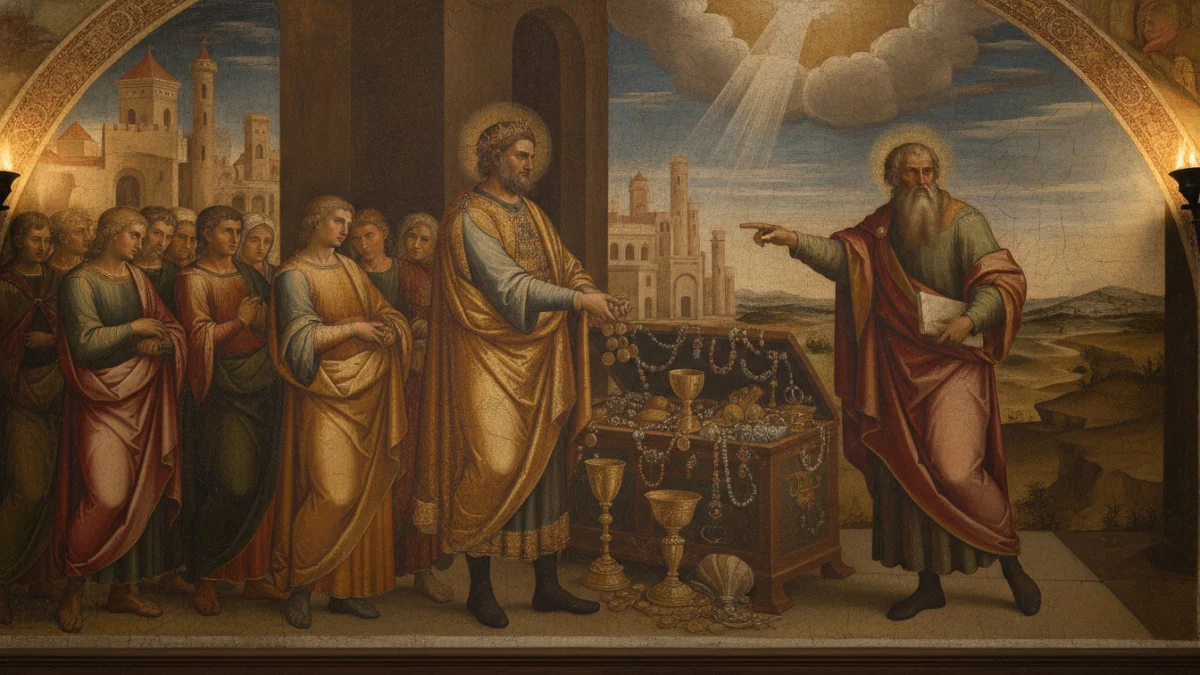
Have you ever wondered if the desire to prosper financially leads you away from the Lord’s path? In our daily lives, balancing the pursuit of material stability with an active spiritual life can seem like a constant challenge for many Christians.
The truth is that the Scriptures do not condemn abundance, but they do strongly warn us about where we place our trust. Understanding the opulence: biblical meaning It is the first step toward aligning your heart with the Creator's true will.
What the Bible Says About Wealth and Abundance
When we open the pages of the Holy Scriptures, we realize that abundance is often associated with divine blessings when received with gratitude. God wants His children to experience provision and peace in all areas of life.
However, the line between blessed provision and destructive greed is very fine and requires constant spiritual vigilance. A correct understanding of the biblical meaning of wealth helps us discern when the pursuit of material resources becomes an idol in our hearts.
In our reflections on the Biblical Quotes Channel, we have observed in practice that many people suffer because they do not understand this limit. They confuse legitimate prosperity with selfish accumulation, which leads to anxiety and a distancing from heavenly things.
The material wealth described in the sacred pages should serve as a tool for the work of the Kingdom and for helping others. When we change our perspective on earthly possessions, we begin to enjoy a financial freedom that glorifies the Father.
The biblical concept of opulence teaches us that true abundance begins from the inside out, in our daily communion with God. Without this solid spiritual foundation, any wealth we accumulate becomes empty and incapable of fulfilling the human soul.
After all, what is the biblical meaning of “opulence”?
To fully understand the biblical meaning of “opulence,” we need to consider the context of the Bible Dictionary classic. The term refers to the excessive accumulation of wealth accompanied by ostentation, unbridled luxury, and, often, a proud self-sufficiency in the face of God.
Unlike simple prosperity, which points to generosity and the fulfillment of needs, opulence in the Bible carries a warning against pride. It describes a state in which an individual believes that his possessions are the exclusive result of his own efforts.
When analyzing various sacred texts, we realize that the problem has never been the precious metal itself, but rather the place it occupies in a person’s life. Blind attachment to earthly possessions blinds our spiritual eyes to the needs of others.
The biblical meaning of “opulence” shows us that placing our security in the instability of wealth is a path to silent spiritual ruin. The apostle Paul offered a fundamental exhortation regarding this attitude, which we must keep in our hearts every day.
“Urge the rich of this world not to be proud, nor to place their hope in the uncertainty of riches, but in God, who richly provides us with everything for our enjoyment.” – 1 Timothy 6:17
This passage perfectly sums up the danger of allowing material possessions to take the place that belongs solely to the Lord. When opulence—in the biblical sense—manifests itself as pride, it leads people away from dependence on the Creator.
Therefore, the great biblical lesson on this topic is to keep our hands open to receive blessings and equally open to share them. In this way, abundance ceases to be a burden of pride and becomes a channel of grace.
Jesus' warnings about the accumulation of wealth
During his earthly ministry, Jesus Christ offered profound and challenging teachings about man’s relationship with money. He knew how the illusion of material security could lead his disciples astray from the path to salvation.
The Savior has always emphasized that a person’s life does not consist in the abundance of possessions he has. This warning helps us understand the biblical meaning of wealth from the perspective of the Gospel of grace and detachment.
In the parable of the foolish rich man, recorded in the Gospel of Luke, we see a portrait of one who hoards only for himself. He planned to build larger barns to store his harvest, not knowing that his soul would be demanded that very night.
When we analyze this parable, we see in practice that that man’s folly was not that he had a bountiful harvest, but his complete lack of good works toward God. He sought in his wealth the biblical sense of security that he could only find in the Creator.
Jesus invites us to seek first the Kingdom of God and his righteousness, promising that all these things will be added to us. This promise of provision eliminates the need to live in anxiety about tomorrow or to be obsessed with accumulating wealth.
When we put Christ at the center, material wealth—as defined by the Bible—loses its hold on us, giving way to a deep sense of peace. We come to understand that we are merely stewards of the resources He has temporarily entrusted to us.



The Spiritual Dangers of Pride and Luxury
Excessive attachment to material possessions acts as an anchor that ties our soul to the earth, preventing us from soaring spiritually. The relentless pursuit of luxury creates an illusion of control that distances us from divine sovereignty.
The pride that often accompanies extreme wealth is one of the greatest dangers described in the biblical terms of wisdom. The Book of Proverbs warns us very clearly about the consequences of this attitude of self-sufficiency.
In our daily studies, we have come to realize that pride comes before a fall, and a haughty spirit precedes a tragic downfall. Biblical opulence often manifests itself in this haughty attitude that scorns dependence on the Lord and the suffering of one’s neighbor.
When people surround themselves with luxuries and extreme comfort, they run the risk of forgetting who their true provider is. This forgetfulness creates an existential void that no material possession, no matter how valuable, can fill.
The biblical meaning of “opulence” serves as a mirror for us to assess where our gaze and our hope are fixed. If our happiness depends on our bank balance, our faith is built on the shifting sands of this fleeting world.
God calls us to a life of moderation, where gratitude for the blessings we have received outweighs any desire for self-aggrandizement or vanity. Simplicity of heart protects us from the invisible pitfalls of spiritual pride.
How to Experience God's True Prosperity
To enjoy a truly prosperous and balanced life, we need to align our daily attitudes with the Father’s eternal principles. This involves a profound shift in our mindset and practical behavior regarding our finances.
As we study the Christian teaching As the classic saying goes, we discover that true wealth lies not in what we hold onto, but in what we give away. Opulence, in the biblical sense, is surpassed by the beauty of a generous life lived in dependence on the Holy Spirit.
Below, we’ve listed three essential practices to help you cultivate the spiritual and material prosperity that pleases God’s heart in your daily life:
- The Practice of Generosity: Giving joyfully to God’s work and helping those in need breaks the power of greed in our lives.
- Cultivating Contentment: Being content with what we have today, while working honestly for tomorrow, brings a deep sense of inner peace.
- Faithfulness in Tithing: Recognizing God’s sovereignty over our resources through faithfulness in tithes and offerings opens the windows of heaven.
These simple practices, based on the biblical meanings of stewardship protect our hearts from harmful greed. They help us stay focused on what really matters: the eternal treasures stored in heaven.
Always remember that money should be an excellent servant, but never a master in your Christian life. By redefining your view of wealth in its biblical sense, you make room for the Lord to pour out true and complete peace upon your home.
To gain an even better understanding of how the Word addresses situations of scarcity and abundance, it’s worth reading about the Meaning of "miserable" in the Bible. This contrast helps us appreciate the perfect balance that the Gospel offers us.
Seek Divine Wisdom for Your Finances
Understanding the opulence: biblical meaning shows us that the Lord wants us to prosper, but above all, He wants to see our hearts kept safe in His presence. True wealth consists in having the peace of God that surpasses all human understanding.
If you'd like to learn more about how great biblical figures handled positions of honor, wealth, and great responsibility without losing their faith, discover the story of who was Esther in the Bible. May the Lord guide your financial and spiritual steps today and always.
Add your name to our prayer chain
We’d like to invite you to be part of a very special moment of intercession and faith in our Christian community. Please write your first name in the comments below so we can pray specifically for your financial and family life.
We will be praying that the Lord will grant you wisdom to manage your resources and free your home from all anxiety. May the Father’s true prosperity—free from all pride—fill your heart with joy and gratitude.
If this message has brought you peace and clarity, share it right now on WhatsApp with a dear friend or family member. Share this message of balance and hope with someone who needs divine guidance today.
Frequently Asked Questions About the Biblical Meaning of Opulence
What is the biblical meaning of “opulence” according to the Scriptures?
In the context of Scripture, “opulence” in the biblical sense refers to the excessive accumulation of wealth associated with ostentation, unbridled luxury, and proud self-sufficiency. Unlike blessed prosperity, it represents a state of pride in which the individual places complete trust in material possessions, turning away from God.
How can we distinguish between blessed prosperity and selfish opulence in our daily lives?
The difference lies in the attitude of the heart and the purpose for which resources are used. While legitimate prosperity is aimed at providing for others, generosity, and the advancement of the Kingdom of God, opulence focuses on selfish accumulation, vanity, and the illusion that human security comes solely from money.
What are the spiritual benefits of understanding the line between provision and greed?
Understanding this limit protects Christians from anxiety and silent spiritual ruin. By aligning their hearts with the Creator’s will, believers enjoy true financial freedom, recognizing that earthly possessions are tools for blessing others and glorifying the Father.
Does the Bible condemn material wealth, or just an excessive attachment to possessions?
The Bible does not condemn wealth in and of itself, as abundance is often seen as a divine blessing. The sacred warning lies in the danger of turning money into an idol, allowing blind attachment to earthly possessions to take the place of God and lead to social indifference.
Is it a myth or a fact that desiring financial stability leads a Christian away from God's path?
It’s a myth. Desiring stability and providing for one’s livelihood is not a sin; the Bible supports providing for oneself. Spiritual drift occurs only when the pursuit of material resources becomes an obsession that replaces daily fellowship with the Creator and trust in divine sovereignty.