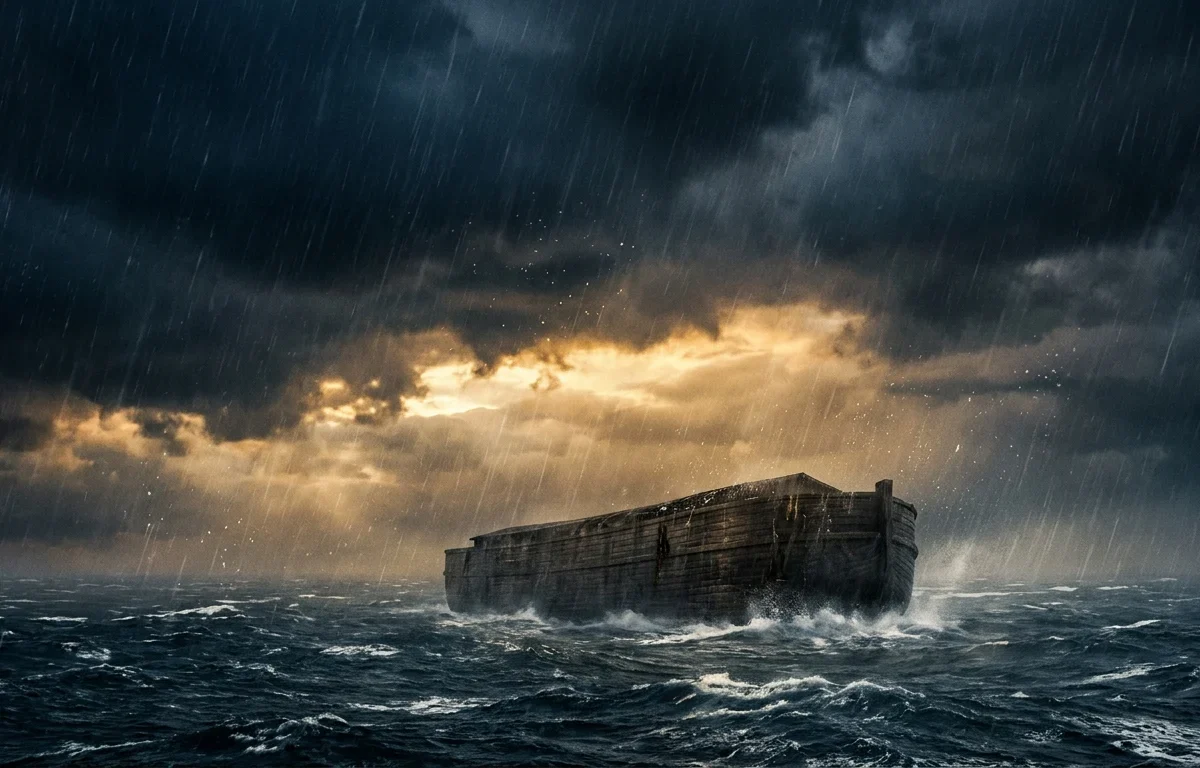
- Who was there: Noah, son of Lamech, the central figure in the story of the Flood
- Where it appears in the Bible: Genesis 5–9, with references in other books
- Approximate period: based on the genealogies in Genesis; date is a matter of debate
- Key passages: Genesis 6:9–22; 7:1–24; 8:1–22; 9:1–17
- Traditions: The narrative is interpreted by Judaism, Christianity, and Islam
Noah and his ark form one of the best-known stories in the Book of Genesis. The text describes a man who was righteous in his generation, the command to build a wooden vessel, and the flood that covered the earth. After the waters receded, came the departure from the ark, the covenant, and the rainbow.
The story is found in chapters 6 through 9 of Genesis and is referenced in other books of the Bible. Outside the biblical text, the image of the ark and the flood appears in religious traditions and popular culture, though not always with the same details as the account in Genesis.
The section below covers the text, the context, interpretations of the traditions, and the most common questions. Each statement about the narrative is accompanied by a reference, and the final reflection is identified as the website’s reflection.
| Fact Sheet: Noah and the Flood Story | |
|---|---|
| Where is it? | Genesis 6:9–9:17, in the Old Testament |
| Traditional authorship | Traditionally attributed to Moses; the authorship of the Pentateuch is a matter of debate |
| Approximate time frame | Based on the genealogies in Genesis; dating is a matter of debate |
| Literary genre | A prose narrative, featuring genealogies and discourse |
| Recipients | The people of Israel, according to the traditional reading of the Pentateuch |
| Central Theme | Judgment, preservation of life, and covenant |
| Related passages | Ezekiel 14:14; Isaiah 54:9; Matthew 24:37–39; Hebrews 11:7; 1 Peter 3:20 |
Who Noah was
Noah is introduced in Genesis as the son of Lamech, a descendant of Seth. The text describes him as a righteous man in his generation, who walked with God (Genesis 6:9). He had three sons: Shem, Ham, and Japheth.
The narrative does not portray him as flawless. After the flood, the text recounts the episode of the vineyard and drunkenness (Genesis 9:20–21), which ends with consequences for his descendants.
Genesis records Noah's age as 950 years (Genesis 9:29), which is consistent with the pattern of longevity found in the book's genealogies. Interpretations of these figures vary among traditions and scholars.
Noah and His Ark: Where the Story Appears in the Bible
The main story is found in Genesis, but the character reappears in other books as an example of justice and faith. The table below lists the most frequently cited passages.
| Passage | What the text presents | Where is it? |
|---|---|---|
| Genesis 6:9–22 | The corruption of the earth and the command to build the ark | Beginning of the story |
| Genesis 7:1–24 | Entering the Ark and the Flood | Middle of the story |
| Genesis 8:1–22 | The waters recede, the dove, and the exit | The End of the Flood |
| Genesis 9:1–17 | The Alliance and the Rainbow | Conclusion of the narrative |
| Ezekiel 14:14 | Noah Cited as an Example of Righteousness | Outside of Genesis |
| Matthew 24:37–39 | Jesus refers to the days of Noah | New Testament |
| Hebrews 11:7 | Noah's Faith | New Testament |
The Context of Noah and His Ark
Genesis 6 sets the story in a land described as full of violence (Genesis 6:11). The text states that Noah walked with God (Genesis 6:9), an expression that also appears in the account of Enoch (Genesis 5:24).
The story comes immediately after a genealogy (Genesis 5) and before the list of peoples descended from Noah’s three sons (Genesis 10). This placement is significant: the narrative links the creation of the world to the new beginning of humanity.
Scholars compare the biblical account with Mesopotamian flood narratives recorded on clay tablets. This comparison is discussed in works on history and biblical studies, and the differences in emphasis are part of the debate.


The Key Moments in the Story of Noah and His Ark
Land Corruption
Genesis 6:5–12 describes the earth as corrupt and full of violence. The text attributes the decision to send the flood to this condition. Noah, however, found favor in the eyes of the Lord (Genesis 6:8).
The order to build
Genesis 6:13–22 records the command. The ark is described as being made of wood, with compartments and pitch. At the end of the passage, the text states that Noah did as he was commanded.
The Flood
Genesis 7 recounts the entry into the ark, the rain that fell for forty days and forty nights, and the rising of the waters. The text describes the waters rising over the earth for one hundred and fifty days (Genesis 7:24).
The waters recede, and the dove
Genesis 8 recounts the receding of the waters and the sending out of the raven and the dove. On the second attempt, the dove returns with an olive leaf in its beak (Genesis 8:11). On the next attempt, it does not return.
The Covenant After Noah and His Ark
Genesis 9:1–17 records the covenant and the rainbow as its sign. The text describes the covenant with Noah, his descendants, and the living creatures that came out of the ark.
The Construction of the Ark and Its Dimensions
Genesis 6:15 gives the dimensions: three hundred cubits long, fifty wide, and thirty high. The text also mentions a window, a door, and three stories (Genesis 6:16).
The "côvado" was a unit of measurement based on the forearm, and its exact value varied. For this reason, estimates of size in meters differ from author to author, and the text does not specify the measurement in modern units.
There is no universally accepted translation of the Hebrew term for “wood,” and different versions render it in various ways. Bitumen is mentioned as a sealant (Genesis 6:14). The exact shape of the vessel is not described in detail in the text.
The Flood and Its Duration
The narrative breaks down the numbers into stages. The rain lasts forty days and forty nights (Genesis 7:12). The waters cover the earth for one hundred and fifty days (Genesis 7:24). The ark comes to rest on the mountains of Ararat (Genesis 8:4).
Noah was six hundred years old when the flood began (Genesis 7:6). At the end of the account, the text describes their exit from the ark and the building of an altar (Genesis 8:20), prior to the covenant described in chapter 9.
The dove, the olive branch, and a new beginning
The dove that returned with an olive branch (Genesis 8:11) has become one of the most memorable symbols in the story. The text presents it as a sign that the waters had receded.
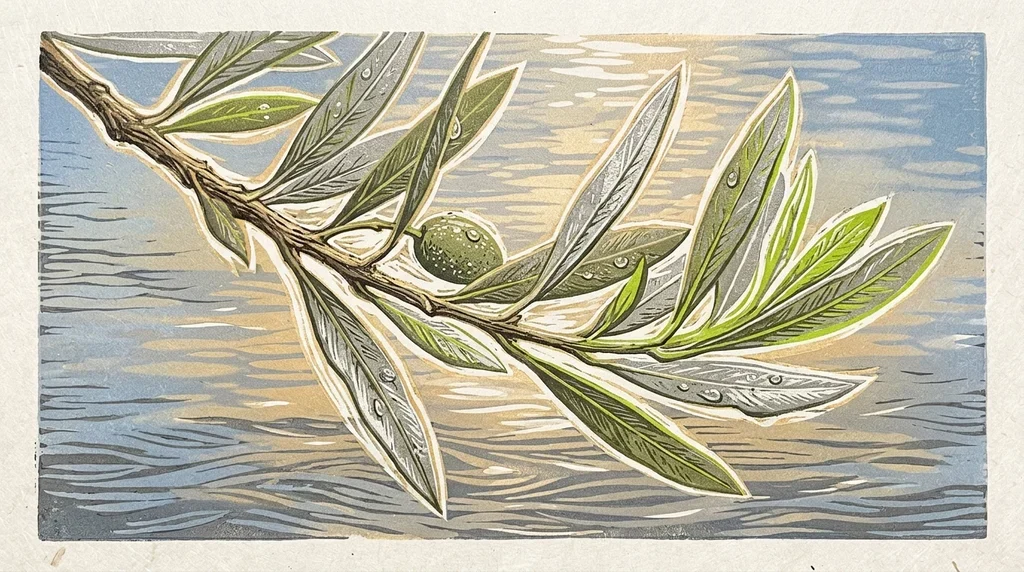
The olive branch appears in art, literature, and as a symbol of peace. This symbolic interpretation predates the biblical text and does not replace the meaning the passage itself conveys: that of a concrete sign within history.
The Alliance and the Rainbow
Genesis 9:8–17 describes the covenant between God, Noah, his descendants, and all living creatures. The rainbow is given as a sign of this covenant (Genesis 9:13).
The covenant is described as perpetual and includes the animals that came out of the ark. The text concludes the account of the flood with this covenant, before moving on to the story of Noah’s sons.
After Noah and His Ark: The Vineyard and His Descendants
Genesis 9:18–29 recounts the story of the vineyard, Noah’s drunkenness, and his sons’ reaction. The passage concludes with a mention of Shem, Ham, and Japheth and the nations descended from them (Genesis 10).
Different traditions interpret this scene in various ways, and there are points of contention regarding the translation of the Hebrew text. The episode shows that the story of Noah and his ark does not end with the flood: it continues in everyday life, with its successes and failures.
What do the traditions say about Noah and his ark?
| Tradition | Emphasis on Reading | What it is based on |
|---|---|---|
| Jewish | It discusses whether Noah was righteous in absolute terms or only in comparison to his generation | Rabbinic Texts |
| Christian | He sees Noah as an example of faith and the Flood as a symbol of baptism | Hebrews 11:7; 1 Peter 3:20–21 |
| Islamic | It presents Noah as a prophet and the ark as a sign to the peoples | The Quran, Sura 11 |
Each tradition has its own texts and its own emphases. This article does not claim to present a single correct interpretation; rather, it presents what each tradition asserts, and the decision of faith is left to the reader.
What Remains of Noah and His Ark
Frequently Asked Questions
Did Noah and his ark really exist?
The biblical text presents the narrative as an account. The historicity of the flood and the ark is debated among scholars, and religious traditions interpret it in different ways. The article does not resolve the issue: it simply shows what the text says.
How many animals went into the ark?
Genesis 6:19–20 speaks of pairs of each kind, and Genesis 7:2–3 distinguishes between clean and unclean animals. The exact number depends on how the passage is interpreted.
How long did the flood last?
The text mentions forty days of rain (Genesis 7:12) and one hundred and fifty days of floodwaters on the earth (Genesis 7:24). The numbers refer to different points in the narrative.
What is the meaning of the rainbow?
In Genesis 9:13, the rainbow is presented as a sign of the covenant between God and living creatures.
Was the ark a boat?
The text describes a wooden vessel with compartments, measured in cubits (Genesis 6:14–16). The exact shape is not specified in the passage.
- Biblical text: The Book of Genesis, chapters 5 through 10, and other references cited throughout the text.
Notice: Informative and devotional content, which is not a substitute for pastoral or professional counseling.