
If you're looking for information about Mark 6, you've come to the right place. This chapter of the Bible is known for recounting many miracles performed by Jesus Christ, as well as his rejection by his own hometown. The chapter begins with Jesus being rejected in Nazareth, his hometown, and ends with the feeding of the five thousand.

Throughout the chapter, Jesus performs many miracles, including healing a man with a withered hand, healing many sick people, and casting out many demons. He also sends his disciples on a mission to preach and heal in his name. However, despite his miracles, Jesus is rejected by his own hometown, where people had known him since childhood.
Mark 6 is an important chapter in the Bible that presents many of the teachings and miracles of Jesus Christ. It is a chapter that shows both the kindness and the rejection that Jesus faced during his life, and it is a chapter that continues to inspire and teach people all over the world.
The Rejection of Jesus in Nazareth
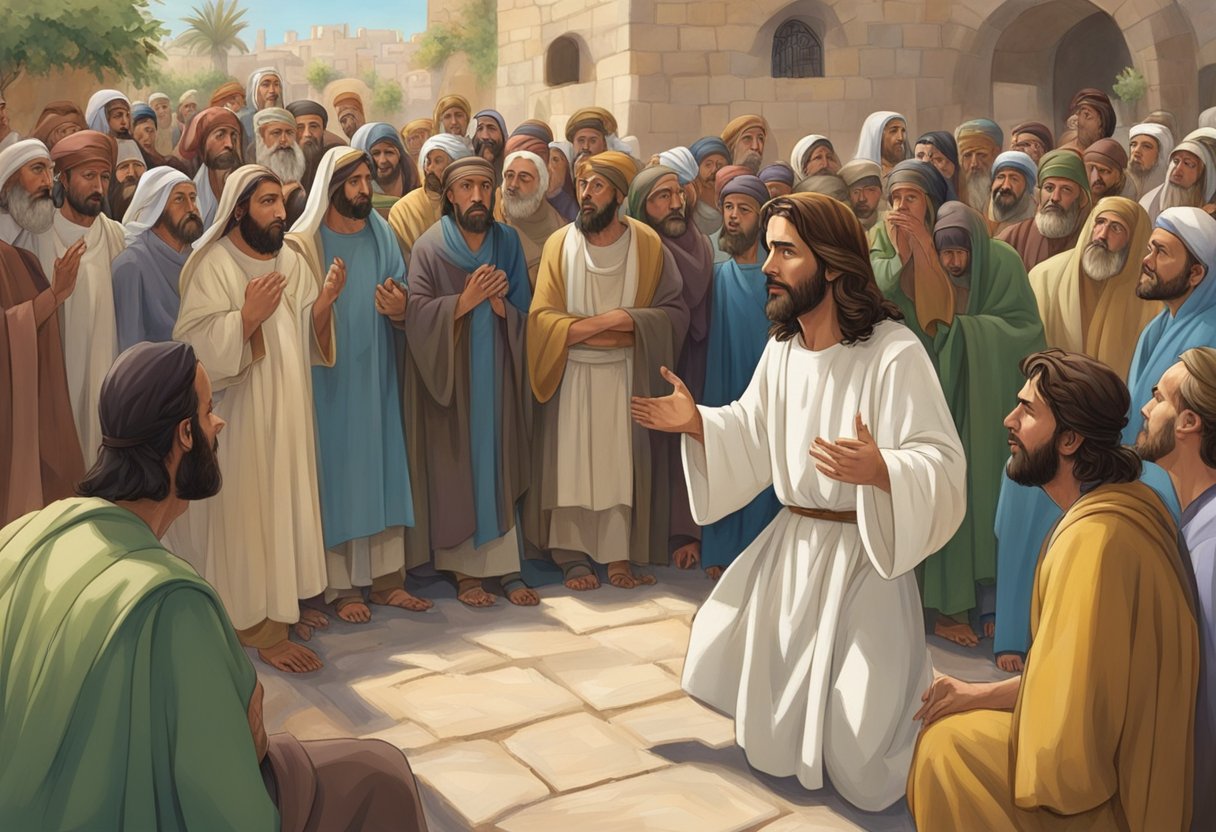
Chapter 6 of the Gospel of Mark recounts Jesus’ visit to his hometown, Nazareth, where he faced rejection from the townspeople. The section begins with Jesus teaching in the local synagogue and ends with him sending his disciples out to continue his mission. Here are some important details about Jesus’ rejection in Nazareth.
Teachings at the Synagogue
On the Saturday following his arrival in Nazareth, Jesus began teaching at the local synagogue. The townspeople were amazed at the wisdom he displayed, even though he had been raised as a carpenter, the son of Mary and Joseph. (Mark 6:1–2)
Questions About Its Origin
Those who heard Jesus teach began to question his origins, asking, “Where does this man get such wisdom and the power to perform these miracles?” (Mark 6:2). They knew he was a carpenter and that his family lived there, so how could he be a prophet?
Wisdom and Miracles Under Scrutiny
The people of Nazareth took offense at Jesus and did not believe in him. They could not understand how a carpenter could be a prophet, and they questioned his wisdom and the miracles he performed. (Mark 6:3-4)
The Disbelief of Relatives and Neighbors
Jesus said that a prophet is not honored in his own town, and that a prophet is respected elsewhere but not in his own home. (Mark 6:4–5) This means that even his relatives and neighbors did not believe in him. They saw him as an ordinary carpenter, not as the Messiah he claimed to be.
This passage from the Gospel of Mark shows the lack of faith the people of Nazareth had in Jesus. Despite his wise teachings and powerful miracles, they did not believe he could be a prophet. This shows how familiarity can lead to disbelief, and how important it is to keep an open mind in order to recognize God’s wisdom and miracles, even when they come from unexpected sources.
The Mission of the Twelve Apostles
When Jesus sent the twelve apostles on a mission, he gave them specific instructions on how to preach the gospel and heal the sick. Here are some of the main things Jesus told his disciples:
Jesus' Instructions
Jesus told his disciples that they should go out in pairs and take nothing with them for the journey. They were not to take bread, a bag, money, belts, or sandals. Instead, they were to trust God to provide everything they needed. Jesus also told them to stay in one house until they left for another town.
Power Over Impure Spirits
Jesus gave his disciples the authority to cast out demons. They were able to carry out this task successfully and heal many sick people. They also preached the message of repentance and bore witness to Jesus.
Supplies for the Day
Jesus told his disciples to carry a staff and wear sandals. They were also allowed to take a little oil to anoint the sick. Jesus told them to look for a house where they would be welcomed and to stay there until they left for another town.
During the mission of the twelve apostles, they were able to perform many miracles and preach the message of the Gospel in many villages and marketplaces. They were like sheep among wolves, but Jesus gave them the courage and strength to carry on.
The Martyrdom of John the Baptist
The Gospel of Mark, Chapter 6, recounts the martyrdom of John the Baptist, a righteous and holy man who preached faith in Jesus. His death was motivated by the resentment of Herodias, the wife of Herod’s brother, who had married Herod and could not accept John the Baptist’s criticism of their union. Below, you will find more information about the events that led to the death of John the Baptist.
Herod and His Fear of Jesus
Herod Antipas, tetrarch of Galilee, heard about Jesus’ teachings and was troubled. Some said that Jesus was Elijah or one of the prophets raised from the dead. Herod, however, believed that Jesus was John the Baptist, whom he had had executed.
The Plot of Herodias
Herodias, the wife of Herod's brother, married him and would not tolerate John the Baptist's criticism of their marriage. She plotted John the Baptist's death and waited for the right moment to carry out her plan.
The Fatal Banquet
At a banquet for important men, Herodias’s daughter danced and delighted everyone. Herod, impressed, promised to give her whatever she asked for. Influenced by her mother, the daughter asked for the head of John the Baptist on a platter.
The Death of João
Herod, although he did not want to kill John the Baptist, did not want to break his oath before the important men. He ordered John the Baptist to be executed and his head to be placed on a platter. His disciples took his body to a tomb.
This was the tragic end of John the Baptist, a righteous and holy man who preached faith in Jesus. His death is remembered to this day as an example of courage and perseverance in defending the truth.



Jesus' Power Over Nature and Disease
When Jesus walked the earth, He performed many miracles that demonstrated His power over nature and disease. In this chapter of Mark 6, we can see some of those miracles in action.
The Multiplication of the Loaves and Fishes
Mark 6:30–44 recounts that Jesus and His apostles were tired and needed rest. They got into a boat to go to a deserted place, but many people followed them on foot. When Jesus arrived at the spot, He saw that the people were hungry and had nothing to eat. So He multiplied five loaves of bread and two fish, feeding more than five thousand people. Everyone was satisfied, and there were still twelve baskets full of leftovers.
Jesus Walks on Water
Shortly after the feeding of the five thousand, Jesus told His apostles to get into a boat and go to Bethsaida, while He went up the mountain to pray. During the night, a strong wind struck the boat, and the waves were crashing against it. Then Jesus walked on the water and went to meet the apostles. They were afraid, thinking He was a ghost, but Jesus told them to take courage and not be afraid. Then He got into the boat, and the wind died down.
Healing at Gennesaret
In Mark 6:53–56, it is reported that Jesus and His apostles arrived at Gennesaret, and the people began to bring the sick on mats so that Jesus might heal them. He healed many of the sick, and all who touched His cloak were healed.
We can clearly see that Jesus had supernatural power over nature and disease. He used that power to help people and show His love for them.