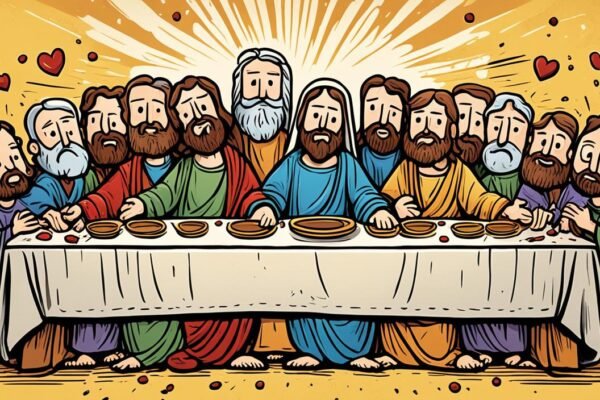
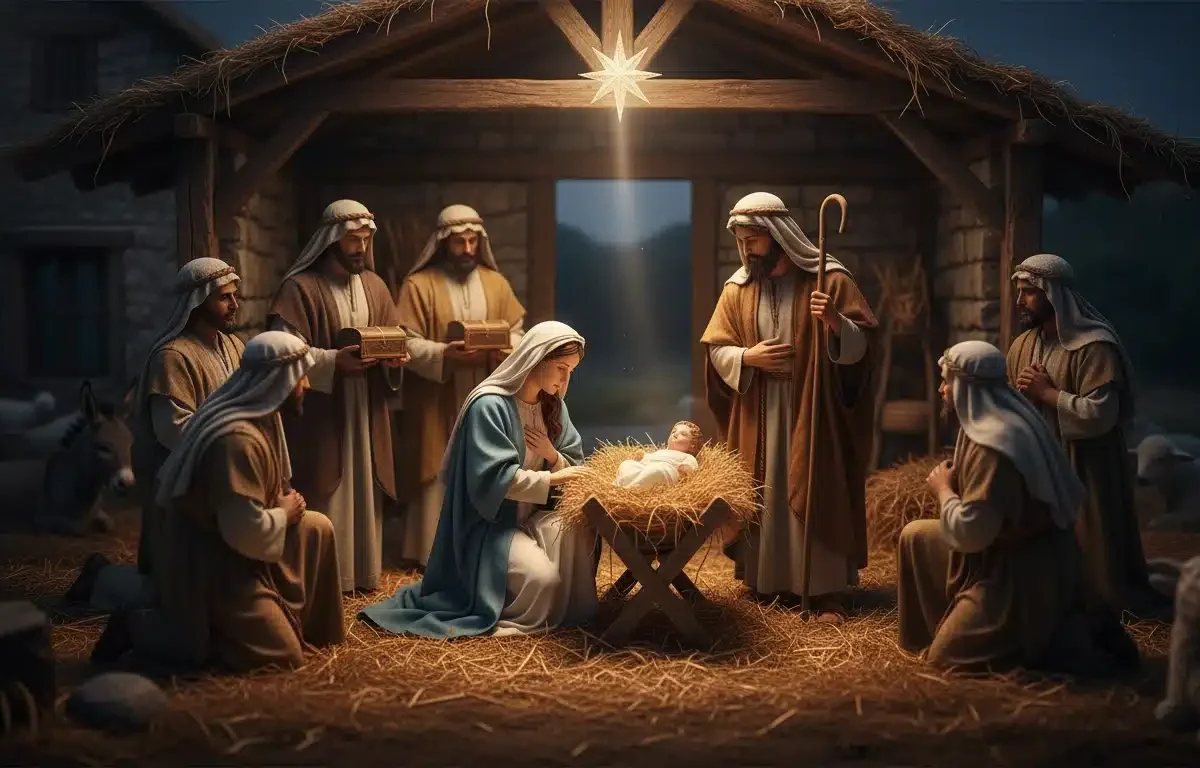
Christmas is one of the most widely celebrated holidays around the world, a time of light, hope, and family gatherings. But have you ever stopped to think about the depth of the connection between Jesus and Christmas?
This holiday, so deeply rooted in our culture, has a complex and fascinating history. It goes beyond decorations and gifts, pointing to a profound spiritual meaning. Let’s explore this story together.
Highlights
- Christmas, as we know it, has surprising roots that go beyond the birth of Jesus.
- December 25 was strategically chosen to incorporate ancient celebrations.
- Symbols Christmas traditions have a rich history, blending faith and folklore over the centuries.
- Understanding this connection reinforces the true meaning of the season for millions of people.
What is the true connection between Jesus and Christmas?
The true relationship between Jesus and NataThe fact is that the celebration commemorates the birth of Jesus Christ, the central figure of Christianity. Although the exact date of his birth is unknown, December 25 was chosen to mark this pivotal event.
In this way, ancient pagan festivals are integrated with Christian tradition, highlighting the message of hope and renewal.
The Unexpected History of the Date of Christmas (and Why It Isn't the Exact Date)
It comes as a surprise to many, but the Bible It does not specify the date of Jesus’ birth. Historians and theologians agree that the choice of December 25 has quite interesting and pragmatic origins.
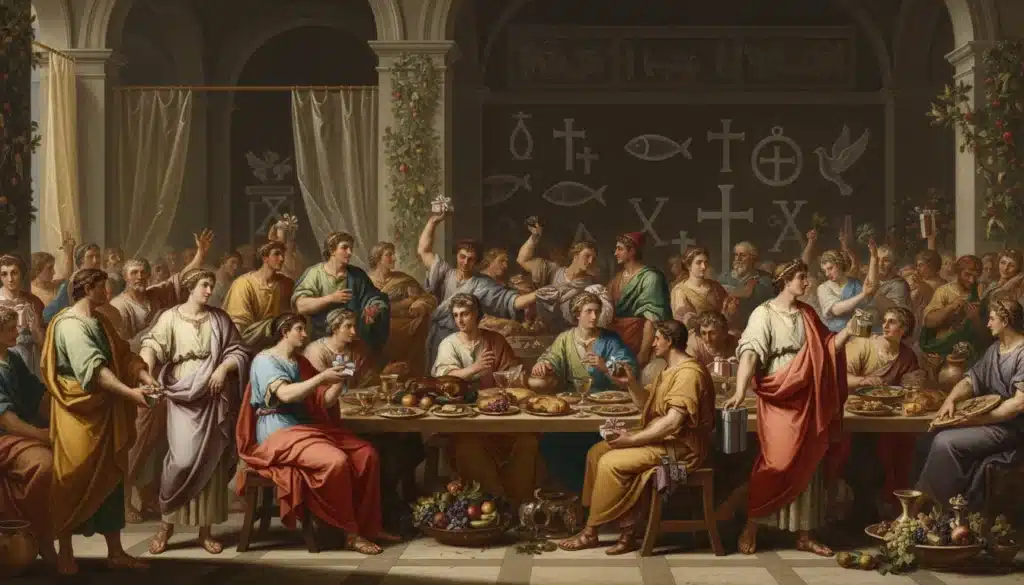
That date was likely chosen by the early Christian Church. The goal was to supplant and Christianize popular pagan festivals, such as the Roman Sol Invictus and the Saturnalia.
These festivals celebrated the winter solstice, marking the return of longer days and the victory of light over darkness. The association with the “Sun of Righteousness”—a metaphor for Jesus—was perfect.
By adopting this date, the Church facilitated the conversion and integration of new communities. This allowed people to continue their celebrations, but now with a new focus and meaning.
Christmas Symbols: More Than You Might Think
The Christmas traditions we love so much are a melting pot of cultures and eras. Many symbols carry stories that blend the sacred and the profane, the ancient and the modern.
- The Christmas Tree: Its origins can be traced back to Germanic pagan rituals. Trees were decorated to celebrate fertility and life during the winter. The Christian tradition reinterpreted it as a symbol of eternal life.
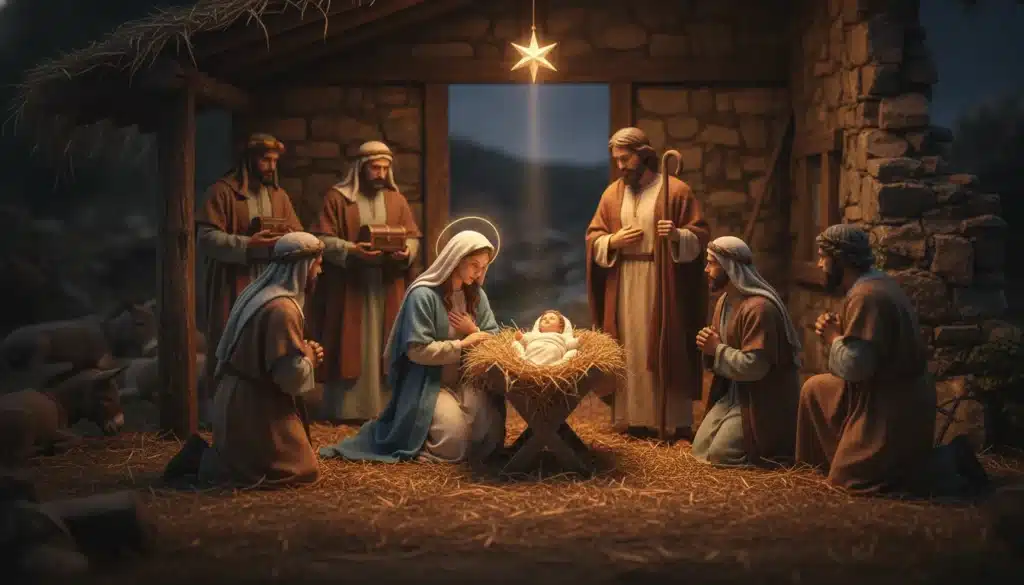
- The Nativity Scene: Attributed to St. Francis of Assisi in the 13th century, the nativity scene aims to recreate the scene of Jesus’ birth. It serves as a humble yet powerful visual representation of the central event of Christmas.
- Candles and Lights: They depict Christ as the “Light of the World.” They also hark back to ancient solstice celebrations, where fire was used to ward off evil spirits and welcome the return of light.
Each of these familiar elements connects us to a rich past. They invite us to reflect on the spiritual and cultural journey of Christmas.
Fun Facts and Trivia That Will Change the Way You See Christmas
Christmas is full of little-known facts that add layers of fascination to its history. Many of these details may surprise even the most avid fans of the season.
- Early Christians and Anniversaries: Interestingly, the early Christians did not celebrate birthdays. The celebration of Jesus’ birth did not gain traction until centuries later. They placed greater importance on martyrdom and the resurrection.
- The Star of Bethlehem: Astronomers and historians continue to debate its nature to this day. Some theories suggest it may have been a rare planetary conjunction, a supernova, or even a comet. Regardless of its exact nature, it guided the Magi and remains a symbol of hope.
- The Origin of Santa Claus: Santa Claus is a figure inspired by Saint Nicholas, a 4th-century bishop known for his generosity. His image evolved over time, blending European legends with American culture, until he became the global icon we know today.
- Christmas Carols: Medieval “carols” were festive dances accompanied by singing, and were not necessarily religious in nature. It was only later that they became Christmas carols, conveying the story of Jesus’ birth in a joyful and accessible way.
- Underground Christmas: During the 17th century, Christmas was even banned in England and some American colonies. The Puritans considered it a pagan and excessively indulgent holiday, far removed from biblical teachings. Read more about this ban at Wikipedia on Christmas.
These interesting facts reveal how Christmas is the result of many influences. It demonstrates the human ability to adapt and reinterpret traditions over time.
The Impact of Jesus on the Meaning of Modern Christmas
Despite all the historical and cultural layers, the figure of Jesus remains central to Christmas. His teachings shape the spirit of the season for millions.
The message of love, peace, hope, and generosity, which is central to Christianity, is at the heart of Christmas. It transcends consumerism and invites reflection and charity.
The act of giving gifts, for example, although commercialized, recalls the gifts that the Magi gave to Jesus. It also evokes the idea of sharing and caring for others—values taught by Christ.
For many, Christmas is a reminder of sacrifice and the promise of redemption. It is a time to renew one’s faith and put Christian principles into practice in daily life.
The spiritual side of the holiday season provides a much-needed counterbalance to the frenzy of the season. It invites us to pause and remember what really matters.
Celebrating the Nativity: Different Christian Perspectives
Christians around the world celebrate Christmas in a variety of ways, reflecting the richness of their faith. Traditions can vary greatly across denominations and cultures.
- Orthodox Churches: Many Orthodox churches, such as the Russian and Serbian churches, celebrate Christmas on January 7. This is because they follow the Julian calendar, which differs from the Gregorian calendar adopted by most of the Western world.
- Protestants: They focus on reflecting on the birth and life of Jesus. Bible readings and special services are central elements of their celebrations.
- Catholics: They focus on Midnight Mass and setting up the Nativity scene. Devotion to the Virgin Mary and Saint José These are also important aspects, particularly the Holy Family. For more details on the life of Jesus, see the Wikipedia on Jesus.
These differences enrich the tapestry of Christmas around the world. Each tradition, in its own way, seeks to honor the birth of Jesus and his teachings.
Conclusion: Jesus and Christmas: The Fascinating Connection Behind the Holiday
Christmas is much more than just a date on the calendar; it is a complex cultural and spiritual phenomenon. The connection between Jesus and Christmas It is the thread that links centuries of history, traditions, and faith.
By understanding the origins and meanings behind the holiday, we can experience Christmas more deeply.
May this season of light inspire in everyone a spirit of love, peace, and renewal. Take a moment to reflect on the true gift of Christmas: the message of hope.



Frequently Asked Questions
The Bible does not specify the exact date of Jesus’ birth. Most historians and theologians agree that he was born between 6 B.C. and 4 B.C., but the exact date is unknown.
The date of December 25 was chosen by the early Christian Church to Christianize popular pagan festivals. These ancient celebrations marked the winter solstice and the return of light.
Yes, the tradition of the Nativity scene is an ancient one, but it was popularized by St. Francis of Assisi in 1223. He created the first live Nativity scene to teach about the humility of Jesus’ birth.
The Star of Bethlehem symbolizes the divine light that guided the Three Wise Men to the place of Jesus’ birth. For Christians, it represents hope, guidance, and the manifestation of God’s glory.
The early Christians did not celebrate Jesus’ birth in the same way we do today. The initial focus was on Easter and the Resurrection. Christmas as we know it developed centuries later.