
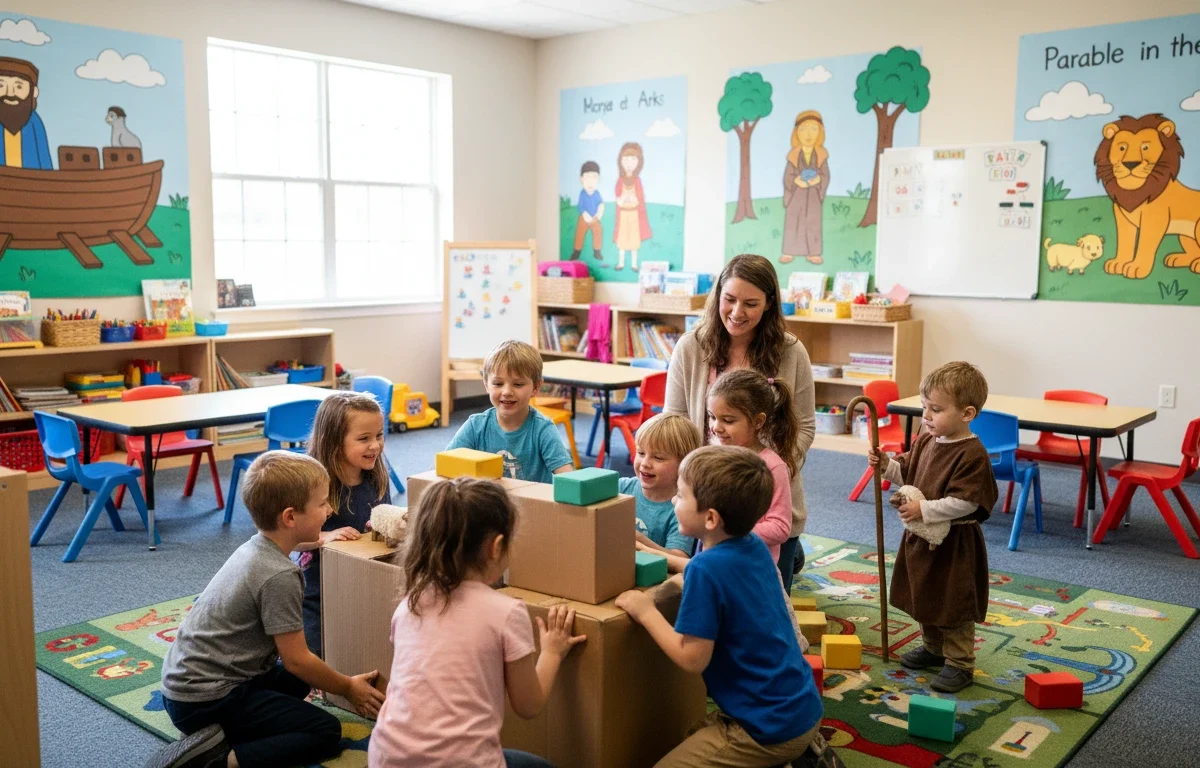
The church has always played a fundamental role in the moral and spiritual formation of new generations. However, today's world requires innovative approaches to how the church can teach children in an effective and captivating way.
It is essential to go beyond the traditional so that children absorb Christian values and build a solid faith from an early age.
Highlights
- Accessible language and storytelling are vital for children's understanding of faith.
- Playful activities and music turn religious learning into a joyful experience.
- The involvement of the family and the training of educators are pillars for the success of Christian teaching.
- Curiosities and fascinating facts about faith can ignite the flame of discovery in children.
How Can the Church Teach Children Effectively?
The church can teach children effectively by adopting interactive, age-appropriate pedagogical methods, prioritizing simple language, storytelling and the biblical stories in an engaging way and the realization of playful activities that stimulate active participation, creativity and a practical understanding of the principles of the Christian faith.
Transforming complex concepts of faith into something tangible and meaningful for developing minds is the great challenge. It's not just about transmitting information, but inspiring a personal relationship with God.
The church should be a space of discovery and welcome, where each child feels part of a great story, a loving compass on their spiritual journey.
The Secret to Keeping Little Ones Connected to the Faith
Engaging children in religious themes requires creativity and a deep understanding of their developmental stages. The key is not to simplify the message, but to present it in ways that resonate with children's curiosity and energy.
The Crucial Importance of Accessible Language
Adults often get lost in complex theological terms. For children, this barrier is even greater. The language used should be direct, simple and free of jargon.
Think of everyday analogies, concrete examples and vocabulary that they already know or can learn easily.
Instead of talking about “atonement”, for example, you could explain about “Jesus helping us to fix our mistakes”. The key is to demystify and bring faith into their universe. This doesn't diminish the depth of the message, but makes it digestible and applicable.
Storytelling: More than Words, Emotions!
Stories are the universal language of childhood. Jesus himself taught in parables. The church should invest in storytellers who know how to dramatize, use visual aids and create a magical environment where biblical narratives come to life.
It's not just reading; it's interpreting, feeling and making the child imagine themselves in the story.
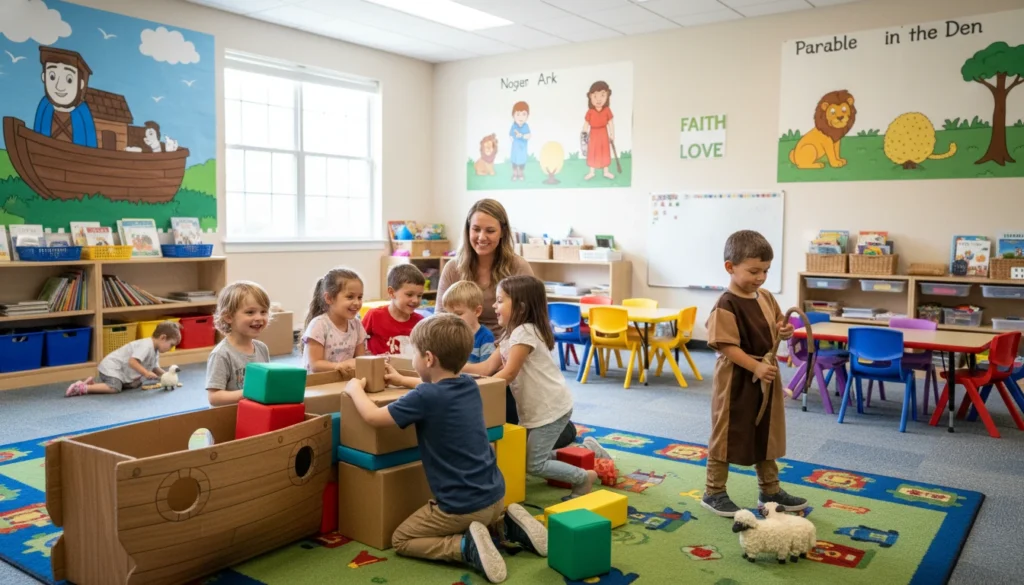
You can use puppets, simple sets, costumes and even children's participation in the performance.
Every Bible story is an opportunity to teach a value, a life lesson or an aspect of God's character in a memorable way.
Playful Activities: Learning through Play is More Fun
Play is the work of the child. When faith is presented through games, arts, puzzles and challenges, learning becomes enjoyable and effective. This can include:
- Board games with biblical themes.
- Handicrafts that illustrates stories or teachings.
- Treasure hunts with clues that lead to bible verses.
- Outdoor play that simulate biblical events (such as the crossing of the Red Sea).
These activities not only reinforce the content taught, but also develop motor, social and cognitive skills, showing that faith can be lived out in all areas of life.
Music and Praise: The Rhythm of Children's Spirituality
Music has an incredible power to fix messages and awaken emotions. Children's songs with lyrics that teach biblical principles are powerful tools. Children love to sing, dance and express joy. Music can be used to:
- Memorize Bible verses.
- Celebrating God's goodness.
- Create a sense of community and belonging.
- Express gratitude and praise in a way they understand.
Children's praise doesn't have to be a “mini” version of adult praise; it should be made for them, with simple choreography and accessible instruments.


Curiosities of Faith: Fascinating Facts that Kids Love
Sparking children's natural curiosity is a powerful way of learning about faith. Presenting unusual facts and stories can open doors to deeper questions and discussions.
Did you know...
- The Bible took more than 1500 years to be written, by around 40 different authors, on three different continents? It's a library of 66 books!
- Many animals are mentioned in the Bible, from lions and snakes to ravens and doves, each with a special symbolism.
- The least and greatest plagues in Egypt were lice and the death of the first-born, respectively.
Exploring these peculiarities can turn Bible study into an adventure. For example, when talking about Noah's Ark, You could discuss how big it is compared to a school bus, or which animals the children imagine were there. Stimulating imagination and research is fundamental.




Challenges and Solutions: Overcoming Obstacles in Christian Teaching
Teaching children in church is not without its challenges. The scattered attention, the diversity of ages and the influence of the outside world are just some of them. However, with planning and dedication, it is possible to overcome them.
Engaging Parents and Families: The Tripod of Christian Education
The church cannot be the only source of religious education. Parents are the first and most important models of faith. The church must be a support, not a substitute. Strategies include:
- Workshops for parents: Offering tools and tips for discipleship at home.
- Materials for the home: Books, games and devotionals that families can use together.
- Family events: Programs that promote interaction between parents and children in church and outside.
- Constant communication: Keep parents informed about what their children are learning.
When church and family work together, the impact on children's lives is exponentially greater.
Preparing Educators: Essential Tools and Training
Children's teachers in the church are real heroes. They need to be passionate about God and children, but also prepared. Providing ongoing training is vital. This can cover
- Children's pedagogy: Understand the stages of development and how to teach in each one.
- Creative methodologies: New ideas for lessons, stories and activities.
- Classroom management: How to deal with different personalities and maintain order.
- Basic theology: So that they can answer the children's questions with wisdom.
A well-prepared educator is a treasure who transforms teaching into a rich and meaningful experience.
Adapting to the New Generations: Technology and Interactivity
Today's children are digital natives. To ignore technology is to miss out on a powerful tool. The church can use it:
- Educational apps and games with biblical content.
- Videos and animations to illustrate stories and concepts.
- Interactive platforms for online classes (when necessary).
- Social media to share inspiring content with teenagers and parents.
Technology should be a tool to amplify the message, not replace it. The focus should remain on human interaction and forming relationships. Wikipedia's site on Theology of Christian Education can provide more context.
Creating a Welcoming Environment: Where Faith Blooms Naturally
The physical space and atmosphere of the church play a crucial role in how children perceive and interact with faith. A welcoming and safe environment is fundamental.
The Aesthetics of Space: Colors, Comfort and Safety
Colorful rooms, furniture suited to the size of the children and decoration that stimulates the imagination make all the difference. In addition to aesthetics, safety is non-negotiable. This includes:
- Safe play areas: Risk-free and supervised.
- Accessible and clean bathrooms.
- Trained staff first aid and child protection policies.
- Access control to ensure that only authorized people interact with the children.
A well-kept physical environment shows that the church values and prioritizes its younger members.
Celebrations and Rituals: Making Church Relevant
It can be challenging for children to participate in the main services. However, it is important that they feel part of the larger community. This can be done through:
- Specific moments in worship for the children (a song, a short message).
- Children's services where the liturgy is adapted for them.
- Participation in plays or choirs during special events.
- Rites of passage simple ones that mark milestones in your journey of faith.
Making church a place of celebration and belonging for children helps them build a strong Christian identity. The Correio newspaper.
Conclusion: Church and Children: How to Connect Faith and Playful Teaching?
Teaching children the faith in church is a noble and vital mission. By adopting playful approaches, accessible languages and investing in educator training and family engagement, churches can create an environment where children not only learn about God, but also experience His love in a deep and lasting way.
May faith be an adventure of discovery and joy for every little one.
Frequently Asked Questions
There is no “right” age, but parents can start introducing simple concepts about God and love from early childhood, adapting the complexity as the child grows. The church can support with programs for different age groups.
Use visual aids such as picture books, puppets, dramatizations and drawings. Keep the story short, focus on one main point and ask interactive questions to maintain engagement.
Music helps memorize verses and teachings, creates an atmosphere of joy and praise, and allows children to express their faith creatively and collectively, strengthening their sense of community.
Yes, parental reinforcement at home is crucial. It solidifies the teachings, shows the consistency of the faith and establishes the parents as important role models in the child's spiritual journey, creating an environment of continuous discipleship.
The main challenges include keeping attention in a world full of digital distractions, adapting content to be relevant and competitive with other media, and balancing the use of technology with human interaction and community experience.