
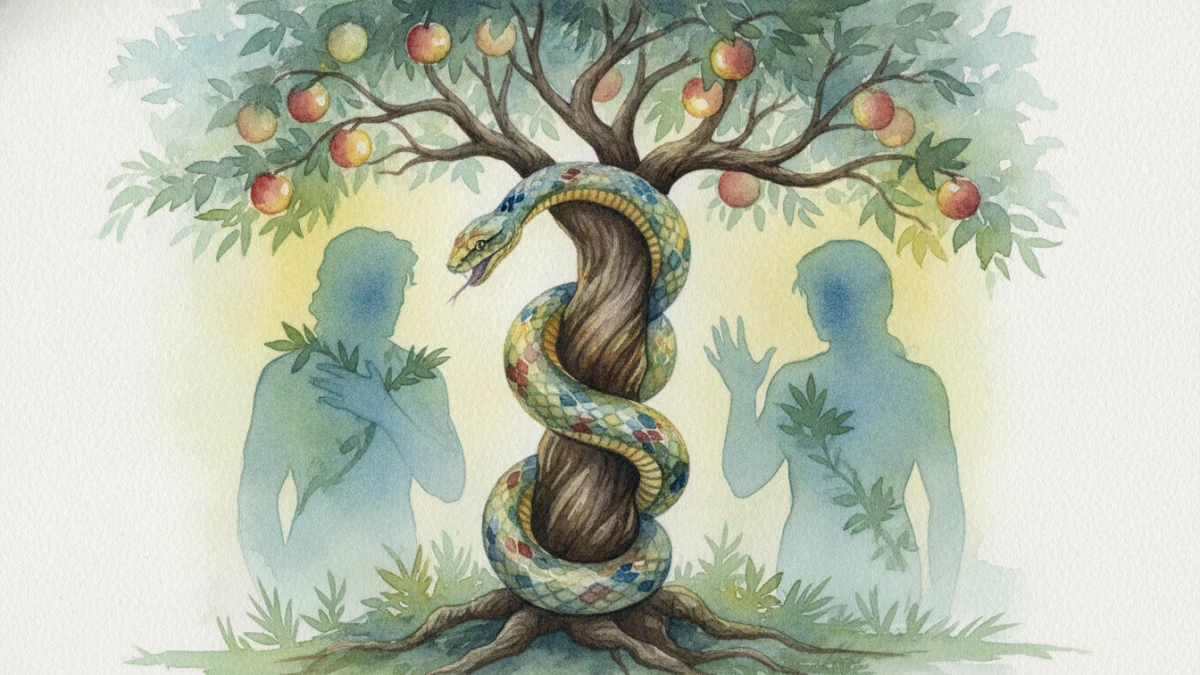
How can we make sense of one of the most intriguing and debated accounts in the entire Bible? We've compiled the main Questions and Answers About Genesis Chapter 3 to shed light on your spiritual understanding of the Fall and redemption.
Do the decisions made in that garden still affect our daily lives and the choices we make? Let’s uncover these mysteries together from a balanced perspective that will deeply enrich your faith.
Who was the serpent in the Garden of Eden?
At the beginning of the biblical account, the figure who appears in conversation with Eve is presented in a very unique way. The text of Genesis 3:1 describes this being as the most cunning of all the wild animals that the Lord God had made.
In our theological studies, we have observed in practice that a complete understanding of this agent requires looking at the progressive revelation of Scripture. An isolated analysis of Genesis explained only the animal aspect, but the unfolding of biblical revelation dramatically broadens this spiritual picture.
Later, the New Testament reveals the true identity behind that reptile. The apostle John, in the book of Revelation, clearly identifies the ancient adversary as the great dragon, the ancient serpent, who is called the Devil and Satan.
This creature used its cunning to subtly draw near to humanity. The presence of the tempter in Eden reveals that evil already existed in the spiritual realm even before it entered the human heart.
Understanding this identity helps us to view the questions and answers regarding Genesis chapter 3 in a mature way. The enemy of our souls uses everyday disguises and logical arguments to try to draw us away from the Creator’s presence today.
How Humanity Was Tempted
The temptation in Eden did not occur through an overwhelming physical force, but rather through a subtle and strategic dialogue. The adversary began by questioning God’s generosity, planting the seed of doubt in Eve’s mind by distorting the original divine command regarding the trees of the garden.
In her response, Eve ended up adding elements that God had not mentioned, revealing a weakness in her understanding of that command. Sensing this opening, the serpent launched a direct attack against the faithfulness of the Lord’s Word, promising the couple a false sense of spiritual autonomy.
And the serpent said to the woman, “You will certainly not die. For God knows that on the day you eat of it, your eyes will be opened, and you will be like God, knowing good and evil.”. Genesis 3:4-5
After that conversation, the woman looked at the forbidden fruit from a new perspective, one distorted by deception. The fruit seemed pleasing to the eye, good for food, and desirable for gaining practical knowledge.
When Eve gave in to temptation and ate the fruit, she shared it with Adam, who also ate it of his own free will. This process of the Fall serves as a mirror of how temptations present themselves to us on our daily journey of faith.
The questions and answers about Genesis chapter 3 teach us that lies always try to portray disobedience as a path to freedom. The error began in the mind, passed through the eyes, and was consummated in direct action against the Creator.
What was the actual consequence of original sin?
Their immediate disobedience caused an instant rupture in the harmony that had existed in Eden. The first sign of this rupture was mutual shame, manifested by their sudden awareness of their nakedness and their attempt to hide from God.
Fear replaced the intimate fellowship the couple had enjoyed with the Lord during the cool of the day. When God called to them, their human response was to flee, and immediately afterward, to shift the blame among Adam, Eve, and the serpent itself.
In our counseling sessions, we have observed in practice that sin always tears apart the closest relationships. Divine judgment has brought about geographical and physical consequences, altering the dynamics of human labor and the creation of new life.
The earth became cursed because of disobedience, and began to produce thorns and thistles instead of natural abundance. Physical and spiritual death entered the world, setting a limit on human existence on earth.
An analysis of the questions and answers about Genesis chapter 3 shows us that original sin marred the perfect creation. However, even in the face of such a severe judgment, God did not abandon humanity to its own fate in that moment of pain.



Questions and Answers About Genesis Chapter 3
To make it easier to understand the practical and historical aspects of this crucial moment in the creation of the world, below we highlight the main questions readers have about what’s happening in the garden.
- Why did God forbid the fruit of the tree of the knowledge of good and evil? The prohibition served as a test of love, trust, and willing obedience. Without a real choice between obedience and disobedience, human free will would have no practical significance in the relationship with the Creator.
- What is the spiritual significance of the animal skins made by God? Before expelling the couple from Eden, God sacrificed animals to cover their nakedness with skins. This act symbolizes that the atonement for sin requires the shedding of innocent blood, foreshadowing Jesus’ sacrifice on the cross.
- Why did God expel man from the garden after the Fall? The expulsion was an act of divine mercy intended to prevent man from eating from the Tree of Life. If they had done so in their fallen state, they would have lived eternally separated from God in a state of eternal sin, with no chance of redemption.
The answers above reveal a God who, even while punishing wrongdoing, immediately provides a way out and protection. If you’d like to deepen your understanding of other significant moments from the beginning of the Scriptures, take our Quiz About Noah to test your understanding of the Bible.
Understanding these pillars helps us avoid the A common mistake we make when reading the Book of Genesis in the morning without proper theological attention. A rushed reading often prevents us from seeing God’s grace at work right from the very first chapters of the Bible.
Through the questions and answers about Genesis chapter 3, we understand that the expulsion from the Garden was the beginning of a long journey of restoration that God has prepared for all of us.
What Does the Promise of the Protoevangelium Mean?
In the midst of the judgment pronounced against those involved in the Fall, God speaks words of direct hope in Genesis 3:15. This verse is widely known in biblical theology as the Protoevangelium—that is, the good news announced for the first time.
The Creator establishes a perpetual spiritual enmity between the seed of the serpent and the seed of the woman. This spiritual battle would span the historical eras of the Old Testament until it found its full fulfillment at the time appointed by God.
The promise prophetically declares that the woman’s offspring would crush the serpent’s head, while the serpent would only strike her heel. The wound to the heel points to the temporary sufferings of Jesus Christ during his crucifixion.
The crushing of the head, on the other hand, symbolizes Satan’s definitive and fatal defeat at the hands of Jesus on the cross at Calvary. By rising from the dead, Christ undid the works of the devil and secured salvation for all who believe.
Studying the questions and answers about Genesis chapter 3 helps us realize that the cross was already on God’s horizon from the very beginning. Divine grace began to work at the very moment humanity failed in its mission in Eden.
If you want to see how this promise unfolded in subsequent generations of the messianic lineage, it's worth reading the article on the transition Between Adam and Noah Genesis 5. This genealogical study links the promise of Eden to the preservation of humanity through the Flood.
Watchfulness and grace in our daily walk
A thorough study of Genesis 3 invites us to engage in a sincere self-examination of our own tendency toward daily disobedience. The same strategies of doubt and deception used in Eden continue to knock at the door of our hearts with each new dawn.
We must constantly watch and pray, nourishing our minds with the unshakable truth of the Holy Scriptures so that we do not fall into the enemy’s snares. The restoration we need is fully available in Christ, who undid the bitter consequences of that ancient fall.
We hope that these Questions and Answers About Genesis Chapter 3 may they have strengthened your spiritual journey and provided clear answers for your Christian life. Share this blessed message with your family on WhatsApp to build up the faith of those you love so much today.
We invite you to join our community of intercession and mutual support. Please write your first name in the comments below so we can include you and your family in our next daily prayer chain.
Frequently Asked Questions About Questions and Answers on Genesis Chapter 3
What does this Q&A guide on Genesis chapter 3 reveal about the true identity of the serpent in Eden?
The guide reveals that, although Genesis describes the serpent as the most cunning of animals, the Bible’s progressive revelation—especially in the book of Revelation—unmasks the being behind the reptile as the Devil and Satan himself, who used this disguise to deceive humanity.
How can we apply the lessons from Genesis 3 to resist the daily temptations in our spiritual lives?
We can apply these lessons by being on guard against subtle arguments that distort the Word of God. The text shows that the error began when people listened to questions about the Creator’s generosity, teaching us to remain steadfast in the original divine instructions.
What are the main benefits of understanding the process of human fall described in this chapter?
Understanding the fall benefits us by exposing the tempter’s strategy, which relies on logic, visual beauty, and the promise of false autonomy. This strengthens our faith and prepares us to identify and reject illusions that promise independence from God.
Was Eve's mistake in speaking with the serpent worse than Adam's decision to eat the fruit?
There is no superiority in error; both failed in complementary ways. While Eve succumbed to deception after a subtle argument that distorted the divine order, Adam sinned willingly by accepting the fruit she offered, thereby sealing the fall of all humanity in the Garden.
Is it a myth that the temptation in Eden occurred through an overwhelming and irresistible physical force?
Yes, it’s a myth. The biblical account makes it clear that the temptation took place through strategic dialogue and psychological persuasion, in which the adversary planted doubt, and the couple chose, of their own free will, to give in to desire and disobey God.


