
Since the dawn of humanity, the idea of an “end” has haunted us. Whether it’s the end of a day, a season, a life, or—on a grander scale—the end of everything as we know it. But, after all, What is the Apocalypse? This word, so laden with images of destruction and catastrophe, is often misunderstood.
It brings to mind scenes from science fiction movies, prophecies gloomy moods and heated debates.
But what does this word—which both fascinates and frightens us so much—really mean? Join us as we unravel the mysteries behind the Apocalypse, exploring its roots and the various ways this idea has shaped our culture and beliefs.

The Origin of the Word and Its True Meaning
To understand What Is the Book of Revelation?, we need to go back to its Greek origin. “Apokalypsis” (ἀποκάλυψις) does not mean “destruction” or “end of the world,” as many people think.
In fact, its literal translation is “revelation,” “unveiling,” or “lifting the veil.” It is the act of revealing something that was hidden, of bringing profound truths or future events to light.
This revelation may concern the fate of humanity, the nature of the divine, or the plans of a higher power. It is a moment of clarity, when what was obscure becomes visible.
Therefore, the central idea of the Book of Revelation is not necessarily annihilation, but rather a radical transformation—a turning point at which knowledge is revealed.
💡 Tip: Thinking of the Apocalypse as a “revelation” rather than “destruction” completely changes our perspective on the subject, doesn’t it? It’s like turning on the light in a dark room.
The Apocalypse in the Bible: The Book of Revelation
When we talk about What Is the Book of Revelation?, most people immediately think of the Book of Apocalypse (or Revelation) from the Bible Revelation. Written by John on the island of Patmos, this is the last book of the New Testament and, without a doubt, the most enigmatic and controversial.
Visions and Symbols
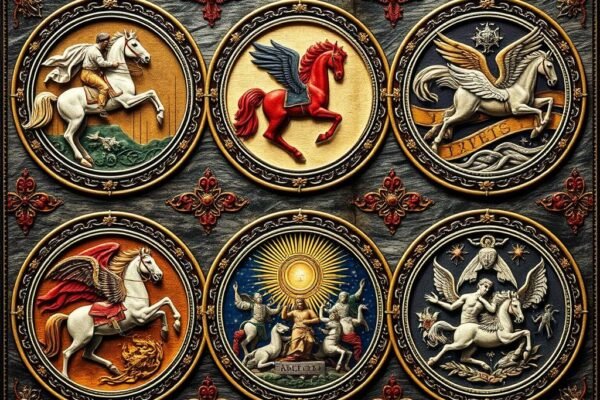
The Book of Revelation is filled with symbolism. Horses of different colors, multi-headed beasts, angels blowing trumpets, the New Jerusalem—all of this is part of a rich tapestry of visions.
These symbols Most of them should not be interpreted literally, but rather as representations of spiritual, political, and social forces.
- The Four Horsemen: Famine, Plague, War, and Death, representing the scourges that afflict humanity.
- The Beast: Often associated with oppressive empires or tyrannical figures in power.
- The New Jerusalem: A symbol of a new heaven and a new earth, a state of perfection and peace.
These visions were written against a backdrop of persecution of Christians, serving as a message of hope and warning to the faithful of that time, and a call to perseverance.
Theological interpretations
Interpretations of the Book of Revelation are diverse and complex, varying across different theological schools of thought. The main ones include:
- Preterism: He views most of the prophecies as having already been fulfilled in the first century A.D., during the Roman era.
- Historicism: It interprets the prophecies as an overview of the history of the Church from apostolic times until the return of Christ.
- Idealism: He sees the book as an allegory of the ongoing struggle between good and evil, without any specific literal interpretation.
- Futurism: It views prophecies as events that are yet to be fulfilled in the future, related to the end times and the return of Christ.
Each interpretation seeks to answer the question What Is the Book of Revelation? in a way that aligns with your understanding of history and faith. To learn more, read about the Book of Revelation at Wikipedia.

The Apocalypse in Other Cultures and Religions
The idea of an “end” or a major transformation is not unique to Christianity. Many other cultures and religions have apocalyptic or eschatological narratives (the study of the “end times”).
| Religion/Culture | Main Apocalyptic Concept | Key Feature |
|---|---|---|
| Judaism | Yom Ha-Din (Day of Judgment) | The Coming of the Messiah, the Resurrection, Divine Justice |
| Islam | Yawm al-Qiyamah (Day of Resurrection) | Signs of the End, Judgment of All Souls |
| Hinduism | Kali Yuga, Kalki Avatar | Cosmic cycles of destruction and renewal, reincarnation |
| Nordic | Ragnarök | Final battle between gods and giants, renewal of the world |
| Maia | The End of Cosmic Cycles | Transitions between eras—not an absolute “end,” but a new beginning |
These perspectives, though distinct, share a common thread: the belief in an end to the current order and the beginning of a new reality, often following a period of great trials. They help us understand that the search for meaning in the “end” is a universal human experience.



What Is the Book of Revelation? Beyond Religion
Outside of a religious context, the word “apocalypse” has taken on a broader meaning in everyday language. Today, we use “apocalyptic” to describe large-scale events that threaten the existence or well-being of humanity.
The End of the World or the End of an Era?
It’s common to hear about a “zombie apocalypse” or a “climate apocalypse.” In these cases, the word refers to a global catastrophe that drastically alters life on Earth.
It isn't necessarily the “end of the world” in the literal sense of the planet's destruction, but rather the end of civilization as we know it—the end of an era.
- Environmental Crises: Extreme natural disasters, ecosystem collapse, irreversible climate change.
- Nuclear Wars: Post-apocalyptic scenarios of devastation and scarcity.
- Global Pandemics: Diseases that threaten existence or social order on a large scale.
- Advances in AI: Concerns about a future in which artificial intelligence outstrips human control.
These stories have become an integral part of our popular culture, reflecting our collective fears and hopes for the future. They force us to question our own vulnerability and resilience.
The Modern Apocalypse: Crises and Changes
Today's question What Is the Book of Revelation? can be answered in very contemporary ways. We don’t need to wait for trumpets or horsemen to sense the imminence of major transformations. Economic, political, and social crises are often described as “apocalyptic” in their scale and impact.
“The apocalypse is not an event; it is a process. We are always living through an apocalypse in one way or another, as old orders give way to new ones.” – A quote that resonates with the idea of constant revelation and transformation.
These daily “micro-apocalypses,” while not the end of the world, represent the end of certain structures, ideologies, or ways of life.
They invite us to reflect on impermanence and the need for continuous adaptation. To learn more about the contemporary perspective, see articles on Eschatology and its implications.
Why Are We So Fascinated by the Apocalypse?
There is something intrinsically human about our fascination with the Apocalypse. Perhaps it is the desire to understand the purpose of life and death, to find meaning amid the chaos. Or perhaps it is the thrill of the unknown, the adrenaline rush of imagining a radically different world.
This fascination is evident in:
- Literature and Cinema: Entire genres devoted to post-apocalyptic settings.
- Games: Open-world games that explore survival in desolate environments.
- Philosophical Debates: Questions about ethics, morality, and the future of civilization.
- Survival Preppers: Movements preparing for scenarios of collapse.
It is a way to confront our greatest fears and, paradoxically, to find hope in the possibility of a fresh start or a new order. The idea that something big and definitive is yet to come makes us question the present.
Preparing for the Unexpected (or Understanding It Better)
Regardless of how you interpret it What Is the Book of Revelation?, whether as a religious prophecy, a cultural metaphor, or a real threat, reflecting on this topic can be enriching. It invites us to:
- Reevaluate Priorities: What really matters as the “end” approaches?
- Fostering Resilience: How can we adapt and thrive in times of change?
- Seek Knowledge: Understanding the past and the present to build a better future.
- Connect with the Community: The importance of unity and cooperation in times of crisis.
It’s not about living in fear, but about living mindfully. It’s about recognizing that life is cyclical and that from every “end” a new “revelation” can emerge.

Conclusion: A New Perspective on What Is the Book of Revelation?
Throughout this article, we reveal that What Is the Book of Revelation? It goes far beyond the simple idea of destruction. It is a multifaceted word, with ancient roots and modern connotations, that speaks to revelation, transformation, and the eternal cycle of endings and new beginnings.
Whether from the religious perspective of a final judgment, the cultural vision of a global catastrophe, or a philosophical reflection on the end of an era, the Apocalypse challenges us to look to the future with more open eyes.
He invites us to uncover the hidden truths of our time and to prepare ourselves not only for the end, but for the new possibilities that each revelation brings. And you—how do you view the Book of Revelation today?
Frequently Asked Questions (FAQ)
The word ‘Apocalypse’ comes from the Greek ‘Apokalypsis,’ which means ‘revelation,’ ‘unveiling,’ or ‘removing the veil’—not ‘destruction,’ as many people think.
Most scholars and theologians agree that the Book of Revelation is largely symbolic, using imagery and metaphors to convey spiritual and prophetic messages, although some interpretations take a more literal view of it.
Not necessarily the end of planet Earth, but rather the end of an era, an established order, or a civilization, followed by a transformation or a new beginning. In common usage, it can refer to major catastrophes.
Yes, many other religions and cultures have similar eschatological concepts, such as Yom Ha-Din in Judaism, Yawm al-Qiyamah in Islam, Ragnarök in Norse mythology, and the cosmic cycles in Hinduism and Mayan culture.
The fascination with the Apocalypse may be linked to the human desire to find meaning in the end and the new beginning, to the thrill of the unknown, to confronting one’s greatest fears, and to the hope for a new order or a transformed future.