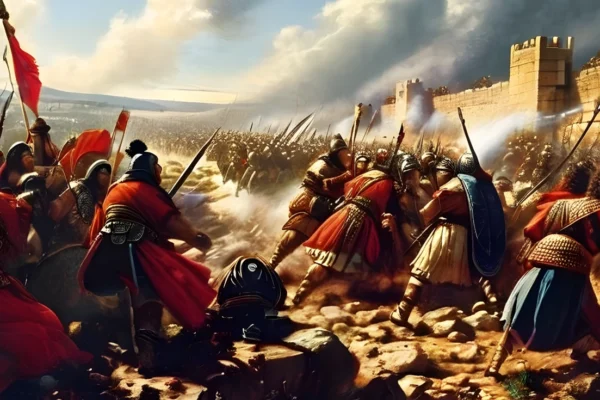

Since time immemorial, the Bible has been a beacon of light and wisdom for millions. But has there ever been a time us We wonder about the hands and minds that recorded these timeless words. The authorship of the books The sacred is a subject that inspires deep curiosity and reverence.
In this space for reflection, us Let's delve into the origins of the Bible, exploring the different perspectives and the mysteries surrounding its authors. Get ready for a journey that will strengthen your connection with the Word of God and the history of faith.
Who Wrote the Bible? An Overview of Authorship
Often, when we open the Scriptures, we wonder about the hands that held the pens and the hearts that beat as each verse was written.
We understand that the Bible is not just a single book, but a divine library consisting of 66 distinct and profound books.
The origins of the Bible are a fascinating journey that spans approximately 1,500 years of human history and ongoing spiritual revelation.
Unlike any other literary work, it was not written by a single person over a short period of time in isolation.
On the contrary, we see a tapestry woven by about 40 different authors, from completely different backgrounds and social contexts.
Among them were powerful kings, humble shepherds, dedicated fishermen, educated doctors, and even tax collectors who had been transformed by faith.
This diversity is what makes the Bible such a caring and approachable from our own daily struggles and victories.
Despite this multitude of voices, we perceive a supernatural harmony that inexplicably unites Genesis and Revelation.
This central unit exists because, although the hands were human, the mastermind Behind every word was the Creator Himself.
We call this process a collaboration between the divine and the human, in which God breathes truth and man records it.
As we study who wrote the Bible, we are invited to immerse ourselves in an ocean of wisdom that transcends the ages and borders.
The Many Authors of the Old Testament and Their Stories

The Old Testament is the foundation of our faith, where God’s promises first began to be recorded for posterity.
We recognize in Moses one of the fundamental pillars of this body of writing, traditionally attributed to him as the Pentateuch, the first five books.
Moses wrote under the influence of the Exodus from Egypt, recording the laws and the covenant that would shape the people of Israel.
Below, we highlight some of the main groups of authors who contributed to this sacred section:
- Leaders and Legislators: Like Moses, who gave us the foundation of the Moral and Ceremonial Law.
- Kings and Psalmists: David, the “man after God’s own heart,” wrote most of the Psalms, expressing pure emotions.
- Wise Men: Solomon, known for his wisdom, gave us Proverbs, Ecclesiastes, and the Song of Solomon.
- Prophets Greater Than and Less Than: Men like Isaiah, Jeremiah, and Daniel, who spoke on behalf of God in times of crisis.
In David, we see the essence of worship, while in Solomon we find the search for the meaning of life under the sun.
The prophets, for their part, were the God's sentinels, often writing amid suffering and the Babylonian exile.
Each of these men wrote from his own historical, geographical, and cultural context, experiencing both wars and periods of peace.
| Lead Author | Work/Book | Main Context |
|---|---|---|
| Moses | Genesis through Deuteronomy | The Exodus and the Pilgrimage |
| David | Most of the Psalms | Royalty and Worship |
| Solomon | Proverbs and Ecclesiastes | Wisdom and Reflection |
| Isaiah | Book of Isaiah | Messianic Prophecy |
This diversity of authors shows us that God uses every stage of human life to communicate His eternal will.
We can feel Jeremiah's pain and Joshua's courage through their accounts, which have survived millennia of history.
The preservation of these texts is, in itself, a miracle that allows us to gain insight into God's mind today.
Divine Inspiration and the Human Hand in Biblical Writing
Understanding who wrote the Bible requires that we grasp the theological concept of divine inspiration, the breath of God in the human soul.
We do not believe that the authors were mere robots or typewriters in the hands of a distant deity.
The biblical term for this is theopneustos, which literally means “breathed by God,” indicating a heavenly and holy origin.
God, in His infinite grace, chose to use the personality and style of each writer to convey His perfect message.
That is why we notice that the vocabulary of Luke, a physician, is much more technical and detailed than that of Peter, a fisherman.
God guided the author's thoughts and choice of words, but allowed the author's humanity to shine through the text.
This cooperation is what makes the Bible so vibrant and organic, capable of speaking to our hearts in such a personal way.
We see divine sovereignty ensuring that the truth was preserved from fundamental theological errors during the process of writing.
Inspiration did not override the author's intellect; rather, it elevated it so that he could express the ineffable of God.
That is why we sense the urgency in Paul’s letters and the poetic depth in the visions of the ancient prophets.
We can fully trust the Bible because it has a co-authored: It is entirely divine in its origin and entirely human in its expression.
This bridge between heaven and earth is what allows us to find comfort and guidance on every page we read.



Who Wrote the Gospels? The Testimonies of Jesus
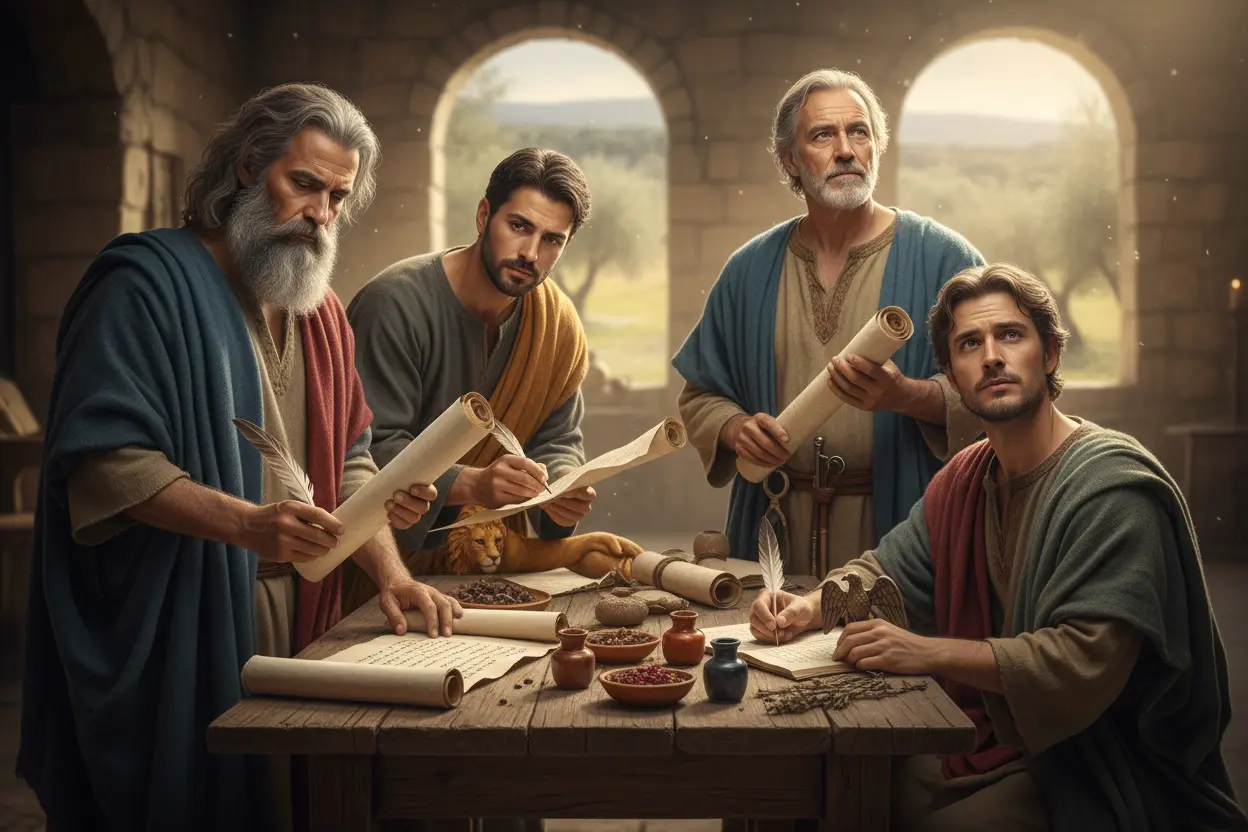
When we turn to the New Testament, we find the heart of revelation: the four Gospels that recount the life of Christ.
We have four distinct perspectives that, together, paint a complete and multifaceted picture of our Savior and Lord.
Matthew, a former tax collector, wrote with a focus on Jewish readers, presenting Jesus as the promised Messiah and the long-awaited King.
Marcos, a companion of Peter, wrote a quick and dynamic account, emphasizing Jesus’ actions as the Suffering Servant.
Lucas, the “beloved physician,” conducted a meticulous investigation to portray Jesus as the Son of Man, full of compassion for the marginalized.
As for the apostle, John It offers us a profoundly theological and spiritual perspective, revealing Jesus as the Divine Word who became flesh.
We call the first three Synoptic Gospels because they share a very similar structure and vision.
John, on the other hand, soars like an eagle, offering profound insights and revelations about the eternal nature of Christ.
- Mateus: The Lion (The King).
- Marcos: The Ox (The Servant).
- Lucas: The Man (The Savior of Humanity).
- João: The Eagle (God Incarnate).
This diversity of testimonies ensures that Jesus' message reaches all kinds of hearts and minds around the world.
We are blessed to have these accounts, which allow us to walk with Jesus along the roads of Galilee through reading.
Each evangelist put his life on the line so that we could come to know the Truth that sets you free and transforms.
The Apostolic Letters and Their Messengers of Faith
After Jesus' ascension, the Holy Spirit inspired men to write letters that would form the basis of the doctrine of the early Church.
Above all, we highlight the apostle Paulo, who wrote most of the New Testament epistles under strong inspiration.
His letters to the communities in Rome, Corinth, and Ephesus were not merely correspondence, but theological treatises of inestimable value.
Paul wrote while in prison, during his missionary journeys, and in moments of deep anguish, always focusing on God’s grace.
In addition to Paul, we have the vital contributions of other pillars of the faith who walked closely with the Master.
Pedro He wrote to encourage persecuted Christians, reminding them of the living hope we have in Christ Jesus.
James, the Lord’s brother, offered a practical and ethical approach, urging us to live out a faith that is reflected in our actions.
John, the beloved disciple, wrote letters filled with love, refuting false teachings and strengthening fellowship with the Father.
The purpose of these letters was clear: to guide, correct, and encourage the early Christian communities to remain steadfast on the rock.
We continue to draw from this source to this day, because the problems faced by those churches are very similar to the challenges we face today.
These messengers of the faith did not seek their own glory, but desired only that the name of Jesus Christ might be exalted everywhere.
As we read the epistles, we hear the voices of devoted shepherds caring for God’s flock throughout the centuries.
The Book of Revelation and Its Visionary Author
The Holy Scriptures come to a majestic conclusion with the Book of Revelation, a work of mystery and hope.
We attribute this work to the apostle John, the same man who wrote the fourth Gospel and the three previous letters.
John wrote while he was in exile on the island of Patmos, a Roman penal colony, because of his faithful witness to Jesus.
Amid isolation and persecution, he received glorious visions God's throne and the future of humanity.
The context in which it was written was one of extreme political and religious pressure, in which Christians were being persecuted by the Roman Empire.
The Book of Revelation was not written to instill fear, but to bring comfort and victory to those who suffer for the sake of the Gospel.
John uses prophetic and symbolic language, typical of the apocalyptic genre, to describe spiritual battles and God's ultimate triumph.
We see in the author a visionary who looks beyond temporal circumstances to perceive the New Jerusalem.
The symbolic nature of the book calls for a careful and humble reading on our part, always guided by the Holy Spirit.
John concludes the biblical canon with a powerful promise that Jesus will return to wipe away every tear from our eyes.
We conclude our reading of the Bible with the same prayer as the visionary author: “Come, Lord Jesus!“.
The authorship of Revelation seals the Bible as a complete work, one that begins with creation and ends with the restoration of all things.
The Eternal Voice of Faith in Our Hands
At the end of this journey, us We realize that the Bible is not just a book, but a compendium of lives, experiences, and the very voice of God, conveyed through human hearts. Each author, with their own story and their own time, contributed to forming the sacred mosaic that guides and inspires us today. It is a living testimony of faith that transcends generations.
May this understanding deepen your reverence for the Word. We We invite you to share your thoughts in the comments below and to continue exploring the riches of the Bible on your own spiritual journey. May the light of these scriptures always illuminate your path!