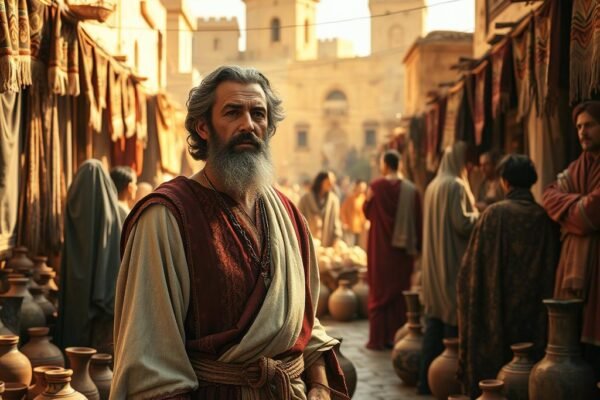

Have you ever imagined facing a choice that could change your life forever? That was the reality for three young people who, even in the face of an order from the king, chose to remain true to their beliefs.
His story is an example of courage and faith that continues to inspire people to this day.
These men, who were taken to Babylon, faced a radical change in their lives.
Their original names, which carried deep meaning, were replaced by others, symbolizing a new phase.
But even in the face of all this, they have not lost their identity.
The decisive moment came when they were challenged to worship an idol. The choice was clear: give in to the pressure or face the furnace of fire. They chose faith, and the result was a powerful testimony to the power of the sir.
This story isn't just about the past, but about how faith can guide us through the most difficult times.
How about diving into this story and discovering what it can teach you about your life?
Historical Context and the Role of Young People in Babylon
Have you ever stopped to think about how historical context can shape a person's destiny?
In the case of the three young men, it all began with Jehoiakim's rebellion, king of Judah, which set off a series of momentous events.
O King Nebuchadnezzar, the leader of the Babylonian Empire, invaded Jerusalem following that revolt. He not only sacked the city but also selected young men from royal and noble families to serve him.
These young people They were taken to Babylon, where they would face an intense process of cultural adaptation.

Imprisonment, Rebellion, and the Selection of the Jewish Princes
O boss The eunuchs were tasked with selecting the most suitable prisoners. They were looking for individuals who were good-looking, wisdom e intelligence, qualities essential for serving at the palace.
These young people underwent rigorous training that lasted three years.
Name Changes and Cultural Adaptation
One of the first steps in this adaptation was the change of names. The original names, which carried deep meanings, were replaced by Babylonian names.
This marked a new phase in their lives, but even so, they held on to their identity and faith.
This process of acculturation was crucial for integrating them into the kingdom Babylonian. However, as you'll see, it wasn't all easy.
The story of these young people is a testament to resilience and faithfulness in the face of extreme challenges.
To learn more about how they overcame these obstacles, check out this detailed summary.
Who were Hananiah, Mishael and Azariah?
Have you ever thought about the power that a name can hold? For these young people, their names were not just identifiers, but an expression of their faith and identity.
When they were taken to Babylon, their Hebrew names were replaced with Babylonian names in an attempt to erase their connection to the God of Israel.

Meaning of Hebrew and Babylonian Names
The original names of these young men had deep meanings. Hananiah, for example, means “God ”He was kind to me.".
Misael means “Who is like God?”. As for Azarias, it means “God ”They are the ones who help me." Those names were a declaration of faith and dependence on God.
However, when they arrived at the palace of King Nebuchadnezzar, their names were changed. Hananiah came to be called Shadrach, which means “order of Aku.” Mishael was given the name Meshach, which can be interpreted as “who is like Aku?”.
And Azariah was renamed Abede-Nego, which means “servant of Nabu.” These changes reflected an attempt at cultural and religious assimilation.
| Hebrew Name | Meaning | Babylonian Name | Meaning |
|---|---|---|---|
| Hananiah | God has been gracious to me | Shadrach | Order of Aku |
| Misael | Who is like God? | Mesaque | Who is like Aku? |
| Azarias | God is the one who helps me | Abede-Nego | Servant of Nabu |
This change of names was not just a matter of identification. It was a strategy to sever these young people's ties to their faith and culture.
Even so, they remained loyal to the God from Israel, showing that a name can be changed, but one's identity and faith remain.
This story reminds us that, even in the face of pressures and changes, it is possible to stay true to who we are.
Names may change, but what really matters is what we carry in our hearts.
The Burning Furnace: The Miracle and Its Meanings
What would you do if you were forced to choose between your faith and your life? That was the dilemma faced by three young people who, when confronted with the order to king, decided to remain loyal to the God of Israel.
The history of blazing furnace It is a striking testament to courage and divine intervention.
The Event at Fornalha and the Test of Faith
When the young people refused to worship the statue gold, the king ordered that they be thrown into the furnace.
The fire was seven times hotter than normal—a temperature capable of consuming anything in an instant.
It was a moment extremely dangerous, but they trusted the Sir.
Even in the face of imminent death, the young people did not waver. Their unshakable faith was put to the test, and the result was a miracle which surprised everyone.
The fire did not touch them, and they walked freely through the flames.
The Divine Presence and the Interpretation of the Fourth Man
The most surprising thing was the presence of a fourth man at the furnace. O king and his servants were astonished when they saw a figure that looked like a son of the gods.
Many scholars interpret this presence as an angel or even a manifestation of Jesus Christ before his incarnation.
This divine intervention not only saved the young people, but also reinforced the idea that the God God of Israel is powerful in protecting those who trust in Him.
O miracle in blazing furnace It is a reminder that, even in the most difficult situations, faith can sustain us.



Conclusion
What can this story teach us about keeping our faith during times of crisis? The story of the three young men in the furnace It is a powerful testament to courage and loyalty to the Sir.
Even in the face of fire and the pressure from the king, they chose to remain faithful.
This story not only inspires us, but also invites us to reflect on the importance of our identity and values.
The change from name It did not extinguish his faith, showing that what we carry in our hearts is stronger than any challenge.
The impact of this story transcends time; it continues to be studied and celebrated to this day. It reminds us that, even in the most difficult situations, the divine presence can transform the life and bring about resilience.
May this story continue to inspire you to keep your faith, no matter what the circumstances may be.
FAQ
Who were the young men in the blazing furnace?
There were three young Hebrews named Hananiah, Mishael, and Azariah, who remained faithful to God even in the face of the trial in the blazing furnace.
Why were the young men's names changed in Babylon?
The names were changed to Babylonian names as part of the process of cultural adaptation and assimilation in Nebuchadnezzar's kingdom.
What happened in the fiery furnace?
The young men were thrown into the fiery furnace because they refused to worship the king's statue, but God protected them, and a fourth man, with a divine appearance, appeared beside them.
What is the significance of the miracle in the furnace?
The miracle demonstrated God's sovereignty and strengthened faith in His protection, even in the most challenging situations.
How did King Nebuchadnezzar react to the miracle?
He was impressed and acknowledged the power of the God of the young people, decreeing that no one should blaspheme against Him.
What is the main lesson from the story of the fiery furnace?
History teaches us the importance of maintaining faith and integrity, even under pressure, by trusting in God's presence and power.