
Do you know Who was Nebuchadnezzar?? He was the second and most powerful king of the Neo-Babylonian Empire. He reigned from 605 B.C. to 562 B.C. Nebuchadnezzar II is famous for its military achievements and projects in Babylon. He also plays an important role in biblical history.
In this article, we'll talk about the life of Nebuchadnezzar. Let's take a look at how he rose to power and his achievements. We'll also discuss the impact he had on history.
Who Nebuchadnezzar was
Nebuchadnezzar II was a famous king of the Babylon. He reigned for 43 years, from 605 to 562 B.C. His reign had a major impact on the history of Mesopotamia and Bible.
The books of Jeremiah, Ezekiel e Daniel People talk about him a lot. They talk about his achievements, his construction projects, and how he treated the Jews. Nebuchadnezzar is seen as both a cruel leader and an instrument of God.
“Nebuchadnezzar was one of the most powerful and influential rulers of the ancient Near East.”
He did the Neo-Babylonian Empire shine like never before. His skill and strategy helped expand the Babylonian Empire.
This article will discuss the life of Nebuchadnezzar. We’ll look at how he rose to power, his conquests, and his significance in the Bible. In this way, we’ll understand how he changed the ancient history.
Origins and Rise to Power
Nebuchadnezzar was the eldest son of Nabopolassarthe founder of Neo-Babylonian Empire. He was already a skilled commander before becoming king. He successfully led several military campaigns while his father was still on the throne.
Family History
Nebuchadnezzar's rise to power was influenced by the fall of the Assyrian Empire. His father, Nabopolassar, formed an alliance with Chaldeans e fears. They defeated the Assyrians and established the Neo-Babylonian Empire in 612 B.C.
Early Military Campaigns
In 605 B.C., Nebuchadnezzar defeated an Egyptian army at the Battle of Carchemish. That victory made the Neo-Babylonian Empire the new great power. After the death of Nabopolassar, Nebuchadnezzar became the King of Babylon.
Nebuchadnezzar made Babylon an important cultural and architectural center. He built monuments such as the Tower of Babel and the Hanging Gardens of Babylon. These were the Seven Wonders of the Ancient World.
“Nebuchadnezzar II was one of the most powerful and influential leaders of the Ancient Near East, responsible for bringing the Neo-Babylonian Empire to its zenith.”
The Reign of Nebuchadnezzar
The Neo-Babylonian Empire reached its peak under Nebuchadnezzar. He led several campaigns in the Rise Up to fight the Egyptians. In 586 B.C., he destroyed the Kingdom of Judah and Jerusalem, leading the Jews to the Babylonian Captivity.
This conquest is frequently mentioned in the Bible. It portrays Nebuchadnezzar as a great leader. He was used by God to punish the Jews for their disobedience.
Conquests and Expansion of the Empire
Nebuchadnezzar reigned for 43 years, from 605 to 562 B.C. He did many military achievements. It included the invasion of Judea in 597 B.C. and the Jewish revolt in 587 B.C.
The blocking of Shot It lasted from 585 to 572 B.C. These victories greatly expanded the Neo-Babylonian Empire. They demonstrated Nebuchadnezzar's power.
The Destruction of Jerusalem and the Babylonian Exile
A the destruction of Jerusalem In 587 B.C., a major event took place. The Bible says that Nebuchadnezzar was used by God to punish the Jews. That event and the Babylonian captivity had a major impact on Jewish history.
“Nebuchadnezzar, King of Babylon, came against the city, and his servants laid siege to it. They built ramparts around it, and it remained under siege until the eleventh year of the king’s reign Zedekiah.” (Jeremiah 52:4)



Nebuchadnezzar in the Bible
The King Nebuchadnezzar Babylon is often mentioned in the Old Testament. The prophets Jeremiah, Ezekiel e Daniel They tell us a lot about him. They describe how Nebuchadnezzar conquered Jerusalem and destroyed Solomon's Temple.
In the Bible, Nebuchadnezzar is portrayed as a pagan ruler. But God used him to punish the people of Judah. There were times when he acknowledged the God of Israel.
- Nebuchadnezzar invaded Jerusalem and took the Israelites into exile, where they remained for 70 years.
- He took a total of 10,000 people from Jerusalem into exile in Babylon, leaving behind only the poorest.
- About twelve months after building Babylon as the capital of his kingdom, a voice from heaven prophesied that Nebuchadnezzar would live among wild animals for seven years, which came to pass.
- Nebuchadnezzar fell prostrate before Daniel and acknowledged the power of the God of gods.
The biblical accounts of Nebuchadnezzar highlight his importance in the history of the Jewish people. He was an instrument of divine punishment and the Babylonian exile.
“And the Lord delivered into his hands Jeconiah, the son of Jehoiakim, king of Judah, and some of the articles from the house of God; and he took them to the land of Shinar, to the house of his god, and placed the articles in the treasury of his god.” (Daniel 1:2)
The Prophetic Dreams of Nebuchadnezzar
The book of Daniel It tells of two of the King's dreams Nebuchadnezzar. He was the king of the Empire Babylonian. These dreams revealed the future of empires and of the Messianic kingdom.
The Golden Statue
The first dream was about a golden statue, silver, bronze, iron, and clay. It symbolized the world empires, starting with the Babylonian until Greek of Alexandre. Daniel He interpreted the dream with God's help.
The Great Tree
The second dream was about a giant tree being cut down. Daniel He told the king that he would remain insane until he acknowledged God.
These prophetic dreams depicted the rise and fall of empires. They spoke of an eternal kingdom with the Messiah. The interpretation of Daniel demonstrated God's influence throughout history.
“That God in heaven will establish a kingdom that will never be destroyed, nor will this kingdom be handed over to another people. It will crush and consume all these kingdoms, but it will itself endure forever.” (Daniel 2:44)
Achievements and Construction Projects
Nebuchadnezzar II was famous for his military campaigns and construction projects. He led offensives against Shot and Egypt. This helped strengthen the Neo-Babylonian Empire.
Military Campaigns
Nebuchadnezzar conquered territories such as Judah, Syria, and parts of Egypt. Their campaigns increased the Babylonian Empire. An important victory came against the Egypt, led by Pharaoh Necho II in 605 B.C.
Construction Projects in Babylon
Nebuchadnezzar made Babylon grow and become more beautiful. He rebuilt temples, such as the Esagila and the Etemenanki. But his Hanging Gardens are the most famous. They were one of the Seven Wonders of the Ancient World, built for his wife Amitis of Media.
“Nebuchadnezzar is credited with creating the famous Hanging Gardens of Babylon, an architectural marvel that left visitors speechless with its beauty and ingenuity.”

Nebuchadnezzar left a great legacy through his conquests and construction projects. He is one of the most famous rulers of the ancient history.
Nebuchadnezzar and Daniel
Nebuchadnezzar it was the King of Babylon. A young man named Daniel and his friends Shadrach, Meshach, and Abed-Nego They were very important to him. They were very smart, thank God.
The Interpretation of Dreams
Daniel He knew how to interpret dreams. Nebuchadnezzar had dreams that frightened him greatly. Daniel explained what they meant.
This impressed the king. He saw the power of God in Daniel. Then, Daniel He also explained another dream the king had. That dream was about the king going mad until he recognized God.
“And the King Nebuchadnezzar fell across his face, and he worshiped the Daniel, and ordered that offerings and incense be presented to him.”
Daniel and his friends could understand prophetic dreams. This showed that they were connected to God. The relationship between Nebuchadnezzar e Daniel shows the importance of faith and humility.
The Decline and Fall of Nebuchadnezzar
O the reign of Nebuchadnezzar It had its ups and downs. Its early decades were not marked by great achievements. This led some vassals to begin questioning Babylon's power.
The King's Rebellion Zedekiah Judah's actions made the situation worse. This led to a new Babylonian invasion and the fall of Jerusalem.
Nebuchadnezzar recovered from the crisis and resumed his conquests. But his reign was also marked by arrogance and pride. According to the Bible, he even went through a brief period of madness.
This episode shows that even a great conqueror like Nebuchadnezzar can fall. He lost divine favor.
A The Fall of Babylon In 539 B.C., the city's rule came to an end. It was conquered by the Achaemenid Empire, led by Cyrus the Great. He proclaimed himself king of Babylon and established a new government.
O decline of the Babylonian Empire and their eventual downfall show that empires do not last forever. They can fall quickly, as historian Niall Ferguson says. This is an important historical legacy left behind by the history of Nebuchadnezzar and Babylon.
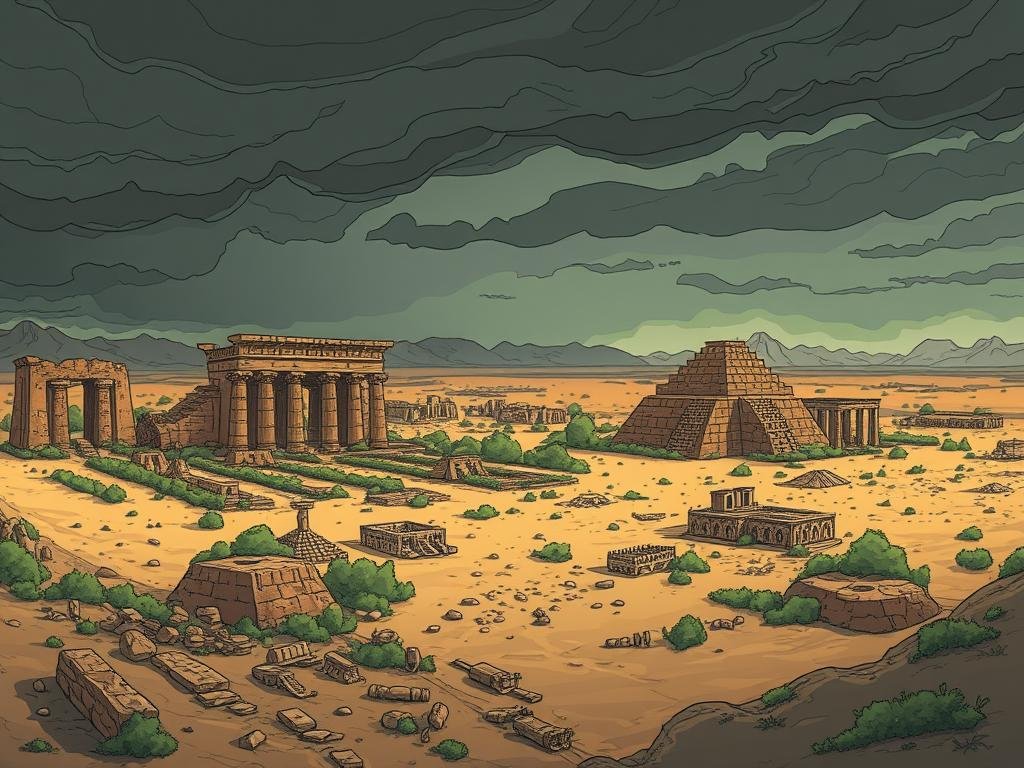
“Empires are complex systems that can be turned upside down quickly by events that exceed the system’s capacity.”
– Niall Ferguson
Legacy and Historical Significance
Nebuchadnezzar's reign was a milestone in the history of the Ancient Near East. He led the Neo-Babylonian Empire at its peak. It transformed the city of Babylon in a stunning cultural and architectural hub.
His achievements, such as the the destruction of Jerusalem, had a major impact. This changed Jewish history forever.
Nebuchadnezzar is portrayed in the Bible as an instrument of God. He punished nations for their disobedience. His historical legacy He is still remembered today as one of the greatest Babylonian kings.
He left behind an incredible legacy. His Neo-Babylonian Empire and Ancient Babylon They are wonderful. Their achievements and architectural projects still fascinate many people.
FAQ
Who was Nebuchadnezzar II?
Nebuchadnezzar II was the second king of the Neo-Babylonian Empire. He reigned from 605 to 562 B.C. His reign is marked by conquests in the Levant and construction projects in Babylon. He is also significant in Jewish history.
He led the team to victory in the Kingdom of Judah. This led to the destruction of Jerusalem and Babylonian Captivity.
How significant was Nebuchadnezzar's reign in the history of the Ancient Near East?
Nebuchadnezzar's reign was a major milestone. He led the Neo-Babylonian Empire to its zenith. He transformed Babylon into an impressive cultural and architectural center.
His conquests, such as the destruction of Jerusalem, had a major impact. This changed Jewish history forever.
How is Nebuchadnezzar portrayed in the Bible?
The Bible views Nebuchadnezzar as an instrument of God. He punished the nations, including Judah. He is portrayed as a ruthless ruler, but he also acknowledged God’s sovereignty.
What were Nebuchadnezzar’s main prophetic dreams?
Nebuchadnezzar had two prophetic dreams. The first was of a large statue, symbolizing the rise and fall of empires. The second was of a tree being cut down, which Daniel interpreted as a warning of the king’s madness.
What were Nebuchadnezzar's main achievements as a builder?
Nebuchadnezzar is famous for his architectural achievements. He transformed Babylon into an imposing city. He rebuilt and embellished temples, including the Esagila and the Etemenanki.
His most famous works are the Hanging Gardens of Babylon. They were one of the Seven Wonders of the Ancient World.
What was Nebuchadnezzar's relationship with Daniel and his companions like?
Daniel and his friends Shadrach, Mesaque e Abede-Nego They were the king's advisors. They impressed Nebuchadnezzar with their wisdom. Daniel was the only one who could interpret the king's dreams.
Were there periods of decline during Nebuchadnezzar's reign?
Yes, Nebuchadnezzar's reign had moments of decline. Its early decades were not marked by any major achievements. This led some to begin doubting Babylon's power.
This situation worsened with the king's rebellion Zedekiah. This led to a new Babylonian invasion and the destruction of Jerusalem.
Source links
- All about the New Testament
- What is the Bible?
- Who Was Nebuchadnezzar? Meet the King of Babylon
- Biography of Nebuchadnezzar II – eBiography
- Who was Nebuchadnezzar (the most powerful king of Babylon)?
- Introduction to the Book of Daniel
- Bible Gateway passage: Daniel 2 – New International Version
- Babylonian Civilization – History of the Babylonian Civilization – World History
- Who Was Nebuchadnezzar II? – Theology