
Have you ever felt a little lost when opening the Holy Scriptures and trying to connect those ancient stories to your own reality? Understanding the context of each book is the first step toward a more mature and conscious faith.
In this comprehensive guide, we've put together a simple step-by-step process to help you understand Everything About the New Testament, allowing this message of hope to profoundly transform your heart starting today.
What Is the New Testament and Why Is It Important?
The New Testament is the second major part of the Christian Holy Bible, containing texts written after the birth of Jesus. It represents the establishment of God’s new covenant with humanity, based on sacrifice, love, and divine grace.
In our daily studies, we have observed in practice that many people find it difficult to understand the transition between the two parts of the Bible. While the first covenant focused on the Law given to Moses, the New Testament reveals the fulfillment of that promise in the person of the Messiah.
The significance of these texts lies in their revelation that salvation is accessible to all peoples, regardless of culture or origin. It is through them that we understand the Creator’s will for the contemporary church.
“I am the way, the truth, and the life; no one comes to the Father except through me.” — John 14:6
To delve deeper into this reading, understanding everything about the New Testament requires looking at the context in which the early Christian communities lived and how they kept their faith alive.
All About the New Testament and Its Structure
The sacred texts are organized according to a very clear thematic structure, which makes learning easier throughout their bible study People. Understanding this structure helps us place each message in its historical context.
Below, we've put together a simple table that perfectly summarizes the structure of the 27 books that make up this will, helping you easily find your way around while reading it on your cell phone.
| Book Category | Number of Books | Key Examples |
|---|---|---|
| Gospels | 4 books | Matthew, Mark, Luke, and John |
| History | 1 book | Atos of the Apostles |
| Pauline Epistles | 13 books | Romans, Corinthians, Galatians |
| General Letters | 8 books | Hebrews, James, Peter, John, Jude |
| Prophecy | 1 book | Apocalypse |
Many people ask us about the best order in which to read these sections of text. As we explored everything about the New Testament, we realized that starting with the Gospels makes our understanding of the letters much richer.
This didactic division helps us understand that divine revelation occurred in a progressive and organized manner throughout human history, preparing the early church to spread the gospel throughout the world.
Each of these sections plays a specific role in the formation of Christian character, offering practical advice on how to live in community and how to keep hope alive.
Who were the authors of the sacred books?
The passages we read today were written by different men inspired by God, each of whom brought his own cultural background, profession, and personality to the biblical writings.
Identifying the authors helps us understand the perspective of each narrative, such as the meticulous eye of the physician Luke or the practical outlook of the apostle Matthew, who was a tax collector.
The Apostle Paul played a key role by writing essential doctrinal letters. For those who wish to delve deeper, it is worth reading about the doctrine of salvation as he described it.
The fact that these manuscripts were written by human authors does not negate God’s sovereignty, for theology teaches us that the Holy Spirit guided every written word to preserve the integrity of the message.
When we study the New Testament in depth, we discover that ordinary men like Peter and John were transformed by the power of the gospel, becoming eyewitnesses to the ministry of Jesus Christ.



Jesus' Central Message in the Gospels
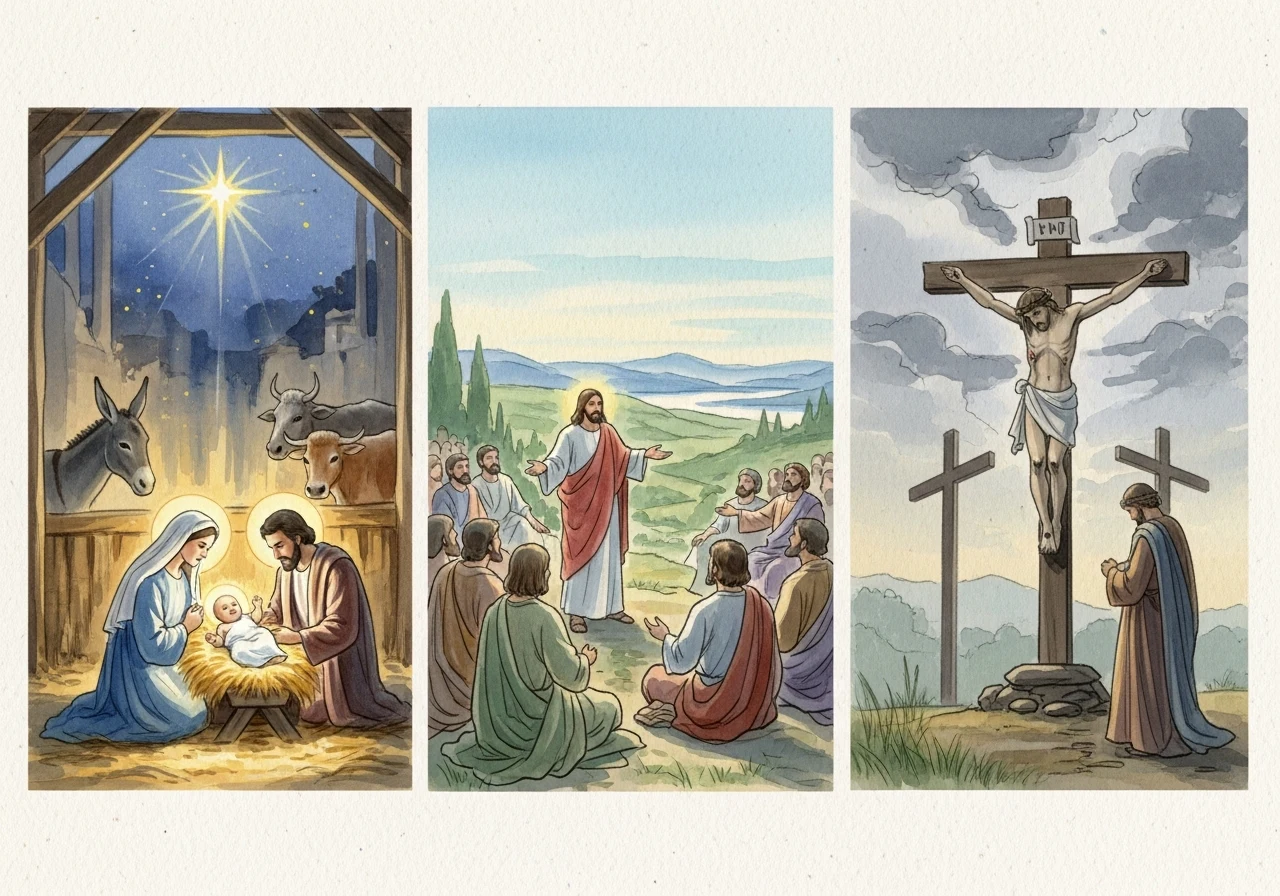
The first four historical accounts present the Savior’s earthly life from different perspectives, focusing on his coming to reconcile humanity with the Creator.
Matthew presents Christ as the King promised to the Jews; Mark highlights him as the Suffering Servant; Luke emphasizes his humanity and compassion; and John focuses on his divinity as the Son of God.
The central theme of these writings is the crucifixion and the resurrection, events that sealed the victory over death and paved the way to eternal life.
To truly understand everything about the New Testament, we need to realize that the message of the Gospels is not merely a passive historical account, but an active call to repentance.
As they read these books, readers are confronted with the Father’s unconditional love and challenged to live out a practical faith grounded in love for their neighbor and the justice of the Kingdom.
How Paul's Letters Strengthen Our Faith
The epistles of the Apostle Paul were written to address real concerns of churches that were facing persecution, internal divisions, and complex theological questions.
In our analyses of the Pauline texts, we have observed in practice that the counsel given to communities in antiquity applies perfectly to our modern struggles, such as anxiety and the search for peace.
Many of these letters explain how the sacrifice on the cross has set us free from the condemnation of the law, bringing us spiritual comfort and assurance about our identity as God’s beloved children.
Reading these messages strengthens the bible study daily, providing practical tools for overcoming temptations and maintaining healthy relationships within the family and in society.
To fully explore the New Testament, we must understand Paul’s passion for preaching grace, which inspires us to persevere even in the face of the greatest difficulties.
Practical Tips to Start Reading Today
Taking the first step in reading the Scriptures may seem challenging at first, but with the right approach, this daily practice will become your favorite part of the day.
To help you understand these messages in a lighthearted way, we’ve put together some practical guidelines that will transform your spiritual routine starting right now:
- Start with João: This Gospel presents the Creator's love in an intimate and profound way, facilitating an initial connection with the teachings of Jesus Christ.
- Use simple translations: Editions with updated language make it easier to understand older terms, making for a much smoother and more enjoyable read.
- Take notes: Keeping a notebook to jot down your questions and what you've learned helps you retain the material in your mind for the long term.
- Take your time reading this: It's more important to reflect on a few chapters than to read entire chapters quickly verses, seeking to apply the message to your daily routine.
In addition to these tips, understanding how to study the Bible It involves cultivating a habit of consistency by setting aside a quiet moment in your day to devote yourself exclusively to the Word.
As you explore everything about the New Testament, you'll find that every minute you spend reading it brings you greater peace of mind and clarity for making important life decisions.
If you're curious about other intriguing biblical stories from the beginning of time, you might enjoy reading this article about the Biblical giants who inhabited the earth in ancient times.
Join our prayer chain now
We believe that the Word of God becomes even more powerful when we share our experiences and pray for one another in unity and brotherly fellowship.
If you’d like to receive the strength to apply these teachings to your life or need a divine answer, please write your first name in the comments so we can pray for you.
Don't keep this message of hope to yourself. Send the link to this article via WhatsApp to a loved one—a family member or friend—who needs a breath of faith and spiritual guidance today.
Deepen your study of the Holy Word
Learn about Everything About the New Testament It is the beginning of a wonderful journey of intimacy with the Creator, one that can renew your strength and bring peace to your home every day.
If you want to continue nourishing your spirit with transformative teachings, we invite you to explore more exclusive content and daily reflections here at Bible Phrases Channel, continually strengthening their faith.
Frequently Asked Questions About Everything Related to the New Testament
How can I learn everything about the New Testament and the structure of its books?
To understand this sacred collection, you should study its didactic division into 27 books. They are organized into five main categories: the four Gospels, one historical book (Acts), 13 Pauline Epistles, eight General Epistles, and one book of prophecy (Revelation).
Where should I start reading to better absorb the teachings?
The best way to get started is by reading the four Gospels (Matthew, Mark, Luke, and John). Beginning with this section makes it easier to understand the apostolic letters later on, as it lays the foundation for understanding the life, miracles, and sacrifice of Jesus Christ.
What is the main benefit of understanding the New Covenant described in these texts?
The greatest benefit is understanding that salvation is now accessible to all peoples through divine grace. Unlike the first covenant, which focused on the Law of Moses, the New Testament reveals direct reconciliation with God through the sacrifice of Jesus.
Is the New Testament just a repetition of the laws of the Old Testament?
No, that is a common myth. The New Testament does not repeat the ancient laws, but presents the perfect fulfillment of the messianic promises and establishes a new covenant of love, faith, and grace, transcending the rigidity of the old Mosaic law.
What is the difference between the Gospels and the Epistles in the Bible?
The Gospels provide a historical account of the life, teachings, and resurrection of Jesus Christ. The Epistles (Pauline and General), on the other hand, are pastoral letters that offer practical and theological advice for strengthening the faith and organizing the early Christian communities.