Trends in Religion: Have you ever stopped to think about how spiritual practices are changing over time?
The world is constantly movement, and the expressions of faith They are not left out of this evolution.
According to the Pew Research Center, religious pluralism has taken on new forms, especially with advances in technology and changes in society.
Today, more than ever, it is essential to reflect on what the future set aside for faith communities.
How experience How do personal and collective influences shape this journey? And how is the interplay between tradition and modernity shaping new forms of spirituality?
In this article, you'll discover how these changes are impacting not only religious practices, but also the way we connect with one another.
Follow this discussion and learn why understanding these changes is essential to interpreting the global and national landscape.
Historical and Current Context of Faith Communities
The relationship between spirituality and society has always been dynamic and full of nuances. Over the centuries, faith communities have adapted to new contexts, embracing innovations and resisting change.
This process reflects not only the evolution of religious thought, but also the impact of social changes.
The Evolution of Religious Thought
Figures such as Feuerbach, Marx, and Freud offered profound reflections on faith and religion.
Feuerbach, for example, viewed religion as a projection of human needs. Marx interpreted it as a mechanism of social control. Freud, on the other hand, understood it as an expression of the unconscious.
O Council Vatican City II, which took place in the 1960s, was a milestone in the history of the Catholic Church.
He promoted significant reforms, such as the emphasis on liturgy in local languages and dialogue with other religions. This period redefined the interpretation of faith and its practice in the modern world.
Impact of Social Changes
Social changes have always influenced religious practices. Modernity has raised questions about traditions, while postmodernity has paved the way for new forms of spirituality.
Today, we are seeing a trend toward more personal and less institutionalized experiences.
One example of this is the rise of practices such as meditation and yoga, which transcend religious boundaries.
These activities reflect a search for balance and connection in an increasingly fast-paced world.
| A Historic Moment | Impact on Religious Practices |
|---|---|
| Second Vatican Council (1962–1965) | Liturgical Reforms and Interreligious Dialogue |
| Industrial Revolution (19th century) | Questioning traditions and the emergence of new movements |
| Globalization (20th–21st Centuries) | Diversification and Hybridization of Spiritual Practices |
Understanding this trajectory is essential for analyzing the current situation. History shows us that religion is not static, but rather a reflection of changes in life and in society.

The Religious Landscape in Brazil
Brazil is a country characterized by a rich religious diversity that reflects its history and culture.
According to the IBGE's 2010 Census, this diversity is evident, with a percentage decline in the Catholic population and a growth a significant portion of evangelical churches, especially Pentecostal and Neo-Pentecostal ones.
This transformation is not limited to just the numbers. It reflects profound changes in the community and in the way people live out their faith.
Migration between religious traditions is a phenomenon that has drawn the attention of experts.
Diversification of Religious Practices and Institutions
Today, Brazil is a clear example of how religious practices can diversify. In addition to Catholicism and Protestantism, there is a growing space for other forms of worship, such as Afro-Brazilian religions and Spiritism.
This diversity reflects the population and their search for more personal spiritual experiences.
Religious institutions have also been adapting to this new reality. Many traditional churches are reevaluating their practices to better connect with their congregations.
At the same time, new churches are emerging, offering innovative approaches and attracting a diverse audience.
Growth of Pentecostal and Neo-Pentecostal Churches
O growth The Pentecostal and Neo-Pentecostal churches are one of the most striking phenomena in the Brazilian religious landscape.
According to data from the IBGE, these denominations account for a significant portion of the population Evangelical in the country.
These churches are known for their charismatic approach and their emphasis on intense spiritual experiences.
They have been able to attract congregants from different backgrounds, offering a sense of community and a sense of belonging that resonates with many people.
This phenomenon not only reshapes the religious landscape, but also influences culture and society.
The new churches are shaping the way faith is lived and expressed in Brazil, reflecting the changes currently taking place in the country.
Religious Trends: Global Perspectives
The distribution of religions around the globe is constantly changing. Recent studies, such as those by the Pew Research Center, show that the balance among the major religious groups is shifting significantly.
Projections for 2050 and 2070 indicate that the Christianity and Islam will be the two largest religious traditions, with growth rates that reflect migration and demographic patterns.
According to these studies, the world There will be a decline in the percentage of Christians, especially in Europe and North America.
Meanwhile, Islam will grow rapidly, driven by higher birth rates in Muslim-majority countries. This scenario suggests a global realignment of spiritual practices.
“The future of religions will be marked by ever-increasing diversity, with different groups coexisting and influencing one another.”
In addition, international migration plays a crucial role in this transformation. People who move to new countries bring their religious traditions with them, contributing to cultural and spiritual diversity.
This phenomenon is particularly evident in regions such as Europe, where Islam is becoming more visible.
To better understand these changes, it is essential to analyze demographic data. The table below shows the projections for the major religious groups through 2050:
| Religious Group | Growth Rate (2020–2050) |
|---|---|
| Christianity | +34% |
| Islam | +70% |
| Hinduism | +27% |
| Buddhism | +10% |
These figures highlight how the world It is becoming more diverse in terms of religion.
O Christianity, although it remains the largest group, faces challenges in maintaining its growth rate. On the other hand, Islam is growing rapidly, especially in Africa and Asia.
Reflecting on these trends is essential to understanding the future of spiritual practices.
Interaction among different religious groups will shape not only faith, but also culture and global society.
Keeping track of these studies and projections helps us understand how the world is changing.




The Pandemic's Impact on the Expression of Faith
The COVID-19 pandemic has brought about profound changes in religious practices around the world.
From a time On the other hand, faith communities have had to adapt to a new reality, in which social distancing has become essential.
This challenging period has accelerated changes that were already underway, such as the shift to virtual worship services and the search for new forms of spiritual connection.
Adapting to Virtual Worship
Due to social distancing measures, many churches and temples closed their doors, but they did not stop their activities.
The shift to online services was an immediate and necessary response. During the year In 2020, platforms such as Zoom, YouTube, and Facebook became sacred spaces for millions of Christians.
Religious leaders reported that, despite the technical challenges, the experience was enriching.
“It was an opportunity to reach people who would never set foot in a church,” a pastor shared.
This adjustment allowed the faithful to keep their meetings of faith, even from a distance.
Changes in the Behavior of the Faithful
The pandemic has also changed the behavior of individuals with regard to spirituality.
Many have turned to more personal and less institutionalized practices. Meditation, prayer at home, and individual Bible study have gained prominence.
In addition, the health crisis has underscored the importance of community. Even online, people came together to support one another, sharing hope and faith.
“Each day ”It was a new opportunity for us to reinvent ourselves," said one parishioner.
“The pandemic has shown us that faith does not depend on a physical place, but on the connection between people.”
These changes were not merely temporary. Many churches continue to offer online options, recognizing that this flexibility meets the needs of a world that is increasingly time more digital.
The pandemic, despite its challenges, has paved the way for a new era in the expression of faith.
Technology and New Forms of Worship
Technology is revolutionizing the way faith communities connect and practice their spirituality.
Today, the medium Digital technology has become an essential tool for maintaining religious rituals, even during times of physical distancing.
This transformation not only preserves traditions, but also paves the way for new ones forms of spiritual expression.
Digitization of Religious Rituals
The digitization of religious rituals has inspired significant innovations. Institutions such as the Sibra They were already streaming services online before the pandemic, but this trend has gained momentum worldwide.
Nowadays, it’s common to see ceremonies being held on platforms like Zoom and YouTube, allowing worshippers to participate from anywhere city or country.
This adaptation is not limited to worship services alone. Rituals such as baptisms, weddings, and even confessions are being held virtually.
This change shows how technology can be an ally in maintaining one's faith, even in challenging times.
Use of Social Media and Digital Platforms
Social media is also playing a crucial role in the spread of spirituality.
Platforms such as Instagram and TikTok are used by religious leaders to share messages of faith and engage with their followers.
In United States, for example, religious influencers amass thousands of followers, creating a new shape of spiritual connection.
In addition, churches and temples are using these platforms to organize events and promote campaigns.
This digital interaction allows the institutions religious organizations reach a wider audience, including young people and people in remote areas.
“Technology does not replace faith, but it expands the possibilities for living it in a more inclusive and accessible way.”
To better understand the impact of these changes, take a look at the table below, which summarizes the main platforms and their uses in a religious context:
| Platform | Use in a Religious Context |
|---|---|
| Zoom | Broadcasts of worship services and meetings |
| YouTube | Storing and Sharing Ceremonies |
| Engagement and dissemination of messages | |
| TikTok | Short, interactive content about faith |
This new digital era is transforming not only the institutions, but also the personal experience of each member of the faithful. Technology, when used properly, can strengthen faith and bring communities closer together, regardless of their location.

Demographic Changes and Projections for the Future
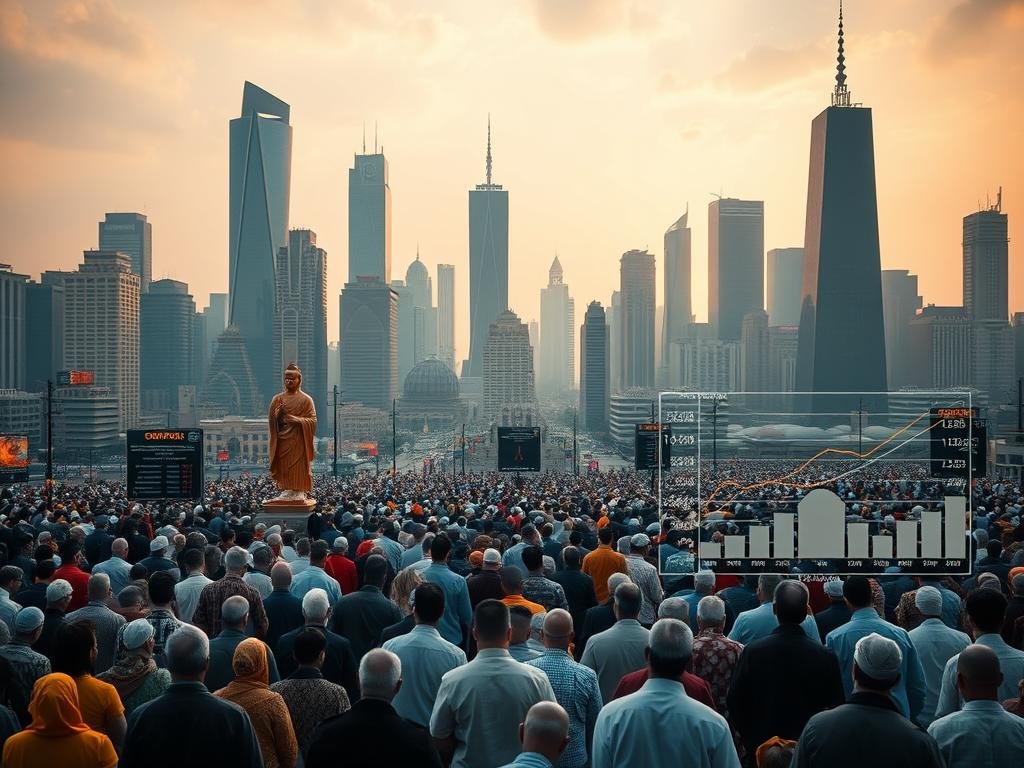
Demographic shifts are shaping the future of spiritual practices. According to studies by the Pew Research Center, the global religious landscape will undergo significant changes in the coming decades.
These projections reflect not only population growth but also migration and changes in birth rates.
Population Trends and Religious Projections
By 2050, the Christianity and Islam will continue to be the two largest religious traditions.
However, Islam will grow more rapidly, driven by higher birth rates in Muslim-majority countries. Meanwhile, the percentage of Christians will decline, especially in Europe and North America.
Other religions, such as Hinduism and Buddhism, will also see changes. Hinduism will maintain its global share, while Buddhism will see a percentage decrease.
These trends highlight how the religious landscape is changing in different regions.
Challenges and Opportunities for Communities
These changes present both challenges and opportunities. For Christian communities, the decline in percentage may require new engagement strategies.
As for Islam, rapid growth could lead to greater cultural and political influence.
In addition, international migration is diversifying religious practices in many countries. Communities that adapt to this new reality can find new ways to connect and grow.
“The future of religions will be marked by ever-increasing diversity, with different groups coexisting and influencing one another.”
To better understand these changes, take a look at the table below, which shows the projections for 2050:
| Religious Group | Growth Rate (2020–2050) |
|---|---|
| Christianity | +34% |
| Islam | +70% |
| Hinduism | +27% |
| Buddhism | +10% |
These figures show how the world is becoming more religiously diverse.
Keeping up with these trends is essential to understanding the future of spiritual practices and their influence on global society.
The Charismatic Renewal and the Reconfiguration of the Church
The Catholic Charismatic Renewal has emerged as a transformative movement within the Catholic Church. Emerging in the post-Vatican II context, it represents an emotional and spiritual response to contemporary demands.
This phenomenon not only revitalizes ancient practices but also introduces new ways of experiencing faith.
Experiences of Prayer and Baptism in the Spirit
At the heart of the Charismatic Renewal are the experiences of prayer and baptism in the Spirit.
These practices have a profound effect on the lives of faithful, fostering a more intimate connection with the divine.
Many report a personal transformation, feeling renewed and strengthened on their spiritual journey.
Baptism in the Spirit is seen as a moment of profound grace, in which the individual experiences a new outpouring of the Holy Spirit.
This experience, often accompanied by gifts such as glossolalia, strengthens the faith and sense of community among the participants.
Expansion and Social Impact
The Charismatic Renewal is not limited to the spiritual realm; it also has a significant social impact.
Around the world, Catholic communities have been revitalized thanks to this movement.
In Brazil, for example, the Charismatic Renewal is one of the most significant expressions of the catholicism contemporary.
This phenomenon has attracted a growing number of lay, priestly, and religious vocations.
In addition, the Charismatic Renewal has been promoting greater participation by faithful in the life of Catholic Church, strengthening the community and the mission of evangelization.
“The Charismatic Renewal is a living response to the challenges of our time, uniting tradition and innovation in the living out of the faith.”
To better understand how the Charismatic Renewal is reshaping the Catholic Church, it is essential to analyze your history and its impact on society.
This movement not only preserves the tradition, but it also paves the way for new forms of spiritual expression, adapting to the needs of the faithful in the modern world.
If you want to deepen your understanding of reconfiguring the catholicism In Brazil, check this out detailed study which explores the evolution of the Catholic Church and its various manifestations.
Dialogue Between Science and Religion
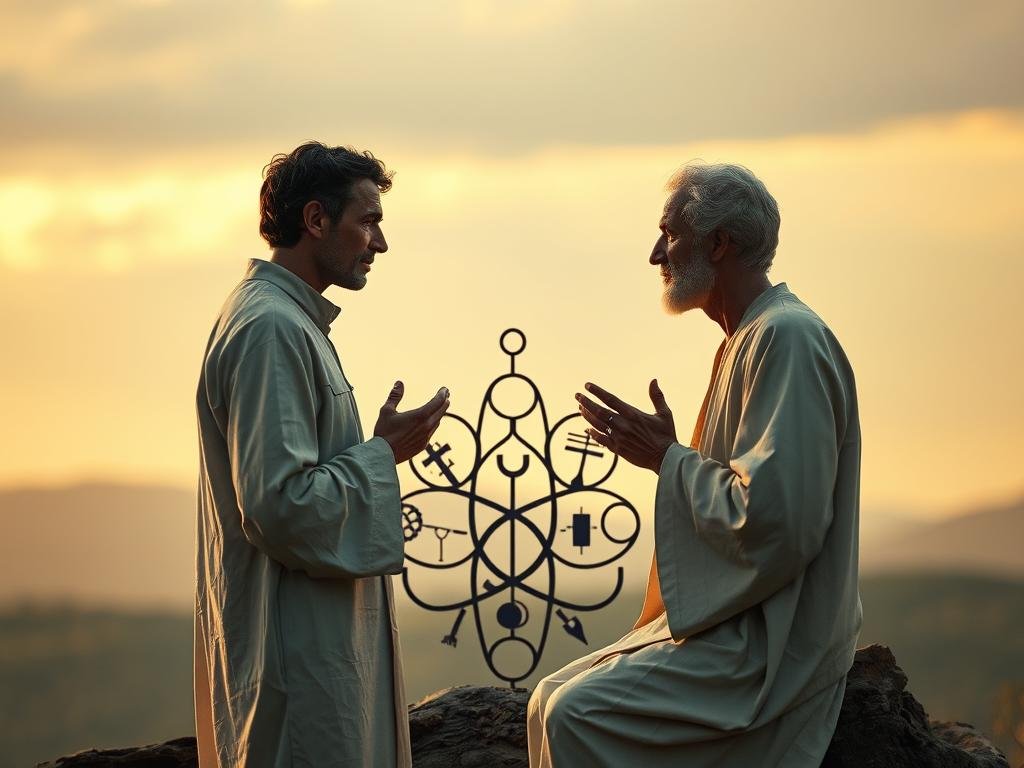
The dialogue between science and religion has been a topic of reflection throughout history. These two fields, which seek to understand the reality, they often clash, but they also complement each other.
From the time of Galileo, when science was accused of heresy, to modern debates about evolution and creation, the problem The relationship between faith and reason remains relevant.
Historical Conflicts and Modern Reflections
One of the examples One of the most notable episodes of this conflict was the case of Galileo, who defended the heliocentric theory and was condemned by the Church.
This episode illustrates how the nature Human nature can resist changes that challenge deeply held beliefs. Today, however, many religious leaders and scientists are seeking a more constructive dialogue.
In the Jewish context, because example, a pragmatic approach to science has allowed for harmonious coexistence.
Jewish tradition values knowledge and the pursuit of truth, which facilitates the integration of faith and science.
Integrating Perspectives for the Future
Looking ahead, it is essential to recognize that science and religion address different questions. While science explores “it,” religion focuses on “You.”.
This duality can be a driving force for a broader understanding of the reality.
In addition, dialogue between these fields can help address global challenges, such as the preservation of nature and the quest for a more just world.
The integration of scientific and religious perspectives can offer innovative solutions for the problems current.
“Dialogue between science and religion is not only possible but necessary for a deeper understanding of the world.”
The table below summarizes the main points of overlap between science and religion:
| Area | The Contribution of Science | The Contribution of Religion |
|---|---|---|
| Cosmology | Study of the universe and its origins | Reflection on the Purpose of Creation |
| Ethics | Analysis of the Consequences of Actions | Moral and Spiritual Guidance |
| Human Nature | Understanding Behavior and Biology | An Exploration of the Soul and the Meaning of Life |
This integration does not eliminate the differences, but it shows how both fields can benefit from each other. The future depends on our ability to reconcile reason and faith in the pursuit of a reality more comprehensive.

The Influence of the Media on Spirituality and Religious Movements
Digital communication is redefining the way in which people experience their spirituality.
Today, social media and online platforms have become essential tools for streaming church services and connecting with congregants.
This transformation not only brings the people, but it also creates new forms of religious expression.
Digital Communication and Live Streaming of Church Services
Live streaming of religious services is a clear example of how technology is revolutionizing the religious experience.
Platforms like YouTube and Zoom allow anyone to person Take part in ceremonies, regardless of your location.
During the pandemic, this practice became a part an essential part of the spiritual life of many of the faithful.
In addition, the digitization of religious rituals has paved the way for innovations. Baptisms, weddings, and even confessions are now being conducted virtually.
This adaptation shows how technology can strengthen faith, even in challenging times.
The Impact of Social Media on the Religious Experience
Social media is also transforming the way in which people live out their spirituality.
Platforms such as Instagram and TikTok are used by religious leaders to share messages of faith and engage with their followers.
These tools allow the people connect in a more personal and meaningful way.
In addition, social media helps build virtual faith communities. Facebook groups, for example, bring believers together for group prayers and Bible studies.
This digital interaction is a part an important aspect of the modern religious experience.
“Digital media do not replace faith, but they expand the possibilities for living it in a more inclusive and accessible way.”
To better understand the impact of the media on spirituality, take a look at the table below:
| Platform | Use in a Religious Context |
|---|---|
| YouTube | Broadcasts of religious services and ceremonies |
| Message Sharing and Engagement | |
| Prayer groups and Bible study groups | |
| Zoom | Virtual meetings and gatherings |
The adaptation of religious institutions to digital tools is essential for the future of spirituality. By embracing these changes, faith communities can continue to inspire and connect people all over the world.
Conclusion
The future of faith communities is being shaped by profound and innovative changes.
Throughout this article, we explore how spirituality adapts to new contexts, from the influence of technology to demographic changes.
Each person It plays a key role in this evolution, helping to foster a more inclusive and meaningful religious experience.
It is essential to understand that these changes affect not only institutions, but also the lives of each person.
The search for a more personal and authentic connection reflects the need for balance in a world that is constantly changing.
When doing part Through this journey, you can help build a more harmonious and connected future.
Staying informed and active in the dynamics of the religious movements It's a powerful way to positively influence your community.
Spirituality is, above all, a collective experience that is strengthened by the participation of each person. For more thoughts on this topic, check out our privacy policy.
The invitation has been extended: please part of this transformation and discover how your spiritual journey can impact the world around you. The future of faith is in your hands.
FAQ
How has religious thought evolved over time?
Religious thought has undergone significant changes, adapting to social and cultural transformations. Today, it seeks to strike a balance between tradition and modernity, reflecting the spiritual needs of new generations.
What is the current religious landscape in Brazil?
Brazil is experiencing a diversification of religious practices and institutions, particularly marked by the growth of Pentecostal and Neo-Pentecostal churches, which attract followers with dynamic and engaging approaches.
How has the pandemic affected the expression of faith?
The pandemic has accelerated the shift to virtual worship, transforming the behavior of the faithful. Many have begun seeking religious experiences online, redefining the way they connect with their spirituality.
How is technology influencing religious worship?
Technology is digitizing religious rituals and expanding the use of social media and digital platforms. This allows faith communities to reach a wider audience and stay connected with their members.
What are the projections for the future of religious communities?
Demographic changes and population trends present both challenges and opportunities for communities. They will need to adapt to remain relevant in a constantly changing world.
What is the Charismatic Renewal, and how does it impact the church?
The Charismatic Renewal emphasizes experiences of prayer and baptism in the Spirit, reshaping the church and expanding its social impact. It attracts believers who are seeking a deeper connection with spirituality.
How can science and religion engage in dialogue in the future?
The dialogue between science and religion involves overcoming historical conflicts and integrating modern perspectives. This integration can pave the way for broader and more collaborative reflections.
What is the role of the media in contemporary spirituality?
Digital media is transforming spirituality, making it easier to stream religious services and expanding the impact of social media on the religious experience. It helps connect people and faith communities.