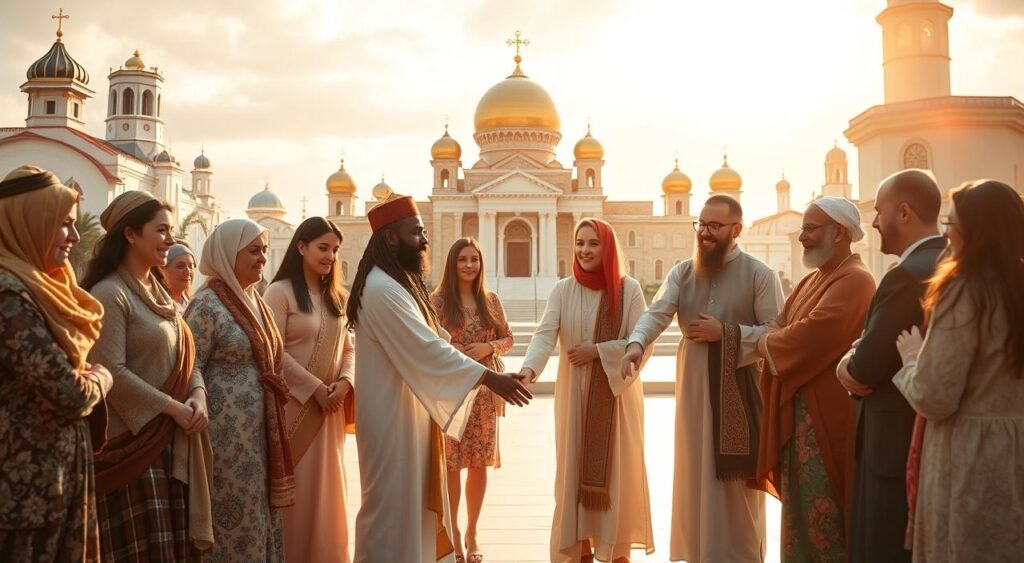
Religious ToleranceHave you ever imagined what the world would be like if everyone could express their beliefs without fear of judgment? In a country as diverse as Brazil, living with different ways of looking at life isn't just necessary - it's an asset that defines us.
Respecting diversity of thought is one of the pillars of freedom individual. When we value everyone's right to follow their faith, we create a more just and united society.
This does not mean abandoning your convictions, but understanding that the other also deserves space to be who they are.
Historically, thinkers such as Voltaire have argued that true equality arises from dialog between different visions.
Today, this principle is directly linked to human rights, It also ensures that no one is discriminated against because of their spiritual choices.
Did you know that, according to research, communities that practice respect for religious differences have lower rates of social conflict? This shows how small attitudes of acceptance can transform realities.
Throughout this article, you'll discover how to cultivate this value on a daily basis and why it's essential for collective harmony. Let's explore ways to build a future where all voices are heard.
Contextualizing Religious Diversity in Brazil
Imagine a country where more than 30 spiritual groups coexist - this is the Brazilian reality. From indigenous traditions to African matrices, each belief is part of the national identity. But how is this mixture kept in balance?
Cultural richness and plurality of beliefs
June festivals with Catholic syncretism, yards Umbanda and Spiritist centers side by side: this is the face of Brazil. According to Pew Research Center, 57% of Brazilians consider the variety of spiritual practices to be a positive factor for society.
| Religious Group | % Population | Cases of Intolerance (2023) |
|---|---|---|
| Catholics | 50% | 120 |
| Evangelicals | 31% | 85 |
| Afro-Brazilian religions | 2% | 310 |
Current challenges in religious coexistence
Figures from the Ministry of Women, Family and Human Rights reveal that every 15 hours, there is a report of a crime against women. discrimination based on belief. Terreiro communities and followers of minority religions are the most affected.
But there is hope! Projects such as interfaith dialogues in schools have reduced 40% conflicts in the Northeast. Respect differences It's not just about faith - it's about building a country where everyone fits.
Origins and Concepts: From the Meaning of Tolerance to Intolerance
Did you know that the idea of accepting differences arose centuries ago as a response to violence? In the 18th century, Enlightenment philosophers revolutionized thinking by arguing that living with differences is essential for peace.
It was in this context that Voltaire wrote his famous “Treatise on Tolerance”, questioning persecution based on beliefs.

Historical roots and references to thinkers
The word “tolerance” comes from the Latin tolerate, which means “to endure”. But it was during the Enlightenment that it gained strength as a social value.
Voltaire argued: “What is tolerance? It's the hallmark of humanity”. His ideas inspired laws that today protect the human rights, and ensuring that no one is oppressed for their faith.
Definitions and social implications
Intolerance isn't just about rejecting other beliefs - it's about denying dignity. A UNESCO study shows that 43% of global conflicts are linked to discrimination religious or cultural. In Brazil, as this article, cases of assault on temples have increased by 56% in 5 years.
| Type of Intolerance | Form of Manifestation | Consequences |
|---|---|---|
| Religious | Destruction of symbols sacred | Social exclusion |
| Racial | Offensive comments | Collective trauma |
| Cultural | Banning traditional practices | Loss of identity |
Understanding these concepts helps to identify harmful behavior in everyday life. When you recognize intolerant speech, you are contributing to a world fairer. How about starting by observing how small gestures can make a difference?
Religious Tolerance: Legal Aspects and Human Rights
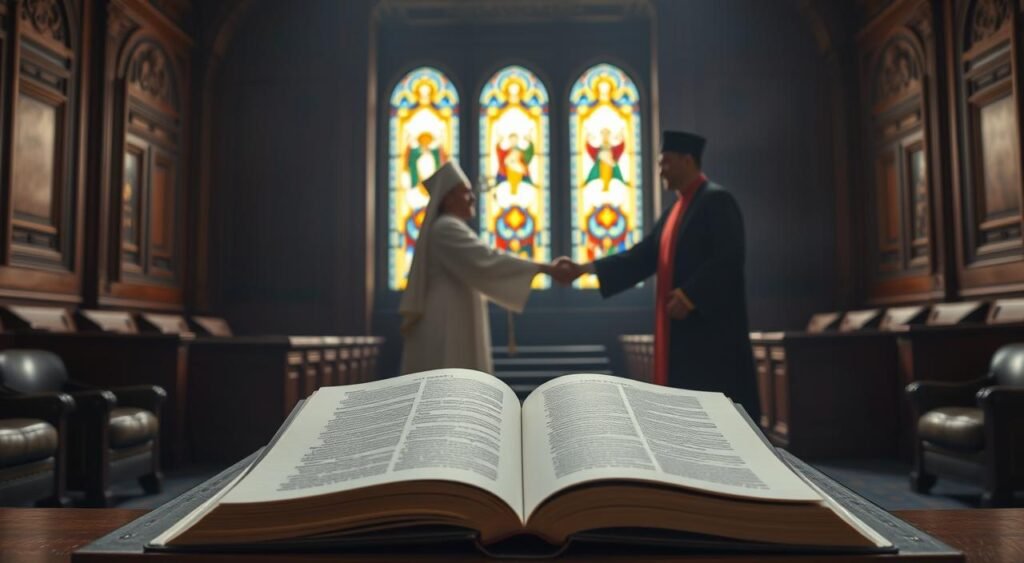
Do you know the laws that defend your freedom of belief? In Brazil, the Constitution is clear: the law The right to profess any faith has been protected since 1988. This includes everything from traditional rituals to modern spiritual practices.
Constitutional protection and Brazilian laws
O Article 5 guarantees that no one will be discriminated against because of their religion. Law 9.459/1997 punishes acts of hostility, such as the destruction of sacred symbols. In 2022, the Public Prosecutor's Office registered 742 complaints of this kind - 60% against terreiros.
International and national data and statistics
One study global reveals: 90 countries have active religious persecution. Christians and Muslims are the most affected. In Brazil, 43% of the victims of prejudice are from religions of African origin.
| Indicator | Brazil | World |
|---|---|---|
| Annual complaints | 1.200+ | 5.5 million |
| Specific laws | 4 | 32 countries |
| Protecting minorities | Article 216a | UN Declaration |
Bodies like the National Human Rights Ombudsman show how to record violations. Their rights are worth as much as the next person's - knowing the law is the first step in defending them.
Impacts of Intolerance and Ways to Combat It
In 2021, an attack on a terreiro in Rio de Janeiro shocked the country and revealed alarming patterns. In Lebanon, the bombing of a church in 2023 left deep scars on the local community.
These episodes show how violence linked to discrimination generates exclusion and fear. Data from the Brazilian government indicates that complaints have grown 65% in the last 5 years. years.

Case studies and practical episodes
In the case of the Rio terreiro, the community came together to rebuild the space and created a program of dialogue with schools.
Already in Lebanon, Christians and Muslims began joint reconstruction projects, becoming a symbol of resistance. These actions prove that combat starts with concrete gestures.
| Location | Incident | Social Impact |
|---|---|---|
| Rio de Janeiro | Trespassing in the yard | 300 people helped by psychological support |
| Lebanon | Attack on the church | Interfaith alliances strengthened |
| Bahia | Prohibition of public ritual | Legal mobilization guaranteed rights |
Initiatives that have worked:
- Conversation circles in basic health units
- Educational campaigns on social media
- Hotline specialized in human rights
You can contribute by reporting cases and supporting local projects. O exercise of active citizenship is the key to a future with more respect. How about starting by sharing overcoming stories in your community?
The Importance of Education and Culture in Promoting Respect
Schools are living laboratories where children learn more than math and Portuguese. There, values such as empathy and understanding shape future citizens.
A UNESCO study reveals: students exposed to diversity content are 74% more likely to reject it prejudices in adulthood.
The role of educational institutions
High schools in Rio Grande do Sul have already adopted elective courses on the history of religions. In these classes, students compare indigenous rites, Catholic festivals and Buddhist ceremonies.
This shape education broadens horizons and breaks down stereotypes from an early age.
| Educational Project | Location | Impact |
|---|---|---|
| Intergenerational Dialogues | São Paulo | 45% less religious bullying |
| Spiritual Nations Fair | Bahia | 80 participating schools |
| Sacred Art Workshops | Minas Gerais | 2.000 young people sensitized |
Cultural and artistic initiatives that value diversity
The Museum of Culture The Black Museum in Pernambuco receives 15,000 visitors a year. Its exhibitions show how African traditions have influenced the country. The “Somos Muitos” festival, in Pará, brings together sacred music of different origins in concerts that fill squares.
These actions prove that when art addresses the nature plural of beliefs, it becomes a bridge between worlds. Have you ever been to an event that celebrates this richness? Your presence makes a difference!
Practical Strategies for Cultivating Respectful Coexistence
Joining forces can be the key to transforming realities. When public policies and local actions complement each other, we create networks of protection against discrimination. Here's how you can do it part of this change.
Community action and public policies to combat intolerance
O State plays a crucial role: in 2023, cities with interfaith committees reduced conflicts by 38%. One example is Dialogic Bridges Program in Rio, which trained 1,200 leaders in crisis mediation.
| Public Policy | Location | Results |
|---|---|---|
| Hotline 0800 | São Paulo | 147 cases solved in 6 months |
| Training for teachers | Salvador | 90 schools with anti-prejudice projects |
| Diversity Patrol | Curitiba | 60% fewer occurrences in temples |
Tips for individual and collective engagement
Your action makes a difference! Start by taking part in cultural events for different groups. Research by UFBA shows that those who attend at least two activities a year are 3x more likely to fight prejudice.
- Use social networks to share stories of justice social
- Take part in clean-up efforts in sacred spaces
- Report cases via the app Human Rights Brazil
As Dona Marta, the project coordinator, says Joining Hands: “When a person acts, it becomes an example. When many act, they become a revolution”. How about being the next to take the first step?
Conclusion: Religious Tolerance
Every gesture of respect is a step towards a more harmonious future. The data shows: fighting intolerance needs to be a global priority. From schools to social networks, we all have a role to play in this journey.
Remember the essentials: the freedom of belief supports the human rights. When we value dialog and education practices - such as projects in health units or digital campaigns - we create shields against discrimination.
You can take action today! Share content that celebrates diversity, take part in cultural events and report aggression.
History teaches us: even big changes start with small attitudes, as the narrative of the love that saves in the midst of challenges.
O world that we want is built through daily choices. How about being the bridge between different visions? Your voice strengthens the social fabric and protects victims of prejudice. Together, we can turn statistics into stories of unity.
FAQ
Q: How does religious diversity manifest itself in Brazil?
A: The country is home to a mixture of indigenous, African, Christian, spiritist and other beliefs, the result of centuries of cultural encounters. This plurality is visible in festivals, rituals and even cuisine, showing how faith is intertwined with national identity.
Q: What laws protect the right to religious freedom in Brazil?
A: The 1988 Constitution guarantees freedom of worship, and laws such as the Racial Equality Statute (2010) combat discrimination. In addition, the Penal Code provides for punishment for acts of hatred or violence motivated by prejudice against religions.
Q: What are the main challenges in combating intolerance?
A: Lack of information, deep-rooted stereotypes and cases of symbolic or physical violence are obstacles. Data from Disque 100 shows that complaints have increased in recent years, especially against followers of African matrices, such as Umbanda and Candomblé.
Q: How can education help promote respect between religions?
A: Schools and universities play a crucial role in teaching the history of beliefs, stimulating dialog and deconstructing myths. Projects such as Law 10.639/2003, which includes Afro-Brazilian culture in the curriculum, are examples of initiatives that value diversity.
Q: What practical actions can I take to combat prejudice?
A: Find out about different faiths, take part in interfaith events and denounce discriminatory acts. Small gestures, such as correcting offensive comments in everyday life, also contribute to creating more welcoming environments.
Q: Are there cultural initiatives that celebrate religious diversity?
A: Yes, festivals like the Lavagem do Bonfim (BA), the Círio de Nazaré (PA) and events like the March for Jesus bring together people of various faiths. Cinema and music also portray this richness, as in the films of Glauber Rocha or the works of Milton Nascimento.