

Who Was Timothy in the Bible?? The young leader whom Paul mentored—Have you ever wondered how a young person can become a leader An inspiration in the face of challenges?
The story of Timothy, in the new testament, is a powerful example of dedication and spiritual growth.
He was one of the closest associates of the apostle Paul, and his journey teaches us valuable lessons about faith and perseverance.
Timothy was born in Lystra to a Jewish mother and a Greek father. From an early age, he was taught the Scriptures by his mother and grandmother, which shaped his faith.
When he met Paul, he became his disciple and fellow missionary, helping to strengthen the church primitive.
The relationship between Paul and Timothy is a model of mentorship and ministerial training. Paul viewed Timothy as a spiritual son, guiding him with wisdom and love.
Her story inspires us to seek out mentors and grow in our faith, even in the face of difficulties.
Who was Timothy in the Bible?
Do you know the story of a young man who grew up in a multicultural environment and became a spiritual leader? His journey begins in Listra, a city in the Roman province of Galatia, where he was born and raised.
The son of a Jewish mother named Eunice and a Greek father, Timothy grew up in a unique environment that shaped his identity and faith.
Timothy's origins in Lystra
Listra was a city with a diverse culture, where Jewish and Greek traditions coexisted. This multicultural environment directly influenced Timothy's life.
Although his father was Greek and a pagan, his mother and his grandmother, Loide, were deeply committed to the Jewish faith. They were responsible for their Jewish education, teaching him the Scriptures from childhood.
His Family and Jewish Upbringing
Eunice and Lois played a decisive role in Timothy’s spiritual formation. They not only imparted to him a knowledge of the Hebrew Scriptures, but also prepared him for the ministry he would later undertake. As Paul said:
“I remember your sincere faith, which first took root in your grandmother Lois and your mother Eunice, and which, I am convinced, also dwells in you.”
This cultural paradox—being Jewish on his mother’s side but not having been circumcised as a child—was a divine preparation for Timothy’s future.
He learned to navigate between different cultures, which was essential to his missionary work.
| Aspect | Details |
|---|---|
| Place of Birth | Listra, a Roman province in Galatia |
| Family | Mother Eunice (Jewish), Grandmother Loide, Greek father |
| Education | Jewish upbringing from childhood |
| Preparation | Mastery of the Scriptures and Cultural Adaptation |
To learn more about Timothy's life and ministry, check out this detailed article.
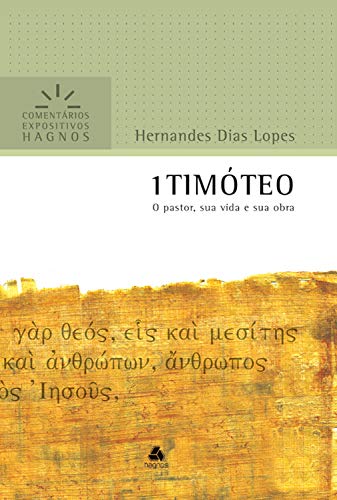
Paul’s First Letter to Timothy is a divine guide that provides direction for pastoral ministry in the face of life’s great struggles and the stresses of ministerial work.
How should a pastor conduct himself in God’s church? How should he deal with the allure of false doctrines? How should he instruct the people regarding their relationship with the authorities? How should one confront false teachers who have fallen away from the faith? What is the role of prayer in the life of the church, and how should its leaders be chosen? What criteria should be followed?
These and other topics are raised by the Apostle Paul and addressed in a normative manner.
The Encounter with Paul and the Missionary Call
Have you ever wondered how a young person could be chosen for such an important mission? During the second mission trip In Paul's circle, he met a young man who stood out for his faith and character.
This young man was from Lystra and had an exemplary reputation among the the brothers from Lystra and Iconium.

Why did Paul choose Timothy?
Paul did not choose Timothy by chance. He saw in him a sincere heart and a deep knowledge of the Scriptures.
In addition, Timothy was respected by the local churches, which would make it easier for him to be accepted as a leader. This choice was strategic in order to strengthen the work of the Gospel.
Circumcision and Its Meaning
One of the most memorable moments was the Timothy's circumcision. Although it was a cultural event, Paul saw it as a way to open doors for ministry among the Jews.
This decision demonstrated how cultural adaptation can be used to advance the Jewish cause without compromising the principles of the faith.
To better understand this context, check out the full report at Acts 16.
Timothy's Ministry
How can a young person make an impact on entire communities through faith and leadership? Timothy’s story shows us that, with dedication and guidance, it is possible to make a difference.
He not only accompanied Paul on his mission trips, but he also played crucial roles in the early church, facing challenges with courage and wisdom.
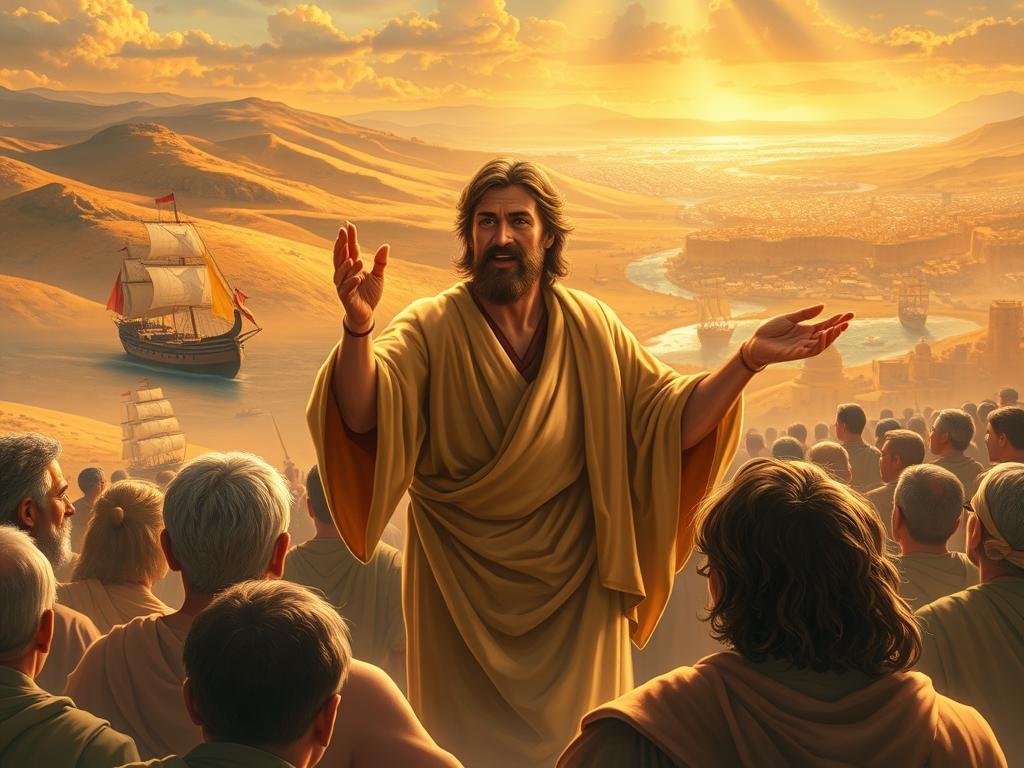
Missionary journeys alongside Paul
Timothy was an indispensable companion to Paul on his journeys through Macedonia, Greece, and Asia Minor.
He helped plant churches in cities such as Lystra and Iconium, bringing the message of the gospel to complex urban settings. His ability to adapt to different cultures was key to the success of these missions.
Leadership in the Early Church
In Ephesus, Timothy took over the leadership of the local church, confronting false teachers and heresies that threatened the faith of Christians.
He was responsible for establishing criteria for church leadership, ensuring that the community would grow in a healthy way and in accordance with the teachings of Christ.
Combating False Doctrines
One of Timothy's greatest challenges was the combats heresies that were appearing inside the church.
He confronted Greek philosophies and the cult of Artemis, steadfastly defending the truth of the gospel. His dedication to protecting the Christian faith is an inspiring example for leaders today.
Through the pastoral letters, Paul guided Timothy in his mission, offering practical and spiritual advice. This divine partnership teaches us the importance of discipleship and authentic leadership.



Timothy and Paul: A Divine Partnership
Have you ever thought about the power of mentorship that transforms lives and builds legacies? The relationship between Paul and Timothy is a striking example of how discipleship can shape leaders and strengthen communities.
Paul saw Timothy as a child in the faith, and that connection was essential to both of their spiritual growth.

Paul's paternal affection
Paul showed deep affection for Timothy, treating him as a spiritual son.
In his letters, he refers to him as a “true son in the faith” (1 Timothy 1:2). This affection was not only emotional but also practical. Paul guided Timothy with wisdom, preparing him for the challenges of ministry.
An example of this is when Paul recalls Timothy’s tears, revealing the depth of their emotional bond. This relationship teaches us the importance of building genuine bonds in discipleship.
Pastoral letters and their advice
The pastoral letters Paul's writings are a treasure trove of guidance for leaders. In them, he offers ministerial councils practical guidelines, such as the requirements for elders and deacons (1 Timothy 3:1–13).
He also urges Timothy to rekindle his spiritual gifts (2 Timothy 1:6), emphasizing the importance of using the talents God has given him.
Furthermore, Paul demonstrates pastoral care by advising Timothy about his health, suggesting the moderate use of wine (1 Timothy 5:23). This balance between doctrinal firmness and personal care serves as a model for leaders today.
The partnership between Paul and Timothy inspires us to seek out mentors who will guide us with love and wisdom. Their legacy is a example of discipleship which continues to have an impact on generations.
Timothy's Distinctive Characteristics
What makes a leader truly inspiring? Timothy’s story shows us that the combination of humility, firm faith e knowledge of the Scriptures It can transform lives and communities.
Not only did he follow Paul's teachings, but he also distinguished himself as a working-class example to everyone around them.
Humility and a willingness to serve
Timothy was known for his humility and a desire to serve. He put the interests of others before his own, as mentioned in Philippians 2:20–21.
This quality made him an admired and respected leader, capable of uniting people around a common purpose.
He wasn't seeking personal recognition, but rather the growth of the community. His dedication to others is an example that continues to inspire leaders today.
Steadfastness in the faith and knowledge of the Scriptures
From an early age, Timothy was taught the Scriptures by his mother and grandmother. This knowledge A deep understanding of the Word of God was essential to his mission.
Not only did he teach with authority, but he also lived by what he preached, remaining steadfast even in the face of challenges.
Paul emphasized his sincerity in the faith, saying:
“I remember your sincere faith, which first took root in your grandmother Lois and your mother Eunice, and which, I am convinced, also dwells in you.”
This spiritual steadfastness was one of the pillars of his ministry, demonstrating how the Holy Spirit It can guide and strengthen those who seek the truth.
Timothy teaches us that effective leadership begins with a humble heart and unshakable faith. His life is an invitation for us to seek these qualities on our own journey.
Challenges Faced by Timothy
Have you ever thought about the challenges a young leader might face in his ministry? Timothy’s journey was not without obstacles.
He dealt with poor health, shyness and the pressure of being young in a position of authority. These difficulties, however, made his story a an example of overcoming adversity.
Poor health and shyness
Timothy suffered from chronic stomach problems, as mentioned in 1 Timothy 5:23. This poor health It could have been an obstacle, but he learned to manage his physical limitations without giving up on his calling.
In addition shyness It was a challenge. Paul encouraged him, saying:
“God has not given us a spirit of timidity, but of power, love, and self-control.” (2 Timothy 1:7)
Those words were a source of encouragement to Timothy, showing him that his insecurities did not define him.
Dealing with Youth and Leadership
Being young and in a position of authority brought with it prejudice and pressure. Many questioned his ability to lead. However, Paul exhorted him:
“Don’t let anyone look down on you because you are young; instead, set an example for the believers.” (1 Timothy 4:12)
Timothy learned to balance his youth leadership with wisdom and determination, becoming a role model for others.
These challenges show that, even with ministerial challenges, it is possible to persevere and make a difference in people’s lives. Timothy’s story inspires us to face our own obstacles with faith and determination.
Lessons Timothy Teaches Us Today
What can we learn from the life of a leader who faced challenges and left a lasting legacy?
Timothy's journey offers valuable insights into the today's church, especially with regard to the discipleship and authentic leadership. His story is a contemporary example about how faith and dedication can transform lives.
The Importance of Discipleship
Timothy was shaped by a process of discipleship which began at home, with his mother and grandmother, and was refined by Paulo.
This model of ministerial multiplication, based on 2 Timothy 2:2, shows how investing in new leaders is essential for the church's growth.
Paul instructed Timothy to teach others, creating a cycle of learning and knowledge-sharing.
Today, the discipleship remains a powerful tool for the ministerial training. It not only trains leaders but also strengthens the community, ensuring that Christian values are passed down from generation to generation.
How to Be an Authentic Christian Leader
Timothy teaches us that a authentic Christian leader prioritizes character over gifts.
In 1 Timothy 3:1–13, Paul lists the qualifications for leaders, emphasizing integrity, faith, and the ability to serve. Timothy lived out these principles, becoming a model of leadership that continues to inspire people today.
Furthermore, he reminds us of the importance of personal piety. As Paul wrote in 1 Timothy 4:7–8, cultivating piety is essential for an effective ministry.
This includes prayer, studying the Scriptures, and nurturing one's spiritual life.
To learn more about how to apply these lessons to your life, check out this article on the call for improvement.
Conclusion
Have you ever thought about how a leader’s example can influence generations? The story of this young disciple offers us a current example of dedication and loyalty.
Your ministerial legacy continues to inspire leaders to seek guidance and integrity on their journeys.
This journey challenges us to practice discipleship in an organic way, by investing in relationships that strengthen the community.
Even in the face of limitations, God’s grace proves sufficient to overcome challenges and fulfill the divine call.
May your Christian life be marked by that same doctrinal faithfulness and balanced pastoral love. Just like him, you can leave a lasting impact by following his example of mentorship and authentic leadership.
FAQ
Q: Where was Timothy born and raised?
A: He was born in Lystra, a city in the Roman province of Galatia. His mother was Jewish and his father was Greek.
Q: Why did Paul decide to take Timothy along on his trips?
A: Paul saw in him a faithful young man, filled with the Holy Spirit, and with a heart willing to serve. He became a disciple and an indispensable companion.
Q: What was Timothy's role in the early church?
A: He was an important leader who helped strengthen the churches, combat false doctrines, and guide the brothers in the faith.
Q: What were Timothy’s main characteristics?
A: He was known for his humility, steadfastness in the faith, and dedication to studying the Scriptures. Although he was young, he showed spiritual maturity.
Q: What challenges did Timothy face in his ministry?
A: He dealt with poor health, shyness, and the pressure of leading at a young age. Paul encouraged him to persevere.
Q: What do Paul's letters to Timothy reveal?
A: The epistles reveal Paul’s fatherly affection and offer valuable advice on leadership, doctrine, and the Christian life.
Q: What lessons can we learn from Timothy's life?
A: He teaches us the importance of discipleship, humility, and leading with integrity, even in the face of difficulties.