
Who was Mary, the mother of Jesus?? Facts the Church Doesn't Tell You Have you ever stopped to think about the life of Maria, the one known as the mother of Jesus?
Her story goes beyond what many have heard. She was a young Jewish woman living in Galilee under Roman rule, during a time full of challenges and uncertainties.
According to tradition, she was the daughter of Anne and Joachim, and her marriage to Joseph took place when she was between 12 and 14 years old.
Imagine how much courage she must have had to face a pregnancy at such a young age, in a society that had little understanding of her divine mission.
But there is much more to the figure of the Virgin Mary. His life was marked by moments of faith, doubt, and a devotion that transcends time.
This article will explore little-known facts about her, offering a critical and human perspective on her life story.
Introduction: The Importance of Mary in Christian History
From the very beginning centuries, devotion to a woman has been essential to the Christian faith. Her influence has transcended borders, uniting different traditions and cultures.
She is venerated not only in the Christianity, but also in Islam, where it is mentioned in the Qur'an.
In Catholic Church, her figure has come to the forefront through dogmas such as the Immaculate Conception and the Assumption. These beliefs reinforce her central role in theology and spirituality. But why not explore the untold facts about her?
Mary as a Central Figure in Christianity
With more than 2.3 billion Christians worldwide, her image is a symbol of unity. Since the first Marian prayer, recorded in the second century, devotion to her has inspired generations.
However, there is a paradox: while its presence in the Bible is limited, its theological development is extensive.
Why explore the untold stories?
The discovery of apocryphal manuscripts at Nag Hammadi in 1945 shed new light on his life.
These texts challenge tradition and invite deeper reflection. Exploring these alternative versions helps us understand the conflict between history and faith.
Who was Mary, mother of Jesus?
Learning about the roots of such an important figure can reveal a great deal about his mission. His life It began in Nazareth, a small farming village in Galilee, where simplicity was the norm.
According to the Protoevangelium of James, written in the second century, her parents were Anna and Joachim, people of great faith and devotion.

Background and Family: What Do We Know About His Childhood?
This young Jewish woman’s childhood is steeped in legends and traditions. One of them tells of the “Three Years in the Temple,” where she is said to have been educated.
Although there is no historical evidence to support this story, it reflects the importance of his spiritual development.
Archaeologists have found evidence showing what the life daily life in Galilee.
The women, at that time, they played a limited but essential social role in the community. This helps us understand the context in which she grew up.
Her marriage to Joseph and her role in Galilee
O marriage With José, it was a milestone in his life. In Jewish tradition, marriage was divided into two phases: kiddushin (betrothal) and nissu’in (ceremony).
This union not only solidified his position in society, but also paved the way for his divine mission.
Joseph, described as a tekton (carpenter or craftsman), symbolized humility and hard work. Together, they faced challenges—such as the flight to Egypt—demonstrating resilience and faith.
| Aspect | Details |
|---|---|
| Origin | Nazaré, a farming village with 200–400 residents |
| Parents | Ana and Joaquim, mentioned in the Protoevangelium of James |
| Wedding | Kiddushin and Nissuin, Jewish traditions |
| Joseph's Profession | Tekton (carpenter or craftsman) |
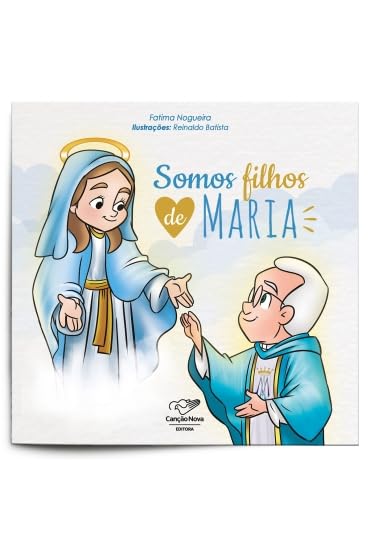
Father Jonas always said that we are Children of Mary, that we are her descendants—in other words, we are part of her family. As a mother, she raised Jesus and taught him how to do everything, even how to pray. So let’s learn to pray with her, too! In the words of Monsignor Jonas Abib on Canção Nova, it was She who did it all.
The Annunciation and the Birth of Jesus
Have you ever wondered what it was like when it all began? The story of the annunciation It is one of the most significant events in Christian tradition. According to the Gospel of Luke, it was the angel Gabriel the one who brought the news that would change the world.
The meeting between the angel Gabriel and the young woman from Nazareth is described as a moment of profound transformation.
He greets her with the words: “Hail, full of grace, the Lord is with you”. This message announced the miraculous conception through the Holy Spirit.
The Encounter with the Angel Gabriel
The dialogue between the angel Gabriel and the young woman shows a mixture of surprise and acceptance.
Her response, “Behold, I am the Lord’s servant”, demonstrates a complete surrender to God's will. This moment is still celebrated today as an example of faith and courage.
The Miraculous Conception and Its Theological Implications
Conception through Holy Spirit It is one of the pillars of Christian theology. It represents the divine self-emptying, known as Kenosis, in which God becomes human.
This miracle is mentioned in both the Bible and the Quran, demonstrating its universal significance.
O Birth of Jesus It was not only a historic event, but also a spiritual milestone. It brought hope and renewal, reinforcing the central role of this figure in the Christian faith.
The account of the Annunciation, preserved in Papyrus P75, is an ancient testimony to this truth.


Mary in the Gospels: What Does the Bible Really Say?
Have you ever wondered how gospels Do they depict the figure of Mary? Her presence varies significantly across the texts of the new testament, offering different perspectives on her life and paper.

The Gospels of Luke and Matthew
Luke and Matthew are the gospels which provide more detail about Mary's story. In Luke, she is mentioned 12 times, most notably in the Magnificat, a song that reflects her deep faith and humility.
Matthew, on the other hand, presents a genealogy that links Mary to the line of David, reinforcing her importance in sacred history.
The Magnificat, in particular, is a highlight. It echoes the Canticle of Hannah, showing how Mary recognizes divine grace in her life. This connection between the biblical texts reveals a rich and symbolic tradition.
Rare References in Mark and John
In contrast, Mark mentions Mary only once, in the passage in Mark 3:31–35, where Jesus asks: “Who is my mother?”.
This passage is interpreted as a call to the spiritual community, beyond family ties.
John, for his part, highlights Mary at the Wedding at Cana (John 2:1–12), where she plays a crucial role by interceding for Jesus. This event is seen as a key Mariological event, demonstrating her influence and faith.
| Gospel | References to Mary | Key Event |
|---|---|---|
| Lucas | 12 | Magnificat |
| Matthew | Genealogy | The Lineage of David |
| Marcos | 1 | Passage from Mark 3:31–35 |
| John | Wedding at Cana | Mary's Intercession |
These different approaches in gospels show how Mary has been viewed and interpreted over time. Each text offers a piece of the puzzle, helping us understand her importance in the new testament.
Mary's Life After the Birth of Jesus
The story of this historical figure did not end with the birth of Jesus. He continued to play a key role in Jesus’s life and in the Christian community.
His presence made a lasting impression in various moments important, from childhood through to crucifixion.
His presence at key moments in Jesus' life
She was present at crucial events, such as the presentation of Jesus at the temple. That was a moment a place of great significance, where she and Joseph observed Jewish traditions.
Furthermore, at the wedding in Cana, she demonstrated her faith by asking Jesus to turn water into wine.
After the Resurrection, she joined the disciples, praying and waiting for the Holy Spirit. Her dedication to the Christian community shows how she continued to be a central figure, even after the death of Jesus.
The Crucifixion and the Role of Mary
In the Gospel of John 19:25–27, she stands at the foot of the cross, witnessing the crucifixion.
With his last breath, Jesus entrusted his mother to the beloved disciple, saying: “There’s your mother.”. This act symbolizes not only Jesus' care for her, but also her acceptance into the spiritual family.
The traditions surrounding the Dormition and the Assumption also reflect her importance. While the Dormition speaks of her death, the Assumption celebrates her ascension into heaven. These dogmas reinforce her role as a mediator between the divine and the human.
| Events | Meaning |
|---|---|
| Presentation at the Temple | Observance of Jewish law |
| Wedding at Cana | Intercession and Faith |
| Crucifixion | Surrender and Spiritual Care |
| Dormition and Assumption | Death and Ascension into Heaven |
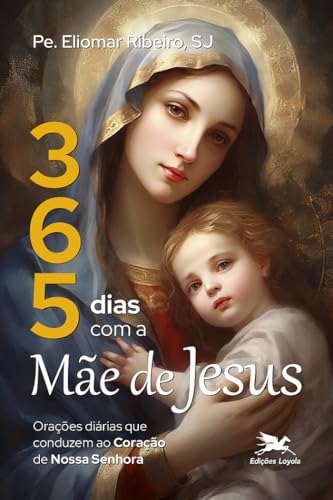
365 with the Mother of Jesus is a book designed to connect your heart with the Heart of the Mother of Jesus. These are daily prayers that draw us closer to her with the hearts of sons and daughters who wish to grow in friendship and gratitude. She will ensure that our prayers reach the ears and the Heart of Jesus, for she is a caring Mother who knows our needs and our love.
Mary in the Old Testament and Prophecies
Did you know that Old Testament Does it contain surprising references to Mary? These passages, though indirect, offer a profound insight into her role in sacred history.
Prophecies and symbols Ancient texts point to her as a central figure in the fulfillment of the divine plan.
Indirect references and interpretations
In Isaiah, we find one of the prophecies the best known: “Behold, the virgin shall conceive and bear a son” (Isaiah 7:14). This passage, interpreted as a reference to Mary, highlights her unique mission.
The Hebrew word “Almah”, translated as “virgin,” has sparked debate over the centuries.
Another important reference is found in Genesis 3:15, known as the Protoevangelium.
Here, the woman is described as the one who will crush the serpent’s head, symbolizing victory over evil. This interpretation reinforces Mary’s role as the new Eve, bringing redemption to the world.
The connection to the lineage of David
A lineage of David It is a central theme in the prophecies messianic. Through her marriage to Joseph, Mary is linked to this royal lineage. In Matthew 1:16, Jesus’ genealogy is traced back to David, highlighting the importance of this connection.
The Dead Sea Scrolls also reinforce the messianic expectations associated with the lineage of David. These ancient texts show how deeply rooted the hope for a savior was in Jewish tradition.
| Reference | Meaning |
|---|---|
| Isaiah 7:14 | Prophecy of the Virgin Who Will Conceive |
| Genesis 3:15 | Protoevangelium: Victory Over Evil |
| Matthew 1:16 | Genealogy linked to the line of David |
| Dead Sea Scrolls | Messianic expectations |
Depictions of Mary in the Arts and Culture
Over the centuries, the figure of Mary has inspired various forms of artistic expression. Her image has transcended religion, becoming a universal symbol of faith, motherhood, and devotion.
From Byzantine icons to Renaissance masterpieces, their depiction has evolved, reflecting the cultural and theological changes of each era.
Renaissance paintings and religious icons
During the Renaissance, artists such as Leonardo da Vinci and Michelangelo brought new dimensions to the depiction of Mary.
The Work The Virgin of the Rocks, by Da Vinci, is a remarkable example, with its alchemical symbolism and masterful use of light and shadow.
Byzantine icons, such as the Icon of the Virgin Mary with Saint George and Saint Theodore, highlight their spiritual significance through vibrant colors and precise details.
Ultramarine blue, a pigment derived from lapis lazuli, was widely used to depict his cloak.
This color, associated with the sky and divinity, reinforced his connection to the divine. To learn more about these representations, check out this article on artistic depictions of Mary.
Famous sculptures such as Michelangelo's Pietà
The sculpture Pietà, Michelangelo's [...], is one of the most iconic works in the history of art.
Depicting Mary holding Jesus' body after the crucifixion, the artwork is an example of how art can convey deep emotions.
The expression of pain and resignation on his face is a testament to the artist's ability to capture the humanity of the sacred figure.
Mary in Music and Literature
In music, compositions such as the Stabat Mater, by Pergolesi, explore Mary's grief at the foot of the cross.
In literature, his presence is striking in works such as The Lusiads, by Camões, in which she is invoked as the protector of sailors.
Her influence also extends to popular culture, such as in Brazilian soap operas, where characters inspired by her embody values of strength and resilience.
- Iconographic evolution: from the Byzantine Theotokos to the medieval Madonnas.
- Botanical symbolism: lilies, roses, and myrrh in their depictions.
- Appearances in soap operas: from Isaura the Slave a Pantanal.
Devotion to Mary: How Is She Venerated?
A devotion Mary is one of the deepest pillars of Christian spirituality. Since the early centuries, she has been central to the faith of millions, inspiring practices and traditions that transcend cultures and denominations.

In Catholic Church, this veneration is known as hyperdulia, a term that highlights the special respect accorded to her. Unlike the worship reserved for God, hyperdulia recognizes her unique role in the history of salvation.
Hyperdulia in the Catholic Church
Hyperdulia is expressed in various ways, ranging from prayers such as the Rosary to Marian festivals. The Litany of Loreto, for example, lists 1,329 Marian titles, each reflecting an aspect of her life and mission.
This practice became established after the Council of Ephesus (431), which declared Mary to be Theotokos (Mother of God). This title reinforced her importance in Catholic theology and spirituality.
Differences Between Catholics, Orthodox Christians, and Protestants
While Catholics and Orthodox While they share a strong devotion to the Virgin Mary, Protestants take a more reserved approach.
For Catholics, Mary is a powerful intercessor, while the Orthodox They see her as the protector of humanity.
Protestants, on the other hand, while acknowledging the saints’ role in biblical history, avoid specific devotional practices. This difference reflects distinct theological views on the role of the saints in divine mediation.
- A Comparative Analysis of the Rosary and the Akathistos.
- Controversies: extreme Marian movements (e.g., the Blue Army).
- The Impact of Vatican II on Mariology.
- Statistics on pilgrimages to Fátima (6 million per year).
- The Phenomenon of Marian Apparitions in the 20th Century.
These practices and differences show how the devotion The figure of Mary remains a rich and complex subject, uniting and, at the same time, distinguishing the various Christian traditions.
Mary in Other Religions
Mary's influence extends beyond Christianity, reaching other religions and cultures.
She is revered in unique ways, reflecting the spiritual diversity found around the world. Let's explore how she is viewed in the Islamno Judaism and in other traditions.
The Role of Mary in Islam
In Islam, Mary, known as Sayyidatuna Maryam, is a figure of great importance.
She is mentioned 34 times in the Quran, more than in the New Testament. The 19th surah, titled “Maryam,” is dedicated to her, highlighting her purity and devotion.
The Quran describes Mary as chosen, purified, and favored above all women. Her story, including the virgin birth of Jesus, is recounted with deep respect. “She is a sign to all worlds”, says the sacred text.
The View of Mary in Judaism and Other Traditions
In Judaism, the view of Mary is more complex. Some rabbinic traditions question her virginity, linking it to the controversy surrounding Yeshu ben Pandera.
However, he is also viewed as part of a historical narrative that influenced Judaism and Christianity.
In other words religions, as in the Bahá’í Faith, Mary is considered a symbol of feminine perfection. In Afro-Brazilian practices, there is a syncretism in which she is associated with orixás, blending Catholic elements with African religions.
| Religion | Mary's Vision |
|---|---|
| Islam | Sayyidatuna Maryam, mentioned 34 times in the Quran |
| Judaism | The Yeshu ben Pandera Controversy |
| Bahá'í Faith | A symbol of feminine perfection |
| Afro-Brazilian women | Syncretism with the orixás |
Current interfaith dialogue also addresses Mary, fostering discussions among Christians, Muslims, and other groups about her significance and role in spiritual history.
Its presence transcends borders, bringing together people of different faiths.
Marian Dogmas and Controversies
The dogmas Marian devotions are fundamental to the Catholic faith, but they also spark intense debates.
Two of them, the Immaculate Conception and the Assumption are pillars of Marian devotion, but not all Christian denominations accept them. Let's find out why.
Immaculate Conception and Assumption
A Immaculate Conception It was proclaimed on December 8, 1854, by Pope Pius IX. This dogma affirms that she was conceived without original sin.
The Assumption, on the other hand, proclaimed on November 1, 1950, by Pius XII, teaches that she was taken up into heaven, body and soul.
These dogmas were the result of lengthy theological discussions. For example, Franciscans and Dominicans debated the Immaculate Conception for centuries. To learn more about this history, check out this BBC article.
Why do some denominations reject these dogmas?
Protestant and Orthodox churches have different views. For Protestants, the biblical basis for these dogmas is questionable. The Orthodox, on the other hand, celebrate the Dormition, but not the Assumption as defined by the Catholic Church.
Modern theologians, such as Hans Küng, also criticize the lack of direct biblical evidence.
In Brazil, according to Datafolha (2022), 67% of Catholics believe in Immaculate Conception, showing how deeply rooted these beliefs are in popular culture.
| Dogma | Date of Proclamation | Meaning |
|---|---|---|
| Immaculate Conception | December 8, 1854 | Conception Without Original Sin |
| Assunção | November 1, 1950 | Ascent of body and soul to heaven |
These controversies show how the figure of Mary continues to inspire debate and reflection, uniting and, at the same time, dividing Christian traditions.
Fun Facts and Little-Known Facts About Mary
There are fascinating details about Mary's story that few people know. From her youth to the mysteries surrounding her life, there is much to explore.
Let's dive into a few of these curiosities which continue to intrigue scholars and the faithful.
Mary's age when she became pregnant with Jesus
Did you know that, according to Coptic tradition, Mary was only 12 years old when the angel Gabriel visited her?
This information, found in Coptic Papyrus 51 of the Nag Hammadi Library, reveals how society at the time viewed marriage and motherhood.
Jerônimo de Estridão, one of the great theologians of antiquity, also made calculations regarding his life expectancy.
He suggested that she lived to be 60, which was a ripe old age for that time. This information helps us understand the historical and cultural context in which she lived.
The Mystery of the Death and Assumption of Mary
A death The subject of Mary is shrouded in mystery. Some traditions indicate that she died in Jerusalem, while others suggest Ephesus as the site of her tomb. Even so, there is no consensus among scholars.
The dogma of the Assumption, proclaimed by the Catholic Church in 1950, states that she was assumed into heaven, body and soul.
This event, celebrated on August 15, is one of the cornerstones of Marian devotion. However, some Christian denominations question this belief, sparking theological debates.
In addition, medieval legends tell of the miracles of Our Lady of the Snows, while recent archaeological discoveries in Nazaré shed new light on her life.
These facts show how Mary's story continues to be a source of inspiration and reflection.
| Theme | Details |
|---|---|
| Age at the Annunciation | 12 years, according to Coptic tradition |
| Place of Death | Jerusalem or Ephesus |
| Assunção | Ascent of body and soul to heaven |
| Archaeological Discoveries | Nazaré, Recent Evidence |
Conclusion: Mary's Eternal Legacy
As we explore the life story of one of the most remarkable figures of the faith, we realize that legacy that transcends time. Its history It is not limited to religion, but extends to art, psychology, and culture, inspiring generations around the world.
Mariological studies continue to reveal new perspectives, inviting us to reflect on the mystery surrounding her life.
In addition, his influence on the Christianity It also shows how his legacy remains relevant in different contexts.
To learn more, Learn more about the legacy . Explore primary sources and embark on a journey of discovery and reflection.
FAQ
Q: What is the significance of Mary in Christian history?
A: Mary is a central figure in Christianity, recognized as the mother of Jesus Christ. Her devotion and role in the biblical narrative make her essential to the Christian faith.
Q: What do we know about Mary's childhood?
A: The Bible does not go into much detail about her childhood, but tradition suggests that she grew up in a devout family and was educated at the Temple in Jerusalem.
Q: What was Mary and Joseph's wedding like?
A: Mary married Joseph, a carpenter from Galilee. He played a crucial role by accepting and supporting the miraculous conception of Jesus.
Q: What happened during the Annunciation?
A: The angel Gabriel appeared to her, announcing that she would be the mother of the Son of God. This moment is known as the Annunciation.
Q: How is Mary portrayed in the Gospels?
A: The Gospels of Luke and Matthew highlight her life and role, while Mark and John make only brief mention of her.
Q: What role did Mary play during Jesus' crucifixion?
A: She was present during the crucifixion, showing strong faith and support for her son until the very end.
Q: How is Mary viewed in Islam?
A: In Islam, she is revered as one of the most virtuous women and is mentioned with respect in the Quran.
Q: What are the Marian dogmas?
A: Dogmas include the Immaculate Conception and the Assumption, which are central beliefs in the Catholic Church but are not accepted by all Christian denominations.
Q: What is Mary's legacy in art and culture?
A: She is depicted in Renaissance paintings and sculptures such as Michelangelo’s Pietà, and has inspired musical and literary works over the centuries.
Q: What was Mary's estimated age when she became pregnant with Jesus?
A: It is believed that she was young, possibly between 12 and 16 years old, in keeping with the customs of the time.