Miracles of Our Lady of Aparecida: Can you imagine how a small image found in the waters can unite millions of hearts? In 1717, three fishermen in Paraíba do Sul River experienced something extraordinary: after hours without fish, they found a figure in their nets that would change the world forever. history Brazil.
This discovery was not just an isolated event. In 1930, the Patroness of Brazil received an official title, consolidating a devotion that spans centuries. Did you know that even laws, such as No. 6,802 of 1980, recognize October 12 as a national holiday in his honor?
But what makes this story so special? In addition to the records of abundant fishing after the find, reports of healings and divine protection echo to this day. These are narratives that not only strengthen faith, but also weave Brazilian cultural identity.
Here, you'll discover how every detail - from the day from the encounter to modern celebrations - reveals a legacy of hope. Get ready for a journey that unites the past with the present, showing why this devotion transcends borders and enchants the world. world.
Introduction to the Devotion and History of Our Lady of Aparecida
How does a religious tradition capable of uniting millions come about? It all began in October 1717, when three simple men cast nets in the Paraíba do Sul River.
After unsuccessful attempts, something unexpected appeared: a small sculpture blackened by the water. That moment marked the top of a unique spiritual journey.
A image of lady aparecida, as it came to be known, became a symbol of hope. Her first devotees built a simple oratory, which quickly attracted pilgrims.
Did you know that Conceição Aparecida is associated with maternal protection, linking it to the Virgin Mary in the Catholic tradition?
| Year | Historical Landmark | Cultural Impact |
|---|---|---|
| 1717 | Meeting the image | First reports of popular devotion |
| 1930 | Official recognition as patron saint | National consolidation of tradition |
| 1980 | Establishment of the 12/10 holiday | Integration into the Brazilian identity |
This lady devotion transcends the religious. Regional festivals, local handicrafts and even everyday expressions carry its influence.
In the following sections, you'll discover how every detail - from the restoration of the lady image even impressive reports - reinforces this link between faith and culture.
Curious to understand how a 40cm sculpture became a national heritage site? Follow the next chapters of this story that continues to inspire generations.
The Finding of the Image and the Origin of Miracles
On an ordinary day in October, three men transformed the fortunes of a region with an unexpected discovery. On the Paraíba do Sul River, near Guaratinguetá, Domingos Garcia, João Alves and Felipe Pedroso had spent hours unsuccessfully trying to find a boat. fishing.
Everything changed when their networks first brought body and then the head of a small blackened sculpture.
The meeting of the fishermen and the miraculous catch
After invoking divine protection, the trio witnessed the first miracleThe nets, once empty, were filled with fish in abundance.
Reports from the time describe lady image, Even fragmented, it emanated a sacred aura. A fishing miracle not only fed families, but ignited the flame of faith in the community.

The historical importance of the find
This event in 1717 redesigned the history place. The simple act of collecting the image from the waters generated pilgrimages and gave origin to reports of miracles for decades. Did you know that even today nameAre the three fishermen remembered in prayers?
In years following, devotion to sculpture strengthened the idea of intercession divine. Every cure or protection attributed to lady image strengthened its credibility, turning the find into a spiritual landmark for Brazil.
Consecration and Elevation as Patroness of Brazil
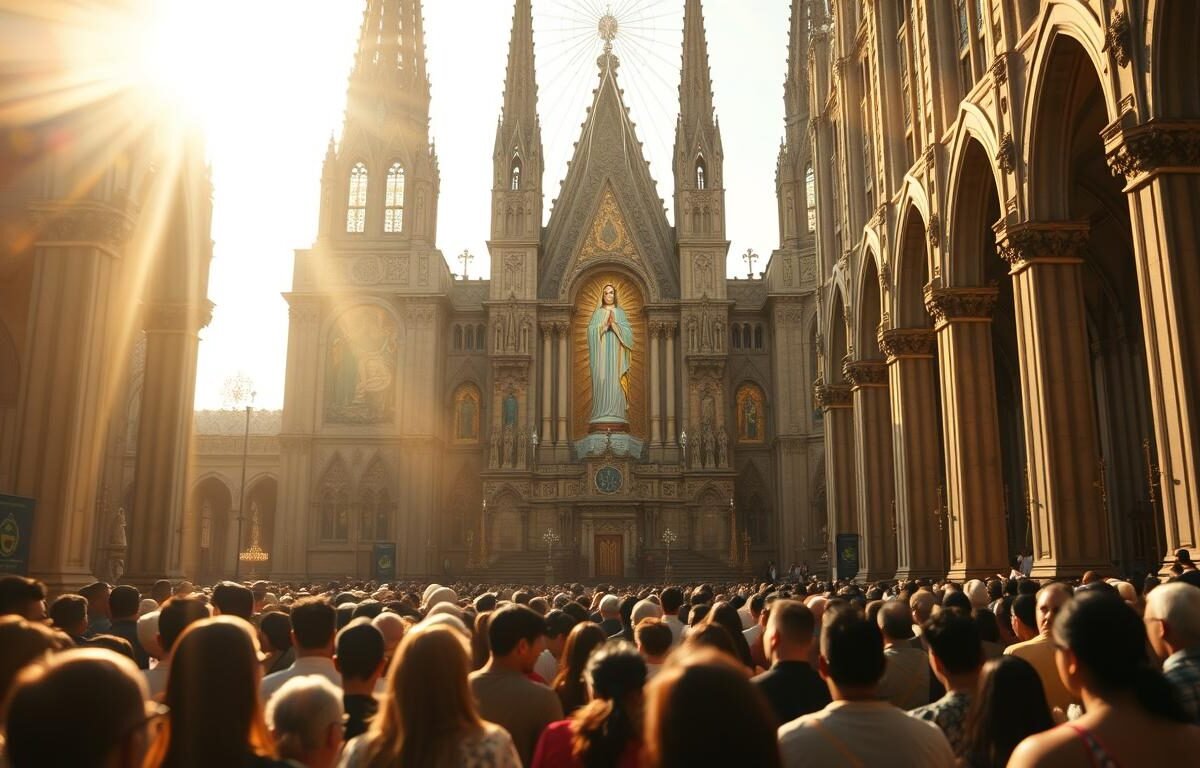
How does a religious symbol gain national recognition? In 1904, the Our Lady of Aparecida received his canonical coronation in front of 30,000 faithful.
The image was given a blue embroidered cloak and a gold crown set with diamonds - gifts that reflected the devotion popular.
But the road to the aparecida patron saint brazil began decades earlier. Dom Pedro I visited the sanctuary in 1822, asking for protection for the country's independence. This royal support accelerated the construction of a church and consolidated the place as a pilgrimage center.
The decisive milestone came in 1930. A papal decree officially declared the mother Brazil, confirming centuries of tradition. Did you know that day October 12 unites millions in celebration?
Religious and political leaders worked together in this process. While the popes validated the devotion, the men kept the flame of faith alive in communities. This union between authorities and people transformed history of Our Lady of Aparecida.
The shrines are not just stone constructions. They are silent witnesses to how an entire nation embraced its patron saint. Every detail of the consecration reinforces why she remains, after centuries, a symbol of Brazilian identity.



The Charm of the Image: Characteristics and Restoration
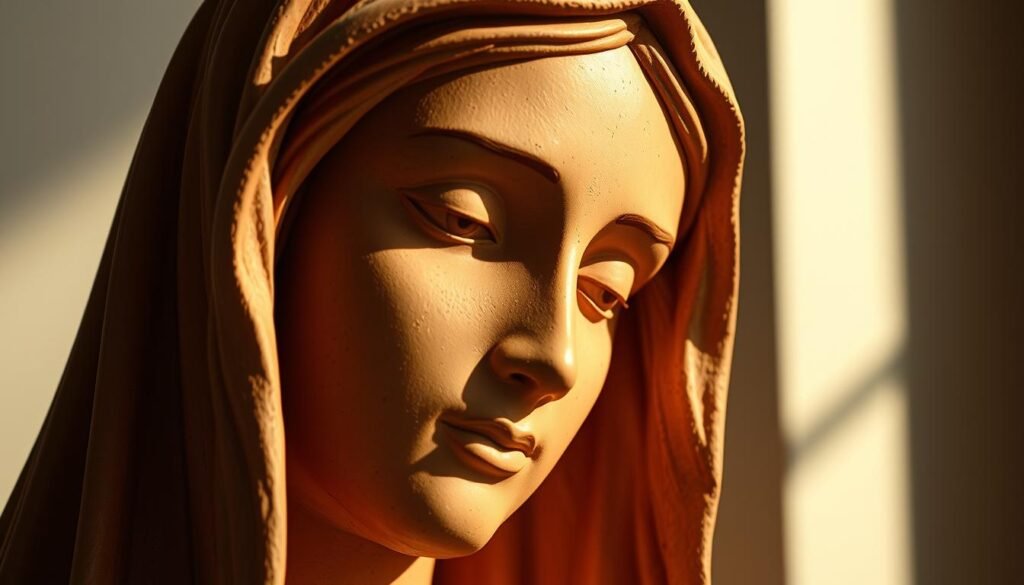
What makes this 40cm sculpture so special? Molded in terracotta in the 17th century, the piece has tones darkened by the action of time and the soot of candles. His hands joined in prayer and the blue cloak create a silhouette that is recognizable even from a distance, symbolizing protection and welcome.
Art that speaks to the soul
The separation between body and head - found at different times by the fishermen - carries mystical significance.
Experts point out that the stooped posture represents humility, while the gold of the crown is reminiscent of Princess Isabel's gift in 1888. Every detail has been designed to inspire spiritual connection.
Rebirth of a symbol
In 1978, an episode shocked the country: the image was reduced to almost 200 fragments. Restorer Maria Helena Chartuni led a thorough restoration at MASP, using pioneering techniques.
“Every chip that was replaced was a prayer.”,
she said during the months-long process.
Today, protected in a chapel made of bulletproof glass, the sculpture retains 85% of the original material. Its preservation isn't just about art - it's about keeping a tradition that shaped the culture Brazilian. Can you imagine how many stories these repaired cracks could tell?
Miracles of Our Lady of Aparecida
Have you ever heard of events that defy explanation? The history of Brazil's patron saint is marked by extraordinary occurrences. Among the stories that span generations, two phenomena stand out as pillars of the devotion popular.
Miraculous fishing and plenty of fish
It all started with the three fishermen in 1717. After finding the image in the waters, their previously empty nets overflowed with fish. Witnesses at the time described shoals so abundant that they threatened to capsize the boats.
Miracle of the candles and other events
In sanctuary original, something intriguing was happening: candles would go out and come back to life without human intervention. The faithful interpreted this as a sign of divine protection. One emblematic case involves a blind girl who regained her sight during a prayer in 1874.
Another remarkable episode was the freeing of the slave Zacarias. The chains that bound him mysteriously broke in front of the image. These facts attracted crowds, strengthening the tradition that continues to this day.
Curious to know how these events shaped the Brazilian faith? In the following topics, you'll discover even more surprising stories that unite the daily lives of the people to the extraordinary.
Miracles and Curiosities Throughout the Centuries
Do you know any stories that carry hope through time? Among the most striking tales of popular devotion, two episodes stand out for uniting symbolism and faith in an extraordinary way.
Freeing the slave Zechariah
In 1870, a moving event took place at the local pilgrimage. O slave Zechariah, chained by heavy handcuffs, begged for the intercession during their prayers.
Witnesses reported that the chains broke as if they were made of wax, freeing him in front of the lady image.
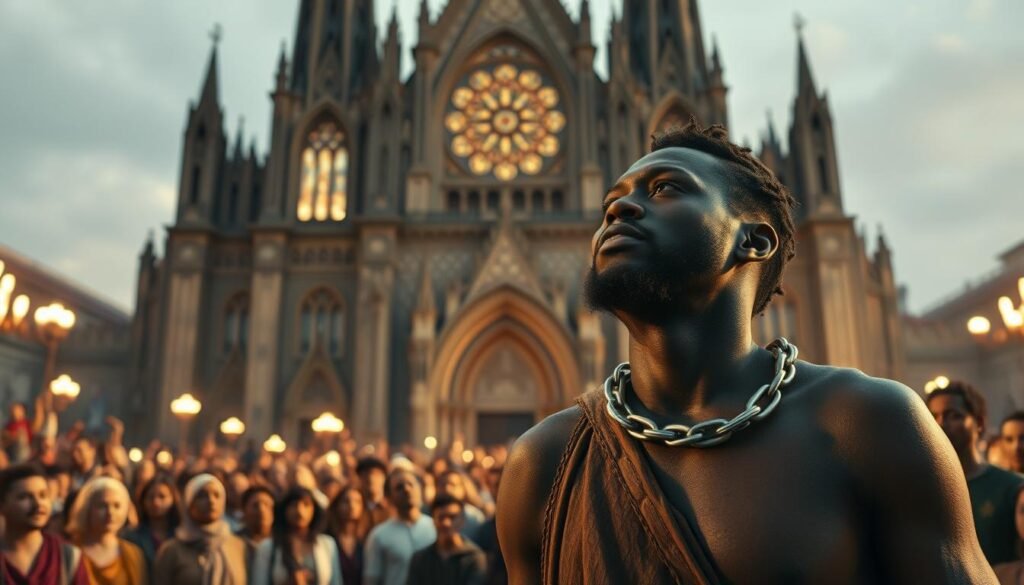
O name of this man echoed through the centuries as proof that divine justice transcends human barriers. To this day, replicas of the broken chains are carried by faithful as a symbol of liberation.
The episode of the knight and the horseshoe mark
Can you imagine seeing the physical marks of a miracle? In 1895, a knight tried to enter the old chapel on horseback. The animal stalled at the entrance, leaving a horseshoe embedded in the stone. The brand remains visible on the local, attracting onlookers and devotees.
This reinforced the belief in the protection of sacred spaces. O knight, initially skeptical, became a propagator of the faith after the event. His story shows how day devotees' daily lives are full of hidden meanings.
| Events | Year | Impact |
|---|---|---|
| Zechariah's release | 1870 | Strengthening faith in divine justice |
| Horseshoe brand | 1895 | Symbolic protection of sacred spaces |
These stories are not just stories from the past. They continue to inspire generations of faithful who seek comfort and hope. How many other knights modern people will have their lives transformed by these narratives?
The Role of Prayers and Faith in Devotion
What keeps a spiritual tradition alive for centuries? The answer lies in prayers that echo daily, uniting people in a chain of faith.
Since the 18th century, praying before the image has become a central practice for millions of people. faithful, creating bonds that transcend geographical borders.
In the pilgrimages, you notice how shape to come together reveals collective strength. Groups of different municipalities e cities carry lighted candles - a symbol of hope that illuminates paths. “Each flame represents a request or thanks”, explains a devotee from Minas Gerais.
| Devotional Practice | Frequency | Main symbol |
|---|---|---|
| Prayer of the Rosary | Daily | Rosario |
| Novenas | Monthly | Candles |
| Processions | Annual | Banners |
A prayer traditional, created in 1904, synthesizes this connection:
“O incomparable Lady, protect us under your holy mantle...”
These rituals reinforce the image of lady as mother welcoming. Even those arriving by reasons personal discoveries in the culture a space of belonging. Whether individual or collective, each prayer strengthens the devotion that has shaped identities for generations.
National Shrine and Basilica of Our Lady of Aparecida
Imagine a space that houses so much history how great. O sanctuary started out as a simple chapel in 1745. As devotion grew, in 1955 construction began on the current Basilica, designed to receive crowds from all over the world. world.
History and construction of the shrine
The first church was built where the Paraíba Valley. Did you know that the cornerstone of the new Basilica weighed 1.4 tons? The project, inspired by the image of lady aparecida, He used reinforced concrete to create 23,000 m² of sacred space.
Recognition and dimensions of the Basilica
With a length of 188 meters and 100-meter towers, the space can accommodate 45 thousand faithful. In 1980, the Pope John Paul II consecrated the high altar, confirming its global importance.
A region Aparecida has become a pilgrimage center, receiving 12 million visitors every year.
The architecture combines modernity and tradition. Stained glass windows depict the virgin mary, while the central dome symbolizes maternal protection. This miracle engineering has become an icon of culture Brazilian religious figure, reinforcing her status as aparecida patron saint brazil.
Today, the complex includes museums and support centers. Every detail—from the image "All the Way to the Gardens"—tells a story of faith that transcends borders. It's no wonder this shrine is considered one of the largest in the world Catholic.
The Presence of Our Lady in Brazilian Culture
Art and faith have been intertwined in the heart of Brazil for centuries. The lady image It transcended the altars to inspire creations that have enchanted generations. In cinema, The Compadecida depicts her intercession with humor and wit, showing how the devotion blends into people's daily lives.
The soap opera The Patron Saint brought the story of the Our Lady of Aparecida, blending drama and religious tradition. These works demonstrate how the image The sacred has been fueling narratives for years, transforming historical events into entertainment that educates and moves audiences.
In cityand municipalityYes, folk festivals are full of symbols of the patron saint. Artists paint her image on murals, while writers transform each miracle recorded in tales full of magic.
Even the title of aparecida patron saint brazil echoes in samba song lyrics, showing how the miracles inspire culture.
This fusion of the sacred and the artistic creates a unique identity. Each cultural expression reinforces the role of the lady devotion as the social fabric, uniting the past and the present in a vibrant celebration of the Brazilian faith.
The Influence of Devotees and Popular Tradition
How does a tradition retain its luster after three centuries? The answer lies in the hands of the millions who turn faith into action. Every day October 12, streets and altarThese moments are filled with colors, songs, and promises that bring generations together.
Celebrations and the October 12th holiday
In this region In the interior of São Paulo, the national holiday becomes a spectacle of faith. Pilgrimages with ox-drawn carts, processions of horseThe decorated churches and outdoor Masses show how the Our Lady of Aparecida inspires devotional creativity. A knight from Minas Gerais says:
“I’ve been coming here for 15 years Keep a promise. My life changed after I asked for protection for my mother ”sick"
Legacy in popular culture and media
A image The national mascot even appears in soap operas and memes. Movies such as At First Glance They use his story to talk about overcoming adversity, while contemporary artists reimagine his image in urban graffiti. This fusion of the sacred and the pop keeps the Ms. Conceição in the collective imagination.
| Tradition | Modern Expression | Impact |
|---|---|---|
| Processions | Devotional flash mobs | Engaged young people |
| Votive offerings | Thank-You Hashtags | Fé digitalizada |
| Hinos sacros | Playlists de streaming | Música sem fronteiras |
The reasons para venerar variam: desde pedidos de cura até gratidão por conquistas. Mas todos reforçam o mesmo laço – o Brasil que se reconhece na aparecida patron saint brazil. Sua história, mais que religiosa, é espelho da alma de um povo.
Artistic Expressions and Music in Honor of the Patron Saint
Você já percebeu como a arte traduz emoções que palavras não alcançam? Desde o século XVIII, a lady image inspira composições que misturam fé e criatividade.
Em 1904, Belmiro Braga e Padre João Batista criaram o hino “Virgem de Aparecida”, que até hoje emociona multidões nas celebrações de 12 de outubro.
Nas artes plásticas, a senhora conceição aparecida ganha formas únicas. Artistas usam gold em pinturas para simbolizar sua realeza espiritual, enquanto esculturas reproduzem detalhes do rio paraíba sul – onde tudo começou. Essas obras mostram a image envolta em luz dourada, conectando passado e presente.
| Expressão Artística | Elemento-chave | Symbolism |
|---|---|---|
| Pinturas sacras | Tons de azul e ouro | Proteção maternal |
| Esculturas em madeira | Detalhes do rio | Origem histórica |
| Mosaicos | Fragmentos coloridos | União dos fiéis |
Na cultura popular, a aparecida patron saint brazil marca presença até em novelas. Na série The Patron Saint, a história do achado da lady image ganhou vida, misturando drama e devoção.
Já no cinema, documentários mostram como cada miracle registrado virou fonte de inspiração para artistas.
Que tal explorar músicas que refletem a devoção? Desde canções regionais até clássicos eruditos, cada nota carrega a ternura que o povo dedica à lady. Sua história não está só nos altares – vive na arte que pulsa no coração do Brasil.

Milagres é o livro mais completo e sem dúvida o mais emocionante sobre os 300 anos de acontecimentos sobrenaturais atribuídos à intervenção de Nossa Senhora Aparecida. O escritor Rodrigo Alvarez, autor dos bestsellers Aparecida, Maria e Humano Demais, foi o único jornalista que teve acesso ao “baú” dos milagres do Santuário Nacional de Aparecida. Após meses mergulhando nas mais incríveis histórias dos fiéis, ele relata os acontecimentos extraordinários associados à santa que é o maior símbolo da fé católica brasileira.
Conclusion
Que força une séculos de history a corações modernos? A image encontrada no rio em 1717 continua tecendo narrativas de fé. Desde pescas milagrosas até libertações impressionantes, cada evento reforçou a devotion que molda nossa identidade.
Today, the Our Lady of Aparecida não vive só em altares. Está nas ruas enfeitadas em outubro, nas promessas sussurradas e nas mãos que se unem em prayer. Your intercession é sentida por milhões que buscam conforto nos desafios cotidianos.
The faithful mantêm viva essa tradição através de gestos simples: uma vela acesa, um rosário entre os dedos, uma visita ao sanctuary. These acts transformam a lady image em ponte entre o humano e o divino.
How aparecida patron saint brazil, ela simboliza mais que religião – é espelho da resiliência de um povo. Sua história nos convida a preservar memórias e renovar esperanças. Que esse legado inspire futuras gerações a encontrar luz mesmo nas águas mais turbulentas.
FAQ
Q: How was the image of Our Lady of Aparecida found?
A: The statue was found by fishermen in the Paraíba do Sul River in 1717. After hours of catching no fish, they retrieved the body and then the head of the statue, which led to a bountiful catch.
Q: Why is the image dark brown?
A: The hue developed after years of exposure to candle soot and the effects of time. The color strengthened the sense of connection with the local population, especially marginalized communities.
Q: What is the significance of the National Shrine?
A: It is the largest Marian shrine in the world, built to accommodate the growing devotion. It welcomes millions of pilgrims each year and was consecrated by Pope John Paul II in 1980.
Q: What was the miracle of the candles?
A: It is said that, during a prayer, candles went out on their own and then relit without human intervention, strengthening people’s faith in the saint’s powers of intercession.
Q: What's the connection with the October 12th holiday?
A: The date commemorates the day dedicated to the patron saint, established in 1980. In addition to its religious significance, it has become a symbol of cultural unity and is now celebrated alongside Children’s Day.
Q: How was the image restored after the attack?
A: In 1978, experts used conservation techniques to restore the fragments. The process took months and preserved the original features, reinforcing their historical and spiritual value.
Q: Who was Zechariah and what was his miracle?
A: Zechariah was a slave who, according to accounts, had his chains broken after asking for protection. This event symbolizes liberation and hope, and is commemorated in folk tales.
Q: How does devotion influence Brazilian culture?
A: She is present in music, literature, festivals, and even soccer. Artists such as Roberto Carlos and Father Marcelo Rossi have already paid tribute to the saint in their works.