
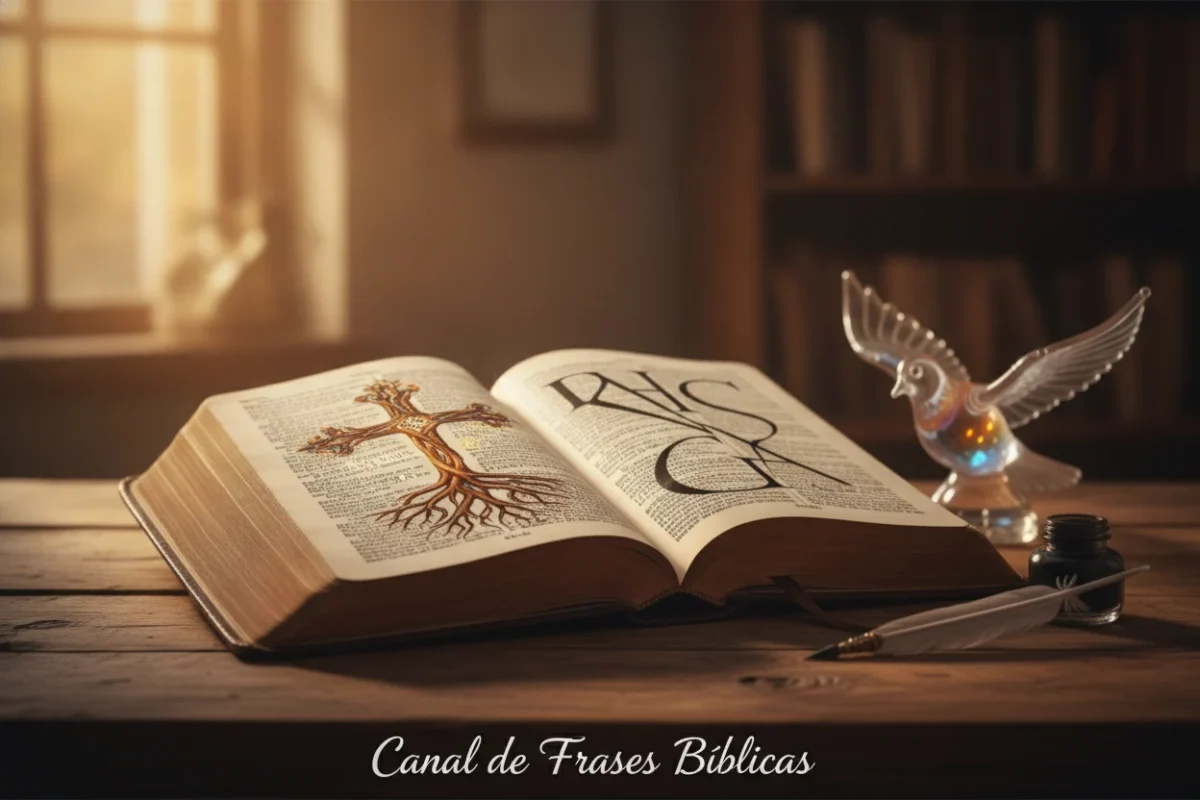
What Is a Metaphor in the Bible? An Explanatory Verse
Have you ever felt that some passages in Scripture seem to conceal a depth that goes far beyond a superficial reading? Understanding figurative language is the key to unlocking these doors to practical wisdom in your daily life.
The use of symbols In the Holy Scriptures, it does not serve to complicate the divine message. On the contrary, this rich language brings the heavenly mysteries closer to our very limited human understanding.
When we study each metaphor in the bible verse Verse by verse, we realize that God uses elements of our daily lives to reveal eternal truths. This divine teaching method helps us connect emotionally with the Creator.
For this in-depth Bible study, we have relied primarily on the well-established Almeida Revista e Corrigida (ARC) Bible translation. This translation effectively preserves the poetic power of the original terms.
“Symbolic language in biblical theology is not merely a poetic embellishment, but rather the only means capable of translating God’s infinity into the finite language of humankind.” — C. S. Lewis
In our analyses of sacred texts, we see in practice how classical theology values these visual representations. They prevent us from turning faith into a cold set of dogmatic rules.
The metaphors in the Bible, verse by verse, show us that progressive revelation draws on the culture of the time. In this way, the Lord speaks directly to the human heart in a way that is easy to understand.
The metaphor in the Bible verse about the vine
In the Gospel of John 15, we find one of the most beautiful and profound allegories in the entire New Testament. Jesus directly identifies himself as the true vine to his disciples.
In the ancient province of Judea, grape farming required patience, constant pruning, and total dependence on the local climate. The people understood very well the effort required to keep a vine alive.
The term “metaphor” in the Bible comes to life when we realize that the branch has no energy of its own to survive. Without a direct connection to the main trunk, the branch’s death is inevitable.
This mutual dependence perfectly illustrates our true need for daily and constant communion with our Savior. Without Him, our religious works become dry leaves with no spiritual value.
The metaphor in the Bible, verse by verse, explains that the Father acts like a diligent farmer who prunes the plant. This painful pruning is intended solely to increase our production of excellent fruit.
Remaining in the vine requires daily self-denial and a sincere search through prayer and Bible reading. It is from this invisible flow that the true sap of our Christian journey springs forth.
Jesus as the Light of the World and Biblical Symbolism
In John 8:12, Jesus makes a surprising statement when He declares that He is the light that guides humanity. To understand the significance of this statement, we need to turn our attention to the history of Israel.
This statement was made specifically during the well-known Feast of Tabernacles in the courtyard of the great temple in Jerusalem. On that occasion, gigantic golden candelabra were lit to illuminate the entire city, which was in a festive mood.
The metaphor in the Bible—specifically this Bible verse—associates light with the protective presence of God who guided the people through the desert. By declaring himself to be the light, Jesus identified himself as the messianic pillar of fire itself.
A person without faith gropes in moral darkness, lacking direction and enslaved by his own daily uncertainties. The light of Christ dispels the darkness of fear and reveals the true condition of the human heart.
This metaphor in the Bible—a verse of hope—invites us to walk in righteousness and expose our lives to the truth. Light may be uncomfortable to eyes accustomed to darkness, but it sets the thirsty soul free.
Following this divine light requires that we leave behind the dark paths of sin and human selfishness. Only in this way can we, too, become small reflections of Christ’s character in this world in need.


The Lord is my shepherd, according to the tradition of Israel
Psalm 23 is certainly the most frequently recited and remembered poetic text in times of distress and uncertainty. However, we often reduce this rich message to a purely romantic or childish sentiment.
In the ancient Near East, the life of a shepherd involved a routine of extreme physical exertion and real danger. Shepherds of that era were directly responsible for the safety and feeding of the entire flock.
With a staff in hand, he faced ferocious predators and led the animals through arid and very dangerous gorges. The sheep, fragile and nearsighted by nature, depended entirely on the voice of their guide.
We find this metaphor in the Bible, verse by verse, when we accept that our own intelligence is not enough to guide our steps. We need the steadfast guidance of the One who knows all the dangers along the way.
Throughout our theological studies, we have observed how the shepherd’s staff brings both discipline and comfort in equal measure. The Lord’s discipline is the mark of His fatherly love for us.
Resting in lush pastures does not mean the absence of struggles, but rather the assurance of provision in the midst of the desert. God’s active care sustains us even as we pass through the darkest valleys.

The metaphor in the Bible verse about bread
In the well-known discourse in John 6, Jesus presents himself in a striking way as the Bread of Life that came down from heaven. This statement caused deep bewilderment and raised questions among the religious leaders of that time.
The Jews demanded a magnificent physical sign similar to the miracle of the manna that had sustained their ancestors on Mount Sinai. They sought only to satisfy their temporary physical hunger and to be freed from Roman political oppression.
The metaphor of the bread in the Bible points us to the need to nourish our souls with eternal truths. Physical food perishes quickly, but fellowship with Christ satisfies our deepest existential hunger.
Jesus shows us that He Himself is the daily sustenance essential to maintaining an active spiritual life. Just as the physical body grows weak without bread, our spirit falters without God’s presence.
This metaphor in the Bible—a verse of exhortation—challenges us to seek the Lord not for the sake of fleeting material interests. We must feast on His Word to gain strength on our journey of Christian faith.
Understanding this mystery frees us from the ceaseless pursuit of earthly achievements that can never fill the emptiness in our hearts. Christ is the sufficient and abundant nourishment for all who believe in him.
How to Interpret Biblical Metaphors with Confidence
Many heresies and doctrinal deviations arise when readers try to take biblical figures of speech too literally. Interpreting these literary devices correctly requires care, dedication, and a basic method of study.
We cannot interpret a biblical poem in the same way we read a legal text in Leviticus. Each literary genre found in Scripture requires the reader to adopt a distinct and careful hermeneutical approach.
Metaphors in the Bible, verse by verse, must always be understood in light of their original historical context. We must ask ourselves what that symbol meant to the message’s first listeners.
To help you deepen your Bible Study For daily use at home, we have prepared some basic guidelines for interpretation.
- Analyze the context: Always follow the verses that precede and follow the passage under study.
- Learn about the culture: Seek to understand the agricultural, historical, and social customs of the people of Israel.
- Avoid dogmatism: Do not create complex doctrines based solely on a single, isolated poetic figure.
- Check out some positive reviews: Use reputable theological dictionaries to clarify the original terms.
By applying these simple rules of hermeneutics, we avoid common mistakes and enrich our daily devotional reading. Biblical truth shines much more clearly when we respect the rules of the sacred text itself.
Selected passages on biblical metaphors
To help you better understand these concepts and guide your future reflections, we have created a table listing the main metaphors analyzed. This information helps you connect the symbol with its actual theological application.
We recommend that you use this practical guide as a starting point for sharing the Word in your small group. Understanding these concepts strengthens the fellowship and maturity of the local church.
| Book and Verse | Metaphor Used | Main Theological Meaning |
|---|---|---|
| John 15:5 | The Vine and the Branches | The believer's vital dependence on and spiritual union with Christ. |
| John 8:12 | The Light of the World | Moral guidance and divine revelation in the midst of darkness. |
| Psalm 23:1 | The Good Shepherd | Active care, daily provision, and constant divine protection. |
| John 6:35 | The Bread of Life | Spiritual sustenance and the complete fulfillment of the soul's needs. |
Walking in the light of sacred metaphors
Delving into the rich symbolism of the Holy Scriptures is much more than a mere intellectual exercise in theological scholarship. It is a spiritual journey of transformation and renewal of our minds under the guidance of the Holy Spirit.
May each metaphor in the Bible, verse May the verse you studied today serve as a reliable compass for your daily decision-making. Let the vine sustain your branches, and may the divine light guide your steps in the right path.
We’d love to hear your thoughts on today’s Bible study. Which of these classic metaphors touched your heart the most and shed light on your current life situation? Share your reflections in the comments below!
Legal Notice: Our theological and devotional analyses are based on the classical hermeneutical principles presented in the renowned Bible Commentary by theologian Matthew Henry.
Frequently Asked Questions About Metaphors in Bible Verses
What does it mean to find a metaphor in the Bible verse by verse?
It means examining how God uses elements of everyday human life to reveal eternal truths in a progressive way. Studying each metaphor in the Bible verse by verse helps us connect emotionally with the Creator, transforming complex heavenly mysteries into practical wisdom that we can apply to our daily lives.
How can we apply the lesson about the vine in John 15 to our daily lives?
To apply this metaphor, we must recognize our daily dependence on Jesus, knowing that the branch cannot survive without the trunk. The practical application comes when we accept the pruning of the Father—who is the diligent farmer—and seek constant fellowship through prayer in order to produce excellent spiritual fruit.
What are the benefits of understanding figurative language in the Scriptures?
Understanding symbolic language prevents us from turning our faith into a cold set of dogmatic rules. This interpretation enriches devotional reading, preserves the poetic power of the sacred texts, and allows biblical revelation to speak directly to the heart, fostering a profound spiritual transformation.
What is the difference between a superficial reading of the Bible and a metaphorical analysis of it?
A superficial reading is limited to the plain text of the law and literal rules, while a metaphorical analysis reveals the spiritual depth hidden within the passages. The use of symbols does not serve to complicate the divine message, but rather functions as the only vehicle capable of conveying the infinity of God.
Is it a myth that metaphors serve only as poetic embellishments in sacred texts?
Yes, it is a myth. As classical theology and the thought of C. S. Lewis explain, visual representations and metaphors are not mere aesthetic embellishments. They are essential and necessary pedagogical tools for bringing the reality of the Creator closer to our limited human understanding.