Have you ever wondered how a celebration can bring together millions of people around the world in gratitude and spiritual renewal? The Eid al-Fitr It is not just a religious holiday, but a time of connection that transcends borders and generations.
Marking the end of Ramadan, this event symbolizes the reward for spiritual discipline and the strengthening of community bonds. Families gather for special prayers, exchange gifts, and share meals that represent abundance and generosity.
In cities like Mogi das Cruzes, local mosques organize lively gatherings where even non-Muslims can feel the infectious energy of the occasion. The celebration goes beyond ritual: it is an invitation to reflect on values such as empathy and solidarity.
But what makes this tradition so special after a month of fasting? The answer lies in the unique blend of personal devotion and collective joy, creating memories that nourish the soul throughout the year.
Overview of Eid al-Fitr
Do you know which tradition unites families from different continents in a shared sense of renewal? This celebration, which takes place after a month of spiritual discipline, combines millennia-old history with practices that strengthen communities around the world.
Historical and religious context
Dating back to the 7th century, the event is linked to the prophet Muhammad. The date marks the end of Ramadan—a period dedicated to daily fasting from sunrise to sunset. It is not merely a matter of physical abstinence, but a journey of self-discovery and charity.
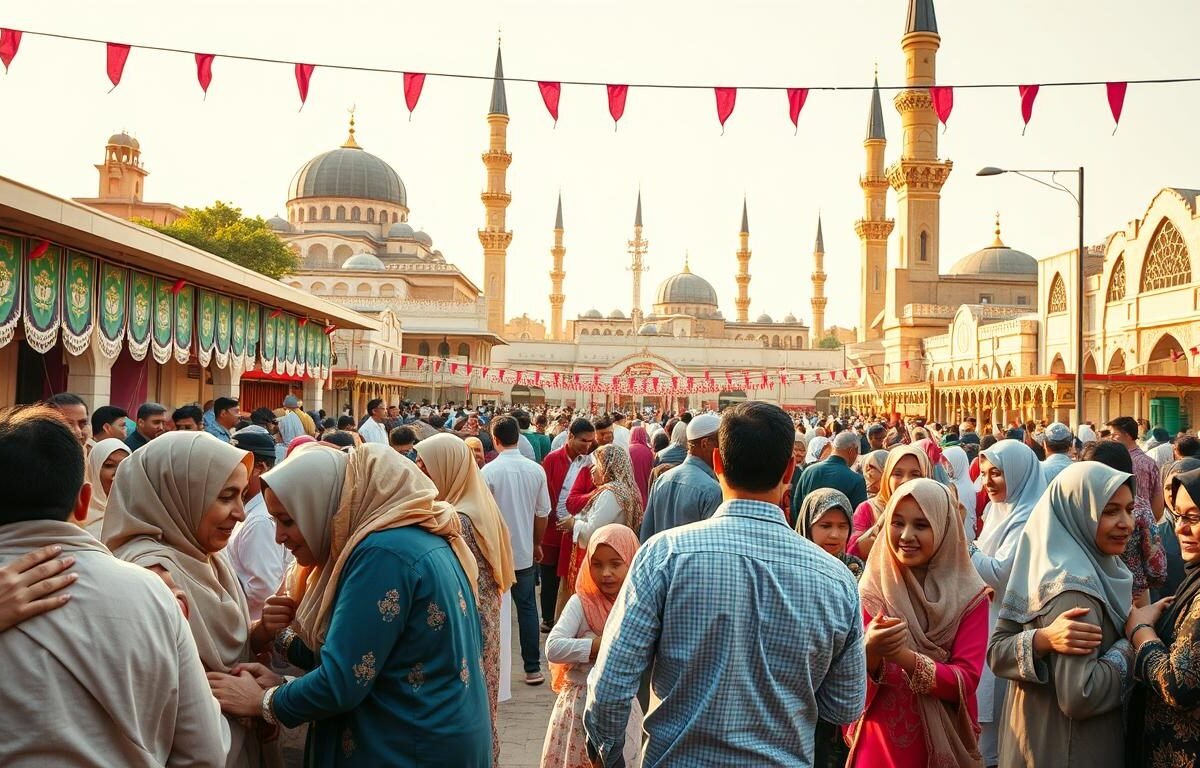
In mosques, the prayers Morning celebrations draw crowds dressed in traditional attire. It is common to see children receiving gifts and families donating food to those in need. “The true essence lies in sharing blessings,”, reflects a religious leader from São Paulo.
The Role of Ramadan as a Sacred Period
The 30 days of fasting prepare the spirit for the festive season. During Ramadan, Muslims practice patience and strengthen community bonds. This explains why Eid brings so much collective joy—it is the culmination of a cycle of inner growth.
In countries like Indonesia and Morocco, the streets come alive with unique colors and flavors after the prayer main. In Brazil, cities with large Arab communities organize public banquets at the mosques, showing how tradition adapts around the world without losing its deeper meaning.
Reflecting on the “Meaning of Eid al-Fitr”
Why is breaking the fast more than just physical relief? For the Muslims, select the end A 30-day period of abstinence goes beyond personal achievement—it is a symbol of collective growth.
Definitions and interpretations of the date
O month Ramadan serves as a journey of self-transformation. “It’s not just about breaking the fast, but about how we transform our very essence during this time”, explains Sheikh Omar, a religious leader in Curitiba.
Each year brings a chance to start anew: forgiveness, charity, and a connection with the divine come together in the celebrations.
Did you know that this date also marks the beginning of a new lunar cycle? Families exchange new clothes and donate food before prayers. This practice reinforces that the end of fasting It is not an end in itself, but a step on the spiritual ladder.
For Muslims, complete the month It's like finishing an inner marathon. Month after month, renew their commitment to values that extend beyond the dinner table.
On the streets of Rio, you see smiles that tell stories of resilience—stories that begin in the silence of the fasting and burst into color during the festivities.
“When we watched the sunset together after 30 days of discipline, we realized that the true reward lies in a united community.”
Preparations and Traditions for the Celebration
The anticipation for the festive occasion begins long before the first greeting is exchanged. In recent days During Ramadan, families step up their preparations to transform their physical and mental spaces for the grand celebration.
Purification and Dress Rituals
Before the dawn of the great day, o ghusl marks the symbolic beginning. This ritual bath does not merely cleanse the body—it represents washing away worries and renewing one’s intentions.
“It’s like putting on spiritual armor,”, says a woman who attends the mosque in Mogi das Cruzes.
Choosing new clothes is about more than just vanity. Each piece symbolizes a fresh start, while vibrant colors reflect collective joy. On the streets near the temples, fabric stores are seeing record sales during these days.
Decoration and Preparation of Mosques
While families get ready, volunteers transform sacred spaces. Colorful paper lanterns and golden lights adorn the walls, creating a magical atmosphere. At the Al-Hikmah Mosque in the interior of São Paulo, even the children join in by tying decorative ribbons.
| Element | Meaning | Practical example |
|---|---|---|
| Ritual bath (ghusl) | Spiritual renewal | Held at sunrise |
| New Clothes | Symbolism of a New Beginning | Lightweight fabrics in light colors |
| Special Lighting | Guide to the Celebration | Lanterns aligned with the phase of the moon |
Observation of the moon determines the exact moment to begin. This astronomical detail connects ancient traditions to modern life, showing how each day The process of preparation builds collective meaning.



The Importance of Fasting and Ramadan
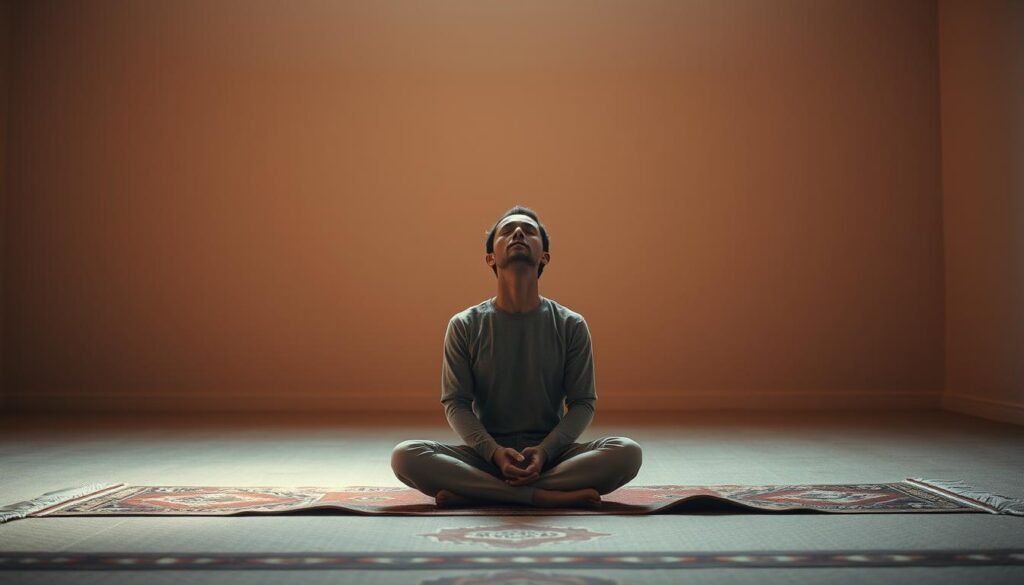
Have you ever wondered how 30 days can transform your relationship with the world and with yourself? Ramadan goes beyond abstaining from food: it is an exercise in self-control
Spiritual and Self-Control Aspects
When you give up basic needs—such as eating or drinking—you rediscover the value of what is essential. This practice, one of the five pillars of Islam, strengthens inner discipline.
“Fasting is a silent conversation between you and your spirituality”, ", explains Aisha, a member of a community group in São Paulo.
O the sacred cycle of Ramadan strictly follows the Islamic calendar, marked by the phases of the moon. This ancient system not only determines religious dates but also synchronizes millions of people in a collective process of reflection.
Did you know that many people donate part of their money saved during the month for charity?
In Brazilian communities, the impact is evident:
- Groups are organizing food baskets for families in need
- Young people participate in discussions on social empathy
- Mosques serve as centers for psychological support
Individual sacrifice creates a chain of solidarity. When you share your money or time, strengthens bonds that transcend differences.
Thus Islamic calendar It doesn't just mark dates—it invites you to start anew, year after year, on a journey of shared growth.
Community Prayers and the Role of Mosques
How can millions of voices come together in harmony for a single spiritual purpose? As the great day dawns, the Eid Salad transforms urban spaces into places of divine connection.
Mosques and public squares welcome worshippers of all ages, united by the same rhythm of movements and prayers.
The invisible force that weaves webs of faith
At the mosque in Brasília, you see businesspeople standing side by side with informal workers. Young people teach older adults how to use apps to find the schedules for the prayers. This blend reveals the essence of the party: equality before the sacred.
In countries such as Turkey and Nigeria, the streets near temples turn into temporary markets. In Brazil, communities adapt the tradition—in São Paulo, even sports stadiums host the prayers.
“When we bow together, we are no longer strangers,”, says an event organizer in Curitiba.
The differences between Sunnis and Shiites lie in the details:
- Schedules vary depending on local interpretations
- Specific gestures during prayers
- Distinctive Decorations in Mosques
But the goal remains the same: to build bridges. In 2023, the party In Dubai, people from 200 different nationalities gathered under the same sky. These moments show how spirituality, just like a passion that brings communities together, transcends geographical boundaries.
“Our differences melt away when we echo the same ‘Allahu Akbar’ in unison”
The prayers They don't end with the final “Amen.” They spark conversations among neighbors, encourage donations, and reinforce that the true party It happens when the world Everyone shares the same hope.
In Recife, even those who aren’t Muslim take part by handing out candy—proof that the celebration fosters dialogue.
Cultural and Regional Practices of Eid
Have you ever wondered how the same celebration takes on unique characteristics in every corner of the globe? The appearance of the new moon not only begins the calendar month Islamic, but it reveals a mosaic of traditions that vary depending on the country.
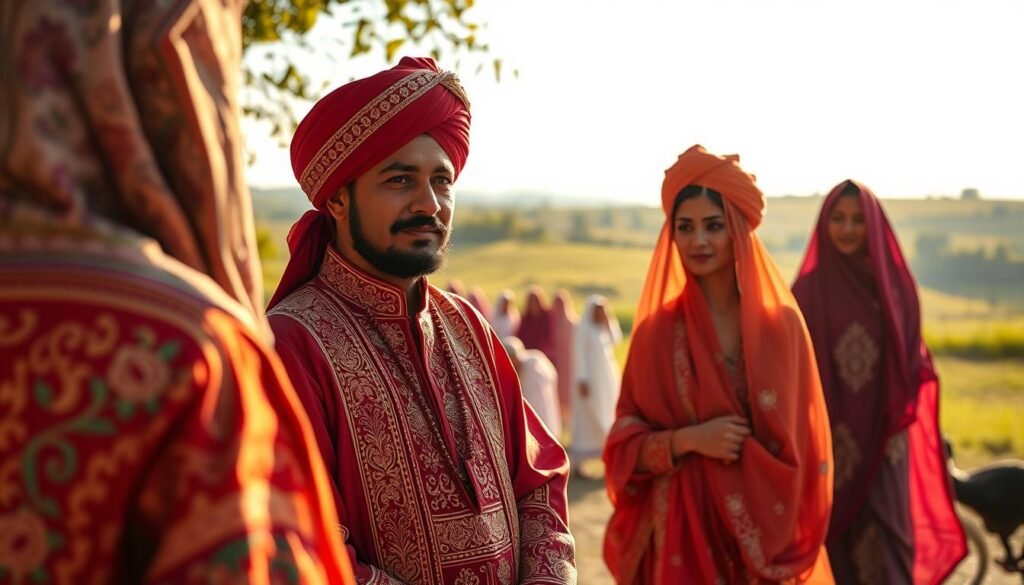
Differences in celebrations around the world
In Indonesia, the mudik It moves millions of people—a migration to reunite with family members. In Turkey, mosques are illuminated with lights arranged in geometric patterns, while children receive candy wrapped in traditional fabrics.
| Country | Custom | Meaning |
|---|---|---|
| Egypt | Paper lanterns | Lighting the Spiritual Path |
| Malaysia | Open Houses | Community Hospitality |
| Morocco | Dances with Candles | Collective purification |
The Impact of Local Customs on the Festival
O holy month takes on regional flavors: in Pakistan, families prepare sheer khurma with milk and dates, while in Brazil, communities adapt recipes using tropical fruits.
In South Africa, the country turns parks into outdoor places of worship. In the Philippines, on the other hand, the calendar month It ends with fireworks over the night markets.
“We respect the essence, but each culture adds its own sparkle”, explains an event planner in São Paulo.
This diversity proves that the holy month It is not limited to rituals—it permeates the identity of each people. Even the way of observing the new moon It varies: Modern telescopes in Saudi Arabia stand in contrast to traditional methods in Indonesian villages.
Dating and the Islamic Calendar
How can a system of measuring time bring different generations together in cosmic harmony? The calendar Islam answers this question through its direct connection to natural cycles.
Based exclusively on the phases of the moon, it guides not only religious observances but also the entire spiritual life of the faithful.
How the Lunar Calendar Works
Each month begins with the sighting of the crescent moon—a practice that keeps a 1,400-year-old tradition alive. While the calendar The Gregorian calendar follows the sun; here, everything depends on nighttime observations.
“It’s like dancing to the rhythm of nature,”, says an amateur astronomer from Recife.
The mosques play a central role in this process. Local committees review reliable reports of the first appearance of the moon new. Only then do they officially announce the start of the holy month.
In 2023, for example, communities in northeastern Brazil used modern telescopes to confirm the phenomenon.
| Features | Lunar Calendar | Solar Calendar |
|---|---|---|
| Calculation basis | Lunar cycles (29–30 days) | Earth Movement |
| Current year | 1445 AH | 2024 |
| Adjustments | None (354 days/year) | Leap years |

- Elegant Ramadan Decor – Beautify your space with this stunning “Eid Mubarak” door banner featuring a crescent moon…
- High-quality material – Made of durable polyester fabric, this Ramadan door decoration is lightweight and won’t fade…
- Ideal size – Measuring 180 cm x 90 cm (70.8 x 35.4 inches), this large banner makes a striking statement, if…
This difference causes the sacred dates to “shift” 11 days each year in the calendar common. For Muslims, this reinforces the idea of renewal—the celebrations take place at different stages throughout life.
In mosques In Brazil, digital displays show both systems simultaneously. This practical adaptation allows young people who are tech-savvy to keep an ancestral tradition alive. After all, the calendar It's not just a tool—it's a bridge between the past and the future.
Special Moments and Rituals of Eid
What turns a simple sunrise into an unforgettable memory for millions of people? The answer lies in the perfect harmony between spirituality and human connection that defines the first rays of sunlight on this sacred day.
Starting the day with morning prayer
Even before sunrise, streets near the mosques come to life. Men, women, and children wear impeccable outfits—many of which have been kept by years for special occasions.
In São Paulo, Ibirapuera Park has already welcomed more than 5,000 worshippers for the Eid Salad, proof of how tradition adapts to urban centers.
The rituals performed after prayer
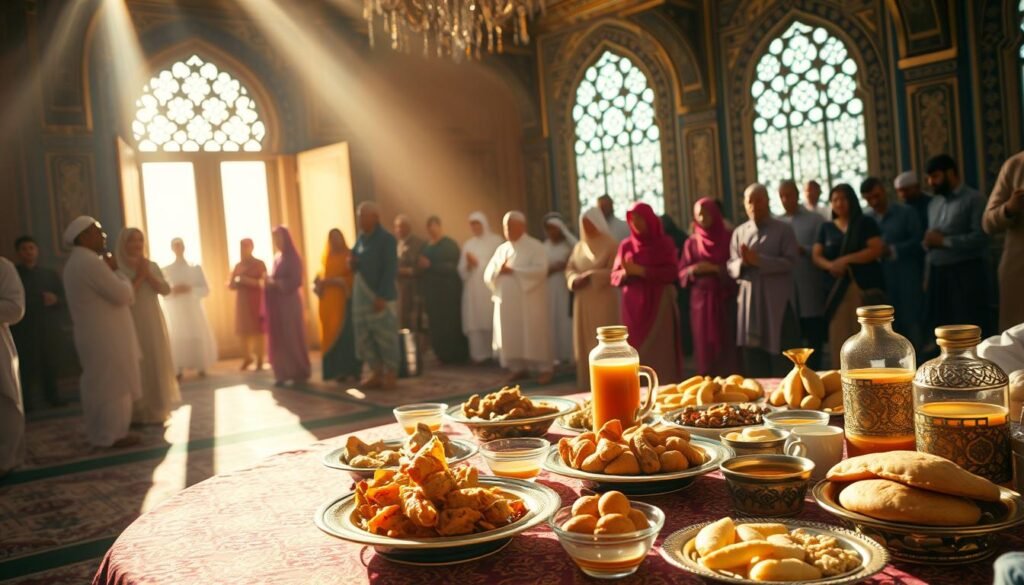
The collective “Eid Mubarak!” greeting is just the beginning. In Brazilian homes, tables are set with Syrian sweets and brigadeiros—a fusion that shows how each family revives the tradition.
“My grandparents introduced the tradition of stuffed dates, and my children added the coconut cookies.”, ", says Leila, the organizer of a community gathering in Rio.
Three key elements characterize these times:
- Distribution of Zakat al-Fitr (mandatory donation) before prayers
- Gift-giving between generations
- Banquets that combine traditional dishes and local ingredients
In communities in the Northeast, it is common to see grandparents teaching their grandchildren how to prepare maamoul, a traditional cookie steeped in stories of migration. These gestures, repeated by years, turn recipes into bridges between the past and the present.
Family Gatherings and Community Activities
What happens when family ties and friendship come together in a collective celebration? In Brazilian homes, the moment The most eagerly awaited moment begins when the first greetings echo after the prayers.
Tables set with Arabic sweets and a Gaucho-style barbecue show how traditions come together in shared joy.
How Families Get Together to Celebrate
In Mogi das Cruzes, rented farmhouses have become the setting for intergenerational gatherings. Grandparents prepare kibes while their grandchildren organize scavenger hunts.
“Here, every dish tells a story of migration and adaptation”," says a mother as she serves passion fruit juice with dates.
There are three essential elements:
- Focus groups where friends People of different religions are welcome
- Educational toys for children learn about cultural heritage
- Fundraising during the moment social gathering
In communities across São Paulo, even non-Muslim neighbors receive special portions. Children They run around with colorful balloons, creating memories they'll share with their children.
In Porto Alegre, a group of friends turned the ritual into a multicultural picnic at Redenção Park.
“When we share pita bread with those we love, we strengthen our collective identity”
These moments go beyond the celebration. Local cooperatives use the occasion to register blood donors, demonstrating how joy and solidarity go hand in hand.
And at the end of the day, when the last children fall asleep, the friends They're still talking under the stars—planning how to keep that flame alive all year long.
Cuisine and Traditional Dishes at Festivals
Sweet flavors and unique aromas transform the celebration into an experience for all the senses. The bountiful table not only nourishes the body but also tells stories of ancient cultures adapted to life modern. Every bite combines tradition and innovation in perfect proportions.
Sweets That Bring Generations Together
O ma’amoul Sírio, a cookie filled with dates, is a staple on Brazilian tables. In Pakistan, on the other hand, the sheer khurma – made with milk, pasta, and dried fruit – symbolizes shared sweetness. These recipes are passed down from grandparents to grandchildren, creating cherished memories through flavors.
Cuisine as a Cultural Mirror
In morning During the holidays, Brazilian families enjoy Arabic coffee with cheese bread. Meanwhile, in Indonesia, the ketupat (rice cake) illustrates how local ingredients take on religious significance. Three elements reveal this diversity:
- Use of tropical fruits in adapted versions of sweets
- Unusual combinations, such as guava and walnuts
- Savory dishes passed down from immigrant ancestors
The meal shared on the first morning Breaking the fast strengthens bonds. In São Paulo, mosques serve dishes that combine esfihas with brigadeiro—proof of how the life Community spirit is renewed through cuisine. Every bite celebrates not only the end of the fast, but also the richness of traditions that are constantly reinventing themselves.
Effects and Impacts of Eid al-Fitr on the Muslim Community
When the sun rises after the holy month, something magical happens on the streets of Brazilian cities. Neighbors from different backgrounds greet one another, mosques open their doors, and the collective spirit transforms everyday life.
Bonds That Transcend Borders
In families, tradition builds bridges between generations. Grandparents teach their grandchildren how to make special treats, while parents organize donations for local charities. “Our table always has an extra seat for guests of other faiths”, says a mother from Campinas.
Three social impacts stand out:
- Public events in Brazil that attract up to 15,000 people
- Educational Projects on Cultural Diversity
- Record Food Drive in Communities
A Global Echo of a Local Tradition
While Dubai lights up its skyscrapers, São Paulo transforms its squares into gathering places. The event The annual event boosts local economies—in the sale of traditional sweets alone, revenue has grown by 40%.
In the latest edition, Brazilian mosques reported:
| Location | Participants | Social Initiatives |
|---|---|---|
| Curitiba | 3.200 | 1.5 metric tons of food |
| Recife | 2.800 | Group Blood Drive |
This union which begins at families It radiates throughout society. When you see children from different schools playing together during celebrations, you understand how positive values spread.
Conclusion
When cycles come full circle and traditions are renewed, we learn lessons that transcend borders. The period The sacred month of Ramadan teaches that discipline and generosity are the true measures of human spirituality.
From Morocco to Indonesia, each of the countries Those who celebrate this date bring their cultural identity to the rituals. The clothes The new fabrics used in the morning prayers are not just fabrics—they are visible promises of a personal and collective new beginning.
On the streets of Brazil, mosques are becoming centers of community where stories intertwine. From ritual baths to food donations, every gesture reinforces the idea that true celebration happens when we share our achievements.
May this journey inspire you to reflect: How many forms of unity exist beyond those we know? We thank you for joining us on this journey through these traditions that transform fasting into celebration and individuals into a global family.
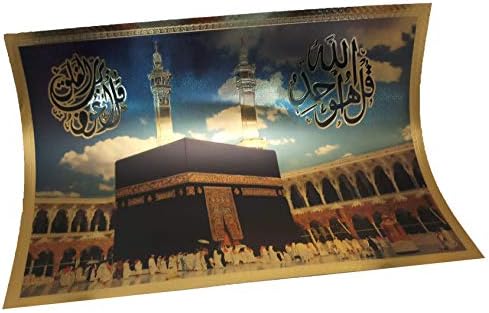
- You will receive a beautiful design featuring verses from the Quran or a poster-sized image without a frame.
- Sheet size: 25 x 35 cm.
- Stick it to the wall with double-sided tape, but find a nice frame to make it look better.
FAQ
Q: How is the date of Eid al-Fitr determined?
A: The date is determined by the sighting of the new moon, according to the Islamic (lunar) calendar. This means that the celebration may fall on different days, depending on the region or country.
Q: What are the differences in celebrations around the world?
A: Each country adapts local customs to the holiday. In Indonesia, for example, it is common to wear traditional batik clothing, while in the Middle East, sweets such as baklava are prepared. The religious essence, however, remains the same.
Q: Why is food so important on this day?
A: Special dishes symbolize gratitude and abundance after the fast. Sweets such as maamoul (filled with dates) and sheer khurma (a milk pudding) are common, and they also reflect the cultural influences of each region.
Q: What is the relationship between Ramadan and Eid al-Fitr?
A: Ramadan is the holy month of fasting, during which Muslims seek spiritual purification. Eid marks the end of this period, celebrating the achievement of self-control and the renewal of faith.
Q: How do morning prayers influence the day?
A: Morning prayer at the mosques is the first ritual of the day. It strengthens the community’s unity and marks the beginning of activities such as family gatherings and the exchange of gifts.
Q: Why is charity emphasized during Eid?
A: Before prayers, Muslims give Zakat al-Fitr, a donation to help those in need. This ensures that everyone can celebrate, strengthening community bonds.
Q: How do families usually get together on this day?
A: Visiting relatives, special lunches, and gifts for children are common traditions. In many countries, such as Turkey and Morocco, it is customary to wear new clothes to symbolize renewal.
Q: What is the significance of the decorations in mosques?
A: Lights, banners, and special rugs create a festive and sacred atmosphere. This sets the stage for communal prayers and welcomes the faithful into a moment of reflection and joy.
Q: How does the lunar calendar affect Eid planning?
A: Since lunar months range from 29 to 30 days, the start of Shawwal (the month following Ramadan) is not confirmed until the moon is sighted, leading to anticipation and local adjustments.
Q: What are the typical greetings during the celebration?
A: Phrases such as “Eid Mubarak” (“Have a blessed Eid”) are used. In countries like Pakistan, people also say “Eid Sa’id,” reinforcing their wishes for happiness and prosperity.