

How do you react when God calls you to work behind the scenes, far from the spotlight and the applause? The priest’s journey Itamar, son of Aaron reveals that true spiritual leadership is often built in silence, through organization and constant obedience.
Many people who seek to serve the Lord face fatigue and a sense of invisibility in their daily lives. Understanding the role of this leader helps us appreciate every small task performed for the Kingdom of God.
Who was Itamar, son of Aaron, in the Bible?
He was the youngest son of the high priest and his wife, whose ancestry is detailed in the Meaning of Eliseba in the Bible. As a member of a priestly lineage, he grew up under the heavy expectation of carrying on his family’s sacred legacy in the desert.
Many readers today share a common struggle: the pressure of leading in difficult times without receiving the recognition they deserve from others. The story of Itamar, son of Aaron, reflects this sense of weariness, for he served in the shadow of giants.
While his father and older brothers held the most prominent positions at the altar, he learned the value of quiet service. This young priest teaches us that our position in the Kingdom matters less than the faithfulness with which we fulfill our calling.
In our daily counseling work, we see firsthand how the desert shapes the character of the most resilient leaders. The youngest son of Aaron in the Bible He accepted his administrative role with the utmost reverence.
He did not seek the easy path of self-glorification, but kept his eyes fixed on the holiness that service to the Lord required. The life of Itamar, son of Aaron, serves as a shield against the ministerial pride that destroys vocations.
The Responsibilities of Itamar, Son of Aaron
The work in the Tabernacle required an extraordinary level of precision and reverence, where every physical detail pointed to the glory of the Creator. The young Itamar, son of Aaron, was given responsibilities that demanded a deep sense of administrative responsibility and constant spiritual vigilance.
To understand the complexity of the sacred service he led under Moses’ direct supervision, we have listed his main duties in the wilderness:
- Inventory of the Tabernacle: He was directly responsible for recording and accounting for all the precious metals in the sanctuary, as stated in Exodus 38:21.
- Supervision of the Gersonites: He was in charge of the duties of this Levite family in transporting the curtains, coverings, and screens of the tabernacle.
- Leadership over the Merarites: He oversaw the transport of heavy structures, such as the planks, pillars, and silver bases of the Tabernacle.
- Utensil storage: To ensure that no sacred object would be handled inappropriately during the journey through the desert.
This meticulous work of accounting and logistics shows that administrative service is also a deeply spiritual activity. The young Itamar, son of Aaron, took care of the physical aspects so that the people’s spiritual worship could take place without a hitch.
What the Bible Teaches Through the Tragedy of His Brothers
That family’s priestly journey was marked by one of the most solemn and awe-inspiring episodes in all of biblical history. The two older brothers, who were supposed to inherit the altar’s most important legacy, dishonored the holiness of the Lord.
“And the sons of Aaron, Nadab and Abihu, each took his censer, put fire in it, placed incense on it, and offered unauthorized fire before the Lord—which He had not commanded them to do. Then fire came out from before the Lord and consumed them, and they died before the Lord.” Leviticus 10:1-2
After that terrible tragedy, the young Itamar, son of Aaron, and his brother Eleazar had to assume their sacred responsibilities immediately. The pain of their family’s grief had to give way to the fear of the Lord and the continuation of divine worship.
This hard lesson taught Itamar, the son of Aaron, that God does not accept worship based on human preferences or rebellious innovations. He understood that the altar demands strict obedience and reverence, and he shaped his ministry on the basis of reverent fear.



Itamar's role in organizing the Levites
Managing large crowds in the desert required impeccable organization to prevent chaos and the desecration of what was sacred. The priest assumed strategic command over the families of Gershon and Merari, as detailed in the Book of Numbers.
He served as a bridge for communication and order between Moses’ central leadership and the families who bore the physical burden of the Tabernacle. In the bible study Against the backdrop of the desert, he stands out as the organizer who kept everything running smoothly.
Always maintaining a warm and cooperative tone, he divided up the daily tasks so that no group would be overburdened. The leadership of Itamar, son of Aaron, shows us that organization is an expression of love and care for God’s work.
In our readings and reflections, we have come to realize that the success of a faith community depends on these peaceful leaders. The work of Itamar, son of Aaron, ensured that when God’s cloud moved, the people moved in perfect harmony.
The legacy of loyalty left by Itamar
The story of a man of God does not end with his death, but continues to resonate through the generations he influenced. The priest’s lineage endured for centuries, playing key roles in the history of Israel.
Even after their painful exile in Babylon, the descendants of Ithamar, son of Aaron, returned to Jerusalem to restore worship of the Lord. This generational faithfulness shows that the example of obedience set in the wilderness was effectively passed down to their children.
They knew that bearing that name meant remaining committed to holiness and to behind-the-scenes service in the temple. The steadfastness of Itamar, son of Aaron, paved a path of honor for generations he never even knew in his lifetime.
Today, when you choose to obey God in your daily life, you are planting seeds of blessings for your children and grandchildren. The greatest legacy we can leave behind is a legacy of unwavering faithfulness and a love for sacred service.
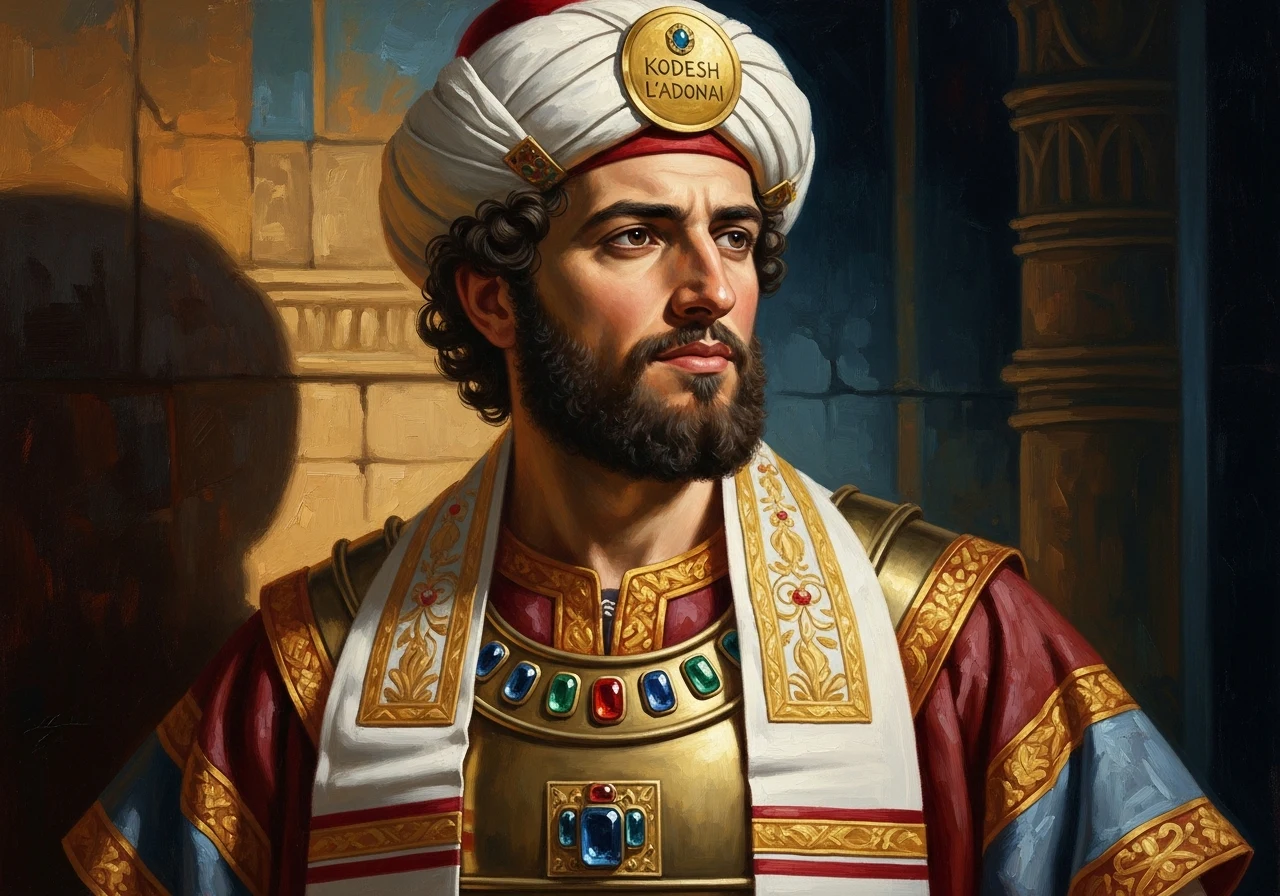
How to Serve God Behind the Scenes Like This Priest
Serving the Lord behind the scenes requires spiritual maturity to understand that our applause comes exclusively from heaven. The priest’s example challenges us to let go of the pursuit of “likes” and public recognition in our Christian walk.
The true value of a ministry lies in its daily faithfulness and in the reverence with which we care for the things of God. Whether you’re cleaning the church, managing its affairs, or quietly helping others, the Father’s eye is upon you.
Let the story of the priest Itamar, son of Aaron May it inspire you to continue serving with excellence, even when no one is watching. Your work for the Lord will never be in vain.
Would you like to receive prayer to strengthen your faith and your calling to ministry today? Write your first name in the comments below so we can include you in our prayer chain, and share this message on WhatsApp with someone who needs encouragement to continue serving.
Frequently Asked Questions About Itamar, Son of Aaron
Who was Itamar, the son of Aaron, and what was his role in the Tabernacle?
He was the youngest son of the high priest Aaron and Elisheba, and he played a key role in organizing the Tabernacle. His leadership behind the scenes demonstrates that administrative service and quiet faithfulness are essential to God’s work in the wilderness.
How can we manage ministerial tasks by following Itamar's example?
To lead effectively, one must emulate Itamar’s diligence in overseeing inventories and coordinating teams, such as the families of the Gershonites and Merarites. This requires extreme technical precision, constant spiritual vigilance, and submission to the leadership established by God.
What are the benefits of Itamar’s quiet service for today’s leaders?
The greatest benefit of his legacy is the protection it offers against ministerial pride and self-glorification. Understanding his journey helps weary leaders appreciate the day-to-day administrative tasks, recognizing that behind-the-scenes work holds profound value and spiritual sanctity.
What is the difference between Aaron's outstanding leadership and Itamar's service?
While Aaron and his older brothers stood at the top of the altar in the spotlight, Itamar managed the sanctuary’s complex logistics, transportation, and accounting. This comparison shows that positions with less visibility are just as vital to the Kingdom as the most prestigious roles.
Is it a myth that purely administrative work in the Tabernacle had no spiritual value?
Yes, that is a myth, because the accounting of precious metals and the transport of pillars and curtains were sacred ordinances. Meticulous care for the physical structure of the sanctuary ensured the reverence necessary for the spiritual worship of all the people to take place.


