
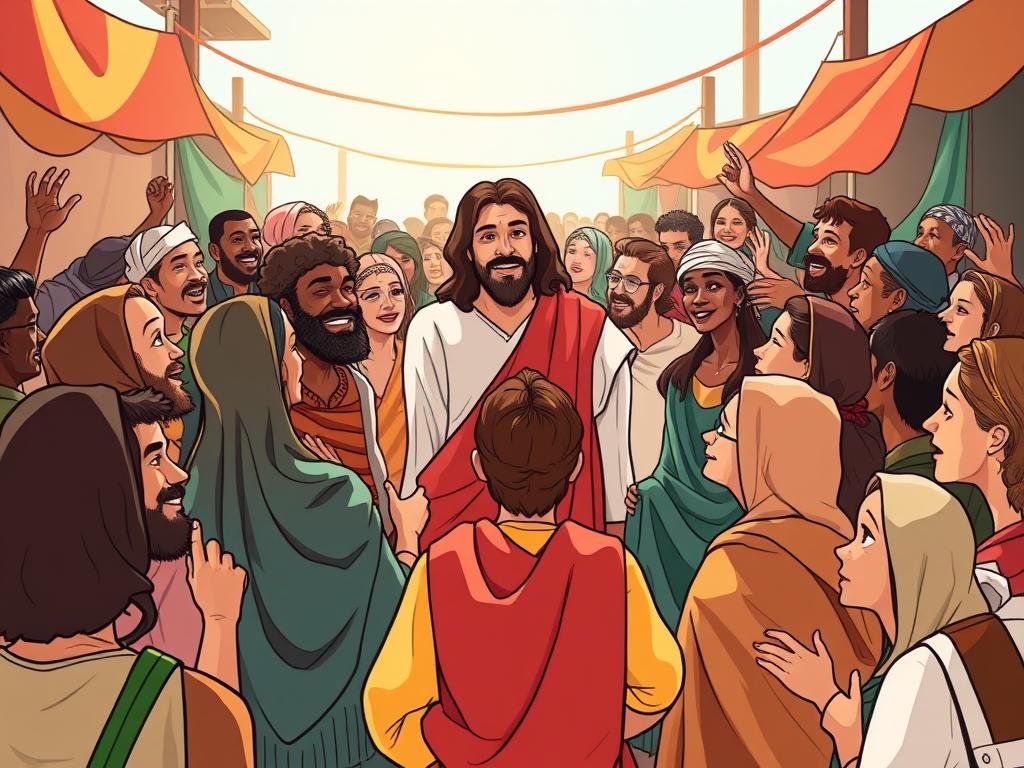
How does the Bible address the issue of diversity and inclusion? Have you ever thought about Diversity in the Bible? It goes beyond superficial differences. Every person has a unique story and a special purpose.
The Bible teaches us to see beyond what our eyes can see.
The Scriptures call us to celebrate our differences. The Bible values diversity as a rich expression of divine creation. Each person, regardless of their background, has a special value in God's eyes.
Let's explore the biblical principles of respect, love, and acceptance. These principles can change our perspective on diversity and inclusion.
Get ready for a reflection that challenges preconceptions and brings us closer together.
The Biblical Perspective on Equality and Human Dignity
The Bible offers a profound perspective on human dignity. It is based on the principle of unity in diversity.
From the very beginning, God established equality before Him. This equality transcends cultural, social, and individual differences.
The Concept of the Image of God
In Genesis, creation reveals a fundamental principle. All human beings are created in the image of God. This concept is revolutionary and establishes some crucial points:
- Every person has intrinsic value
- Human dignity is universal
- There are no hierarchies of value among human beings
The Intrinsic Value of Every Person
The Bible shows that each individual You have a unique and irreplaceable value. No matter your background, gender, or social status, you are precious in the eyes of God.
“For this is what the Lord says—the one who created you… Do not be afraid, for I have redeemed you; I have called you by name—you are mine.” (Isaiah 43:1)
Universal Dignity in Creation
The biblical perspective promotes a radical understanding of equality. Here’s how this perspective manifests itself:
| Aspect | Meaning |
|---|---|
| Creation | All created with equal dignity |
| Value | Intrinsic and independent of external characteristics |
| Purpose | Reflecting the divine image on earth |
A unity in diversity shows that, despite their differences, everyone has a fundamental dignity guaranteed by God.
This perspective challenges discriminatory social structures and promotes the mutual respect.
How does the Bible address the issue of diversity and inclusion?
The Bible conveys a message of love and acceptance. It challenges ideas of exclusion, highlighting the importance of including everyone. This goes beyond cultural and historical differences.
The data show the importance of religious diversity:
- 75% of those surveyed believe that inclusion is essential to the Christian mission today
- 50% churches began to support diversity
- However, only 30% have well-structured inclusion programs
The biblical message invites us to look beyond appearances and value every human being.
From a biblical perspective, Every person has their own value, no matter who they are. This idea challenges existing forms of discrimination.
| Aspect | A Biblical Perspective |
|---|---|
| Ethnicity | Equality Between Jews and Greeks |
| Social Status | Equal status for slaves and free people |
| Gender | Dignity for men and women |
Nearly 15% of the world's population has some form of disability. This highlights the importance of being inclusive, in accordance with the biblical principles of love and respect.
Jesus' Example in Breaking Down Social Barriers
Jesus Christ was a model of mutual respect. He broke down social and cultural barriers in a revolutionary way.
His ministry valued diversity, challenging traditional norms.
The Life-Changing Encounter with the Samaritan Woman
In the story of the Samaritan woman, Jesus demonstrated an encounter without barriers. He spoke with a woman of a different ethnic background, something rare at the time. This encounter shows:
- Willingness to engage in dialogue beyond prejudices
- Respect for individual dignity
- Valuing the individual regardless of their background
Ministry to the Marginalized
Jesus devoted his ministry to marginalized groups, showing radical compassion. His practical example includes:
- Healing Lepers
- Talking to prostitutes
- Welcoming Tax Collectors
Challenging Cultural Prejudices
Through his actions and teachings, Jesus challenged prejudices. The parable of the Good Samaritan shows how to overcome ethnic and social barriers.
True inclusion is not just tolerance, but recognition of each person's intrinsic value.
| Social Group | Jesus' Attitude |
|---|---|
| Samaritans | Respectful dialogue |
| Women | Treatment with dignity |
| Marginalized | Unconditional acceptance |
By following Jesus’ example, you can foster a culture of inclusion. This culture is based on respect and love, which transcend cultural and social differences.



The Early Church and the Inclusion of the Gentiles
The Christian church began with a major shift. The inclusion of Gentiles broke down cultural and ethnic barriers. This changed the way people viewed faith.
“In fact, I realize that God shows no partiality” (Acts 10:34)
The conversion of Cornelius, a Roman centurion, was a pivotal moment. It marked the beginning of a new era. In this era, people from different backgrounds would be welcomed into the church.
- Overcoming Cultural Prejudices
- Openness to different ethnic groups
- Building an Inclusive Community
The apostles faced many challenges. Peter had to receive a divine vision in order to understand that the gospel was meant for all peoples, not just for Jews.
| Events | Meaning |
|---|---|
| Cornelius' Conversion | The First Gentile to Be Officially Converted |
| Council of Jerusalem | Confirmation of the Inclusion of the Gentiles |
The message was clear: faith in Christ knew no cultural boundaries. The Diversity in the Bible It was becoming a reality. A community that celebrated its differences, united in Christ.
Unity in Diversity According to Paul
The Bible teaches us about the importance of unity in the church. It shows that we can live together despite our differences. Paul shows us how the church can be a place of true unity, where each of us is respected.
The Metaphor of the Body of Christ
Paul compares the church to a complex and harmonious body. Each member has a unique role, but they all work together. This comparison shows how diversity can be harmonious.
- Every gift is important
- No member is expendable
- The unit stems from the mutual respect
Different Gifts, One Faith
In 1 Corinthians 12, Paul says that there are many different spiritual gifts. But they all come from the same divine Spirit. The church should value these differences, for they enrich our faith.
“There are different kinds of gifts, but the Spirit is the same” (1 Corinthians 12:4)
| Sun | Function | Purpose |
|---|---|---|
| Teaching | To instruct | Building the Community |
| Prophecy | Develop | Provide spiritual guidance |
| Hospitality | Welcome | Expressing Christian love |
A unity in diversity It's not about being the same. It's about working together and celebrating our differences. And all of this with the love of Christ as our guide.
The Biblical Call to Accept Differences
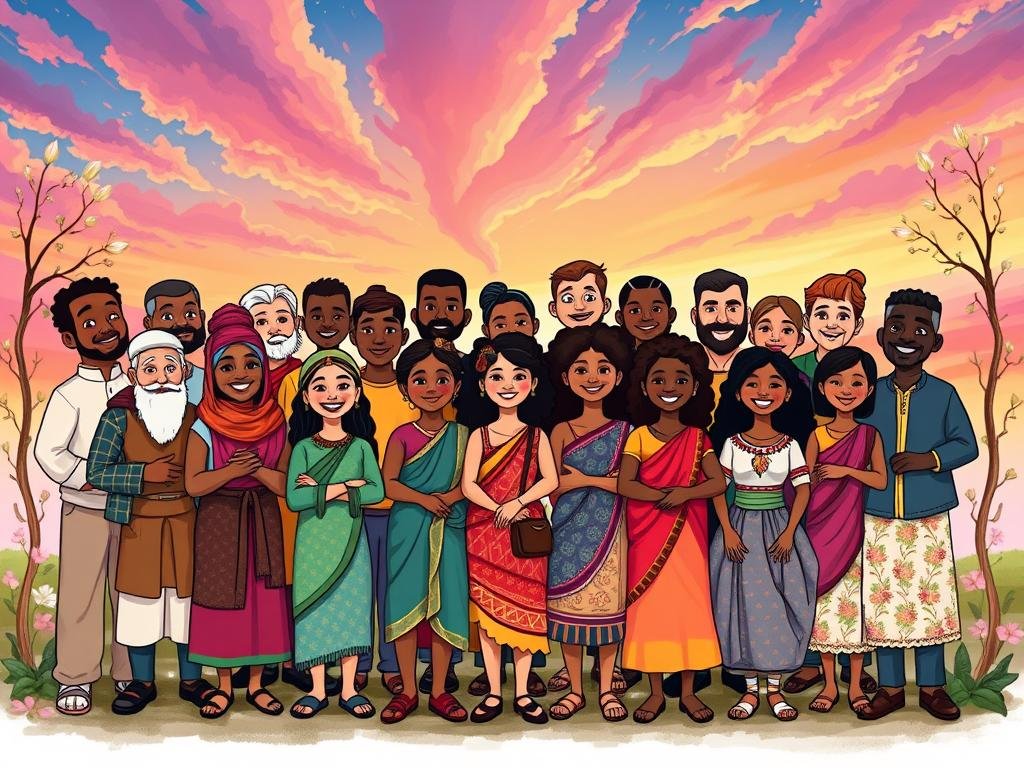
The Bible calls us to a path of love of neighbor. This love must transcend cultural and social barriers.
It teaches us to accept our differences—not as a suggestion, but as a divine commandment.
Every person is uniquely valuable to God. The Diversity of God's Creation shows us that our differences bring us together, not drive us apart.
“There is neither Jew nor Greek, neither slave nor free, neither man nor woman” – Galatians 3:28
- Recognizing the value of each individual
- Practicing Unconditional Compassion
- Breaking Down Barriers of Prejudice
A acceptance of differences It begins with understanding that we are all created in God's image. Love for others It means seeing beyond appearances and recognizing the dignity of every person.
Christ challenges us to be agents of reconciliation. He wants us to build bridges where there are walls.
His message is clear: unity is not uniformity, but a celebration of diversity rooted in love.
| Biblical Principle | Practical Significance |
|---|---|
| Equality in Christ | Respect every person, regardless of their background |
| Universal Love | Welcoming Everyone Without Discrimination |
| Unity in Diversity | Celebrating Differences as a Source of Richness |
Biblical Principles of Equity and Justice
The Bible offers a profound perspective on equity and justice. It challenges common notions about society.
It means that every person has value, regardless of their background or social status.
Fair Treatment for Everyone
Mutual respect is essential to biblical justice. Some important practices include:
- To value each individual as created in the image of God
- Combating Discrimination and Prejudice
- Promote equal opportunities
“Do not judge by appearances, but judge with righteous judgment” – John 7:24
Christian Social Responsibility
Biblical justice calls for real action to promote social integration. She stands up for the oppressed. Her mission is to transform communities through love and inclusion.
Studies show the impact of these actions. About 65% of parents believe that teaching Bible lessons is crucial for teaching justice.
And 60% view social justice as an important value for families today.
God's Vision Beyond Appearances
The Bible teaches us to see beyond what our eyes can see. In 1 Samuel 16:7, we learn that “The Lord does not see as man sees.”.
”Man looks at the outward appearance, but the Lord looks at the heart.".
God shows us that a person’s worth does not come from their appearance, but rather from what is inside. This perspective leads us to ask:
- Looking Beyond Physical Characteristics
- Recognizing the unique potential in each individual
- Value the spiritual essence over superficial aspects
God's gaze penetrates beyond social, cultural, and physical barriers, revealing each person's true identity.
You can learn to see the world in a new way. This perspective helps us overcome prejudices and appreciate each person's individuality.
In this way, we gain a better understanding of humanity's diversity.
Cultural Diversity in the Biblical Narrative
The Bible illustrates diversity in a striking way. It shows how the biblical inclusion goes beyond cultural and linguistic barriers.
From its earliest accounts, the Bible reveals a wealth of human experiences and cultural contexts.
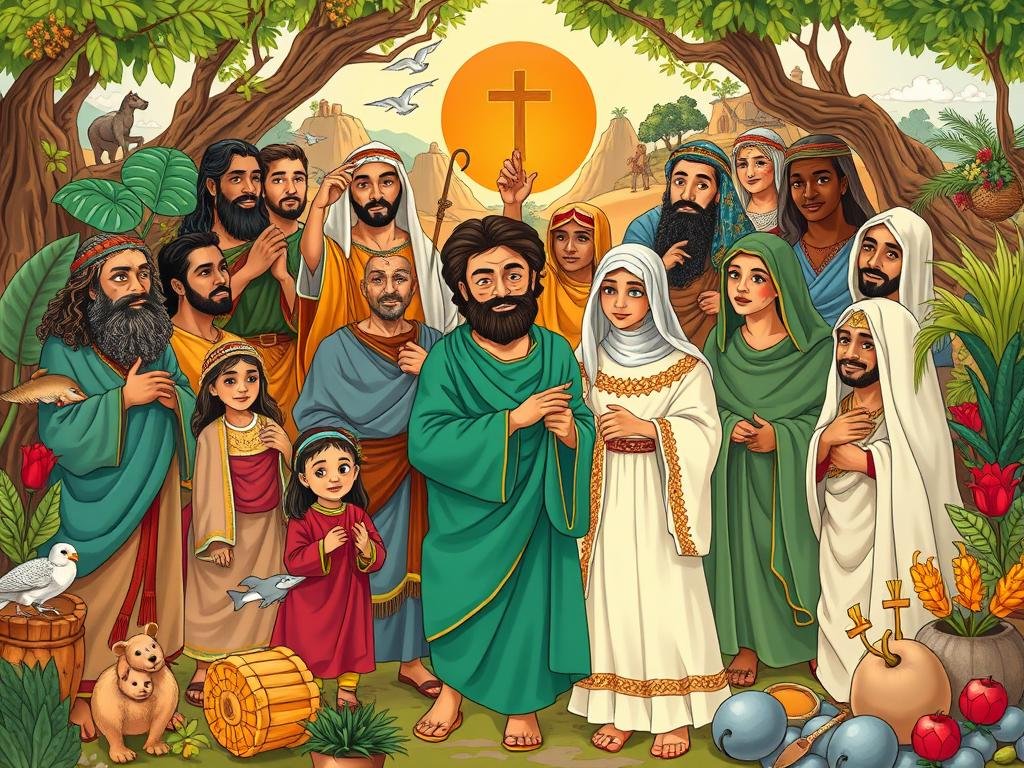
An important moment in religious history is the event of Pentecost. This event is a symbol of universal inclusion.
Pentecost: A Celebration of Diversity
At the event of Pentecost, the diversity of languages revealed God’s plan for global outreach. Here are some important characteristics:
- A gathering of people from different backgrounds
- Communication Beyond Language Barriers
- The Holy Spirit's Manifestation to All Peoples
The Multicultural Church: A Model of Unity
The early church was a place of biblical inclusion. It overcame ethnic and cultural divisions. This community exemplified a radical model of unity in diversity.
“There is neither Jew nor Greek, neither slave nor free, neither male nor female; for you are all one in Christ Jesus.” – Galatians 3:28
A Diversity in the Bible teaches us about true community. It shows that true community transcends cultural differences.
We celebrate the richness of each individual as part of a greater purpose.
The Church's Role in Promoting Inclusion
The church plays a crucial role in fostering unity amid diversity. With nearly 24% of the Brazilian population living with disabilities, its mission is to love of neighbor.
This means overcoming social and physical barriers.
To promote inclusion, it is essential to create a welcoming environment. This should reflect the Christian spirit. Some practical strategies include:
- Adapting Physical Spaces for Accessibility
- Empower leaders and members to understand different needs
- Develop specific ministries for marginalized groups
- To offer genuine support and a warm welcome
“In the absence of others, a person cannot become a person” – Vygotsky
Inclusion goes beyond physical presence. It means creating meaningful connections. It means valuing each individual as part of the body of Christ.
| Challenge | Practical Solution |
|---|---|
| Communication Barriers | Brazilian Sign Language Interpreters |
| Physical Accessibility | Ramps and accessible spaces |
| Understanding the Differences | Awareness Training Sessions |
Your church can be a model of inclusion—showing unconditional love and breaking down social barriers. This helps include people who were previously excluded.
Contemporary Challenges in Light of the Bible
Today's society faces complex challenges regarding diversity and inclusion. Accepting differences is essential to fostering peaceful relations among different groups.
The scriptures offer strong guidance for these challenges. Mutual respect is a key principle for overcoming prejudice. This helps create a more harmonious coexistence.
- Recognizing the dignity of every individual
- Combating Structural Discrimination
- Promote dialogue among different groups
- Building Bridges of Understanding
The Bible calls us to overcome cultural, ethnic, and social barriers. It teaches that true community is built on genuine acceptance and unconditional love.
“There is neither Jew nor Greek, neither slave nor free, neither man nor woman; for you are all one in Christ Jesus” (Galatians 3:28)
To promote inclusion, we can adopt practical strategies:
- Education on the History and Impacts of Racism
- Support for racial justice policies
- Involvement in community initiatives
- Developing Diverse Leaders
Biblical wisdom challenges us to create spaces where every person is valued. This applies to everyone, regardless of their background or characteristics.
Conclusion: How Does the Bible Address the Issue of Diversity and Inclusion?
The Bible offers profound insights into how to approach diversity and inclusion. It highlights the importance of each person, showing that everyone has unique value in God’s eyes.
As we explore the Bible, we learn about Christian love. It knows no cultural, ethnic, or social boundaries.
From the Old Testament to Jesus, there is a call to welcome and respect everyone.
Your challenge is to apply these lessons to your life. Every time you recognize the value in someone else and show respect for their differences, you are practicing inclusion.
Diversity is a celebration of the richness of God's creation.
Be an agent of change in your community, at work, or within your family. Practicing the love and respect taught in the Bible can transform lives.
FAQ
What does the Bible say about diversity and inclusion?
The Bible teaches us that we are all created in God’s image. This gives us equal value and dignity. It encourages us to value our differences, fostering love and respect for everyone.
How did Jesus demonstrate inclusiveness during His ministry?
Jesus always challenged the prejudices of his time. He interacted with marginalized people, such as the Samaritan woman and lepers. He showed that God’s love knows no bounds, valuing each unique person.
What is the importance of unity in diversity according to the Bible?
Paul compared the church to the body of Christ. This shows that different gifts can coexist in harmony. The Bible teaches us that, despite our differences, we are united by our faith.
How can I promote inclusion based on biblical principles?
To promote inclusion, practice love of neighbor and value differences. Treat everyone with dignity and respect. Challenge prejudices and be an advocate for social justice, following Christ’s example.
Does the Bible acknowledge cultural diversity?
Yes, the Bible values cultural diversity. Events such as Pentecost demonstrate this. The biblical narrative tells the story of the formation of a multicultural church, where everyone is valued and included.
How can the church be more inclusive?
The church can be more inclusive with diverse leadership. Create ministries that reach out to different groups. Develop programs that celebrate cultural diversity. And above all, practice a welcoming and respectful love toward all people.
What does it mean to be created in God's image?
Being created in God’s image means having intrinsic value and dignity. This reminds us to see the value in every person, beyond appearances and social status.
Source links
- What is DEI, and is it consistent with biblical principles?
- Does the Bible discuss the origins of different races?
- Unity in Faith: New Wine Blog
- steps toward educational transformation
- What Is Unity in Diversity: Understanding the Concept
- What does the Bible say about diversity?
- What Is Inclusion and Acceptance in the Christian Context?