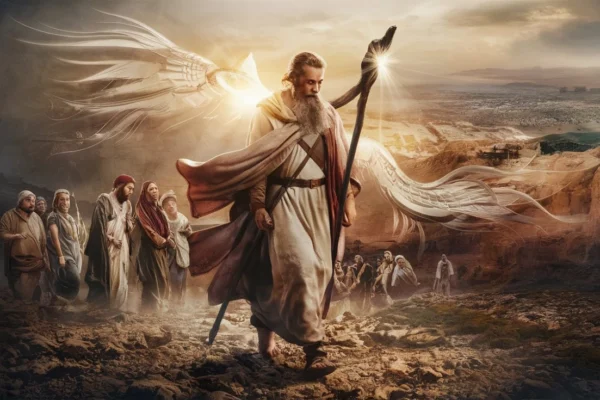

Often, as I leaf through the yellowed pages of the Scriptures, I find myself reflecting on what the silence of the text is trying to tell us.
I seek to understand the life behind the miracles, looking for traces of a humanity that systematic theology sometimes ends up obscuring.

When researching the Daniel's sons in the Bible, I found a gap that reveals much more about divine purpose than about a man's family tree.
CATEGORY: BIBLICAL
The Silence of Scripture Regarding Daniel’s Sons in the Bible
Christian tradition holds that the absence of any mention of Daniel’s biological descendants is not a clerical error, but a historical observation.
I realize that, in the context of the Babylonian captivity, Daniel’s family life was shaped by extreme political and spiritual circumstances.
“Then the king instructed Ashpenaz, the chief of his eunuchs, to bring some of the Israelites—from the royal family and the nobility.” (Daniel 1:3)
The original Hebrew text uses the term “Saris,” which scholars note can refer to either a court official or a castrated eunuch.
I invite you to consider that Daniel, having been taken into captivity at a young age to serve in the palace, may have been subjected to this situation.
Daniel's Situation at the Babylonian Court
I believe that understanding Daniel's position as a court official helps explain why the Daniel's sons in the Bible are never mentioned.
At that time, it was common practice for young nobles from conquered peoples to be trained to serve the king without family ties to distract them.
I saw in this forced renunciation a parallel to the total surrender that the prophet demonstrated in his life of constant prayer and fasting.
The Spiritual Meaning of Biological Infertility
I realize that God often replaces bloodline with a legacy of faith that spans millennia and geographical boundaries.
Daniel left no children, but he left behind a vision that sustains the church’s hope through the year 2026 and far beyond.
I see in your life the promise of Isaiah 56:5, where God promises faithful eunuchs a name better than that of sons and daughters.
This reality leads us to look at other characters who share the same name but have different family histories.
The Other Characters Named Daniel in the Holy Scripture
When investigating the Daniel's sons in the Bible, it is crucial not to confuse the prophet with other men who bore this honorable name.
I have learned that biblical homonymy is a vast field that demands extra attention from students seeking historical truth.
Below is a comparative table to help us distinguish these figures and their respective registered bloodlines.
| Character | Pedigree/Sire | Biblical reference |
|---|---|---|
| Daniel (Prophet) | Royal Lineage of Judah | Book of Daniel |
| Daniel (Son of David) | Son of David and Abigail | 1 Chronicles 3:1 |
| Daniel (Priest) | Itamar's Lineage | Ezra 8:2 |
| Daniel (the Wise) | Mentioned by Ezekiel | Ezekiel 14:14 |
Notice how each “Daniel” plays a specific role in the narrative of redemption, from the royal line to post-exilic priestly service.
Quileabe: Daniel, who was a son of David
Many readers are confused when reading 1 Chronicles 3:1, where Daniel is explicitly identified as the second son of King David and Abigail.
I note that this Daniel, also called Quileab in 2 Samuel 3:3, lived centuries before the prophet who faced the lions.
I believe he died young, since he does not appear in the succession disputes between Adonijah and Solomon over the throne of Israel.
Daniel, the Priest of Itamar
Another figure I came across in my research was Daniel, who returned from Babylon with the scribe Ezra, according to Ezra 8:2.
This man was a spiritual leader who helped reorganize worship at the Second Temple, demonstrating the continuity of the Jewish faith.
I invite you to realize that, although he had spiritual children and followers, his identity is closely tied to sacred service.
Daniel in Ezekiel: A Historical Enigma
In Ezekiel 14:14, the prophet cites Daniel alongside Noah and Job as supreme examples of righteousness and spiritual integrity.
Some scholars suggest that this Daniel could be an even older patriarchal figure, known in Semitic tradition for his wisdom.
Whoever it may be, the focus is on their impeccable character, not on their physical lineage or direct family succession.
Understanding these distinctions allows us to focus now on the prophet’s life and on how he dealt with the absence of heirs.
Daniel's Life in Babylon: Purpose Above Family
Daniel was torn from his homeland while still a teenager, losing the right to start a family in the traditional Judean way.
I feel a deep empathy for this young man who transformed his pain as an exile into a platform of global spiritual authority.
The Bible recounts that he and his three friends decided not to defile themselves with the delicacies from King Nebuchadnezzar’s table.
This diet of vegetables and water was not merely a dietary choice, but an act of resistance against complete cultural assimilation.
Nebuchadnezzar's Education at Court
Daniel spent three years in an intensive training program to learn the language and culture of the Chaldeans, with a view to administrative service.
I understand that, during that time, he was renamed Beltessazar in an attempt to erase his identity linked to the God of Israel.
Despite external pressure, the biblical text indicates that he kept his heart focused on Jerusalem, praying three times a day.
The Gift of Dream Interpretation as a Legacy
The lack of Daniel's sons in the Bible is offset by the legacy of wisdom he passed on to the rulers of four different empires.
He did not father any biological children, but he brought spiritual clarity to confused kings such as Nebuchadnezzar, Belshazzar, Darius, and Cyrus the Great.
I believe that his ability to foresee the future was proof that he was connected to the eternal source of all life.
That divine connection would be put to a dramatic test in one of the most famous episodes in the entire history of humanity.



The Spiritual Legacy as Royal Posterity
As I reflected on posterity, I realized that Daniel left an indelible mark on history that goes far beyond genetics.
Scholars suggest that he may have been the founder of the school of sages that, centuries later, would guide the Magi to the Messiah.
“Then the king honored Daniel, bestowed many great gifts upon him, and appointed him governor of the entire province of Babylon.” (Daniel 2:48)
I see in this leadership role the opportunity Daniel had to mentor an entire generation of scholars and royal advisors.
The Influence on the Magi from the East
It is fascinating to think that the men who followed the star to Bethlehem may have been “spiritual sons” of Daniel’s teachings.
He provided precise calculations regarding the “seventy weeks” that indicated exactly when the Messiah, the Prince, would appear.
I believe this is the greatest proof that the influence of a man of God does not end with his last breath.
The Preservation of Jewish Identity in Exile
Without Daniel’s presence and his integrity, the Jewish people might have been completely absorbed into the pagan culture of Babylon.
He served as a beacon of righteousness, showing that it is possible to be an exemplary citizen of this earth without betraying one’s citizenship in heaven.
I found in this example a source of inspiration for Christians who, today in 2026, face pressure to abandon their values in hostile environments.
It was this strength of character that led him directly to the ultimate test of his faith and dependence on God.
The Lions' Den and the Fatherhood of God
The episode of the lions' den reveals an elderly Daniel, likely over 80 years old, but with the faith of a young man.
I realize that, even though he had no children to defend him, he had his Heavenly Father as his shield and unfailing protector.
The satraps’ conspiracy against him was not merely political; it was a spiritual attack against the light he radiated.
Dario's Decree and Unwavering Loyalty
King Darius was tricked by his advisors into signing a decree that prohibited any petition to gods or men for thirty days.
When Daniel heard about the decree, he did not hide; he opened the windows and prayed, showing that his loyalty to God was absolute.
I invite you to note that he did not seek martyrdom, but neither did he compromise his daily communion with the Creator.
O Milagre da Preservação e o Impacto no Reino
Deus enviou o Seu anjo e fechou a boca dos leões, transformando um local de execução em um santuário de adoração e paz.
Pela manhã, o rei Dario, angustiado, correu para a cova e encontrou Daniel vivo, proclamando a soberania do Deus Altíssimo.
Acredito que esse milagre serviu para validar toda a vida de Daniel diante de um império que agora temia o Deus de Israel.
O desfecho dessa história nos mostra como a justiça de Deus se manifesta tanto na proteção do justo quanto no juízo do ímpio.
Daniel's Legacy from a Theological Perspective
Muitos me perguntam se a ausência de Daniel's sons in the Bible diminui sua importância dentro do plano da salvação.
Eu respondo com convicção: a paternidade espiritual de Daniel é uma das mais ricas e produtivas de todo o cânon bíblico.
Ele é o “pai” da literatura apocalíptica, fornecendo a base para que o apóstolo João escrevesse o livro do Apocalipse séculos depois.
A Relevância de Daniel para a Igreja em 2026
Neste ano de 2026, as visões de Daniel sobre os reinos do mundo e o Reino de Deus tornam-se cada vez mais atuais e urgentes.
Ele nos ensina a discernir os tempos e a manter a esperança, mesmo quando as estruturas humanas parecem estar desmoronando ao redor.
Eu vejo Daniel como um mentor para todos os que desejam viver uma vida de impacto sem comprometer sua essência espiritual.
A Herança de um Nome que Significa “Deus é meu Juiz”
O nome Daniel (Daniyyel) carrega em si a premissa de que não devemos temer o julgamento dos homens, pois Deus é quem nos avalia.
Viver sob o olhar de Deus foi o segredo de Daniel para manter o equilíbrio em meio ao luxo da Babilônia e à ameaça da morte.
Acredito que todos nós podemos ser considerados “filhos de Daniel” quando adotamos sua postura de integridade e devoção inegociável.
Agora, convido você a sanar as dúvidas mais frequentes que surgem ao estudarmos a genealogia e a vida deste grande profeta.
FAQ — Common Questions About Daniel's Sons in the Bible
Recebo constantemente perguntas de leitores que buscam detalhes sobre a família deste profeta. Abaixo, respondo aos questionamentos mais frequentes com base no texto sagrado.
I would like to clarify that the Bible does not mention any biological children for the prophet Daniel, who lived in Babylon. I believe that his status as a court official and his exclusive dedication to his prophetic ministry explain this lack of biological descendants.
No, I realize that this is a common misinterpretation. The Daniel mentioned in 1 Chronicles 3:1 was the son of King David and was born in Hebron; he lived hundreds of years before the prophet Daniel was taken into Babylonian exile.
Although the Bible does not explicitly use that word to describe him, I note that he was entrusted to the chief of the eunuchs (Daniel 1:3). Christian tradition and many historians suggest that he may have been castrated, which would explain why Daniel had no sons in the Bible.
I invite you to focus on the legacy of principles and values. Even without children, Daniel influenced generations; this teaches me that our greatest legacy to our biological or spiritual children is a life of prayer and unwavering integrity.
Share this with someone who needs to hear this message 🙏
Conclusion
Ao encerrar esta jornada pela vida de um dos maiores homens de Deus, sinto meu coração renovado pela profundidade de sua entrega.
Descobrir que não existem registros de Daniel's sons in the Bible não esvazia sua história, mas a preenche com um propósito eterno.
Ele nos prova que uma vida frutífera não é medida apenas pela sucessão biológica, mas pela semente da Palavra que plantamos no coração do próximo.
Daniel atravessou impérios, sobreviveu a feras e interpretou o futuro, tudo isso mantendo os olhos fixos na soberania de Deus.
Eu acredito que o maior desafio que Daniel nos deixa em 2026 é o de sermos fiéis no “pouco” do nosso cotidiano para sermos usados no “muito” do Reino.
Que a falta de herdeiros físicos de Daniel nos inspire a sermos seus herdeiros espirituais, carregando a tocha da verdade em meio às trevas.
Você está disposto a priorizar o seu propósito divino acima de qualquer conforto ou reconhecimento pessoal hoje?