
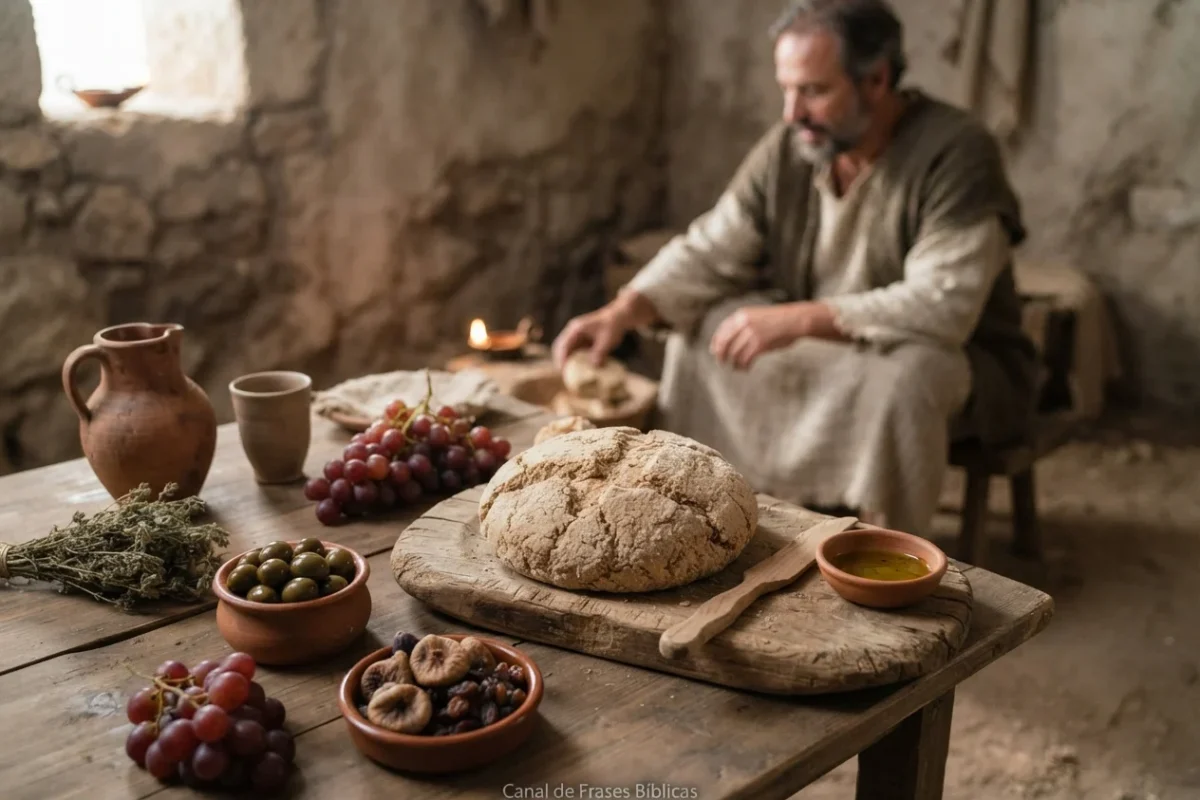
Have you ever felt that the daily rush robs your meals of their tranquility? Understanding Eating Habits in Biblical Times helps us restore true peace around our table.
When we look to the Scriptures, we discover a way of life grounded in simplicity, respect for the earth’s cycles, and constant trust in the Creator’s care.
Eating Habits in Biblical Times
In ancient times, daily life in villages followed the rhythm of sunrise and sunset. Eating habits in biblical times directly reflected dependence on rainfall and soil fertility.
In our Bible studies, we realized that families depended entirely on each season’s harvest. There were no refrigerators or modern methods for storing large quantities of fresh food.
For this reason, food was consumed in its pure and unprocessed form. This way of life ensured a very deep connection with the land and with the daily sustenance provided by the Lord.
When we analyze the Israeli eating habits, we understand that the table was never viewed merely as a source of physical nourishment. It represented a sacred altar of gratitude and community unity.
With each season, dietary habits in biblical times adapted easily. Spring brought the new grain, while fall brought an abundance of ripe fruit.
Many details about this relationship with the land appear right at the beginning of the Scriptures. Upon careful examination Reading from Genesis, we noticed how working in the fields required effort, prayer, and constant perseverance.
This routine taught the Hebrews in their villages patience and humility. Eating habits in biblical times kept people mindful that every bite came from God’s generous hands.
No meal began without a heartfelt blessing spoken by the head of the household. It was a way of publicly acknowledging God’s sovereignty over the sustenance of the entire household.
Daily bread and the foundation of sacred meals

Bread was the very backbone of subsistence in the biblical world. It was so vital that the Hebrew word for bread itself often came to symbolize food in general.
The preparation required intense dedication from the early hours of the morning. The women ground the barley or wheat grains on hand-operated stone mills, creating a distinctive sound in the villages.
Next, they mixed the coarse flour with water and a little olive oil, then baked the dough on hot stones. The aroma of the fresh food filled the tents and brought the family together in joy.
Within this historical context, dietary habits in biblical times held bread up as the ultimate symbol of the heavenly Father’s faithfulness. Tomorrow’s sustenance depended on today’s faithful work.
Barley bread, which was cheaper and more readily available, sustained the poorest families in society. Fine wheat, on the other hand, was reserved for festive occasions and sacred consecration banquets.
This daily need inspired the profound teachings left by the Lord Jesus Himself during His earthly ministry. He taught us to ask only for what is necessary for each day.
“Give us this day our daily bread.” — Matthew 6:11
As we reflect on these words, we come to understand the beauty of living without anxiety about the future. Eating habits in biblical times illustrate this hopeful reliance on heavenly care.
Later, Christ declared that He Himself was the bread of life, bringing complete satisfaction to humanity’s spiritual hunger. Eating the physical bread reminded everyone of the eternal provision.
Therefore, understanding dietary customs in biblical times enriches our relationship with God. Every piece of bread broken at the table reveals the divine love that never forsakes us on our journey.
Fruit and Olive Oil on the Table of God's People
In addition to ground grains, traditional dishes featured a wide variety of agricultural products from the Promised Land. These fruits complemented the diet by providing sweetness, quick energy, and numerous health benefits.
The Foods in the Bible They highlighted what the Mediterranean climate produced in abundance. Olive oil, in particular, was the most prized and versatile ingredient in any household.
It was used for cooking, softening dough, lighting clay lamps, and even preparing healing ointments. Olive oil symbolized abundance, joy, and the visible anointing of the Holy Spirit upon believers.
The Holy Scriptures lovingly record the list of the principal agricultural blessings bestowed by God in Deuteronomy to bless the inheritance of His chosen people.
- Wheat: The golden, noble grain, used for fine breads and sacred offerings.
- Barley: The hardy and nutritious grain, harvested in early spring by humble families.
- Vines: Grapes eaten fresh, dried as raisins, or turned into wine for celebrations.
- Figueiras: Sweet fruits pressed into nutritious cakes, ideal for long journeys through the desert.
- Pomegranates: A symbol of fertility and beauty, whose refreshing seeds adorned festive banquets.
- Olive trees: Thousand-year-old trees that provided tasty olives and precious olive oil for the household.
- Mel: The sweet nectar extracted from ripe dates and wild honeycombs found in the fields.
These items demonstrate the Creator’s generosity in providing for the nutritional needs of His people. Eating habits in biblical times taught people to value every fruit tree planted around the village.
In our reflections, we noted that eating dried fruits provided nutritious food during the harsh winter. Fig cakes and raisins were taken along as provisions on long journeys.
Looking at dietary habits in biblical times invites us to rediscover pure and natural foods. The biblical table celebrated simplicity and the divine wisdom embedded in creation.
Thus, dietary habits in biblical times show that eating well means enjoying the earth’s gifts with moderation, a grateful heart, and true contentment.



Moderate consumption of meat and fish
Unlike in many contemporary cultures, the consumption of red meat was quite rare in the biblical world. Flocks of sheep and herds of cattle were kept alive to provide milk, wool, and labor for plowing.
Slaughtering an animal was an extraordinary event in these communities. The meat was prepared mainly for sacred celebrations, weddings, and to welcome distinguished guests arriving from afar.
In our studies on the Israeli eating habits, we see that offering a fat calf to a traveler was the highest form of honor and hospitality a family could show.
On the other hand, dietary habits in biblical times included fish as a regular source of animal protein. This custom was particularly widespread among the villages located near the Sea of Galilee.
Several of the disciples chosen by Jesus earned their living as professional fishermen on the Sea of Gennesaret. Dried, salted, or charcoal-grilled fish was a common snack for workers and travelers.
This moderation in meat consumption taught people to avoid waste in their homes. In the ancient accounts of the Scriptures, the sharing of meat always took place in a spirit of communal worship.
Eating habits in biblical times show that feasts took on special significance precisely because they were so rare. When meat was served, everyone knew there was cause for joyful celebration.
This daily prudence protected physical health and fostered respect for animal life. Dietary habits in biblical times maintained a perfect balance between human needs and environmental stewardship.
The Spiritual Significance and Fellowship of the Lord's Supper

In the ancient Middle East, sitting down to eat with someone meant forging a sacred bond of friendship and loyalty. The act of breaking bread broke down barriers of enmity and mistrust.
Feeding the stranger and the needy was an explicit commandment of the Mosaic Law. Dining customs in biblical times transformed the dining room into a safe haven of reconciliation.
When someone entered a host’s tent and ate some of his salt, he received immediate protection from external dangers. The meal created an unbreakable bond of brotherhood before God and men.
During His earthly ministry, Jesus elevated these moments of fellowship to a sublime spiritual level. He accepted invitations to eat at the homes of both Pharisees and tax collectors.
At the table, the Savior welcomed those rejected by the religious establishment of the time and offered words of restorative forgiveness. Each meal with Christ became a unique opportunity for redemption and healing for the troubled soul.
As He tenderly broke the bread, He spoke precious words words of faith that soothed wounded hearts. The table was the place where the humble found grace and true comfort.
We understand that dietary practices in biblical times pointed to this intimate communion between God and humankind. Eating together strengthened mutual faith and the unity of the entire congregation.
That is why the eating habits of biblical times continue to inspire our families today. A Christian meal should be a welcoming refuge where sincere love and deep peace reign.
Prayers of Gratitude for Our Daily Food
Restoring the sacred meaning of the table begins with sincere prayers before every family meal. Eating Habits in Biblical Times They teach us to pause, give thanks, and bless the Creator for His unfailing goodness.
Say this prayer in your home: “Lord God, bless this food we receive from Your gracious hands. May there always be bread on our table, and may Your peace and love always be in our hearts. Amen.”
Share this blessed message on WhatsApp with a loved one who needs a word of hope today. Please also leave your first name in the comments so we can join together in a great prayer chain for your family.
Frequently Asked Questions About Eating Habits in Biblical Times
What were the principles that shaped eating habits in biblical times?
Eating habits in biblical times were guided by simplicity, respect for agricultural cycles, and dependence on God. Without modern preservation methods, the diet consisted of pure seasonal harvests, grains, and a sincere acknowledgment of divine providence at the daily family table.
How was the daily bread prepared in the villages of biblical times?
The preparation began early in the morning, when the women ground wheat or barley by hand using stone mills. Shortly afterward, they mixed the coarse flour with water and olive oil, baking the dough directly on heated stones so that the whole family could enjoy it fresh together.
What spiritual and communal benefits did the meal provide for the Hebrews?
Mealtime served as a sacred altar of gratitude, community unity, and a lesson in humility. Always beginning with a blessing spoken by the head of the household, it reinforced the awareness that sustenance came from the Creator, restoring peace and fellowship among everyone.
What is the difference between barley bread and wheat bread in the Scriptures?
Barley bread was more affordable and economical, serving as the staple food for the poorest families in society. Fine wheat, on the other hand, was a more prestigious and prized commodity, reserved for festive celebrations, special occasions, and sacred consecration banquets.
Is it true that the peoples of the Bible stored large quantities of fresh food?
No, that’s a historical myth. In ancient times, there were no refrigerators or modern technologies for storing fresh food on a large scale. For this reason, food was consumed immediately, strictly adapting to what each season provided and requiring constant trust in God’s provision.


