
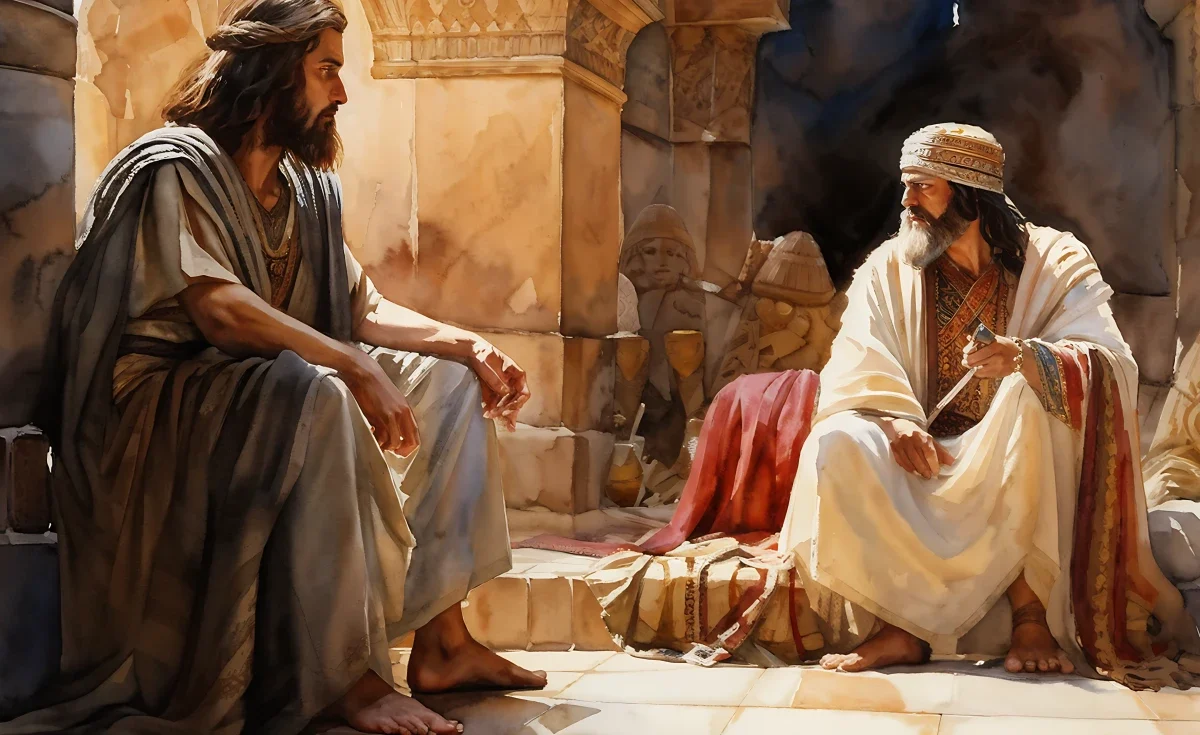
Did Daniel's Sons Actually Exist?: Daniel is a central figure in the Old Testament, known both for his wisdom and for his unwavering faithfulness to God.
How prophet, Daniel played a crucial role at the Babylonian court, where he was taken as a captive during the reign of Nebuchadnezzar. His ability to interpret dreams and visions not only secured him a prominent position but also solidified his reputation as a loyal and gifted servant of God.
The Book of Daniel is a fascinating blend of historical narrative and apocalyptic literature, offering prophetic visions that have been the subject of study and interpretation for centuries.
The stories of Daniel in the lions' den and his three friends in the fiery furnace are classic examples of faith and resistance against oppression.
These episodes not only demonstrate divine protection, but also highlight the courage of Daniel and his companions in remaining faithful to their beliefs, even in the face of certain death.
Historically, Daniel is a transitional figure who lived during a period of great political and social change in the ancient Middle East.
He witnessed the fall of Jerusalem, the rise and fall of the Babylonian and Medo-Persian empires, and his prophetic visions provide a comprehensive overview of the fate of nations.
Daniel's significance extends beyond his own time, influencing both Judaism and Christianity with his prophecies about the end times and the coming of the Kingdom of God.
Understanding Daniel's life and contributions is essential to fully appreciating the context of the scriptures and the divine message they convey.
This introductory section prepares us to explore in greater depth some of the lesser-discussed aspects of his life, including who Daniel’s children were—or the “sons of Daniel” mentioned in biblical and historical texts.
Daniel's Personal Life: What Does the Bible Say?
A Bible It provides a detailed account of Daniel's life, particularly regarding his faith, wisdom, and service to various Babylonian kings. However, when it comes to his personal life, the Scriptures are remarkably silent.
The Book of Daniel, which is the primary source of information about his life, focuses almost exclusively on his public activities and his role as a prophet and royal advisor. There are no explicit mentions of Daniel’s sons or of a firstborn son of Daniel in the biblical passages.
This lack of direct references to Daniel’s children suggests that his family life was not the main focus of the sacred texts. It is possible that Daniel had no children, or that, if he did, the biblical authors did not consider it relevant to record these details for the purposes of the theological and historical narratives.
The silence regarding Daniel's family may also reflect the authors' intention to highlight his exclusive devotion to God and public service.
Some theological and historical interpretations suggest that the absence of any mention of Daniel’s children may symbolize the celibate and devotional nature of his life.
Daniel is often portrayed as a figure of purity and total devotion, which may imply that he chose not to marry or have children in order to focus fully on his divine mission.
However, these interpretations are speculative, since the biblical text does not provide concrete information about his family life.
Other biblical and apocryphal texts do not shed significant light on Daniel's personal life. Rabbinic literature and other religious traditions are also reluctant to provide additional details about Daniel's possible children.
Thus, any discussion of his home life remains largely speculative and based on contextual inferences.
In short, while the Bible details many aspects of Daniel’s life—including his prophetic visions and his role in the royal courts—it offers little information about his personal and family life. This silence invites various interpretations, but leaves Daniel’s personal story shrouded in mystery.

Daniel's Children: Myths and Facts
The biblical figure Daniel is widely known for his wisdom and unshakable faith, but the question of whether he had children remains a topic of debate among scholars and theologians.
Jewish and Christian traditions generally do not explicitly mention Daniel's children, leading to various interpretations and speculations about his personal life.
In some Jewish traditions, Daniel is viewed as a celibate figure who devoted his life exclusively to the service of God. This view is reinforced by the absence of any direct mention of Daniel’s children in the canonical texts.
However, some apocryphal writings and historical texts suggest the possibility that Daniel may have had a family. These documents, although not considered part of the biblical canon, offer an alternative perspective on the prophet’s life.
On the other hand, certain Christian traditions take a similar view, emphasizing Daniel’s dedication to his prophetic role and his divine mission. This has led to the perception that Daniel lived a life of celibacy, without descendants.
However, some scholars point to the lack of conclusive evidence, arguing that the absence of any mention of Daniel’s children does not necessarily imply that he did not have any.
Academic speculation has also contributed to this debate. Some biblical scholars explore the possibility that Daniel may have had children, based on interpretations of historical and apocryphal texts.
For example, some texts suggest that Daniel may have married during his time in Babylon, raising the possibility that he had descendants. However, these theories find no solid support in the canonical texts, leaving the question open.
Ultimately, comparing these theories and traditions with the canonical texts reveals a significant gap in information.
While the official scriptures do not provide details about Daniel’s children, traditions and speculations continue to fuel the debate, reflecting the complexity and multiple layers of interpretation surrounding the life of this iconic biblical figure.
Conclusion: Did Daniel's Sons Actually Exist?
In revisiting the life and influence of Daniel, we can see that, regardless of the direct references to his children, the impact of his figure transcends the Scriptures.
The absence of specific references to Daniel’s children or his firstborn son in the Bible does not diminish the importance of his story. The story of Daniel is, above all, a testament to unwavering faith and moral integrity—qualities that have been a source of inspiration for countless generations.
Daniel, as a biblical figure, is celebrated for his resilience in the face of adversity and for his unwavering devotion to God.
His life teaches us about the importance of standing firm in our convictions, even when faced with challenging situations. This message resonates strongly in today’s world, where values and ethics are often put to the test.
Through a critical and informed analysis of the Scriptures, we can appreciate the depth and complexity of the biblical stories, recognizing the timeless lessons they offer us.
A The story of Daniel invites us to balance our faith with academic curiosity, seeking to understand the historical and cultural context of the biblical narratives in order to draw valuable lessons from them for modern life.
Therefore, when reflecting on Daniel’s legacy, it is essential to recognize that his influence extends beyond the mention of Daniel’s sons.
His life and example continue to shape many people’s understanding of faith and integrity, serving as a role model. Daniel’s story is a powerful reminder that, in the pursuit of truth and knowledge, faith and curiosity must go hand in hand.