

Anna's Prayer: An Example of Faith presents the story of Hannah, Elkanah and the priest Eli in a clear and practical way. You will read and understand 1 Samuel 1-2, Hannah's vow and why her prayer is a model of faith and intercession.
To find out more about the person behind the prayer, see also who Anne was in the Bible. There will be verses-key, simple theological reflection and devotional steps if you pray for a child - all designed to apply to your life and community today.
Key Lessons
- Pray sincerely, even in pain.
- Trust that God hears you.
- Persist in prayer; don't give up.
- Keep promises made to God.
- Say thank you when you receive a reply.

Historical and biblical context of The Prayer of Anna: An Example of Faith
Hannah's story takes place at a time of transition in Israel, when the people were leaving the period of the judges and moving towards a monarchy. The story is told in 1 Samuel, in a sanctuary in Shiloh, with the priest Eli present.
For an in-depth study of Hannah's cry and Samuel's birth, see the text on the cry of a mother who gave birth to a prophet.
Anne's Prayer: An Example of Faith shows how personal life and public faith intersected in that scenario.
The text reveals important social and religious customs: the importance of offspring, offerings at the sanctuary and the weight of the stigma of sterility.
Hannah uses the temple to expose her pain; her prayer is a vow, a commitment and then a song of thanksgiving. For today, the story acts as a mirror: it speaks of suffering, promise and divine response.
This cultural context is similar to that of other women's stories in the Old Testament; see more on female characters in the Old Testament.
Where Hannah's prayer appears in the Bible (1 Samuel 1-2)
The episode begins in 1 Samuel 1, when Hannah begs for a son, makes a vow and receives Eli's blessing. In 1 Samuel 2, Hannah's song appears - a poem that celebrates God's justice, the reversal of the humiliated and the joy of prayer.
For further reading on the continuity of the story and Samuel's role, see the second part of the study on Ana and Samuel. These two chapters form a pair: request and response, anguish and praise.
The song has themes found in other biblical texts: God lifts up the humble, overthrows the powerful and answers sincere prayers.
The account places personal experience within the history of Israel and helps us to see prayer as a communal and spiritual act. Also consider reading biblical text from 1 Samuel chapters in the online Bible to accompany the original verses.
“My heart rejoices in the Lord; my weeping is changed into dancing.”
(Paraphrase of Hannah's song in 1 Samuel 2)
The song has themes found in other biblical texts: God lifts up the humble, overthrows the powerful and answers sincere prayers.
The account places the personal experience within the history of Israel and helps us to see prayer as a communal and spiritual act.
Hannah, Elkanah and the situation of barrenness in biblical history
- Ana: a faithful woman, distressed by the absence of children.
- Elkanah: loving husband, divided between his wives.
- Penina: rival who teases Ana for having children.
- Eli: a priest who initially doesn't understand Anna's pain, but then blesses her.
Barrenness was a source of shame and suffering in that culture. Anna didn't hide; she made a vow before God - a radical gesture of surrender and trust.
The family dynamic (love, jealousy, humiliation) explains the intensity of the prayer and why the answer transforms not only the family, but has implications for Israel (the son Samuel will be a central figure).
For more reflections on remarkable women in the Bible and their inspiration, see women of the Bible: divine inspiration.
Why this story is important for understanding Hannah's prayer
The text shows that prayer can be honest, vulnerable and linked to a serious commitment. Anna prays for the impossible for her, promises a vow and fulfills it after the answer.
This teaches that faith involves word and deed; faithfulness in fulfilling the vow is as essential as prayer. To understand the dimension of a promise kept, also read the study on patience, faith and a promise kept.
Reading and text: Anne's prayer Bible text explained
Hannah appears in 1 Samuel as a woman who is suffering from not having children and goes to the temple to talk to God. The prayer is simple, painful and full of hope: short, profound words.
In the text, there is an exchange - request for commitment - which is not bargaining, but active trust. Anna's Prayer: An Example of Faith fits in well here, because she acts with courage and surrender.
After the divine response, Samuel is born, who becomes prophet. The story shows that God can turn pain into purpose. Read it with an open heart and think about what you are ready to offer.
For practical reflections on the promise fulfilled and its implications, see the continuation in patience, faith and promise - part 2. To follow the biblical text in its entirety, check out the Bible reading from 1 Samuel chapters 1 and 2.
Key verses showing Hannah's prayer in the Bible
The central verses are in 1 Samuel 1:10-11, 1:12-18, 1:19-20 and 2:1-10. In them you follow the anguish, the prayer in the temple, the misunderstanding with Eli and God's answer.
“My soul rejoices in the Lord; my face is joyful in my God.” (1 Samuel 2:1)
This excerpt shows Ana's gratitude after the answer.
The hymn has an affinity with other texts about trust in the midst of suffering; for further reading, check out some of them biblical passages of consolation and hope and also Psalms that speak of suffering and trust, such as Psalm 13.
The role of Eli the priest in the temple scene
Eli finds Anna in prayer and thinks she's drunk, rebukes her and then welcomes her explanation, blessing her.
This moment warns of the danger of judging at first glance and shows that leadership can correct the mistake. If you lead or advise, remember to listen calmly before you speak.
Excerpts you can read and meditate on about Anna's prayer
- 1 Samuel 1:1-20
- 1 Samuel 2:1-10
- (Optional) Compare with Psalms that speak of suffering and trust, such as Psalm 13




Theology and intercession in Anna's prayer
The story shows how prayer can be a bridge between pain and God's action. Anna speaks sincerely, without pretense. Anna's Prayer: An Example of Faith illustrates that intercession is both asking and giving - you ask and give the result to the Lord.
For practices that help strengthen this connection, see the secret of connecting with God.
Theologically, intercession reveals humility and trust: Anna doesn't demand an answer; she trusts. By dedicating her son to God's service, she transforms a personal request into a public mission - individual faith becomes a collective commitment.
For studies on how to strengthen spirituality in faith practices, check out how to strengthen your spirituality.
Anne's vow and the theological significance of commitment
Hannah's vow - to dedicate her son to God - is total surrender. Vows express a bond: you promise something to God as a sign of gratitude.
Fulfilling the vow demonstrates priority and renunciation; Ana puts God's will above her personal desire, showing that commitment to God can require renunciation and a transformation of values.
To reflect on lessons and practices of faith inspired by biblical stories, see lessons of faith.
How Anna's prayer is seen as an example of faith and intercession
Anna prayed with tears and surrender - and this became the standard for anyone seeking to intercede. Her faith was not just an idea; it was oral and sacrificial action. She demonstrated persistence without manipulation: she presented her heart and surrendered to God's will.
Intercession is a balance between request and surrender. Practical resources for strengthening community and devotional life appear in strengthen your faith and fellowship.
“I prayed for this child, and the Lord granted me my request.” - 1 Samuel 1:27 (paraphrase)
Simple theological lessons you can apply
- Pray with an open voice and heart.
- Only make commitments when you are willing to fulfill them.
- Let your request become a service to others.
- Practice patience when waiting for an answer.
Tip: Start small - a vow of daily prayer time will transform your routine.
Practice: using Anna's Prayer: An example of faith in praying for children
Hannah's prayer is a model of how to bring deep desires of the heart to the Lord. In 1 Samuel, Hannah opens her heart with honesty: she feels pain, cries and asks in faith.
Use this example to make your prayer sincere, direct and full of surrender. For daily devotional forms, take inspiration from one of the following morning prayer and in a evening prayer which help to create a spiritual rhythm.
When you pray for a child, speak clearly and, if tears come, let them come. You don't need to memorize words; speak as you would to someone you love very much.
Combine prayer with practical action: take care of your health, seek medical and emotional advice and share your steps with people you trust.
Prayer transforms the heart and gives strength to act with wisdom and patience. Also look for official information on reproductive health that complement medical care with devotional practices.
What the text says about praying for pregnancy and asking for a child
The text emphasizes humility and dependence on God. Anna pleads, she doesn't demand. Praying for pregnancy involves recognizing human limits and trusting in a greater purpose.
Anna's vow also speaks of commitment: if she receives the blessing, she dedicates her son to God - a gesture that unites request and service.
Devotional forms inspired by Anne's prayer for those trying to get pregnant
Simple and constant practices sustain hope:
- Take a moment every day to talk to God.
- Keep a prayer journal to record requests and answers.
- Involve a small support group to pray with you.
For inspiration and phrases that strengthen prayer, see biblical phrases about the power of prayer.
Practical steps:
- Choose a daily prayer time for at least 2 weeks.
- Write down your request: describe your pain, your dream and your gratitude.
- Make a simple promise that you can keep (e.g. to serve in the community).
- Seek medical support and inform your prayer group of your progress.
- Practice moments of silence and listening in order to perceive guidance and inner peace.
Practical guidelines and precautions when praying Anne's prayer for a child
Maintain healthy boundaries: don't impose guilt on yourself or turn faith into an obligation. Prayer doesn't guarantee an immediate result; it changes your heart and can open up different paths.
Seek medical advice and psychological support when anxiety strikes; talk to your partner and ask for acceptance if the response comes unexpectedly.
Note: pray with faith, but take care of your body and mind. Combine prayer, action and human support; this protects your emotional health and strengthens your faith.
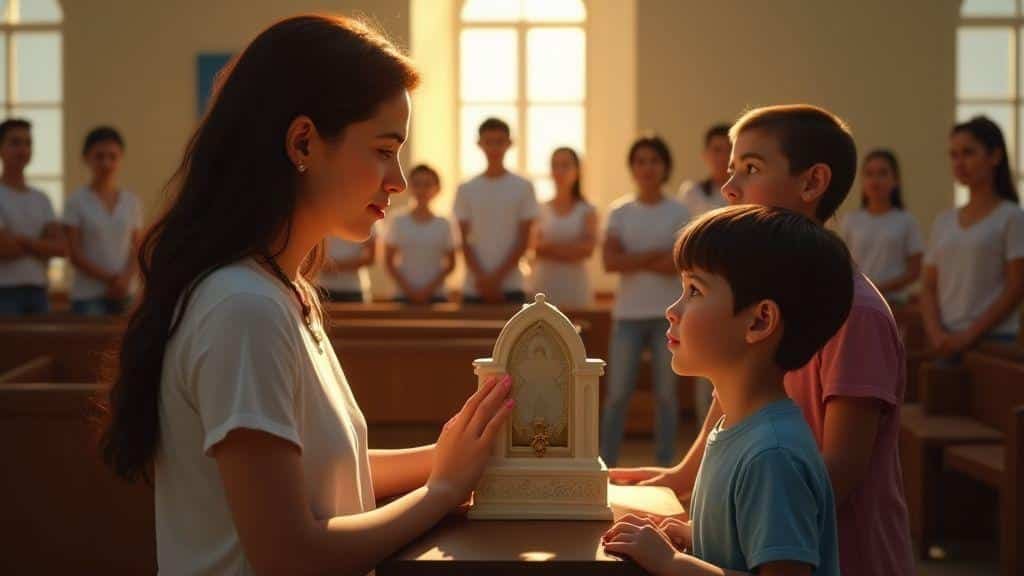
Anne's Prayer in the lives of mothers and in the religious community
Anna's Prayer appears as a beacon on worrying nights. When you read or listen to “Anne's Prayer: An Example of Faith”, you may feel that it speaks directly to the hearts of mothers - asking, thanking and committing a child or a pain into God's hands.
This gesture of commitment translates into practical courage: strength in simple words and in the trust they inspire.
In the community, prayer becomes a meeting point: mothers' circles, prayer groups and celebrations make it a common language and emotional support.
In family life, prayer serves as a routine and an example: saying it quietly, accompanied by simple gestures, helps children learn. To see how others women of the Bible They inspire community initiatives—check them out female biblical characters.


How Anna's prayer brings comfort and models faith for mothers
Prayer comforts because it transforms fear into dialogue; by putting anxiety into words, the weight is lifted. It models faith through persistence and surrender: repeating prayer trains the heart to act with hope.
Communities that pray together transform faith into embrace and practical action. Find pastoral resources to support mothers that help communities organize support groups and welcoming initiatives.
Practical ways in which mothers use prayer:
- Before medical appointments or school exams.
- In nights of vigil for a sick child.
- As thanks in moments of peace.
- In support groups as a starting point for sharing.
Presence of Anne's prayer in liturgies, hymns and devotionals
The prayer enters liturgies as a short passage or inspiration for community prayers. In hymns and devotionals, it appears as a refrain or theme song, gaining memory and emotion.
In written devotionals, passages serve as daily meditations, reminding us that faith is practiced in small rituals. For practical ideas for community and personal devotion, see strengthen your faith and fellowship.
Real examples of community use that show its impact
- In one parish, mothers met weekly to pray the Prayer of Anne before starting a project to help pregnant women; the group grew to offer clothes and support.
- In another community, the prayer has been adapted into a simple song that children sing in the choir, bringing consolation during hospital visits.
“When I prayed with other mothers, I felt I wasn't alone. Faith became embrace and action.” - Maria, mother and volunteer
Practical lessons from Anna's prayer for your daily life
Anna shows us that faith grows when you put your heart into prayer. She prayed with pain and hope at the same time. Learn to take your needs to God with courage and simplicity, without fear of being honest about your weaknesses.
Persistence in prayer is worthwhile: small daily attitudes create a firm foundation for spiritual life. Gratitude is a natural response; when you receive an answer, turn it into thanksgiving that strengthens your journey.
Trust in God, persistence and gratitude as central points
- Trust: hand over control to God without losing the initiative.
- Persistence: routine and patience are worth more than long words.
- Gratitude: celebrate small victories to keep the flame of faith burning.
Keeping promises to God and the importance of transparency in prayer
Keeping promises turns prayer into life. Anna gave her son to the Lord as a sign of honor and return.
For you, keeping promises can be a simple and powerful gesture: it generates coherence between faith and attitude. Be transparent: say what you feel, cry if necessary, ask for help and show gratitude.
Tip: Keep your words short and to the point. Sometimes a short, sincere prayer speaks louder than many speeches.
“Pray with an open heart; the answer comes when the heart is sincere.”
Simple steps you can follow today inspired by Anna's prayer
- Choose a short, fixed time (2-5 minutes).
- State your request and your feelings clearly.
- Give thanks for something concrete.
- Write down any sensations or changes during the week.
- If you make a promise, write it down and keep it.
Practical summary: using Anne's Prayer: An example of faith in everyday life
Anne's Prayer: An Example of Faith inspires simple practices: choose a short prayer routine, write down requests and gratitude, make promises you can keep and seek medical and emotional support when necessary.
Apply Anne's honesty, persistence and faithfulness to fulfilling the vow - then your prayer will become a service to others.
Conclusion: Hannah's Prayer an Example of Faith
Ana's story reminds us that faith is an act, not just a feeling. You make a request, deliver a vow and live the promise. It's like planting in hard soil: you water it with prayer, wait persistently and, when it sprouts, respond with gratitude.
The narrative shows that prayer is honest and communal - a bridge that connects the heart to a greater purpose. Be firm, keep your promise and allow your request to become a service to others.
Remember: the answer may take time, but change begins in your heart. If Ana's story has touched you, come back often to be inspired and learn new ways to pray, act and give thanks.
Read more on the site and in related texts such as Ana: a mother's cry.
Frequently Asked Questions
It's a biblical passage (1 Samuel 1-2) that shows surrender, vow and trust in God. It teaches us to trust in the Lord; for biographical context, see Anna, Samuel's mother.
It teaches patience, honesty in prayer and faithfulness in keeping promises. There are studies that explore this dynamic in patience, faith and a promise kept.
Pray sincerely, commit when you feel called to and keep your promises. Use routines as a morning prayer or a evening prayer to support the practice.
Because Anna prayed with humility, persevered and turned her request into service.
Yes, pray even if you're afraid; God hears your request. To strengthen your prayer practice, see also prayers to Jesus and collections of biblical phrases about the power of prayer.