
Revised on: 23/10/2026
- Key verse: Genesis 12:1-3 (ARC)
- Topic: Abraham's faith, obedience, and hope
- Who it's for: Anyone who wants to understand the story of Abraham and apply its lessons to their daily lives
Abraham is one of the most important figures in the Bible. He is remembered as a model of faith by Jews and Christians, and is also highly revered in Islam.
His story begins when God calls him to leave his homeland and go to a place that would yet be revealed to him. He set out, trusting in the promise that he would be blessed and become the father of a great nation.
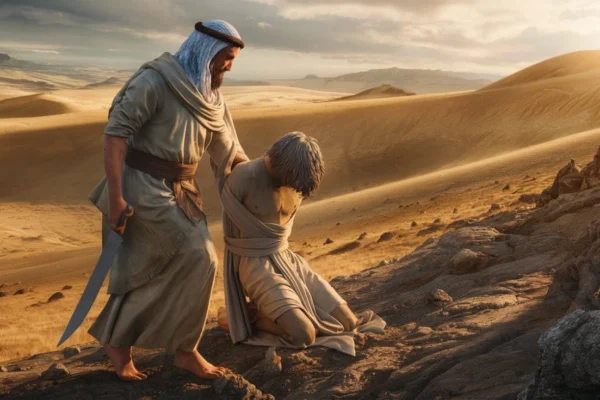
Throughout his life, Abraham faced long waits and difficult trials, such as the command to offer his son Isaac. These passages show what it means to trust and obey when the path ahead is unclear.
In this article, you'll learn who Abraham was, how his faith is portrayed in Genesis, what the New Testament teaches about him, and what lessons can be applied today.
Who Was Abraham: A Historical Introduction
Abraham is the central figure in the accounts found in Genesis 11–25 of the Pentateuch. Scholars generally place him at the beginning of the second millennium B.C., but the exact date is uncertain.
Genesis 11:31 tells us that his father, Terah, left Ur of the Chaldeans with Abram, Sarah, and Lot, heading for Canaan, but the group settled in Haran. In Genesis 12:1–4, God calls Abram to leave there when he was 75 years old.
In Canaan, God promises to give that land to his descendants (Genesis 12:7). Later, the promise takes on a vivid image: his descendants would be as numerous as the stars in the sky (Genesis 15:5).
Abraham is central to the Abrahamic religions: Judaism, Christianity, and Islam. Each tradition interprets him in its own way. In Islam, he is remembered as Ibrahim, a prophet and a model of devotion to God.
Up until Genesis 17, he is called Abram, and his wife, Sarai. In Genesis 17:5, the new name is linked to the promise that he would be the father of many nations. For this reason, this article uses “Abram” for events prior to this change and “Abraham” for those that follow.
Read more:
Abraham's faith
The Call of Abraham
In Genesis 12:1–3, God commands Abram to leave his homeland, his relatives, and his father’s house. In return, He promises to bless him and make him into a great nation.
Abram set out without knowing his exact destination. Hebrews 11:8 highlights precisely this as an act of faith: obeying without knowing the entire path.
To learn more about this moment, see also Abraham's call to leave the land.
The Promise to Abraham
The promise of blessing and descendants was repeated in Genesis 12, 15, and 17. The challenge was great: Sarah had no children (Genesis 11:30), and Abraham was 100 years old when Isaac was born (Genesis 21:5).
Genesis 15:6 sums up his attitude: Abram believed in God, and this was credited to him as righteousness. This verse is the basis for Paul’s argument in Romans 4.
The Bible also shows that Abraham’s faith was not perfect. In Genesis 12:10–20, he fears for his life in Egypt, and in Genesis 16, he and Sarai try to fulfill the promise on their own.
Abraham's Test of Faith
In Genesis 22, the text states that God tested Abraham and asked him to offer Isaac as a sacrifice. The account does not record any protest from Abraham, and he rose early to obey (Genesis 22:3).
Hebrews 11:17–19 explains what motivated Abraham: he believed that God could even raise Isaac from the dead. At the decisive moment, the angel of the Lord stopped him (Genesis 22:11–12), and God provided a ram (Genesis 22:13).
Abraham is called the father of faith because, in Romans 4:11–12, Paul presents him as the father of all who believe. To study this passage carefully, see The Story of Abraham and Isaac.
Lessons in Faith Learned from Abraham
Abraham's life is not just a geographical journey, but also a journey of faith. Three lessons stand out: trust, obedience, and hope.
Trust in God
Abraham trusted in God even when circumstances seemed impossible. He left his homeland, waited for a son in his old age, and accepted the test described in Genesis 22.
Today, that trust reminds us that we can follow God even without understanding everything. Trust isn't about having all the answers, but about knowing whom to trust.
Obedience to God
Abraham obeyed even when the instructions were difficult. In Genesis 17, he accepted circumcision as a sign of the covenant, and the text says that he carried it out that very day (Genesis 17:23–27).
Abraham's obedience shows that following God's will can require sacrifice and change. It stems from trust, not fear.
Hope in God's Promise
Abraham waited many years for the fulfillment of the promise that he would be the father of many nations. His wait shows that patience and perseverance are part of faith.
For today’s reader, the lesson is to keep hope alive even when the answer is slow in coming. God is faithful to His word, and His timing is not always our own.
Related post:



Abraham in Christian Tradition
Abraham in the New Testament
The New Testament mentions Abraham several times. In Romans 4, Paul shows that Abraham was justified by faith, drawing on Genesis 15:6.
Hebrews 11 lists him among the heroes of faith. James 2:21–23, on the other hand, emphasizes that Abraham’s faith was demonstrated through his actions. Christian traditions reconcile these texts in various ways.
Abraham in Liturgical Traditions
Abraham is commemorated in readings and prayers across various Christian denominations. In the Catholic Church, for example, the account in Genesis 22 is among the readings for the Easter Vigil.
Abraham in Christian Theology
Christian theology regards Abraham as the father of faith and a model of trust in God. In Galatians 3:16, Paul states that the promises made to Abraham and his descendants are fulfilled in Christ.
According to Christian tradition, the story of Isaac also points to the sacrifice of Jesus. This symbolic interpretation is not described in the text of Genesis, and interpretations vary among Christian traditions.
Key Passages About Abraham
| Passage | Theme |
|---|---|
| Genesis 12:1-4 | The Call and the Promise of Blessing |
| Genesis 15:5-6 | Descent and faith counted as righteousness |
| Genesis 17:1-14 | The covenant, the new name, and circumcision |
| Genesis 22:1-14 | The Test of Faith and God's Provision |
| Romans 4:1-5 | Justification by faith |
| Hebrews 11:8-19 | Abraham Among the Heroes of Faith |
| James 2:21-23 | Faith That Is Demonstrated Through Deeds |
| Galatians 3:16 | The Promise Fulfilled in Christ |
Conclusion
Abraham's life is a source of inspiration for those who seek to live by faith. His choices show that trusting in God can open up new paths, even when the journey is difficult.
It teaches that obedience comes from trust, that faith gives us courage in the face of challenges, and that waiting is part of the promise. Abraham also made mistakes, and the Bible doesn’t hide that fact.
May we follow his example and trust in the Lord in all circumstances.
In what area of your life does God seem to be asking you to trust Him before revealing the entire path? What would be a first step of obedience that you could take today?
See also: Genesis 15: God's Promise to Abram
Frequently Asked Questions
Why is Abraham called the father of faith?
Because, in Romans 4:11–12, Paul presents him as the father of all who believe. His trust in God, recorded in Genesis 15:6, is seen as a model of faith.
What was Abraham's greatest act of faith?
It was the command to offer Isaac, in Genesis 22. God intervened and provided a ram (Genesis 22:11–13). If you’re having trouble reading this passage, seek support; the CVV is available by calling 188, 24 hours a day, free of charge.
What is the difference between Abram and Abraham?
Abram was his original name. In Genesis 17:5, God changes his name to Abraham, linking it to the promise that he would be the father of many nations.
In which religions is Abraham significant?
He is central to Judaism, Christianity, and Islam—the so-called Abrahamic religions. Each tradition interprets him in its own way.