Disclaimer: This article contains affiliate links. If you make a purchase through them, the website may receive a commission at no extra cost to you.
- We have listed, passage by passage, the men named Gaius in the New Testament.
- We have removed accounts that have no basis in the biblical text and distinguished between the text, tradition, and fiction in the series.
- We have included a reading from 3 John with contextual information (Diotrephes and Demetrius).
- We've updated the FAQs and revised the captions and image descriptions.
- Topic: the men named Gaius (Gaio or Caio) in the New Testament
- Main texts: Acts 19:29; Acts 20:4; Romans 16:23; 1 Corinthians 1:14; 3 John 1
- Context: churches founded by Paul in Corinth, Ephesus, and Macedonia in the first century
- Attention: The centurion in Matthew 8 and the soldier in John 19:34 are not named in the biblical text
Who was Gaius in the Holy Bible? The name appears in five passages in the New Testament, and the question is whether they refer to a single person or to several people.
In Portuguese, the name also appears as Gaio or Caio. It was very common in the Roman world, so it is likely that the texts refer to different men, although the Bible does not resolve the issue.
Here we've separated what the biblical text says, what tradition added later, and what comes from the series The Chosen, who created a character with that name.
The biblical text does not name the centurion in Matthew 8 or the soldier in John 19:34. The names associated with these scenes come from later traditions or works of fiction, and churches differ on how to interpret them.
Introduction to Gaius in the Bible
In the New Testament, Gaius is a person's name, not a title. The person with that name is sometimes mentioned as Paul's traveling companion, sometimes as the host of a church, and sometimes as the recipient of a letter.
What they have in common is hospitality and a close connection to the Christian mission.
The Multiple Identities of Gaius
The text mentions four people by that name. Gaius, a Macedonian, is dragged away with Aristarchus during the riot in Ephesus (Acts 19:29). Gaius of Derbe is among Paul’s companions in Acts 20:4.
In Corinth, Paul mentions Gaius among the few whom he baptized (1 Corinthians 1:14) and calls him a host to himself and to the whole church (Romans 16:23). Finally, 3 John is addressed to a man named Gaius.
Some readers identify the Gaio of Macedonia with the Gaio of Corinth, while others see them as different people. The text does not make this clear.
Meaning of the Name Gaius
Gaius is a Latin name, one of the most common Roman first names. Its exact origin is uncertain. It is often associated with the idea of joy, but this is a hypothesis rather than a consensus.
The Historical Context of Gaius
The passages take place in the middle and late first century, under the Roman Empire founded by Augustus, the first Roman emperor. Roads and ports made it easier for Paul to travel through cities in Greece and Asia Minor.
Corinth, Ephesus, Derbe, and Macedonia are the places associated with Gaius. In these cities, Christian gatherings took place in homes, which is why the owner of a large house—such as Gaius in Romans 16:23—carried so much influence. For the big picture, see the history of the early church.
Gaius, Paul's Faithful Friend and Collaborator
Gaius appears alongside Paul on three occasions: during the riot in Ephesus, in the list of traveling companions, and as a host in Corinth. To learn more about the apostle, read about the The Life and Ministry of the Apostle Paul.
Partnerships on Mission Trips
In Acts 19:29, the crowd in Ephesus seizes Gaius and Aristarchus, who are described as Paul’s traveling companions. The reason for the riot was Paul’s preaching, which threatened the trade associated with the temple of Artemis.
In Acts 20:4, Gaius of Derbe appears on a list alongside Sopater, Aristarchus, Secundus, Timothy, Tychicus, and Trophimus. The text states that they went on ahead and waited at Troas (Acts 20:5). Regarding one of them, see Who was Timothy?.
Mentions in Paul's Epistles
In 1 Corinthians 1:14, Paul mentions Gaius and Crispus as the few people he personally baptized in Corinth. In the same passage, he explains that his primary task was to proclaim the gospel.
In Romans 16:23, at the end of the letter, Paul sends his greetings and refers to Gaius as his host and that of the entire church. This paints a picture of a man whose home served as a gathering place.




The Role of Gaius in the Early Church
Gaius's role is practical: to open his home, provide for travelers, and bring stability to a community. The early churches depended on people like him, because they did not have their own buildings for worship.
Gaius of Corinth hosts an entire church. Gaius of 3 John is praised for welcoming traveling brothers. Neither is presented as a prominent leader; the value the text recognizes is service.
Who was Gaius in the Holy Bible?
To answer your question directly: Gaius was the name of at least four men mentioned in the New Testament, all of whom were connected to Paul or his network of churches. The table lists each one.
| Who | Where | What the text says |
|---|---|---|
| Gaius, a Macedonian (Acts 19:29) | Ephesus | A companion of Paul, swept along by the crowd with Aristarchus |
| Gaius of Derbe (Acts 20:4) | Macedonia and the Troad | One of the companions traveling with Paul |
| Gaius of Corinth (Romans 16:23; 1 Corinthians 1:14) | Corinth | Baptized by Paul and a church leader |
| Gaius in 3 John (3 John 1) | Not applicable | Recipient of the letter, praised for his hospitality |
The text does not state that it is the same person in every case, and there is no way to prove it. What can be said with certainty is the role each one plays in the passage in which they appear.
Bible passages with Gaius
The five passages are best read in contextual order. Acts 19:29 and 20:4 are travel accounts, written in the third person. Romans 16:23 and 1 Corinthians 1:14 are letters from Paul to the churches in Rome and Corinth. The Letter to the Romans It ends with a long list of greetings, and Gaius is on it.
| Biblical reference | Summary |
|---|---|
| Acts 19:29 | Gaius and Aristarchus, Paul's companions, are taken to the theater in Ephesus |
| Acts 20:4 | Gaius of Derbe appears on the list of those who accompanied Paul |
| Romans 16:23 | Gaius is the host of Paul and the entire church |
| 1 Corinthians 1:14 | Gaius is among the few people baptized by Paul in Corinth |
| 3 John 1 | The letter is addressed to Gaius, who is called "beloved" |

Gaius in the Book of 3 John
The Third Epistle of John is the shortest in the New Testament and the only one addressed to Gaius. The author identifies himself as “the elder.” Christian tradition identifies him with the apostle John and dates the letter to the end of the first century.
At the beginning, the author wishes Gaius good health and says he is glad that the brothers bear witness to Gaius’s faithfulness to the truth (3 John 2–4). He then praises Gaius for helping traveling brothers, even though he does not know them (3 John 5–8).
| Character | Paper in the letter | Verses |
|---|---|---|
| Gaius | Recipient, praised for living truthfully and welcoming brothers and sisters | 3 John 1–8 |
| Diotrephes | A local leader who rejects the author and prevents his acceptance | 3 John 9–10 |
| Demetrius | Recommended as someone with a good reputation | 3 John 12 |
The letter contrasts two attitudes within the same church: Gaius’s generosity and Diotrephes’s rejection. The text does not say where Gaius lived or what position he held, and any details beyond that are mere speculation.
Learn more about the 3rd Epistle of John
Theories about Gaius' identity
Two popular ideas link the name Gaius to scenes in the Gospels: the centurion in Matthew 8 and the soldier who pierced Jesus on the cross. Neither of these ideas is supported by the biblical text, and it is helpful to see why.
Gaius as the Centurion in Matthew 8
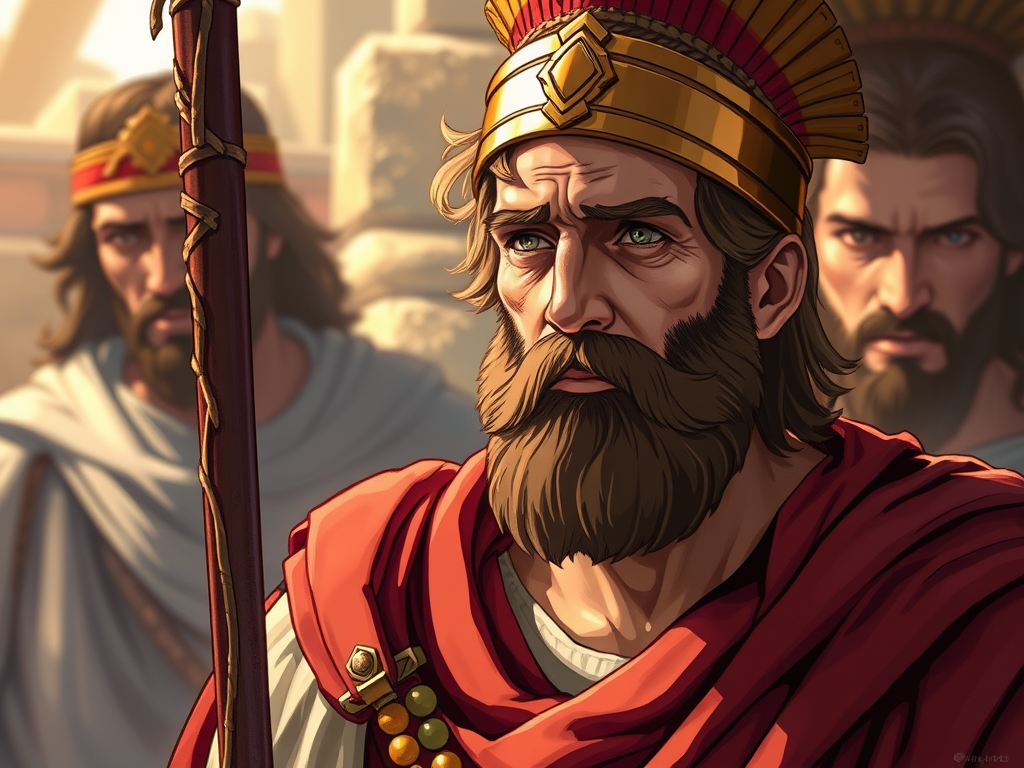
O The Centurion in Matthew 8 (verses 5–13) asks for the healing of a servant and is praised for his trust in Jesus. The text does not give him a name. Matthew uses a word that can mean either “child” or “servant,” and the parallel account in Luke 7:1–10 speaks of a slave and adds that Jewish elders interceded on his behalf.
Calling this man Gaius is an association drawn from works of fiction and popular literature, not from the text itself.
Gaius and the Crucifixion of Jesus
John 19:34 states that a soldier pierced Jesus’ side with a spear, without naming him. Later Christian traditions call him Longinus and say that he was converted. According to some versions of these legends, he was healed of an eye condition and later lived in Cappadocia.
These are traditional accounts, and the name Gaius does not appear in the ancient version. Some popular texts confuse the soldier with Gaius Cassius Longinus, the Roman senator linked to the assassination of Julius Caesar, who lived decades earlier and is a different person.
Curiosities about Gaius

Capernaum and its Importance
Capernaum was the center of Jesus’ ministry in Galilee (Matthew 4:13) and is the setting for the healing of the centurion’s servant. That is why the series The Chosen He placed his character Gaius there. The connection is from the series, not from the New Testament.

Representation of Gaius in Series and Films
In The Chosen, Gaius is a Roman centurion stationed in Capernaum, played by Kirk B. R. Woller. He is a character created for the series, with his own storyline. He serves to illustrate the coexistence between Romans and Jews, but he is not a source for determining who the Gaius of the New Testament was.

The Hospitality of Gaius and his Legacy
What these passages have in common is hospitality. Paul expresses his gratitude for the warm welcome he received in Corinth, and the author of 3 John praises those who supported traveling brothers who preached the gospel without asking anything of outsiders (3 John 5–8).
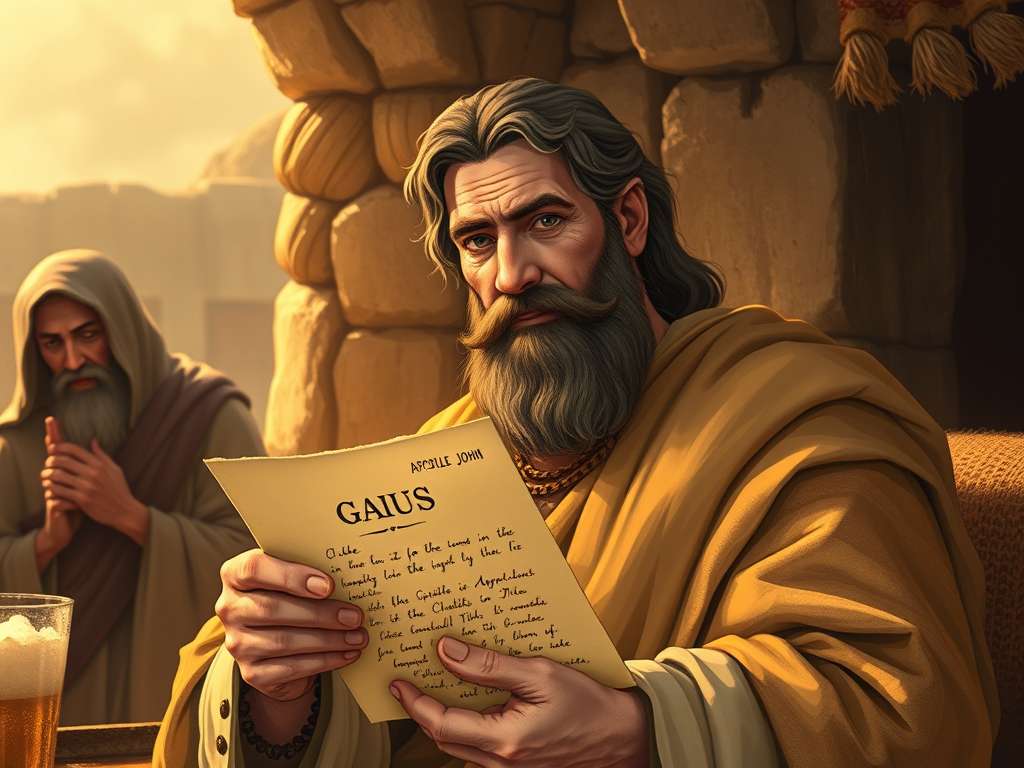
In 3 John 11–12, the author urges the reader to imitate what is good and not what is evil, and cites Demetrius as an example of a good witness. The teaching is practical: faith is demonstrated by how one treats those who come.
For today’s readers, Gaius’s legacy poses a concrete question: Who does your home, your community, or your group welcome, and who does it exclude?
Conclusion
Gaius was a common name that the New Testament associates with companions, hosts, and the recipient of a letter, almost always within the circle of Paul or John. The text does not prove that he was a single person and does not identify him with the centurion in Matthew 8 or with the soldier in John 19:34.
What stands out most clearly is the portrait of ordinary people whose homes and generosity sustained the mission of the early churches.


See also: Who was Timothy, Paul’s companion mentioned in Acts 20:4?
Frequently Asked Questions About Gaius in the Bible
Gaius, also spelled Gaio or Caio, is the name of at least four men in the New Testament: one from Macedonia (Acts 19:29), one from Derbe (Acts 20:4), one from Corinth (Romans 16:23; 1 Corinthians 1:14), and the recipient of 3 John. The text does not indicate whether any of them are the same person.
There is no basis for this in the text. Matthew 8:5–13 does not name the centurion. The association with Gaius comes from works of fiction, such as the series *The Chosen*, and from popular interpretations.
Gaius is a very common Latin name among the Romans. Its exact origin is uncertain, and the connection to the idea of joy is often cited as a hypothesis.
Gaius is the recipient of the letter. The author commends him for walking in the truth and for welcoming traveling brothers, in contrast to Diotrephes, who refused to welcome them (3 John 1–10).
The Bible does not say that. John 19:34 mentions a soldier without naming him. Later traditions refer to him as Longinus. The name Gaius Cassius Longinus belongs to another historical figure, the Roman senator linked to the assassination of Julius Caesar.
- Biblical text: The passages are cited by reference and summarized in the website's own words. The public-domain editions used by the website are Almeida (1819) and Figueiredo (1828).
- Augustus, the first Roman emperor (link in the body of the article, Portuguese Wikipedia).
- More from "Bible Today" on the Third Epistle of John (link in the body of the article).
This content is informational and devotional and is not a substitute for pastoral, medical, psychological, or legal advice. The Biblical Quotes Channel is an independent website and does not represent any church or denomination. The biblical text is from a public-domain edition. The illustrative images do not depict real people, places, or biblical scenes.