Revised on: 04/10/2026
- Key verse: Exodus 12:12 (summarized in my own words)
- Topic: The Ten Plagues of Egypt, the Confrontation with the Egyptian Gods, and the Passover
- Who it's for: Anyone who wants to understand the account in Exodus 7–12 and apply its lessons to their faith
Why did God send such specific plagues upon Egypt? Understanding The Ten Plagues of Egypt and Their Meanings shows that the story of Exodus goes beyond impressive miracles. It speaks of liberation and of the One who rules over creation.
Those going through difficult times often seek promises they can rely on. In this study, you’ll learn about the sequence of the plagues, the confrontation with the Egyptian gods, and what Passover represents in biblical tradition.
The passages are summarized here in my own words. To read the full account, open Exodus, chapters 7 through 12, in the Bible translation of your choice.
The Confrontation Between the Lord and Pharaoh
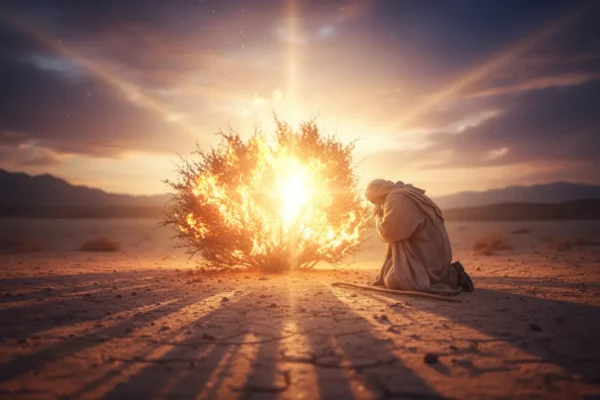
The cry of an enslaved people does not go unnoticed by God. In Exodus 3:7–8, the Lord states that He saw the affliction of the Hebrews, heard their cry, and came down to deliver them from the power of the Egyptians.
The narrative pits them against each other Moses and Pharaoh. In Egyptian thought, the pharaoh was considered divine, and so the request for freedom challenged the pride of the entire empire. To bring this request before the court, God sent the the leader chosen to liberate Israel.
The text states that Pharaoh hardened his own heart with each warning (Exodus 8:15) and also that the Lord hardened his heart (Exodus 9:12). How these two aspects relate to one another is a question on which interpretations vary among Christian traditions.
Pharaoh’s magicians imitated the first plagues, such as the water turning to blood and the plague of frogs (Exodus 7:22 and 8:7). Faced with the next plague, they recognized that it was the work of a divine power (Exodus 8:19).
The Ten Plagues of Egypt and Their Meanings
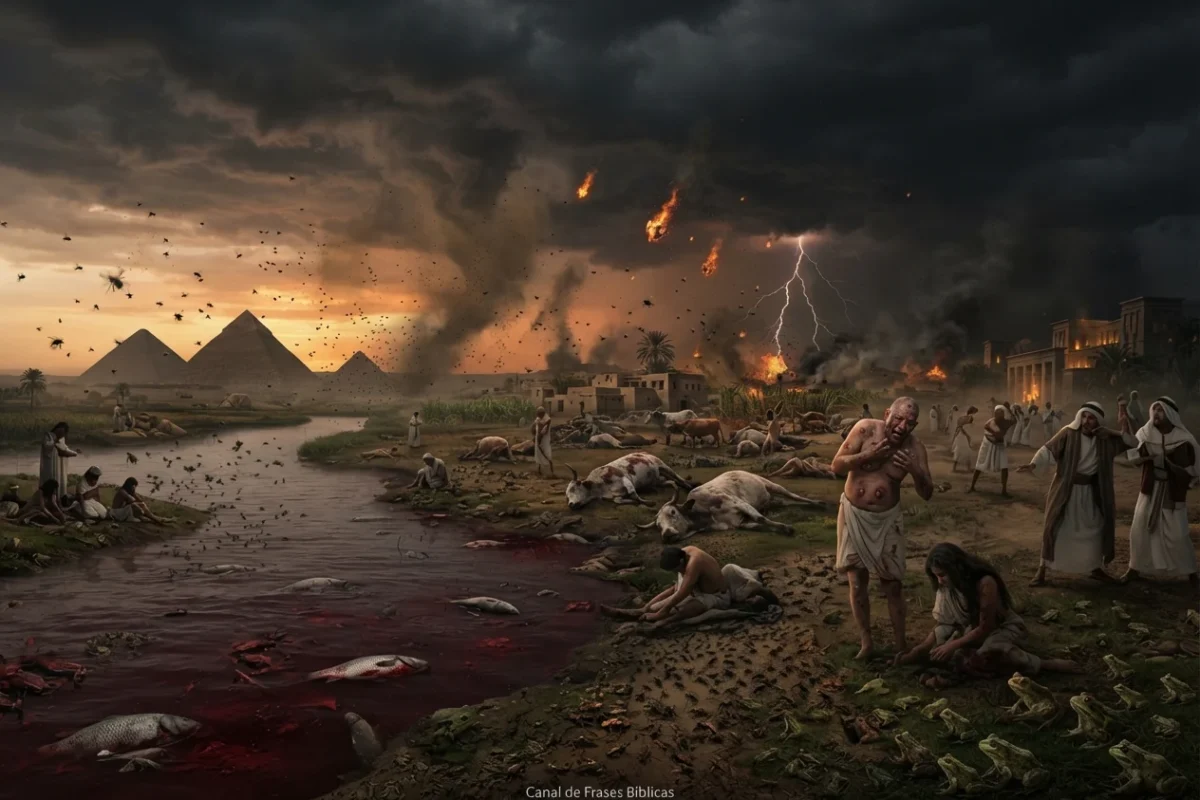
The ten plagues of Exodus affected the water, the animals, people’s health, the crops, and daylight. Each one disrupted something essential to life in Egypt, in a sequence that grew increasingly intense.
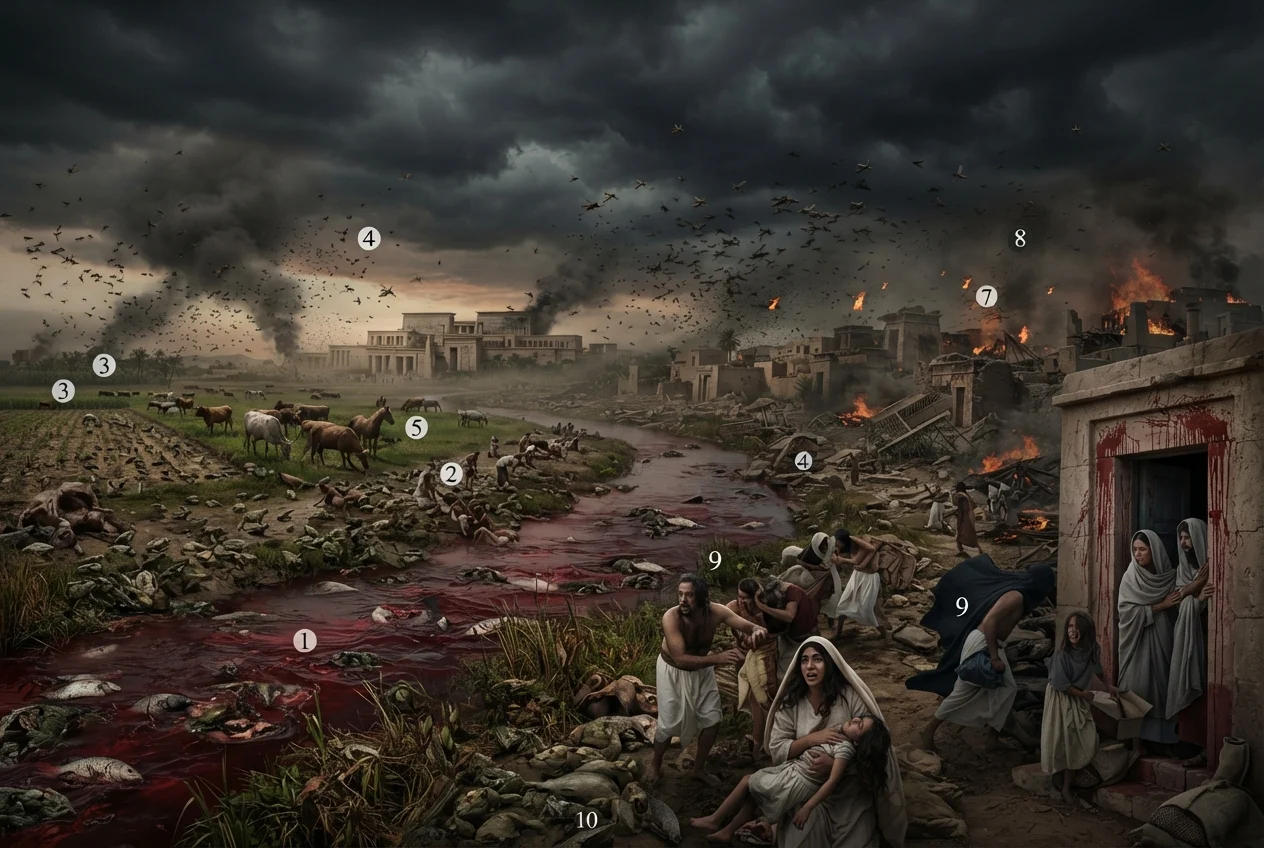
| Prague | Text from Exodus | What it achieved (according to scholars) |
|---|---|---|
| 1. Water Turned to Blood | 7:14-25 | The Nile, the foundation of life and the economy; associated with the god Hapi |
| 2. Frogs | 8:1-15 | Heket, a frog-headed goddess associated with fertility |
| 3. Lice or mosquitoes | 8:16-19 | There is no consensus; some cite Geb, the god of the earth. The translation of the Hebrew term varies |
| 4. Swarm of flies | 8:20-32 | The text does not name a deity; here, the separation of Goshen is mentioned |
| 5. Cattle Plague | 9:1-7 | Apis and Hathor, associated with cattle |
| 6. Ulcers | 9:8-12 | Deities of healing, such as Sekhmet |
| 7. A Rain of Stones and Fire | 9:13-35 | Gods of the sky and storms, such as Nut and Seth |
| 8. Grasshoppers | 10:1-20 | Harvests; gods associated with agriculture, such as Osiris |
| 9. Darkness | 10:21-29 | Ra, god of the sun |
| 10. The Death of the Firstborn | 11:1–10 and 12:29–30 | The household of Pharaoh, who was regarded as divine, and the judgment against all the gods (12:12) |
The Bible generally speaks of judgment against the gods of Egypt (Exodus 12:12). The connections between each plague and a specific deity, as shown in the table, are interpretations by scholars, and not all of them are universally accepted.
From the river that sustained agriculture to the darkness that covered the earth, the account shows creation responding to the Lord. Many biblical characters They witnessed God's action in times of crisis, and here the focus is on the liberation of an entire people.
The Judgment on the False Egyptian Gods
According to Exodus 12:12, the Lord declared that He would bring judgment upon all the gods of Egypt. To the ancient reader, this meant that no Egyptian religious symbol could protect the nation.
The Nile, the frogs, and the sun were elements associated with deities such as Hapi, Heket, and Ra. By striking them, the account shows that the Lord is above all that Egypt revered.
These days, these fragile sources of security may go by other names, such as money, status, or control. The fundamental question remains the same: in whom do we place our trust?
What things in your life have taken the place of your trust in God? Choose one of them and talk to God about it today.


The protection of the people in Goshen
Amid the crisis that was ravaging the empire, the region of Goshen was treated differently. In Exodus 8:22, the Lord announces that He would set apart that land, where the Hebrews lived, to demonstrate His presence.
The text highlights this distinction through the plague of flies. It reappears in the livestock (Exodus 9:4), in the hail (Exodus 9:26), and in the darkness, when the Israelites had light where they lived (Exodus 10:23).
For the faithful reader, this detail serves as a reminder that God’s care extends to real people. This does not mean there are no difficulties, but rather the assurance that we are not forgotten.
Biblical Passover and Liberation
The climax of the deliverance required an act of obedience. Exodus 12:1–13 describes the institution of the Passover as a memorial for all generations.
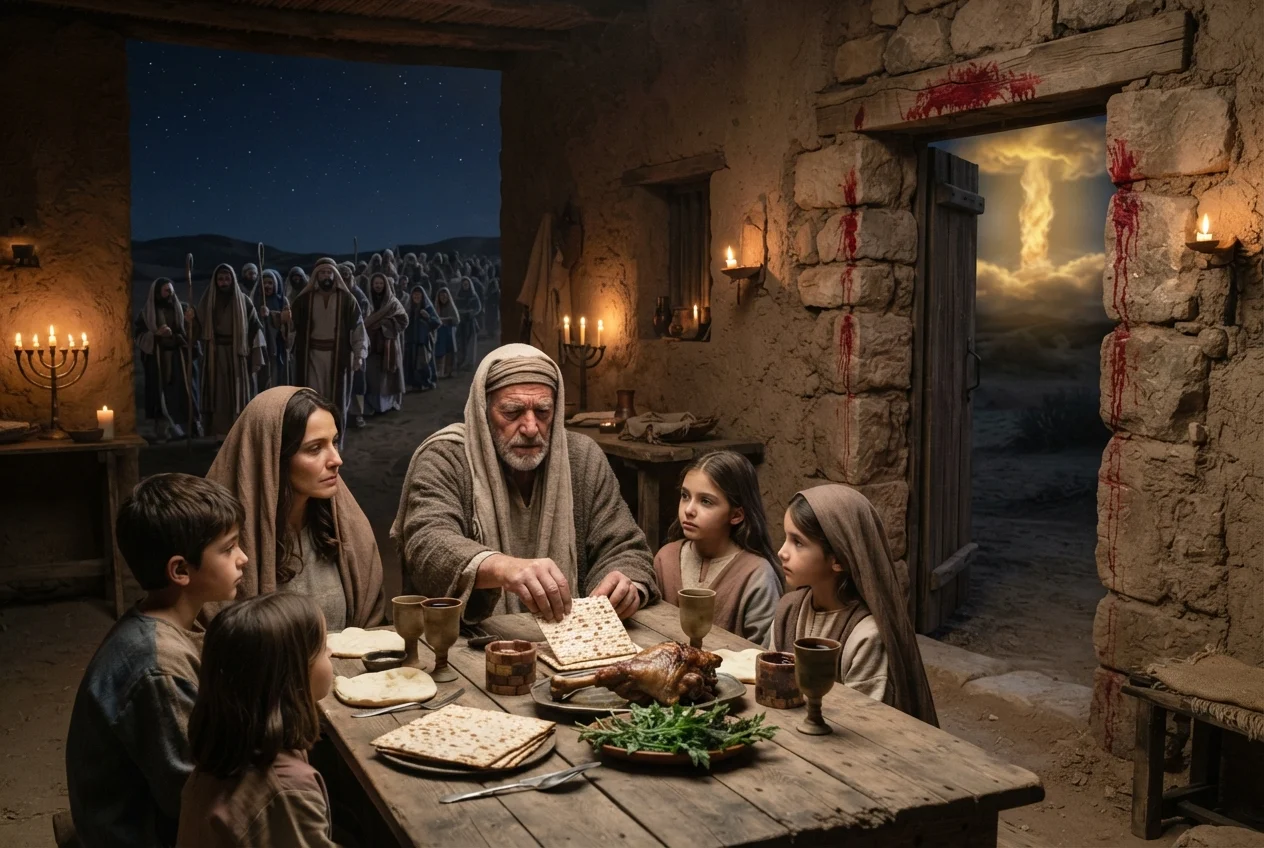
Each family was to choose an unblemished animal and mark the doorposts with its blood. The mark indicated that the plague would pass over that house (Exodus 12:13).
The death of the firstborn, as described in Exodus 12:29–30, is the most harrowing part of the account. It was this event that led Pharaoh to allow the Hebrews to leave (Exodus 12:31–32).
In the Christian interpretation, the Passover lamb points to Jesus, and the Apostle Paul refers to Christ as our Passover in 1 Corinthians 5:7. Jewish tradition celebrates Passover as a commemoration of the exodus from Egypt, without this interpretation.
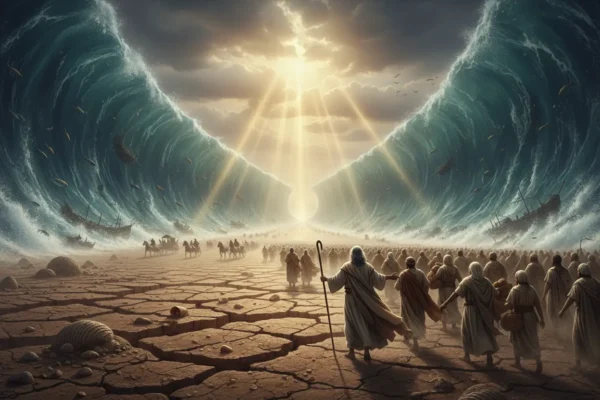
The Israelites left, taking with them silver, gold, and clothing (Exodus 12:35–36). The song of victory appears later, during the crossing of the sea, in Exodus 15.
Lessons in Faith for Your Life
- ✝ God hears the cry: Exodus 3:7 shows that the people’s suffering was seen and heard.
- ✝ Nothing can replace the Lord: Exodus 12:12 declares judgment upon the gods of Egypt.
- ✝ God cares for real people: The separation of Goshen shows concern for the people.
- ✝ Memory sustains faith: Passover was established so that each generation would remember their deliverance.
If this study has helped you, share it with someone who needs hope. Tell us in the comments which lesson touched your heart the most.
What moment in your life reminds you of the Exodus from Egypt? Take a few minutes to thank God for a time when He delivered you.
See also: Who was Moses?
Frequently Asked Questions About the Ten Plagues of Egypt
What were the ten plagues of Egypt, in order?
They were: water turned to blood, frogs, lice or mosquitoes, flies, a plague on the livestock, boils, a hailstorm and fire, locusts, darkness, and the death of the firstborn. The account is found in Exodus, chapters 7 through 12.
Did the plagues affect the gods of Egypt?
Yes, in Exodus 12:12, the Lord pronounces judgment on all the Egyptian gods. The association of each plague with a specific deity is an interpretation by scholars, and there is not universal agreement on all of them.
Did the Hebrews also suffer from the plagues?
The text states that God spared Goshen, where the Hebrews lived, from the plague of flies (Exodus 8:22). This distinction reappears in other plagues, such as the plague of livestock and the plague of darkness.
Why did Pharaoh's heart harden?
The text states that Pharaoh hardened his own heart (Exodus 8:15) and also that the Lord hardened it (Exodus 9:12). Interpretations of how these aspects fit together vary among Christian traditions.
What does the Passover in Exodus 12 mean for Christians?
In the Christian interpretation, the Passover lamb points to Jesus, as in 1 Corinthians 5:7. In Judaism, Passover commemorates the exodus from Egypt, without this interpretation.