

Challenges and Solutions in the Corinthian Church: Did you know that the church in Corinth faced many problems? Founded by the apostle Paul, it faced serious challenges. Even with many spiritual gifts, she strayed from Paul's rules.
Divisions and moral issues threatened the unity of the church. This put its very existence at risk.
What caused these problems in the church in Corinth? And how did Paul deal with them? Let's look at the main problems and Paul's solutions.
Corinth—A Church with Discipline Problems
The church in Corinth grew rapidly, but faced challenges. Divisions, doctrinal problems and moral issues threatened their unity. These problems affected their witness in the ancient world.
The Context of Corinth
Corinth was a cosmopolitan and prosperous city. It was known for its commercial activity and tolerance of religious beliefs. This unbridled freedom created an environment ripe for ethical and doctrinal problems.
The Problems in Corinth
- Divisions: The church was divided into groups. They gathered around different leaders, such as Paul and Apollos. Some even claimed to be Jesus himself.
- Doctrinal problems: There were debates about the resurrection of the dead and Christian freedom.
- Moral Issues: The church was facing serious problems. These included tolerance of a case of incest and legal disputes among members.
These challenges threatened the unity of the church. The apostle Paul was called to restore order and holiness.
| Problem | Impact | Proposed Solution |
|---|---|---|
| Divisions | A weakening of unity, undermining the church's witness | A Call for Unity and Recognition of the spiritual gifts |
| Doctrinal problems | Internal disputes, threatening cohesion among members | Solid biblical teaching, especially on the resurrection of the dead |
| Moral Issues | Scandal and the Tarnishing of the Church's Purity | Application of the ecclesiastical discipline with love and wisdom |
Paul intervened with firmness and wisdom. He sought to restore order and holiness to the church in Corinth.
The Early Churches and the Challenges They Faced
The early Christian churches, such as the one in Corinth, faced many challenges. They had to deal with doctrinal divisions and the influence of pagan customs. These pioneering groups faced complex issues.
A apostolic authority was questioned by the faithful. Serious moral issues ...also affected community life. But despite this, the early church held fast to its faith and spread the gospel throughout the world.
In the church at Corinth, there were divisions, conflicts, and doctrinal deviations. Paul, the apostle, had to intervene several times. He helped resolve the moral issues that affected the congregation.
| Challenges Faced by the Early Churches | Biblical examples |
|---|---|
| Doctrinal Divisions | 1 Corinthians 1:10-17 |
| Influence of Pagan Customs | 1 Corinthians 5:1–2, 6:12–20 |
| Questioning the Apostolic Authority | 2 Corinthians 10:1–11, 11:1–15 |
| Moral Issues Graves | 1 Corinthians 5:1–13, 6:1–8 |
Despite the challenges, the early churches They showed resilience and faithfulness. They serve as an example to all Christians.
Causes of the Divisions and Disagreements in Corinth
The divisions within the church The divisions in Corinth arose for various reasons. The Christians placed great importance on the apostles. They split into groups, following leaders such as Paul, Apollos, or Peter, instead of focusing on Christ.
Another problem was the excessive pursuit of worldly wisdom. This led the Corinthians away from the true construction of the church and unity in diversity. They preferred eloquent speeches and human philosophy to simple and powerful preaching of the Gospel.
In addition, materialism and a preoccupation with possessions and social status were also causing divisions. Instead of growing spiritually and strengthening the community, the Christians in Corinth were allowing themselves to be carried away by spiritual admonitions that did not promote unity.
“I urge you, brothers and sisters, in the name of our Lord Jesus Christ, to agree with one another in what you say, so that there may be no divisions among you, but that you may be perfectly united in mind and thought.” (1 Corinthians 1:10)
Today, churches must learn from this. We must avoid placing excessive importance on human leaders, seeking worldly wisdom, and having a materialistic faith. We must focus on Christ and unity in diversity.



Challenges and Solutions in the Corinthian Church
Immorality and Lack of Discipline
The church in Corinth had serious problems. There were cases of incest and disputes among the members. Paul had to speak up so that everyone would come together.
Interpersonal Conflicts and Disputes
The divisions and interpersonal conflicts were a major problem. The members were divided into factions. They placed great importance on the apostles, such as Paul and Apollos.
Idolatrous and Worldly Practices
Christians were still influenced by idolatrous and worldly customs. They abused the spiritual gifts and there was no set schedule for meals. That was a big problem.
Paul had to teach and guide the church. He wanted the church to have Order of Worship, socializing over meals e financial contributions. That would help foster unity and spiritual maturity.
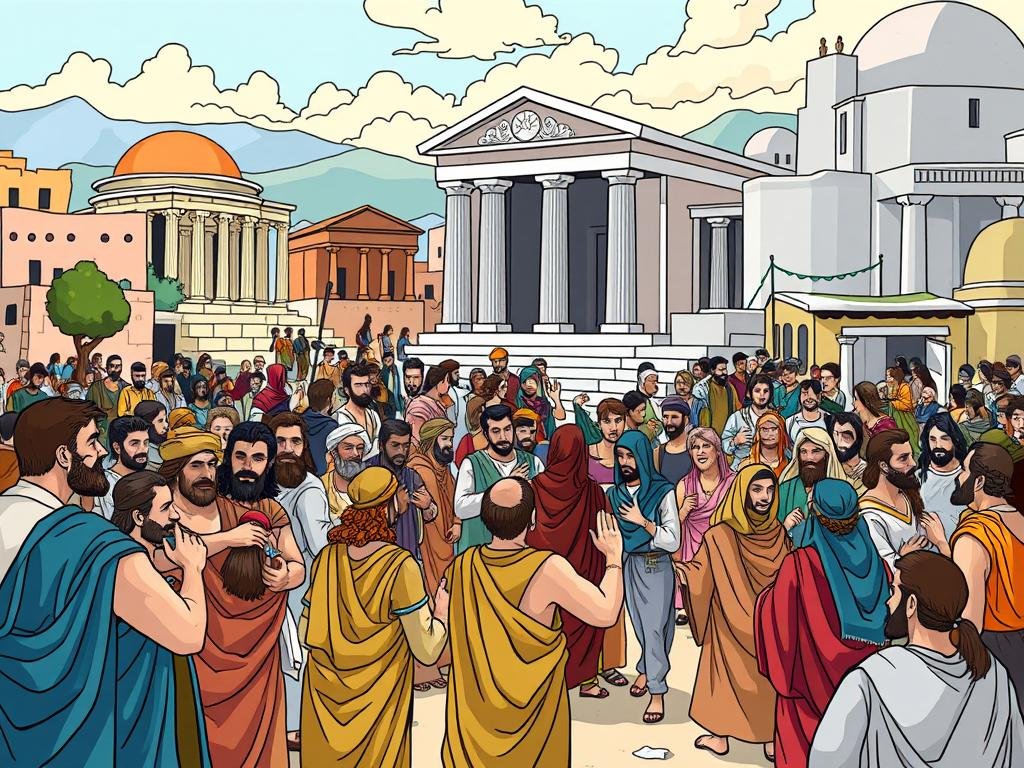
“Therefore, my beloved brothers, be steadfast, immovable, always excelling in the Lord’s work, knowing that your labor is not in vain in the Lord.” (1 Corinthians 15:58)
The Role of the Apostle Paul
Paul founded the church in Corinth. But his authority was questioned by the members. They said that his letters were stern, but that he was weak when he was there.
Paulo had to defend his work and the guidance he provided. He dealt with doctrinal problems, spiritual immaturity e interpersonal conflicts.
Apostolic Authority Questioned
The members of the church in Corinth doubted Paul's authority. They thought he was harsh in his letters but weak in person. Paul had to show that his position was legitimate.
Teachings and Guidance for Corinth
Paul faced many challenges in the church in Corinth. He dealt with divisions, doctrinal problems, spiritual immaturity e interpersonal conflicts. He provided guidance to help the community grow.
“Of the 26 times the word ‘spiritual’ appears in the New Testament, 24 of those instances are used by Paul, and of those 24 instances, 15 are in 1 Corinthians.”
Paul was very concerned about the spiritual growth of the Corinthians. He often used the term “spiritual” when speaking to them.
Paul faced many challenges, but he continued to care for the church in Corinth. He gave important guidance on how to overcome the doctrinal problems, a spiritual immaturity and the interpersonal conflicts. His leadership and teachings were essential to the congregation's growth.
[seguros_promo_shortcode ideal_para="9″ ideal_para_lbl="Brasil" theme="card-large" show_logo="true"/]
Lessons for Churches Today
The difficulties of the church of Corinth teach important lessons. It is essential value spiritual gifts given by God. It is also important use them to build up the community e to foster brotherly love.
Avoiding divisions and discord is crucial. The apostolic guidelines Paul's writings are fundamental to the Christian education. They help with restoration of unity.
Valuing Spiritual Gifts
The church in Corinth had many spiritual gifts. But these gifts were used inappropriately, creating conflicts. Today, churches must learn to value and balance spiritual gifts.
Understand that they are for the building up the body of Christ It's crucial. Not for self-promotion.
Brotherly Love and Encouragement
In Corinth, the lack of brotherly love It was a big problem. Churches today should foster a spirit of unity and fellowship. This helps prevent divisions and disputes.
O apostolic counseling It is essential. It guides the church in restoration of unity and conflict resolution.
“Let all things be done for the sake of edification.” (1 Corinthians 14:26)
The lessons from Corinth challenge us to to practice a Christian education healthy. We should value spiritual gifts and cultivate the brotherly love. That is the key to a strong and united church.
Unity in Diversity
The church in Corinth faced differences and challenges. But under Paul’s leadership, they sought to unity in diversity. This lesson is essential for churches today. They must unite through the biblical principles, emphasizing the communion and christian unity.
In 1 Corinthians 12, Paul highlights the diversity of spiritual gifts in the church. He emphasizes the importance of these gifts to the body of Christ. All gifts come from the same Spirit, for the benefit of the community.
Paul compares the church to the human body. He shows that the church is a unified organism, with members performing essential functions. He emphasizes the interdependence among members, showing that everyone is valuable and needed.
“Just as the body is one and has many parts, and all the parts of the body, though many, form one body, so it is with Christ.” (1 Corinthians 12:12)
In the church in Corinth, the unity in Christ should prevail. This lesson is valuable for churches today. They should cultivate the communion and come together through biblical principles.
The diversity of gifts and circumstances in the church is an opportunity for the christian unity. Together, the members of the body of Christ can strengthen and encourage one another. In this way, they achieve the spiritual maturity and the effectiveness of the church's mission.
Walking in Holiness and Maturity
The church in Corinth faced many challenges. Divisions and conflicts were undermining the community’s unity. The apostle Paul helped them overcome these problems.
Paul wanted everyone to grow spiritually. He compared this to eating more nutritious food. This showed how important it is to understand God better.
Paul also spoke about the “works of the flesh.” Jealousy and strife were obstacles. He wanted the church to be united and holy.
He taught about spiritual gifts and the Lord's Supper. His final words were words of love and encouragement. This helped the church grow.
Follow the Paul's teachings It was essential. That way, the church in Corinth could overcome its difficulties and grow together.

“Brothers and sisters, do not be children in your thinking. Instead, be mature in your understanding.” (1 Corinthians 14:20)
Biblical Principles for a Healthy Church
To be a healthy church, it is crucial to follow biblical principles. It's important to distance yourself from the kinship societies and not accept false teachers. Thus, true unity and maturity in Christ are achieved.
O brotherly love It is an essential pillar. The church should be a place of fellowship. Members should support and honor one another. This means overcoming divisions and valuing the diversity of gifts.
A sanctity This is also essential. The church must live according to divine standards. This includes rejecting immoral and worldly practices, as in the church at Corinth. Mutual discipline and accountability among members are essential to a culture of purity.
- Cultivating the brotherly love and unity in diversity
- Reject the influence of the kinship societies and the authority of false teachers
- To promote holiness and discipline among the members
- To value and exercise spiritual gifts in order to construction of the church
- To faithfully follow the apostolic teachings and the authority of the Word of God
By following these biblical principles, churches can avoid problems. They become healthy, mature communities that are effective in their mission to glorify God and reach the world with the Gospel.
“Do everything with love.” (1 Corinthians 16:14)
Apostolic Authority and the Word of God
Respect the apostolic authority and the Word of God is crucial. Churches must follow the teachings of the apostles, which they received from Christ. This helps prevent the influence of false teachers.
When churches follow these principles, they flourish. They effectively fulfill their mission, avoid problems, and become a light to the world.
Conclusion
The challenges facing the church in Corinth show the importance of ecclesiastical discipline e spiritual leadership. They also emphasize the need for unit e maturity in Christ. These lessons are crucial for churches today.
Paul's letter to the Corinthians addresses various situations. It highlights both the problems and the strengths of the congregation. Issues such as the unequal use of spiritual gifts and the lack of brotherly love still exist.
So, the conclusion is that challenges and solutions from the church in Corinth are important for today. By following the discipline, a leadership and unit In Christ, we can grow spiritually. In this way, we fulfill our mission to be salt and light in the world.
FAQ
What were the main problems faced by the church in Corinth?
The church in Corinth was divided and facing serious problems. They denied the resurrection of the dead. They also tolerated a case of incest, and there were legal disputes among members.
What were the causes of the divisions and discord in the church in Corinth?
The divisions stemmed from an excessive devotion to the apostles. They sought too much worldly wisdom. Their faith was materialistic.
Christians took pride in their spiritual experiences. But the community lacked love and encouragement.
How did the Apostle Paul deal with the problems in the church in Corinth?
Paulo spoke up, saying spiritual admonitions. He wanted the church to strive for unity. He defended his apostolic authority.
Paulo dealt with doctrinal problems e spiritual immaturity. He also decided to interpersonal conflicts.
What lessons do the difficulties faced by the church in Corinth teach us for churches today?
The lessons from the church in Corinth show the importance of ecclesiastical discipline. Also from the spiritual leadership.
It is crucial to seek unity and maturity in Christ. Valuing spiritual gifts and cultivating brotherly love is essential.
How can today's churches become healthy by following the example of the church in Corinth?
Churches must follow the biblical principles. It is essential to distance oneself from pagan influences and reject false teachers.
In this way, you will find true unity and maturity in Christ. You will walk in holiness and victory.
Source links
- Corinth – A Church with Discipline Problems:
- THE CHURCH OF CORINTH - Problems and solutions
- Divisions in the Church of Corinth – A Portrait of Today – Brazilian Theology
- Correcting Problems in the Church of Corinth
- Lesson on 1 Corinthians – The Church’s Problems and Their Solutions
- Works of the Flesh: DISSENT
- Lesson 03: Divisions in the Church | Sunday School – Youth | 2nd Quarter of 2021
- Problems in the church at Corinth
- Trying to Turn Around a Troubled Church
- Paul and the “Spiritualists” of Corinth
- Paul and the Church in Corinth
- Unit 24, Day 1: 2 Corinthians 8–9