The Origin of Ramadan: You are about to discover the fascinating history behind Ramadan, a deeply sacred time for the Muslims all over the world.
O month Ramadan is the ninth month of the Islamic calendar, a time of great spiritual significance. In this article, we’ll explore how this ancient tradition—which brings together some 2 billion people each year—came to be.
The revelation of Allah's word to the Prophet Muhammad transformed this period in a moment of deep spiritual connection and devotion to the Muslims. To learn more about sacred periods and their importance in the religion, keep reading.
What Is Ramadan and Its Importance in Islam
Ramadan, a month of great significance for followers of Islam, is a time of deep reflection and spirituality. During this time, Muslims around the world observe a holy month of fasting and devotion, focusing on spiritual purification and strengthening their faith.
Definition and Position in the Islamic Calendar
Ramadan is the ninth month of the Islamic calendar, a lunar calendar that is about 11 days shorter than the solar calendar. It is a period dedicated to fasting, which begins at sunrise and ends at sunset.
Fasting during Ramadan is a mandatory practice in Islam and it is one of the five pillars that underpin that religion.
Spiritual Meaning for Muslims
For Muslims, Ramadan is more than just a period of fasting; it is a time of deep spiritual connection. It is considered the “month of forgiveness” and offers an opportunity for spiritual renewal.
Fasting during this period represents much more than just physical deprivation, as a form of spiritual purification that promotes values such as self-discipline, empathy for those in need, and community building.
- Ramadan promotes self-discipline and willpower.
- It's a period of empathy for those in need, reminding Muslims of the importance of charity.
- Ramadan strengthens the community, uniting Muslims through a shared practice.
The Origin of Ramadan: The Revelation of the Quran
The revelation of the Quran to Muhammad is the event that gave rise to the holy month of Ramadan. This pivotal moment in Islamic history is commemorated every year during Ramadan, a time of fasting and reflection for Muslims.
The Night of Destiny in 610 A.D.
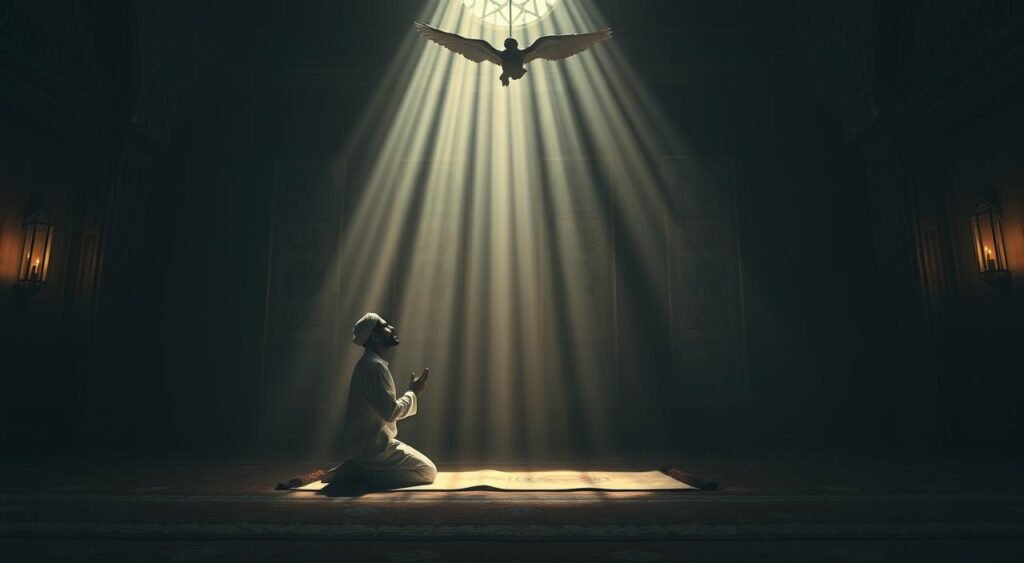
The Night of Destiny, known as “Laylat al-Qadr,” is considered the holiest night of Ramadan. It was on this night, in 610 A.D., that Muhammad, then about 40 years old, received the first revelation of the Quran.
This event marked the beginning of Muhammad's prophetic mission and is regarded as a moment of great spiritual significance.
- The Night of Destiny is celebrated during Ramadan.
- Muhammad received the first revelation of the Quran that night.
- This event is considered fundamental to the Islamic faith.
Muhammad and the Message of Allah
After receiving the revelation, Muhammad began to spread Allah’s message, which can be summarized in the statement: “There is no god but Allah, and Muhammad is His prophet.” This message was revealed over a period of 23 years and formed the Quran, the holy book of Islam.
The life and teachings of Muhammad continue to profoundly influence the practices of Ramadan and the Islamic faith as a whole. During Ramadan, Muslims reflect on Allah’s message and seek to strengthen their connection with God.
Fasting During Ramadan: One of the Five Pillars of Islam
Fasting during Ramadan is one of the five pillars of Islam and represents a time of reflection and spirituality. During this holy month, Muslims around the world observe the fast, known as Sawm, by abstaining from food and drink from sunrise to sunset.
Rules and Practices of Fasting (Sawm)
Fasting during Ramadan involves various rules and practices. Muslims must abstain from eating, drinking, and smoking from the start of Suhur (the pre-dawn meal) until Iftar (the meal after sunset).
In addition, they should avoid negative behaviors such as lying and arguing. The practice of fasting aims to foster self-awareness and gratitude.
Exceptions and Alternatives to Fasting
Although fasting is mandatory for many Muslims, there are exceptions for certain groups. Muslims believe that the following groups are not required to fast: the elderly, children, the sick, travelers, pregnant women, breastfeeding women, and menstruating women.
In all these cases, the fast may be observed at another time during the Islamic calendar, but it must take place before the start of Ramadan the following year.
| Group | Exception | Alternative |
|---|---|---|
| Seniors | You don't have to fast | You can fast at another time or make donations |
| Children | You don't have to fast | They should fast once they reach puberty |
| Sick People | They may postpone the fast | They should fast when they are healthy |
| Pregnant Women or Women Who Are Menstruating | You don't have to fast | They should fast at another time |
These exceptions demonstrate Islam’s flexibility and compassion toward the faithful, ensuring that fasting is an accessible and meaningful practice for everyone.



The Daily Routine During the Sacred Period
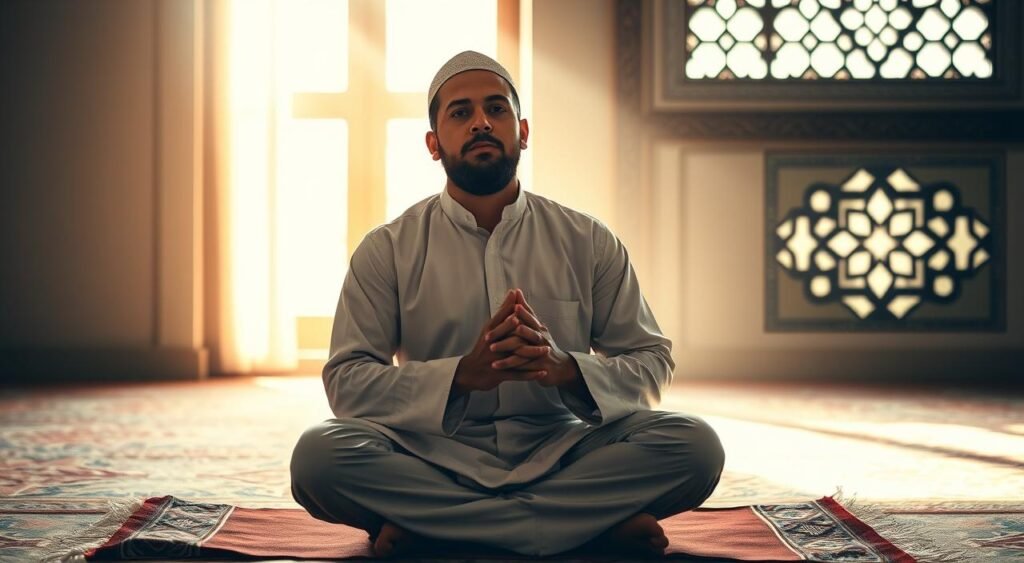
During Ramadan, you experience a unique daily routine marked by spirituality and devotion. This sacred period transforms the lives of Muslims, deepening their religious practices and bringing them closer to Allah.
From Suhur to Iftar: A Day in the Life of a Muslim
A Muslim's day during Ramadan begins before dawn with the Suhur, the meal that precedes the fast. You're getting ready for a day of fasting, which lasts until sunset, when Iftar—the meal that breaks the fast—is served.
This daily routine is a spiritual journey aimed at strengthening one's connection with Allah.
Prayers and Readings from the Quran
In addition to fasting, the daily prayers are essential during Ramadan. Muslims perform the five obligatory prayers, supplemented by additional prayers such as Tarawih, which is performed at night.
Reading the Quran It also takes center stage, with many believers striving to finish reading the holy book during the 29 or 30 days of Ramadan.
| Practice | Description | Importance |
|---|---|---|
| Suhur | A meal before dawn | Prepare the faithful for fasting |
| Iftar | Dinner at sunset | Break the daily fast |
| Tarawih | Additional Evening Prayers | Deepens devotion during Ramadan |

The daily routine during Ramadan is an opportunity for spiritual growth and drawing closer to Allah. Mosques are especially busy, with worshippers seeking to maximize their spiritual practices and receive the blessings associated with this holy month.
Other Customs and Practices During Ramadan
In addition to fasting, Ramadan is marked by various practices and traditions that strengthen the Muslim community. During this holy month, people engage in activities that promote unity, reflection, and charity.
Charity and Good Deeds
One of the practices most emphasized during Ramadan is charity. Muslims are encouraged to perform good deeds and help those in need.
Charity is considered a way to purify the soul and seek closeness to Allah. Many people use this time to make donations, help the poor, and perform acts of generosity.
Family and Community Gatherings
Ramadan is also a time of close family and community bonding. Families gather daily for the Iftar, the meal that breaks the fast at sunset, creating memories and traditions that are passed down from generation to generation.
In addition, mosques have become centers for social interaction, hosting community dinners and special activities. These practices strengthen the bonds between people and foster a sense of belonging to the Muslim community (Ummah).
During Ramadan, you may notice how relationships between people become more harmonious. The holy month promotes reconciliation among those who may have drifted apart, encouraging forgiveness and the renewal of relationships.
It is a time of celebration and togetherness, much like Christmas for Christians, when everyone gets together, puts on their best clothes, and visits the homes of friends and family.
- Daily family gathering for Iftar
- Community dinners and special activities at mosques
- Practicing charity and doing good deeds
- Strengthening Community and Family Ties
How Are the Beginning and End of Ramadan Determined?
Have you ever wondered how Muslims determine when Ramadan begins and ends? In 2024, Ramadan was scheduled to begin on March 11, according to the forecast for Mecca, because the crescent moon would be visible on March 10.
However, in other parts of the world, such as Indonesia, it was estimated that the crescent moon would not be visible until March 13, so Ramadan would begin the following day.
The Role of the Crescent Moon
The crescent moon plays a key role in determining the beginning and end of Ramadan. Observing the moon is crucial for establishing the first and last days of this holy month. According to the Islamic calendar, the month begins with the sighting of the crescent moon following the new moon.
Regional Variations in Observation
Different regions of the Muslim world may begin Ramadan on different days due to variations in moon sightings. Some Muslim countries strictly follow local visual sightings, while others use astronomical calculations or follow announcements from countries such as Saudi Arabia.
This reflects the cultural diversity within the Islamic world, while maintaining unity in faith.
These regional differences stem from theological debates over the use of scientific methods versus traditional observation to determine the Islamic calendar. Countries such as Morocco, Indonesia, and Turkey may begin Ramadan on different days due to these variations.
Eid al-Fitr: The Celebration Marking the End of Ramadan
After days of fasting and devotion, Eid al-Fitr is a time of celebration and joy for Muslims. This festive period marks the end of Ramadan, a holy month dedicated to fasting and spiritual reflection.
Eid al-Fitr, also known as the “Festival of Breaking the Fast,” is an occasion when Muslims gather to celebrate the spiritual achievements of Ramadan. It is a time of great religious and cultural significance.
Traditions and Festivities
During Eid al-Fitr, Muslims observe various traditions and festivities. One of the main practices is Zakat al-Fitr, a mandatory donation made before the Eid prayer to ensure that everyone—especially those in need—can participate in the celebrations.
- Holding special prayers in mosques or public places.
- Food distribution and donations for the poor.
- Family gatherings and gift-giving.
Religious and Cultural Significance
Eid al-Fitr symbolizes the spiritual purification achieved through fasting and other practices during Ramadan. It also strengthens the sense of community and equality among Muslims, regardless of their social or economic status.
Eid traditions vary culturally across different countries and regions, reflecting the rich diversity of the Islamic world.
In many countries, Eid al-Fitr is celebrated with great enthusiasm, highlighting the importance of this date for the Muslim community.
Ramadan 2024: Dates and Details
As we approach Ramadan 2024, it is important to understand the dates and unique aspects of this holy month for Muslims. Ramadan is the ninth month of the Islamic calendar and a time of great spiritual significance.
Schedule and Duration
The duration of Ramadan 2024 will vary depending on geographic location. In Brazil, the fast will last approximately 12 hours, from sunrise to sunset. In countries further north, such as Scotland, the fast can last up to 13 or 15 hours.
You'll see how the duration of fasting varies significantly with latitude. In places near the poles, the fasting period can be particularly challenging due to the long hours of sunlight.
Observance of Ramadan in Brazil and Around the World
In Brazil, the approximately 1.1 million Muslims observe Ramadan with great devotion. Brazilian Islamic communities organize activities at mosques and Islamic centers, strengthening community ties.
Globalization and digital technologies have transformed the Ramadan experience, allowing Muslims around the world to connect and share their traditions. You’ll discover how these changes have impacted religious practice during this holy month.
Ramadan is scheduled to end on April 10, 2024, marking the beginning of the Eid al-Fitr celebrations. During Ramadan, Muslims devote themselves to fasting, prayer, and acts of charity, focusing their attention on spirituality and community.
Conclusion
In this conclusion, we summarize the essence of Ramadan, a month which is much more than just abstinence; it is a celebration of faith. You now understand that Ramadan is a time of profound spiritual significance for the Muslims all over the world.
As we explore the The Origin of Ramadan, we saw how it is linked to the revelation of the Quran to the Prophet Muhammad in 610 A.D., transforming the the ninth month of the Islamic calendar in one sacred period.
This month's activities include the fasting from birth to sunset, prayers special events, recitations from the Quran, and acts of charity.
O Islamic lunar calendar determines the top and the end of Ramadan through the observance of the crescent moon, explaining why the dates vary each year in the Gregorian calendar.
In addition, the Eid al-Fitr marks the end of this period with meaningful celebrations.
Ramadan is an opportunity to spiritual purification, community building and a renewal of faith. It is a tradition that unites more than 2 billion people around values such as self-discipline, compassion e devotion.
We hope that this knowledge will foster greater understanding and respect for religious diversity in our society.
FAQ
Q: What is Ramadan, and why is it important to Muslims?
A: Ramadan is the ninth month of the Islamic calendar and is considered a sacred period for Muslims. During this month, Muslims observe fasting (Sawm), which is one of the five pillars of Islam, and devote themselves to prayer and reading the Quran.
Q: How are the beginning and end of Ramadan determined?
A: The beginning and end of Ramadan are determined by the sighting of the crescent moon. The month begins when the crescent moon is sighted after the new moon and ends when the crescent moon is sighted again.
Q: What are the rules and practices regarding fasting during Ramadan?
A: During Ramadan, Muslims must abstain from eating and drinking from sunrise to sunset. In addition, they must avoid other activities that could invalidate the fast, such as smoking and having sexual relations.
Q: Who is exempt from fasting during Ramadan?
A: People who are sick, pregnant women, women who are menstruating, travelers, and children who have not yet reached puberty are exempt from fasting during Ramadan.
Q: How do Muslims celebrate the end of Ramadan?
A: The end of Ramadan is celebrated with the Eid al-Fitr holiday, which includes special prayers, the exchange of gifts, and meals with family and friends.
Q: How important are charity and good deeds during Ramadan?
A: During Ramadan, charity and good deeds are considered especially meritorious. Muslims are encouraged to give to charity and perform acts of kindness toward others.
Q: How is Ramadan observed in Brazil and around the world?
A: Ramadan is observed by Muslims around the world, including in Brazil. Muslim communities gather to pray and participate in other activities during the holy month.