
Imagine a man who was born under a death sentence, grew up in a golden palace, and ended his days speaking face to face with the Creator. The story of Moses in the Bible It is not just an ancient religious story, but the definitive archetype of transformation and leadership.
Now, in the year 2026, the lessons left by this prophet resonate with renewed force, offering answers to identity crises and challenges in human management. Why did a man who was reluctant to accept his calling become the greatest lawmaker in history?
In this comprehensive guide, we’ll delve into the deepest layers of this story, revealing details that often go unnoticed in a cursory reading. Get ready to rediscover how Moses’s journey shaped the foundations of Western civilization.
Moses in the Bible: A Divine Calling and a Humble Beginning
The story of Moses in the Bible It begins in remarkable fashion, with his miraculous survival as a child. Faced with the growing threat to the Hebrew babies, his mother placed him in a basket in the waters of the Nile.
He is found and adopted by the pharaoh's daughter, which leads him to grow up in the corridors of Egyptian power. However, even amid such luxurious surroundings, the identity of Moses remains deeply connected to its Jewish roots.
His education was the best the ancient world had to offer, but the internal conflict between being an Egyptian prince and a Hebrew slave led him to commit an impulsive act of violence that would change his life forever.
The Flight to Midian and the Preparation in the Desert
After killing an Egyptian overseer to defend a Hebrew, Moses flees to the wilderness of Midian. There, he goes from being a prince to a shepherd, spending 40 years in silence and learning.
This period was crucial in breaking the pride and self-sufficiency that the palace had instilled in him. In the desert, he learned the geography that he would later use to guide an entire nation toward freedom.
It was in Midian that he met Jethro, his father-in-law, and started a family, living a life of obscurity until God’s appointed time for the deliverance of Israel finally arrived.
God's Call and the Liberation of the Israelites
After years of living first as a prince and then as a shepherd, Moses in the Bible He has a life-changing encounter with God through a burning bush that is not consumed. It is at that moment that God calls him to a crucial mission.
The mission was clear, but daunting: to lead the Israelites out of slavery in Egypt. The very Moses He is reluctant, feeling ill-equipped for the task and questioning his own ability to speak in public.
However, his divine connection enabled him to confront the powerful pharaoh and demand the liberation of his people. God revealed His sacred name to him—the “I Am”—assuring him that his authority did not come from Moses, but from the Creator.
The Ten Plagues and the Clash of the Gods
The story unfolds through a series of spectacular events, such as the ten plagues that struck Egypt. Each plague was not merely a natural disaster, but a direct judgment against the Egyptian gods.
The climax comes with the final plague—the death of the firstborn—which finally convinces Pharaoh to free the Israelites. This event gave rise to Passover, which is celebrated to this day as a symbol of redemption.
Easter was established as a commemoration of that event and marks the beginning of a journey that would test the faith and patience of the Israelites under the leadership of Moses, beginning with the miraculous crossing of the Red Sea.
The Journey Through the Desert and the Challenges of Leadership
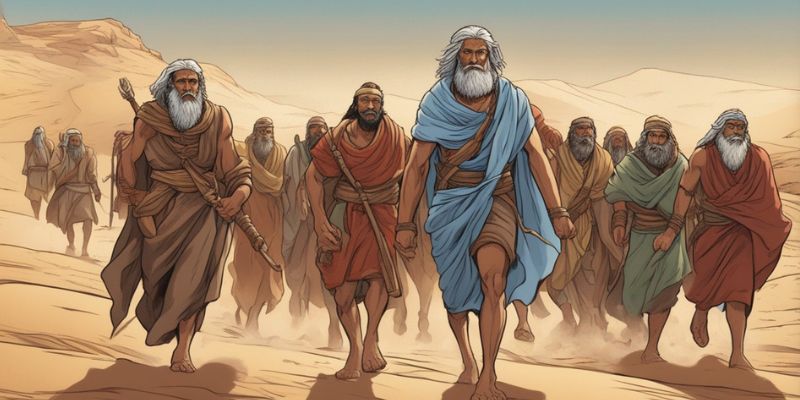
The exodus from Egypt is just the beginning of the odyssey of Moses and his people. Crossing the desert toward the Promised Land becomes an epic journey of faith, trials, and constant divine revelations.
However, the leadership of Moses It is frequently put to the test by the grumbling and rebellion of the Israelites. The lack of water and food, and the uncertainty of the future, lead to moments of despair and longing for slavery.
One of the most iconic events of this period is the giving of the Tablets of the Law on Mount Sinai. Moses He climbed the mountain to receive the commandments directly from God, while the people down below fell into the idolatry of the golden calf.
The Ten Commandments and Social Structure
The commandments given to Moses cover issues of morality, justice, and worship. They were not merely religious rules, but the constitution of a new, free nation.
These commandments would become the foundation of religious ethics and Western civilization. They established respect for life, property, and truth, setting Israel apart from all other nations of that time.
In addition to the moral law, Moses received detailed instructions for the construction of the Tabernacle, a portable sanctuary that symbolized God’s presence dwelling among His people during their journey.



Moses' Mistakes and the Conquest of the Land
Despite his close relationship with God, Moses in the Bible He is not immune to making serious mistakes. One notable incident occurs when, frustrated by the lack of water and the people’s rebellion, he disobeys God.
Instead of speaking to the rock as God had instructed, he struck it twice in a fit of anger. This action resulted in a severe consequence: Moses He is told that he will not physically enter the Promised Land.
This shows that the greater the privilege and closeness to the divine, the greater the responsibility and the severity of the judgment. Even so, God’s grace continued to be with him until the end of his days.
The Transition to Joshua and the End of the Journey
Before his death, Moses He prepared the Israelites for the next phase of their journey: the conquest of the lands inhabited by other nations. He knew that his mission as a liberator was complete.
He appoints Joshua as his successor, ensuring a stable and blessed transition of power. Moses did not hold a grudge over not being allowed to enter the land, but focused on strengthening the next generation.
He leaves a series of speeches and detailed instructions in the Book of Deuteronomy, which serves as a renewal of the covenant between God and Israel before the crossing of the Jordan.
The Three Stages of Moses' Life
Moses’s life is often divided into three 40-year periods, totaling 120 years of an unparalleled journey. See the comparison of these phases in the table below:
| Stage of Life | Location | Lead Role | Key Learning |
|---|---|---|---|
| First 40 years | Egypt | Prince of Egypt | Culture, Laws, and Military Leadership |
| Seconds 40 years | Midian | Shepherd | Humility, Patience, and Survival |
| The past 40 years | Desert | Liberator and Prophet | Total dependence on God and intercession |
Archaeology and Evidence: Where Is Mount Sinai?
One of the major goals of modern biblical archaeology in 2026 remains the exact location of Mount Sinai. Although tradition points to the Sinai Peninsula, new theories are gaining traction.
Some researchers suggest that the real mountain may be in Saudi Arabia, at a site known as Jabal al-Lawz. Evidence such as broken rocks and burn marks at the top of the mountain fuels the debate.
Regardless of the exact physical location, the impact of the events that took place there changed the course of human history, establishing ethical monotheism as a global force.
Moses as a “Type of Christ”
For New Testament scholars, Moses in the Bible He is seen as a foreshadowing of Jesus Christ. Both were spared from death in childhood and left the palace to save their people.
While Moses freed Israel from physical slavery in Egypt, Jesus is presented as the one who frees humanity from the spiritual slavery of sin. Moses gave the Law; Jesus brought Grace.
This theological connection is essential to understanding the unity of the Bible, showing that the story of Moses was a blueprint for a much larger and universal plan of redemption.

Leadership Lessons from Moses
In a fast-paced, digital world, Moses’ leadership offers valuable insights. He faced supply crises, internal rebellions, and the weight of solitary responsibility.
- Resilience Under Pressure: Moses kept his focus on the ultimate goal, even when the people wanted to give up and return to Egypt.
- Intercession and Empathy: He often interceded between God's wrath and the people, demonstrating a sacrificial love for those under his care.
- Active Listening: His ability to take advice (such as that from Jethro) saved his mental health and ensured the effectiveness of his leadership.
- Integrity above all else: Even in the face of personal failings, he never compromised the message he received from God.
Moses' lasting legacy
The story of Moses in the Bible It transcends the pages of ancient texts and continues to influence culture, religion, and ethics to this day. His role as a lawmaker set an unparalleled standard of justice.
His teachings on compassion for foreigners, widows, and orphans have shaped the spiritual identity of Judaism and Christianity, influencing even modern human rights.
In addition, Moses He is remembered as a symbol of perseverance. His journey through the desert, fraught with challenges, reflects the human journey in search of a greater purpose and a spiritual promised land.
Frequently Asked Questions About Moses in the Bible
1. Who wrote the story of Moses?
Traditionally, the authorship of the first five books of the Bible (the Pentateuch) is attributed to Moses himself, under divine inspiration.
2. Why didn't Moses enter the Promised Land?
Because of his disobedience during the incident at the rock at Meribah, where he acted in anger and did not sanctify God’s name before the people.
3. How long did Moses live?
According to the biblical account in Deuteronomy 34:7, Moses died at the age of 120, with perfect eyesight and undiminished vigor.
4. What was Moses's main difficulty?
He himself said he had a speech impediment (possibly a stutter), which makes his journey as God's spokesperson all the more impressive.
5. What were the Tablets of the Law?
They were two stone tablets on which God Himself wrote the Ten Commandments, serving as the foundation of the covenant with Israel.
6. Did Moses have children?
Yes, he had two sons with his wife Zipporah: Gershon and Eliezer, who were born during their time in the wilderness of Midian.
7. Where was Moses buried?
The Bible states that God buried him in a valley in the land of Moab, but no one knows the exact location of his grave to this day.
8. Does Moses appear in the New Testament?
Yes, he appears in all his glory at the Transfiguration of Jesus, talking with the Lord about his departure for Jerusalem.
Conclusion: The Relevance of Moses Today
The saga of Moses in the Bible It is an unparalleled story of leadership, faith, and perseverance that stands the test of time. His journey—from humble beginnings to courageously leading millions—continues to inspire those in search of purpose.
In 2026, the story of Moses reminds us that our failures do not nullify our calling. He was an ordinary man, with fears and limitations, who became extraordinary by placing himself in the hands of the Creator.
His life is an enduring legacy of how a connection with the divine can empower anyone to overcome seemingly impossible challenges. May Moses’ courage inspire your steps today.
If you want to deepen your knowledge of the Bible and find more inspiration for your spiritual journey, See more content here.