As seekers of truth and divine connection, we often come across the richness and diversity of faith expressions around the world. Understanding the origins of great religions is a path to wisdom and mutual respect.
Today, we set out to explore a fascinating topic: how Islam came to be. Let's delve together into the historical and spiritual roots of this ancient faith that has impacted and continues to impact billions of lives, seeking light and understanding.
Origins of Islam! The pre-Islamic context
To deeply understand how Islam came about, we need to travel back in time.
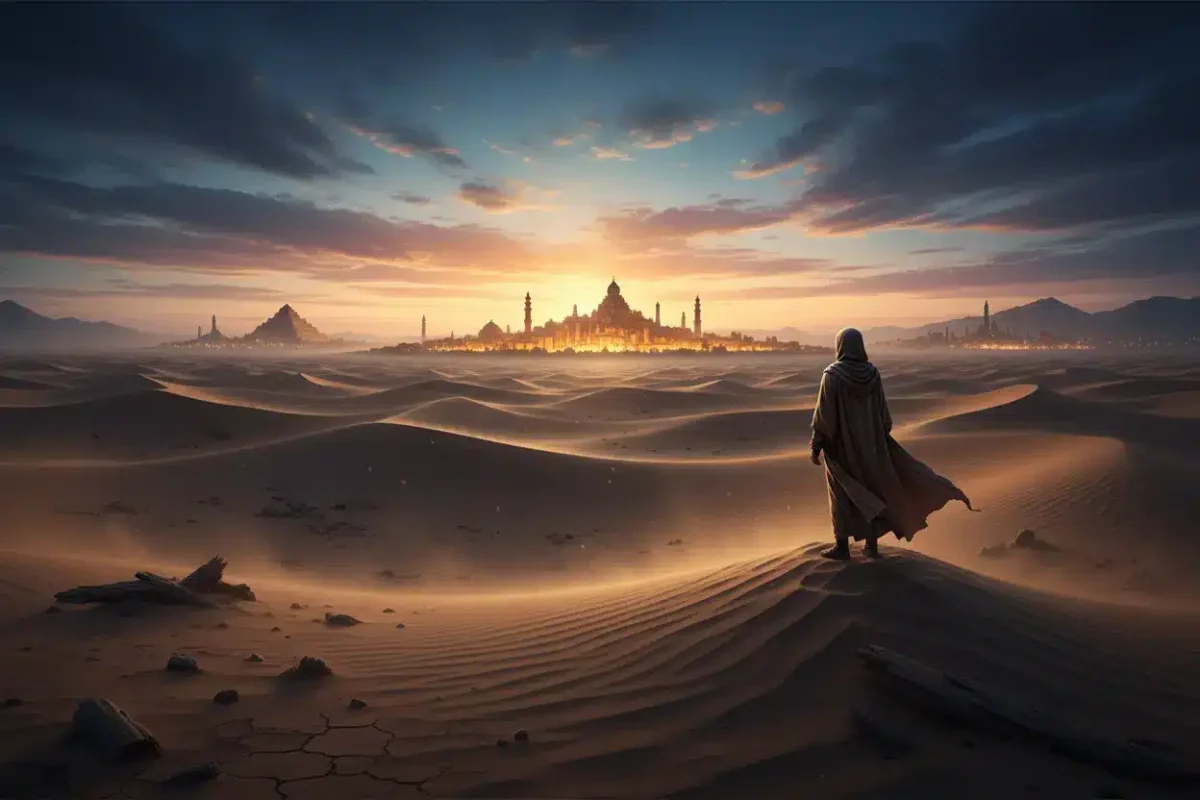
We must look at the 6th century Arabia, a land of vast deserts and deep silences.
At that time, the region was inhabited by several nomadic tribes and sedentary.
Social life was organized in clans, where family loyalty was the supreme value.
Spiritually, the scene was one of a rich and complex diversity of beliefs.
The majority of Arabs practiced polytheism, worshipping various local gods and idols.
At the center of this spirituality was the city of Mecca, a vital point of convergence.
The Kaaba, A sanctuary that already attracted pilgrims from all over the peninsula.
Inside Kaaba, Hundreds of idols represented the deities of the Arab tribes.
However, the desert was also home to communities of Jews and Christians.
These monotheistic religions exerted a silent but constant influence in the region.
Many Arabs, known as hanifs, They sought a purely monotheistic faith.
We realized that Arabia was not a spiritual vacuum, but a melting pot of ideas.
Mecca was not just a religious center, but a thriving trading post.
The caravans that crossed the sands brought goods, news and theological reflections.
In this environment of contrasts between commercial wealth and spiritual quest, something would change.
Social inequality was growing in the cities, generating a yearning for justice and purpose.
It was the perfect setting for the birth of a new and powerful divine revelation.
The story of how Islam came about is intrinsically linked to this context.
Without understanding the spiritual thirst of that time, we wouldn't understand the strength of this faith.
The stage was set for the arrival of a message that would transform the world.
Muhammad and Divine Revelation: The Beginning of Faith
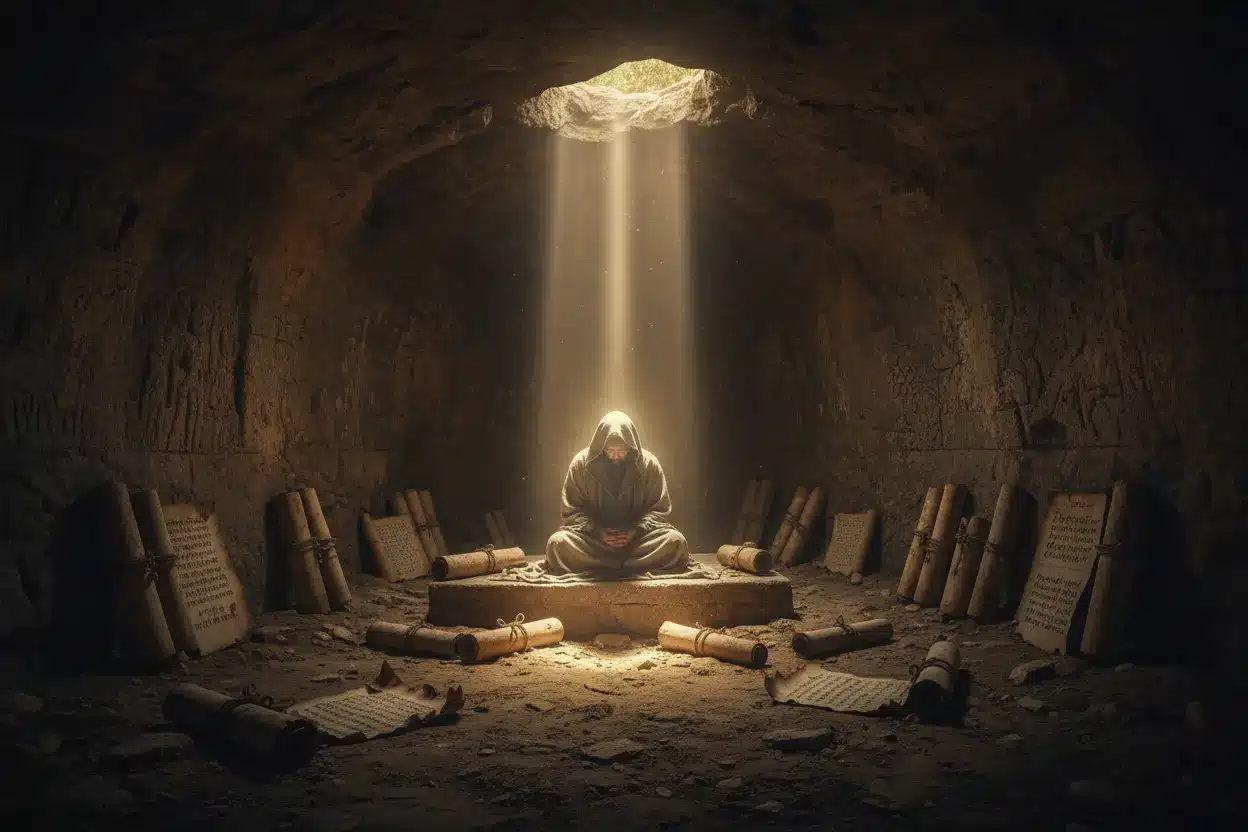
We find the central figure of this journey in Mohammed, born in Mecca around 570.
Orphaned at an early age, he grew up under the care of his grandfather and then his uncle.
Muhammad became a merchant who was respected for his honesty and was called the Al-Amin.
Despite his success, he felt a deep spiritual unease about idolatry.
He used to retire to Hira Cave, on Mt. Nur, to meditate.
It was on one of these nights, in the year 610, that his life changed forever.
According to tradition, the angel Gabriel (Jibril) appeared to him with an order.
“Recite!” said the angel, beginning the transmission of the words that would form the Koran.
Mohammed felt the weight of divine responsibility on his shoulders at that holy moment.
The first revelations focused on oneness of God (Allah) and social justice.
He began preaching in Mecca, but faced fierce resistance from the local elites.
The leaders feared that monotheism would destroy the lucrative trade linked to idols.
We see that the first followers of Islam were persecuted and marginalized.
The message of equality before God was a threat to the tribal caste system.
The situation became untenable for the small community of believers in Mecca.
In the year 622, the event known as the Hégira, the migration to Medina.
This milestone is so important that it marks the beginning of the Islamic calendar.
In Medina, Mohammed stopped being just a preacher and became a leader.
He established the first Muslim community, the Ummah, based on faith and not on blood.
A Hégira symbolizes the transition from persecution to the construction of a new society.
It was in Medina that the foundations of Islamic governance and ethics were consolidated.
Muhammad eventually returned to Mecca victorious, cleansing the Kaaba of all his idols.
When he died in 632, he had unified Arabia under the banner of the pure monotheism.
His life remains the ultimate example of devotion for billions of people today.
The Pillars of Islam and Its Fundamental Teachings
Islam is built on solid foundations that guide the daily life of the faithful.
These fundamentals are known as the Five Pillars of Islam, mandatory acts of worship.
We can see them as the structure that supports the Muslim's spiritual journey.
| Pillar | Name in Arabic | Description |
|---|---|---|
| Faith | Shahada | O testemunho de que não há deus senão Allah e Maomé é Seu profeta. |
| Prayer | Salat | Performing five daily prayers in the direction of Mecca. |
| Charity | Zakat | The donation of part of one's wealth to help those in need. |
| Fasting | Sawm | The ritual fast during the holy month of Ramadan. |
| Pilgrimage | Hajj | A trip to the holy city of Mecca, at least once in your life. |
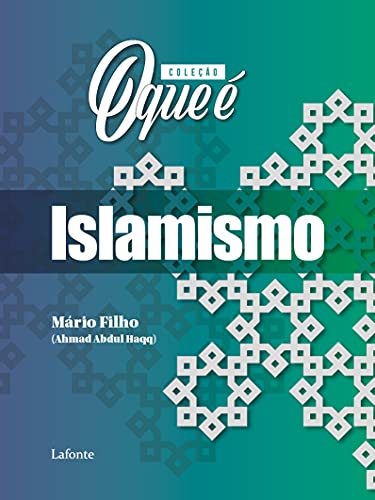
With the terrorist attacks on the United States on September 11, 2001, Islam came to be seen in the West only as a belligerent religion. The word jihad, which in its etymology means effort, has come to have only one meaning: holy war. Christianity and Judaism are not blamed for the crimes of Christians and Jews, but Islam is blamed for the crimes of Muslims, even if they violate the principles of Islam. This book tries to bring about an understanding of what Islam is, its precepts and practices, so that some preconceived and prejudiced ideas can be reframed.
The first pillar, the Shahada, is the gateway to the Islamic faith.
It is a declaration of absolute monotheism, rejecting any form of association with God.
For Muslims, God's sovereignty is total, unique and unquestionable in everything.
A Salat, The prayer connects the believer directly to the Creator five times a day.
These moments of pause serve to remind us of life's purpose and to seek guidance.
We note that prayer is an exercise in humility and constant spiritual discipline.
O Zakat reinforces Islam's commitment to economic justice and compassion.
It's not just a handout, but a social obligation to balance society.
Wealth is seen as a loan from God that should be shared with the poor.
O Sawm, Ramadan is a period of purification and self-control.
By abstaining from food and drink, the faithful develop empathy for those who are hungry.
It's a time of intensive reading of the Koran and renewing the vows of faith.
O Hajj is the ultimate expression of the unity of the global Muslim community.
Millions of people, of all races, dress alike to worship God in Mecca.
There, all social distinctions disappear before the greatness of the Divine.
In addition to the pillars, the Koran is the primary source of all ethical teachings.
Muslims believe that it is the literal word of God, preserved without alteration.
Accompanying the Koran, we have the Sunnah, the examples and sayings of the Prophet Muhammad.



The Expansion of Islam: From Empire to Cultural Legacy
After the death of Muhammad, Islam began a territorial expansion unprecedented.
Under the leadership of the first caliphs, the new faith quickly crossed borders and oceans.
In less than a century, the empire stretched from Spain to the edges of India.
We note that this expansion was not only military, but also cultural and administrative.
Caliphates such as the Umayyads and the Abbasids created very efficient systems of government.
Arabic has become the language of science, commerce and diplomacy worldwide.
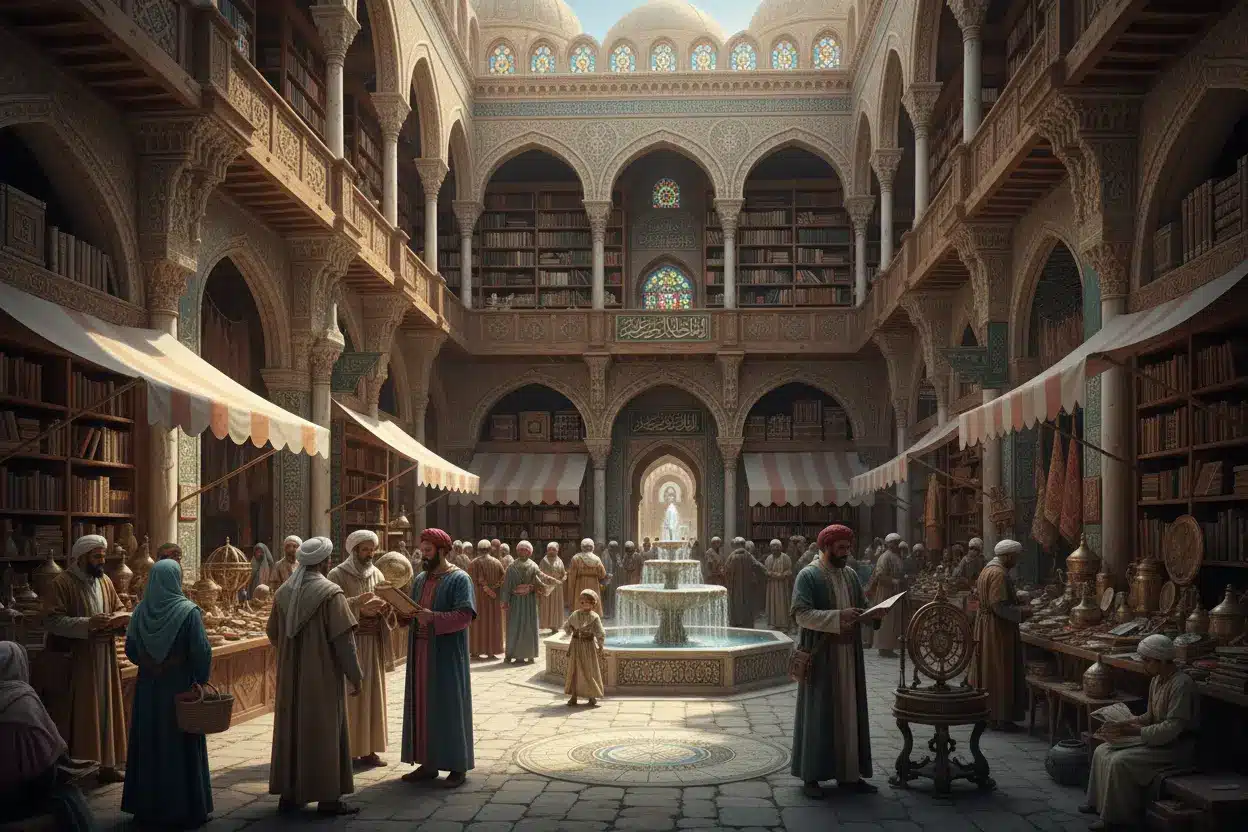
The city of Baghdad became the center of the world during the Islamic Golden Age.
In the famous House of Wisdom, scholars translated Greek, Persian and Indian works.
Islam has preserved the knowledge of antiquity that might otherwise have been lost.
- Mathematics: The development of algebra and the spread of Arabic numerals.
- Medicine: Great advances in surgery and the creation of the first modern hospitals.
- Astronomy: Mapping stars and improving navigation instruments.
- Architecture: The construction of magnificent mosques with unique geometry and calligraphy.
The Islamic influence on philosophy was also profound and lasting for the West.
Thinkers such as Avicenna e Averroes sought to reconcile faith with logical reason.
His works were fundamental to the later Renaissance in Christian Europe.
We must recognize that Islam was a bridge between different civilizations.
It facilitated the exchange of technologies, such as paper from China and steel from India.
The Islamic cultural legacy is present in our language, cuisine and science today.
This expansion also brought internal challenges and important theological divisions.
The distinction between Sunnis and Shiites emerged early in the race for the lead.
Even so, the essence of the faith remained united around the Koran and Allah.
Today, Islam is the fastest growing religion in the world, present on every continent.
His legacy is not just historical, but a living force that shapes geopolitics.
Understanding this expansion helps us understand the complexity of the contemporary world.
How does Islam relate to Christianity?
As Christians, we find many points of contact when studying Islam.
Both religions are classified as Abrahamic, sharing a common origin.
The figure of Abraham is venerated as the patriarch of monotheism by both faiths.
Islam recognizes the validity of biblical prophets who are fundamental to us.
Figures such as Noah, Moses, David and John the Baptist are mentioned with great honor.
For the Muslim, they all brought the same basic message of submission to God.
One point that often surprises us is the Islamic view of Jesus (Isa).
Jesus is considered one of God's greatest prophets and was born of a virgin, Mary.
The Koran devotes an entire chapter to Mary (Maryam), extolling their purity and faith.
However, there are crucial theological differences that we cannot ignore.
Islam denies the doctrine of Trinidad, emphasizing the absolute oneness of God.
They don't see Jesus as the Son of God, but as a human and anointed messenger.
Another fundamental difference lies in the view of the crucifixion and resurrection.
Most Islamic scholars believe that Jesus did not die on the cross.
For them, God has raised him to heaven and he will return at the end of time.
We can also compare the Holy Scriptures of each religion.
While we have the Holy Bible, Muslims follow the Koran.
They believe that the original Bible has been altered and that the Koran is the final correction.
Despite these differences, dialogue between Christians and Muslims is essential.
Both groups seek to live a life of worship, prayer and charity to others.
In a world marked by conflicts, focusing on common ethical values is fundamental.
We must seek mutual understanding, respecting each other's convictions.
Islam and Christianity have shaped human history in profound ways.
By getting to know each other's stories, we strengthen our own journey of faith and peace.
An Invitation to Reflection and Understanding
As we go through the journey of how Islam came about, In this way, we can see the complexity and richness of a faith that, like ours, seeks a connection with the divine. May this knowledge inspire us to cultivate respect and curiosity for the various manifestations of human spirituality.
We invite you to share your thoughts in the comments below. What aspect of this story touched you the most? Together, we can build a space for dialog and learning.
FAQ - Common questions about how Islam came about
We have prepared this section to briefly and respectfully clarify the main doubts about the historical and spiritual trajectory of this faith.
Islam began with the revelations received by the Prophet Mohammed in the seventh century, in the city of Mecca. We understand that his leadership and preaching unified the Arab tribes under the belief in one God, Allah.
Religion emerged in Arabian Peninsula, It was an important center for trade routes where polytheism and influences from Judaism and Christianity coexisted. This diverse environment of intense spiritual search was the setting for the spread of the new faith.
The Hijra was the migration of Muhammad from Mecca to Medina, This event took place in 622 AD, marking the beginning of the Islamic calendar. This event was crucial in consolidating the Muslim community and strengthening the foundations of how Islam came about as a religious and political force.
Both are Abrahamic religions that share monotheism and respect biblical figures such as Abraham, Moses and Jesus. Although we have different theological views on the divinity of Christ, we recognize the historical dialogue between these traditions.
A Muslim's life is governed by the Five PillarsThese precepts include the profession of faith, daily prayers, charity (Zakat), fasting during Ramadan and the pilgrimage to Mecca. These precepts seek to guide moral conduct and a constant connection with the divine.