Learn About the Story of Saint Anthony: Have you ever felt that curiosity about the story behind a tradition that brings millions of hearts together? Imagine a holy whose fame has crossed oceans, linking Portugal to Brazil with stories that have inspired devotion for centuries.
This is how the career of one of the most beloved saints The Catholic faith begins: full of mysteries and rituals that move even skeptics.
Born in Lisbon, he not only left his mark on the life religious, but it has also become a symbol of hope for those seeking love.
Did you know that, in addition to being known for helping people find lost items, he is celebrated as protector of relationships? Its connection to the day June 13, for example, has become a popular festival, bringing together faith and culture.
Here, you'll discover how his humble journey won over even kings and how the miracles attributed to him continue surprising generations.
From sermons brimming with wisdom to acts that defy logic, every detail reveals why he remains so beloved. Get ready for a journey that blends faith, tradition, and unforgettable moments.
The Origins and Life of Saint Anthony
In the heart of Lisbon, a child born into a noble family would embark on a spiritual journey that would span centuries.
Your name, now known worldwide, is linked to choices that defied social expectations. From an early age, a rigorous education and family values shaped his path.
Birth and Upbringing in Lisbon
The son of an influential family, he received his early education at the city’s cathedral, where the canons introduced him to religious studies.
At age 15 years, made a bold decision: to trade the comforts of nobility for the simplicity of a monastery. This change marked the beginning of a search for meaning beyond material possessions.
Entry into Religious Life and the Monastery
In Coimbra, he delved deeper into the theology, becoming a benchmark among the friars. But it was when I met the Franciscans who found his true calling.
A order Franciscan, with her style of life Humble and devoted to those in need, he won her heart. You can learn more about this transformation in historical records.
At age 25 years, he was already known for his eloquence and knowledge. His career, which began on the streets of Antônio Lisboa, shows how personal convictions can inspire generations.
Proof that even the greatest legacies begin with a simple leap of faith.
The Story of Saint Anthony: Miracles and Canonization
Have you ever wondered how a man from the 13th century achieved eternal fame through extraordinary deeds? His ability to combine faith and action gave rise to some remarkable accounts.
Crowds witnessed inexplicable healings and life-changing sermons, even after his death in June 1231.
Miracles That Defied Time
During his missions, he calmed storms with just his words and healed the wounded. On one memorable occasion, fish are said to have gathered to hear him speak when humans refused to do so.
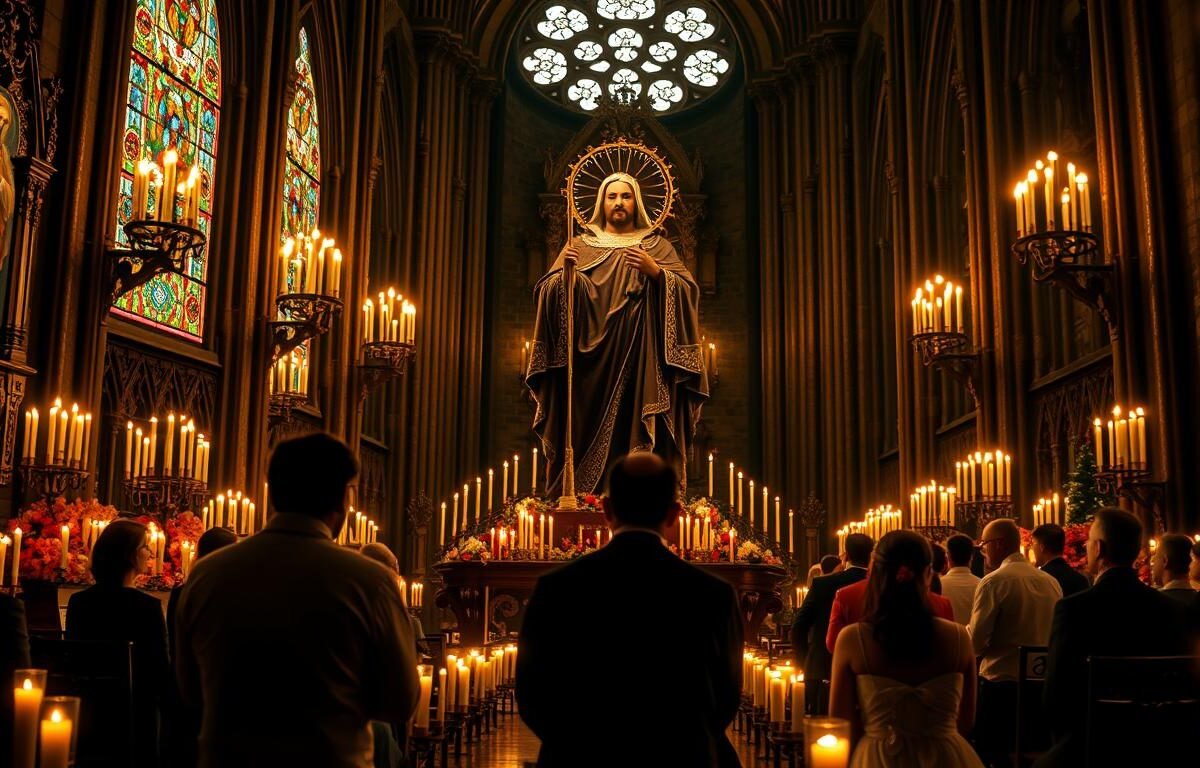
These miracles they didn't stop with their death – Devotees report instances of divine intervention even today in churches dedicated to him.
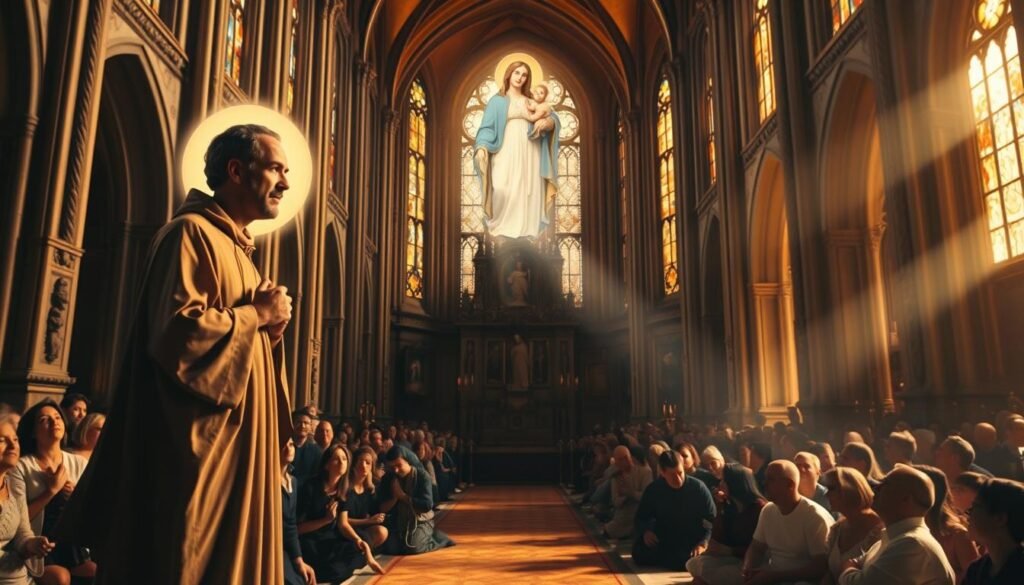
Unprecedented recognition
Less than one year After his death, Pope Gregory IX declared him a saint—a swift process for that time. The exhumation of his body, decades later, revealed something surprising: parts of it were intact, a sign seen as divine confirmation.
In 1946, he won the title of Church Father, a rare honor for his contribution to theology.
| Date | Events | Legacy |
|---|---|---|
| June 1231 | Death | Place of pilgrimage in Padua |
| May 1232 | Beatification | The First Step Toward Holiness |
| 1233 | Canonization | Official recognition by the Church |
This unique trajectory explains why, even 800 years Even today, he continues to inspire millions. His order The Franciscan sister keeps the tradition of charity alive, proving that true miracles lie in the transformation of hearts.
Saint Anthony: The Matchmaker and Protector of the Poor
Did you know there's a holy that has been linking romance and solidarity for nearly 800 years? Its fame extends beyond the altars—it has become a symbol of hope for those who seek love and social justice. In the streets and in prayer, his name resounds as an ally of the humble.
His reputation as a matchmaker and his support for young women
In the 13th century, young women without a dowry would find themselves in the matchmaker saint an ally. It is said that a devout young woman received miraculous coins to help her get married—details that spread her reputation.
To this day, the faithful place her image upside down, promising donations to the poor in exchange for loving help.
“The bread of the poor” and intercession for those in need
In addition to bringing hearts together, he distributed bread to the hungry. A famous miracle tells of a baker who, whenever he donated to the needy, always found his supply replenished. That is why many churches carry on the tradition of the bento box on June 13.
Have you noticed how he turned around? patron saint of popular causes? Its connection to the people It comes from simplicity—preaching to fishermen, helping single mothers. Proof that love True character is shown through actions, not just words.



Saint Anthony Between Lisbon and Padua
Two European cities hold within their streets memories that shaped one of the greatest symbols of the Catholic faith. While one witnessed its birth, the other has preserved its legacy in an extraordinary way.
This journey between Portugal and Italy reveals how traditions have intertwined over the centuries.
Roots That Transcend Borders
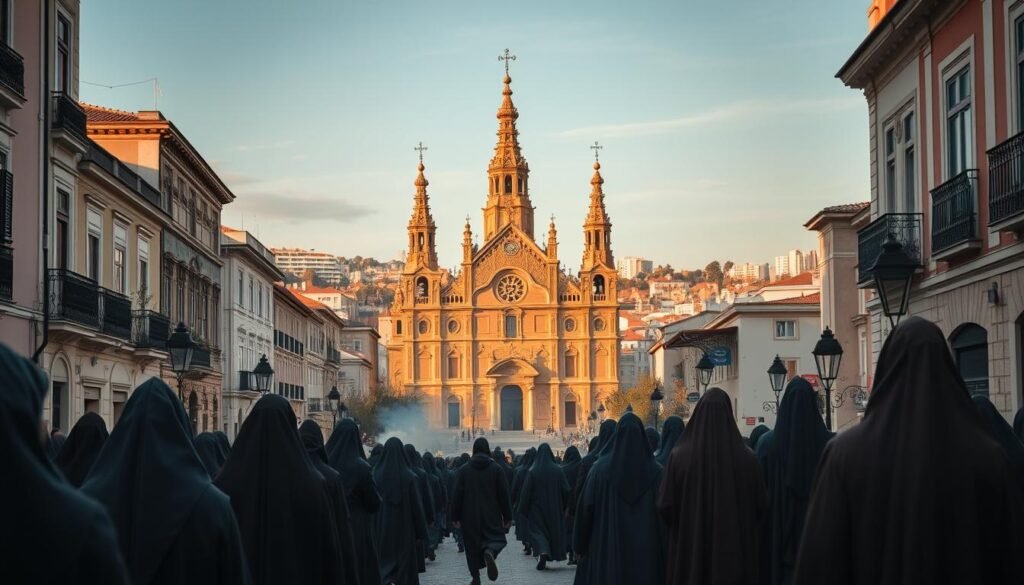
In the Portuguese capital, the name Fernando de Bulhões was shaped by his childhood. The son of a noble family, his early upbringing among the friars The Augustinians paved the way.
But it was by adopting the religious name which marked the beginning of his true mission—a tribute to the city that welcomed him years later.
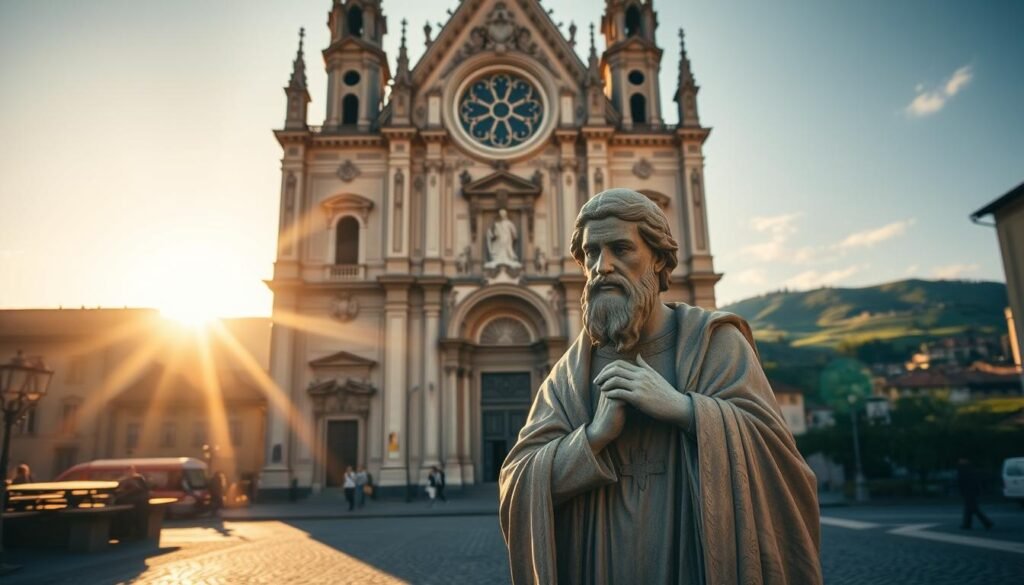
Padua: Where the Legacy Lives On
In city In Italian, her voice rang out loudly. The Franciscans Locals recalled sermons that drew crowds in both rain and sunshine. After his death, Padua became a center of pilgrimage—to this day, the faithful leave letters of thanks at his tomb.
| Aspect | Lisbon | Padua |
|---|---|---|
| Origin | Place of birth | Resting place |
| Contribution | Religious Education | Posthumous Miracles |
| Tradition | Historical Memory | Continuous devotion |
It's interesting to note how each city preserves distinct aspects. While Lisbon retains traces of its youth, Padua celebrates the Anthony of Padua that has transformed lives. This duality shows how a life journey can bring cultures together through spirituality.
Have you ever visited the places associated with this historical figure? In the chapels of Lisbon or the basilica in Padua, you can sense the same spirit: a simplicity that inspires millions. Proof that great legacies are born when heart and purpose come together.
Religious Trivia and Symbolism
Have you ever noticed the details that transform a holy into a timeless symbol? Every object associated with it carries profound messages, uniting faith and culture. The work St. Anthony's legacy goes beyond sermons: it lies in the symbolic gestures that millions recognize.
The Baby Jesus, the lily, and other symbols
In most of the images, he is holding the Baby Jesus – representing intimacy with the divine. It is said that, during her prayers, the child would appear in her arms. The white lily, meanwhile, symbolizes purity, recalling her dedication to chastity and to work spiritual.
Others things Curious? The bread in the saint’s hands symbolizes charity, while the book represents his role as a Doctor of the Church. These elements are not random: they guide people to understand his legacy beyond his words.
| Symbol | Meaning | Tradition |
|---|---|---|
| Baby Jesus | Devotion and Innocence | Appears in 90% of the images |
| Lily | Spiritual purity | Used in decorations on the 13th |
| Book | Written Works and Wisdom | Carried in processions |
In day Every day, devotees perform rituals followed by for centuries. Unmarried women hang her image upside down, promising to make a donation to the poor. The “trezena”—prayers said for 13 days—highlights how traditions bring people together people throughout history.
These things Simple things, like a lily or a loaf of bread, show how faith is present in everyday life. What about you? Have you noticed how many meanings are hidden in the details that followed by go unnoticed?
Conclusion
In just 36 years, how many lives can be transformed? A death On June 13, 1231, this did not diminish the power of that legacy. Centuries later, the miracles They still echo in lit candles and promises kept.
Your short film life brought together sermons that united kings and fishermen. The day Episode 13, now a holiday special, tells the story of how a simple man became a symbol of hope.
To this day, young single women continue to follow ancient rituals, while families give thanks for bread that has never been in short supply.
Have you ever thought about the power of devotion that spans generations? The saints They leave their mark not only on altars, but also on the way we love and help others. Every June, millions repeat gestures that began in a year far away.
That is the magic of a journey that blends faith and action. Even after the death, his name remains a bridge between lonely hearts and dreams come true. How about carrying a little of that inspiration with you in your day per day?
FAQ
Q: Why is Saint Anthony known as the “matchmaker saint”?
A: His fame stemmed from stories that he helped young women from humble backgrounds obtain dowries so they could get married. In addition, many report having received graces after asking for his intercession to find a partner or strengthen their relationships.
Q: What is the origin of the “bread of the poor” tradition?
A: The tradition stems from a miracle in which he multiplied loaves of bread for families in need. Today, the faithful donate bread at churches or distribute food in his honor, keeping alive the charity he preached.
Q: How do Lisbon and Padua celebrate their connection to the saint?
A: In Lisbon, his hometown, there are festivals in June featuring processions and Masses. In Padua, where he died, the Basilica houses his remains and attracts pilgrims from all over the world, especially on June 13.
Q: What symbols are associated with him in religious imagery?
A: The lily represents purity, the Baby Jesus symbolizes her mystical vision during prayer, and the book in her hands reflects her dedication to preaching and studying the Scriptures.
Q: How long did your canonization process take?
A: It was one of the fastest in history! He was declared a saint just 11 months after his death in 1232, due to the large number of miracles attributed to him while he was still alive.
Q: How did he become a protector of those in need?
A: In his sermons, he defended the poor and criticized the greed of the rich. His concrete actions, such as distributing food, reinforced this image of him as a defender of the most vulnerable.