

Introduction
A Christian Easter It is a religious celebration full of meaning, fascinating stories, and captivating traditions. In this article, you'll discover the true The Meaning of Christian Easter, conhecer a história por trás dessa data especial e explorar as tradições que são passadas de geração em geração. Prepare-se para mergulhar em uma jornada de fé, esperança e renovação espiritual.
A Christian Easter It is a celebration that commemorates the crucifixion, death, and resurrection of Jesus Christ. Originally, Passover was celebrated by the Jewish people as the commemoration of the Hebrew people’s liberation from slavery in Egypt. In Christianity, Easter has taken on a new meaning, representing the resurrection of Jesus Christ and the hope of salvation for humanity.
A Easter date It is a movable feast determined by the Catholic Church. The word “Easter” comes from the Hebrew “pesach,” the Latin “pascha,” and the Greek “paskha.” This celebration carries a message of faith, love, and prosperity, and is one of the most important holidays for Christians.
The Origins of Easter and Its Meaning for Christians
Easter has its origins in Jewish tradition as a celebration of the passage from death to life for the Hebrews who were freed from slavery in Egypt.
In Christianity, Easter commemorates the resurrection of Jesus Christ, which took place three days after his crucifixion.
For Christians, Easter is the most important celebration, because the Resurrection of Christ It is seen as the redemption of humanity and the source of hope and salvation for all the faithful.
Holy Week and Christian Easter Events
A Holy Week It is the period leading up to Easter and is marked by the remembrance of the events that led to the crucifixion of Jesus Christ. It begins on Palm Sunday, with Jesus’ triumphal entry into Jerusalem, and includes the Last Supper, Jesus’ arrest, trial, torture, crucifixion, and death on Good Friday. The Saturday is known as Holy Saturday, and Easter Sunday is celebrated as the day of Resurrection of Christ.
A Holy Week It is a time of deep reflection and devotion for Christians, who commemorate the sufferings and sacrifices of Jesus on his way to the crucifixion. During this week, various religious ceremonies and events are held that seek to convey the message of redemption and hope brought by the Resurrection of Christ.
One of the most memorable events of the Holy Week It is the Washing of the Feet, during which the faithful commemorate Jesus’ gesture of humility in washing his disciples’ feet. This ceremony is held in many churches, symbolizing the importance of service to others and humility on the Christian path.
The Celebration of the Passion of Christ
On Good Friday, Christians commemorate the Passion of Christ, which includes the crucifixion and death of Jesus. Many churches hold processions and reenactments of the Stations of the Cross, recalling the stages of Jesus’ journey to Calvary. These reenactments are moving and seek to convey to the faithful the magnitude of Christ’s sacrifice for humanity.
“Holy Week is a time for deep reflection on the passion and death of Jesus, but also a time for hope in the resurrection and eternal life.” – Father João Silva
In addition to religious ceremonies, Holy Week is also marked by cultural and culinary traditions. In many places, it is common to eat fish and traditional seasonal dishes, such as cod. These traditions are part of the culture of various countries and regions, adding a cultural dimension to the celebration of Christian Easter.
Holy Week is, therefore, a special time for Christians, during which they reflect on the passion and death of Jesus, but also celebrate the hope and joy brought by the Resurrection. It is a time of spiritual renewal and strengthening of faith, culminating in the celebration of Easter Sunday, when Christ’s victory over death is commemorated around the world.
| Date | Events |
|---|---|
| Palm Sunday | Jesus' Triumphal Entry into Jerusalem |
| Holy Thursday | The Last Supper and the Washing of the Feet |
| Good Friday | The Crucifixion and Death of Jesus |
| Palm Saturday | Sábado Santo |
| Easter Sunday | Resurrection of Jesus |



Christian Easter Traditions and Celebrations
The Christian Easter traditions are an important part of the celebration of this sacred day for Christians. These traditions vary among the different branches of Christianity, but they all aim to commemorate and celebrate the crucifixion, death, and resurrection of Jesus Christ.
In Catholicism, one of the main Easter traditions is the celebration of Masses, especially on Good Friday, when the sufferings of Jesus on the Cross are commemorated. In addition, reenactments of the Passion of Christ are staged, depicting the final moments of Jesus’ life, from his arrest to his crucifixion. These reenactments are a way to reflect on Christ’s sacrifice and to draw closer to his message of love and redemption.
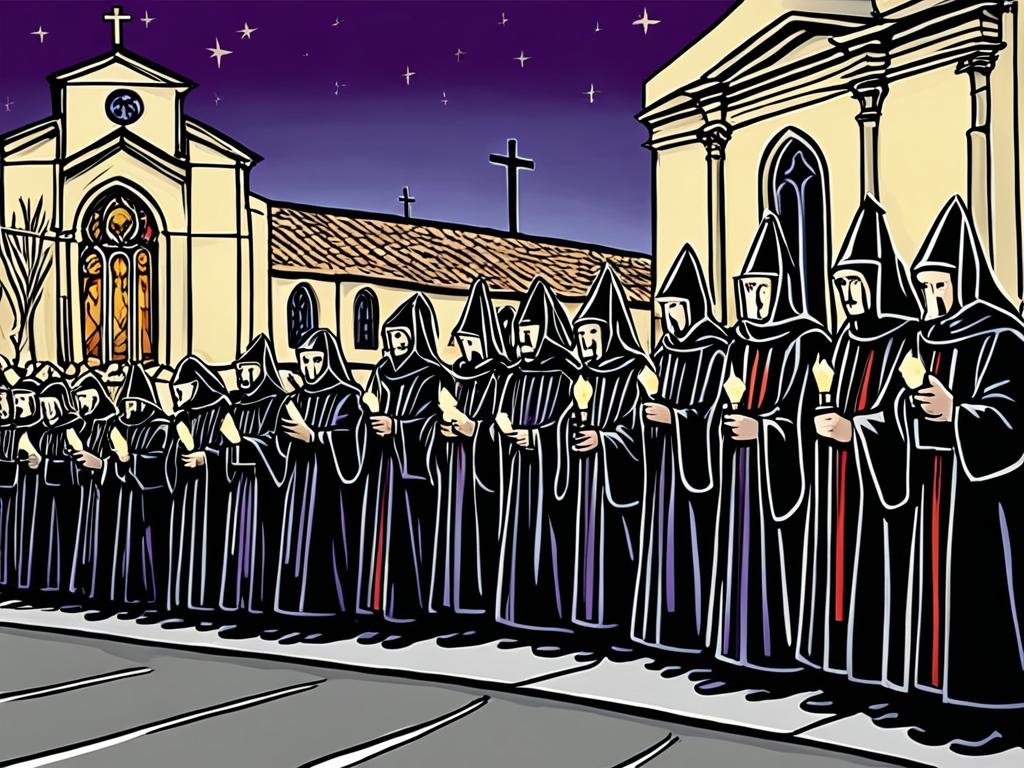
“The Fogaréu Procession is a tradition in the city of Goiás, in the state of Goiás, that reenacts the arrest of Jesus Christ and attracts thousands of the faithful.”
One of the most striking traditions of Christian Easter is the Fogaréu Procession, which takes place in the city of Goiás, in the state of Goiás. In this procession, the faithful reenact the arrest of Jesus Christ, walking through the city streets with lit torches in an atmosphere of deep devotion and faith. This tradition attracts thousands of people every year, who are deeply moved as they recall the moments leading up to Jesus’ crucifixion.
During the Lent, período que antecede a Páscoa, também são realizadas práticas de penitência, jejum e atos de caridade. Os fiéis são encorajados a se absterem de certos alimentos, como carne vermelha, e a se dedicarem à oração e à reflexão espiritual. Essas práticas têm como objetivo preparar os fiéis para a celebração da Páscoa, reforçando sua fé e sua conexão com a mensagem de amor e sacrifício de Jesus Cristo.
A Easter Easter is an opportunity for Christians to renew their faith, their hope, and their commitment to the teachings of Jesus. It is a time to celebrate life, redemption, and the resurrection. Through traditions and Christian Easter celebrations, the faithful find inspiration to live a life of love, forgiveness, and generosity, following the example of Jesus Christ.
Common Christian Easter Celebrations:
- Celebration of Masses in churches;
- Reenactments of the Passion of Christ;
- Religious processions;
- Practices of penance and fasting;
- Acts of charity;
- Participation in the Eucharist;
- Family gatherings and get-togethers.
Examples of Christian Easter Traditions and Celebrations
| Tradition/Celebration | Description |
|---|---|
| Staging of the Passion of Christ | Theatrical performances depicting the final moments of Jesus Christ’s life, from his arrest to his crucifixion. These performances are a way to reflect on his sacrifice and connect with his message of love and redemption. |
| Fogaréu Procession | A procession held in the city of Goiás, in the state of Goiás, that reenacts the arrest of Jesus Christ. The procession winds through the city streets with lit torches, in an atmosphere of deep devotion and faith. |
| Fasting and Penance | Activities carried out during the Lent, the period leading up to Easter, as a form of spiritual preparation. The faithful abstain from certain foods and devote themselves to prayer, reflection, and acts of charity. |
The Date of Easter and Lent
A Easter date Easter is determined by the Council of Nicaea, held in 325 AD. It falls on the first Sunday after the first full moon of early spring (in the Northern Hemisphere) and early fall (in the Southern Hemisphere). Easter marks the end of the Lent, a 40-day period of preparation for Easter, marked by fasting, penance, and prayer.
During Lent, Catholics are encouraged to abstain from red meat, practice charity, and devote themselves to spiritual reflection.
| Date | Easter | Ash Wednesday |
|---|---|---|
| 2023 | 09/04 | 22/02 |
| 2024 | 31/03 | 14/02 |
| 2025 | 20/04 | 05/03 |
The table above shows some future dates for Easter and Lent for your reference. Keep in mind that the Easter date It may vary from year to year, based on the calculation established by the Council of Nicaea.
Note that Lent begins on Ash Wednesday, marking the period of preparation for Easter. During these 40 days, the faithful are invited to engage in self-reflection, prayer, and self-denial as a way to draw closer to God and strengthen their faith.
Fun Fact About Easter
“Easter is a special time to celebrate the life and hope that Jesus brought us through his resurrection. May this Lenten season be a time of reflection and renewal of our faith.”
Christian Easter is a time of profound significance for the faithful, marked by the celebration of life and the resurrection of Jesus Christ. Through reflection, prayer, and fasting during Lent, Christians prepare to experience the joy that Easter brings.
Christian Easter in the Bible and in History
A Páscoa Cristã tem referências na Bíblia que remontam aos relatos da participação de Jesus em celebrações pascais desde a infância. Um dos eventos mais significativos relacionados à Páscoa é a Última Ceia, onde Jesus instituiu a Eucaristia e partiu o pão com os discípulos.
Furthermore, Passover was already celebrated before the emergence of Christianity; it is a Jewish holiday that symbolizes the Hebrew people’s liberation from slavery in Egypt. This transition from slavery to freedom has profound historical and religious significance for both Judaism and Christianity.
“The ‘Passover’ Lamb was the great rite in the Old Testament that prepared the way for liberation from slavery in Egypt. Jesus refers to himself as the Lamb of God in connection with his own death and resurrection, which brings about the definitive liberation from the bondage of sin and eternal life for all who believe in him.” – Biblical Excerpt
In addition to its biblical references, Christian Easter also has a rich history within the development of Christianity over the centuries. From the earliest followers of Jesus to the present day, the celebration of Christ’s resurrection is considered a historic milestone in the spread of the Christian faith. Christian Easter represents hope, redemption, and spiritual renewal for millions of people around the world.
Based on biblical references and the rich history of Christianity, Christian Easter is a holiday that carries profound spiritual and cultural significance. It is an opportunity for the faithful to remember Jesus’ sacrifice on the cross and to celebrate the victory of life over death.
Conclusion
A Easter Easter is a deeply meaningful celebration for Christians, as it commemorates the death and resurrection of Jesus Christ. It represents hope and belief in eternal life, conveying a message of love, forgiveness, and renewal. Over the centuries, the traditions, events, and teachings of Easter have been a source of inspiration for the faithful, renewing their faith and strengthening their relationship with God.
At this special time, Christians have the opportunity to reflect on Jesus’ sacrifice and the profound meaning of his resurrection. Through Easter, they are encouraged to free themselves from sin, renew their hope, and pursue a life of righteousness and fellowship with God. The Easter It is a time to seek reconciliation, to forgive, to love, and to help others, following the example set by Jesus during his earthly life.
May Christian Easter be a time of deep reflection, spiritual renewal, and true joy for all Christians. May each person find comfort in their faith, strength to face life’s challenges, and hope for a better future. Easter is a reminder that, through Jesus Christ, everyone has the opportunity to be transformed, to find redemption, and to experience salvation.
FAQ
What is Christian Easter?
Christian Easter is a religious celebration that commemorates the crucifixion, death, and resurrection of Jesus Christ. Originally, Easter was celebrated by Jews as the commemoration of the Hebrew people’s liberation from slavery in Egypt. In Christianity, Easter has taken on a new meaning, representing the resurrection of Jesus Christ and the hope of salvation for humanity.
What is the origin of Christian Easter, and what does it mean to Christians?
Easter has its origins in Jewish tradition as a commemoration of the passage from death to life for the Hebrews who were freed from slavery in Egypt. In Christianity, Easter represents the resurrection of Jesus Christ, which occurred three days after his crucifixion. For Christians, Easter is the most important celebration, as Christ’s resurrection is seen as the redemption of humanity and the source of hope and salvation for all the faithful.
What are the events of Holy Week and Christian Easter?
Holy Week is the period leading up to Easter and is marked by the commemoration of the events that led to the crucifixion of Jesus Christ. It begins on Palm Sunday, with Jesus’ triumphal entry into Jerusalem, and includes the Last Supper, Jesus’ arrest, trial, torture, crucifixion, and death on Good Friday. Saturday is known as Holy Saturday, and Easter Sunday is celebrated as the day of Christ’s resurrection.
What are the traditions and celebrations of Christian Easter?
The Christian Easter traditions They vary according to the different branches of Christianity. In Catholicism, Masses are held, along with reenactments of the Passion of Christ and the Fogaréu Procession. The Fogaréu Procession is a tradition in the city of Goiás, in the state of Goiás, which reenacts the arrest of Jesus Christ and attracts thousands of the faithful. In addition, fasting, penance, and acts of charity are common practices during Lent, the period leading up to Easter.
How is the date of Easter determined?
The date of Christian Easter was established by the Council of Nicaea, held in 325 A.D. It falls on the first Sunday after the first full moon of early spring (in the Northern Hemisphere) and early fall (in the Southern Hemisphere). Easter marks the end of Lent, a 40-day period of preparation for Easter, characterized by fasting, penance, and prayer. During Lent, Catholics are encouraged to abstain from red meat, practice charity, and devote themselves to spiritual reflection.
What is the significance of Christian Easter in the Bible and in the history of Christianity?
Christian Easter has references in the Bible, such as Jesus’ participation in the Passover celebration as a child and the Last Supper, during which Jesus instituted the Eucharist. Furthermore, Passover was already celebrated before the emergence of Christianity; it is a Jewish festival that symbolizes the liberation of the Hebrew people from slavery in Egypt. Christian Easter also holds significant importance in the history of Christianity, marking the spread of the faith and the celebration of Christ’s resurrection throughout the centuries.
Be sure to explore our blog for more spiritual content! Discover inspiring stories and deep reflections in a warm and relaxed atmosphere.