Apocalypse: A Message of Hope and Redemption for HumanityDo you think the Apocalypse is just about the end of the world? But it brings a message of hope and redemption. Discover the divine revelations of the Apocalypse and how they are relevant today.
The Apocalypse was written by the apostle John on the island of Patmos between 93 and 96 AD. It is not just about the end of the world. It is a message of hope and comfort for persecuted Christians. It shows God's victory over evil. See how this divine revelation can change your life.
Divine Revelation in the Last Book of the Bible
O Apocalypse it's a message from Jesus Christ. God sent him to show what will happen. This book uses symbols and visions to share.
O Apocalypse was written by the apostle John. He was on the island of Patmos between 93 and 96 AD. The book is for the seven churches of Asia Minor, which is now Turkey.
O Apocalypse wants to comfort the church. He shows God's plan for the future. And he ends the Bible with the victory of the church and the creation of the New Earth.
The Meaning of the Word Apocalypse
“Apocalypse” comes from Greek and means “revelation.” This book shows the future of humanity and the church. It uses symbols and visions to do so.
Authorship and Date of Composition
O Apocalypse was written by the apostle John. He was on the island of Patmos between 93 and 96 AD. The book is a series of letters to the seven churches of Asia Minor.

The Purpose of Revelation
O Apocalypse wants to comfort the church. It shows God's plan for the future. And it shows that justice will prevail in the end.
“The Apocalypse is most meaningful in times of crisis and challenge, providing encouragement and hope in difficult situations.”
The Historical Context of the Seven Churches of Asia Minor
The book of Revelation was written at a time of great Christian persecution in Roman Empire. The seven churches of Asia Minor faced challenges in their communities. Emperor Domitian wanted to wipe out the Christians. John was exiled to Patmos for his faith.
Despite the difficulties, these churches were very important for Christianity. The first apostles and Paul helped a lot. They spread the faith in various cities.
Jesus wrote letters to these churches. He praised some and asked for improvements in others. Jesus wanted everyone to repent and persevere in their faith.
The Seven Churches of Asia Minor show the diversity of Christian cities. John in Patmos influenced the messages. This shows the determination of Christians to follow his guidance.
| Statistics | Value |
|---|---|
| Number of times the number seven appears in Revelation | 54 |
| Number of parallel and progressive sections in the book | 7 |
| Major persecutions suffered by the church in the early centuries | Nero, Domitian, Trajan, Marcus Aurelius, Septimius Severus, Decius, and Diocletian |
| Main schools of interpretation of the Apocalypse | Preterist, futurist, and historical |
| Difference between dispensational premillennialists and historical or moderate premillennialists | Different teachings |
The Structure and Composition of the Book of Revelation
O Book of Revelation It is also known as the Revelation of John. It has a unique structure and is full of mystery. This book of the Christian Bible, written in Koine Greek, is a treasure trove of biblical symbolism e prophetic visions.
The Three Main Divisions
The Apocalypse is divided into three main parts:
- Introduction and greeting (chapter 1)
- Letters to the Seven Churches (Chapters 2-3)
- Views on the end of times (chapters 4-22)
The Symbolic and Literary Elements
The book uses language full of biblical symbolism. Important numbers, such as seven, and vivid images are used. They invite the reader to gain a deeper understanding of the structure of the Apocalypse.
Apocalyptic Language
The Apocalypse is a work of apocalyptic language. Its language is symbolic, visionary, and eschatological. This unique language helps us understand the prophecies and revelations from the book.
| Features | Description |
|---|---|
| Main Divisions | The Apocalypse is divided into three parts: introduction, letters to the churches, and visions about the end of times. |
| Symbolism and Language | The book uses biblical symbolism, important figures, and vivid images for his prophetic message. |
| Apocalyptic Language | The Apocalypse is a work of apocalyptic language, with symbolic, visionary, and eschatological characteristics. |
“The Apocalypse is a complex book, but its message of hope and redemption is fundamental to understanding the Christian faith.”
Jesus Christ as the Central Figure of the Apocalypse
In the Book of Apocalypse, Jesus Christ is the central figure. He is seen as the Lamb of God and Christ the Victor. The book shows the divine sovereignty of Christ and His victory over evil.
Jesus appears in various ways in the Scriptures. He is the Seed of the Woman in Genesis and the Paschal Lamb in Exodus. In Revelation, Jesus is shown as glorious, ready to establish his eternal kingdom.
Revelation says that Jesus is “the first and the last and the living one” (Revelation 1:17–18). This shows his divine and eternal nature. He is also called “the Ruler of the kings of the earth” (Revelation 1:5), showing his authority.
The narrative of Revelation shows Jesus suffering on the cross and his subsequent glory. This symbolizes triumph and hope for believers. That message of hope It is one of the main themes of the book.
The Message of Hope and Redemption for Humanity
The Book of Revelation brings a message of hope and redemption. It comforts persecuted Christians, showing that God sees their tears. He hears their prayers and promises vengeance for the blood that has been shed. This message of comfort to believers is essential.
The Promise of Ultimate Victory
The message of Revelation goes beyond consolation. It promises the final victory of Christ and his church over evil. This victory will lead to divine redemption of humanity. A new heaven and a new earth will be created, without pain, suffering, or death.
This vision of hope and divine redemption is central to the book of Revelation. It assures us that God is in control and will triumph over evil.
“He who overcomes will inherit these things, and I will be his God, and he will be my son.” (Revelation 21:7)
This promise of ultimate victory is crucial to the Christian faith. It emphasizes the hope of an intimate relationship with God, even in adversity.

The Prophecies and Their Contemporary Interpretation
The book of Revelation is full of mysteries. It contains symbolic prophecies and apocalyptic language. Many eschatological schools try to understand the prophetic interpretation of this book. They want to know how prophecies apply to today's world.
There are several ways to interpret the Apocalypse. Preterism believes that everything has already happened. Futurism says that it is yet to happen. Historicism sees a historical sequence. And idealism focuses on symbolic meaning.
Some scholars believe that prophecies can have multiple fulfillments. This includes past and future events. To understand this well, it is crucial to look at the historical context and literary genre of the text.
“The interpretation of Revelation must take into account its symbolic and prophetic nature, avoiding excessive speculation or literal readings that distort its message of hope and redemption.”
The Apocalypse continues to intrigue and challenge many. It offers a unique insight into good and evil. And it shows the promise of a final victory for Christ and His Church.
| Eschatological School | Interpretive Approach | Examples of Interpreted Prophecies |
|---|---|---|
| Preterism | The prophecies of the Apocalypse have already been fulfilled in the past, during the persecution of Christians in Roman Empire. | The fall of Jerusalem in 70 AD and the ruin of Rome. |
| Futurism | The prophecies of the Apocalypse refer to events yet to come, in the end of times. | The Second Coming of Christ, the Final judgment and the creation of a new heaven and a new earth. |
| Historicism | The prophecies of Revelation follow a historical sequence from John's time to the end of time. | The rise and fall of empires and governments, the persecution of the Church, and the final triumph of Christ. |
| Idealism | The prophecies of the Apocalypse have a symbolic and eternal meaning, representing the struggle between good and evil. | The conflict between the Church and the forces of evil, regardless of specific historical contexts. |
Interpreting the Apocalypse is a challenge. It requires care and balance. It is essential to consider the historical context and message of hope and redemption from the book.
Symbolism and Numbers in Revelation
The Book of Revelation is full of numerical symbolism and figurative. These symbols are essential to convey his message of hope. Numbers have a special meaning in the biblical and Christian context.
The Meaning of the Number Seven
The number seven is used extensively in Revelation. It symbolizes completeness and divine perfection. We see seven churches, seven seals, seven trumpets, and seven bowls. This shows the totality of human experience and God's sovereignty.
Other Important Symbols
The Apocalypse also uses figurative symbols for its messages. For example:
- The Lamb, symbolizing Jesus Christ
- The Dragon, representing Satan in a cosmic conflict
- The Woman Clothed with the Sun, symbolizing God's people facing persecution
These symbols, along with others such as lamps, seals, trumpets, and bowls, need to be understood in their biblical context. In this way, we can better understand the figurative language of the Apocalypse.
| Symbol | Meaning |
|---|---|
| Number Seven | Divine completeness and perfection |
| Number Twelve | The people of God (12 tribes of Israel, 12 apostles) |
| Number 666 | Symbol of imperfection and absolute evil |
| Lamb | Representation of Jesus Christ |
| Dragon | Symbol of Satan in cosmic conflict |
| Woman Dressed in Sunlight | Image of God's people facing persecution |
O numerical symbolism and interpretation of symbols are essential to understanding the Apocalypse. They reveal profound messages of hope and redemption.
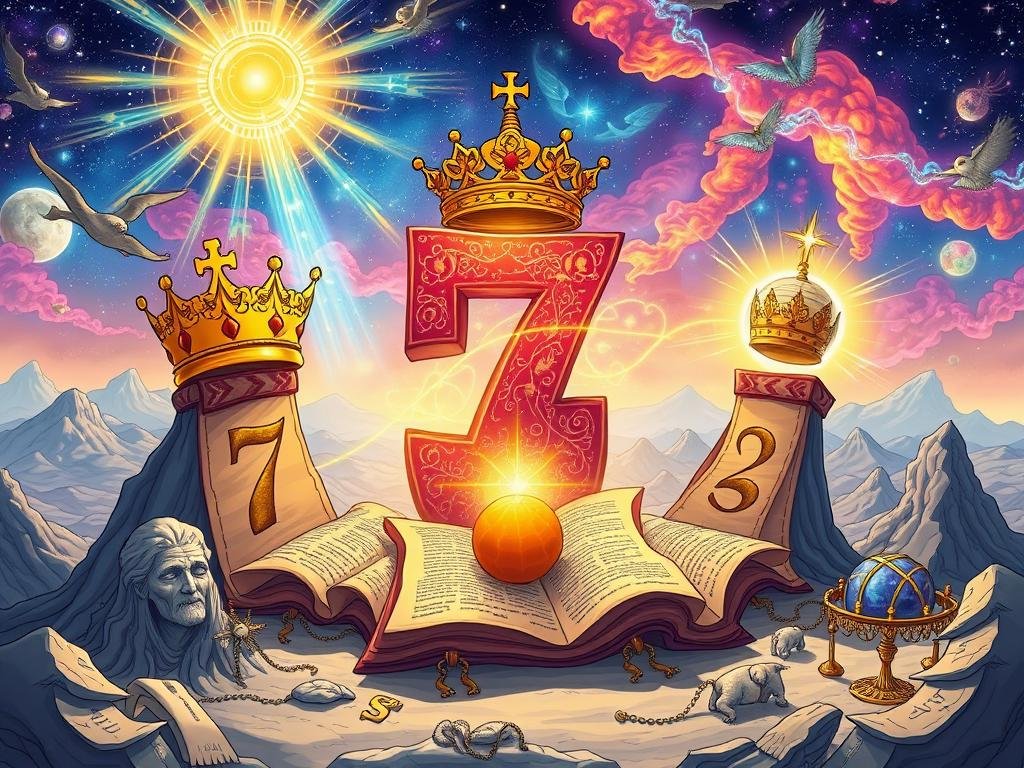
“The Apocalypse makes extensive use of symbolism, especially numbers. The number seven appears 54 times and represents perfection or completeness.”
The Final Victory of Christ and His Church
O triumph of Christ and his Church is the central theme of the Book of Revelation. It describes the final battle between good and evil. evil. Jesus Christ will defeat all the forces of evil, including the dragon and the beast.
The church, the bride of Christ, will triumph with him. The book ends with the final judgment and the defeat of Satan. This message of hope helps Christians who face persecution.
“They overcame him by the blood of the Lamb and by the word of their testimony; they did not love their lives so much as to shrink from death.” (Revelation 12:11)
Biblical examples, such as the story of Job, show perseverance in faith. In modern life, Corrie ten Boom helped Jews during the Holocaust with unshakeable faith.
Maintaining a close relationship with God is essential. This is done by reading the Scriptures and praying. Participating in church and community activities strengthens faith and helps create a better world.
Studying the prophecies of Revelation brings comfort and hope. Understanding that the triumph of Christ and of your Church is certainly important. The defeat of evil and final judgment are part of the divine plan, promising a new era of justice and peace.
The New Heaven and the New Earth
The Apocalypse ends with an incredible vision. God will create a new heaven and a new earth. There, God will live with his people, without sin, pain, or death.
This new reality is the restoration of God's plan. It is the end of His kingdom and the fulfillment of all promises to humanity.
The new Jerusalem is impressive, with its grand dimensions and luxury. It symbolizes the eternal home that God prepares for those who love Him. There will be no more sadness, pain, or mourning there.
Those who persevere will receive the inheritance of being children of God. However, the cowardly and unfaithful will face punishment.
This vision gives us hope and motivates us to persevere. It reminds us of the importance of seeking unity and peace. In this way, we reflect the divine harmony that is to come.
FAQ
What does the word "Apocalypse" mean?
“Apocalypse” means “revelation.” It is the last book of the Bible. In it, there are prophecies about the future and the end of time.
Who wrote the Book of Revelation and when?
The Apocalypse was written by the apostle John. He wrote it between 93 and 96 AD. John was on the island of Patmos, in exile.
What is the purpose of the Book of Revelation?
The book of Revelation seeks to comfort the persecuted church. It reveals God's plan for the future and emphasizes Christ's victory over evil.
What is the historical context of the Apocalypse?
The Apocalypse was written when Christians were severely persecuted. This happened in Roman Empire, under Emperor Domitian.
How is the Apocalypse structured?
The Apocalypse has three main parts. First, an introduction and greeting (chapter 1). Then, letters to seven churches (chapters 2-3). Finally, visions about the end times (chapters 4-22).
What role does Jesus Christ play in the Apocalypse?
Jesus Christ is the center of Revelation. He is the Lamb of God and the victorious King. This shows his sovereignty and ultimate victory over evil.
What is the message of hope and redemption in Revelation?
The Apocalypse brings hope and comfort. It says that Christ and his church will defeat Satan. And that there will be redemption for humanity and the creation of a new heaven and earth.
How are the prophecies of the Apocalypse interpreted?
The prophecies of Revelation have various interpretations. These include preterism, futurism, historicism, and idealism. The interpretation must take into account the historical context and literary genre.
What is the meaning of the symbols and numbers used in Revelation?
The Apocalypse uses many symbols, such as the number seven. It represents perfection. Other important symbols include lamps, seals, trumpets, and bowls. Their interpretation must be based on the biblical and historical context.
How does Revelation describe Christ's final victory?
The Apocalypse shows Christ's final victory. He defeats the dragon, the beast, the false prophet and Babylon. The church, the bride of Christ, triumphs with him.
How does Revelation portray the new heaven and the new earth?
The Apocalypse ends with the vision of a new heaven and earth. God will dwell with his people. This new creation is the restoration of God's original plan. It is a place without sin, suffering, and death, the consummation of kingdom of god.
Source links
- “Do not be afraid!” is the message of Revelation – Dialogues of Faith – CartaCapital
- Revelation and the message of the remnant – Adventist News
- 8 reasons why you should study and understand the book of Revelation
- Bible study on Revelation (how to understand its meaning)
- Hernandes Dias Lopes – Studies at Book of Revelation.doc
- Studies in the Book of Revelation
- To the Seven Churches of Asia Minor
- The three angelic messages