
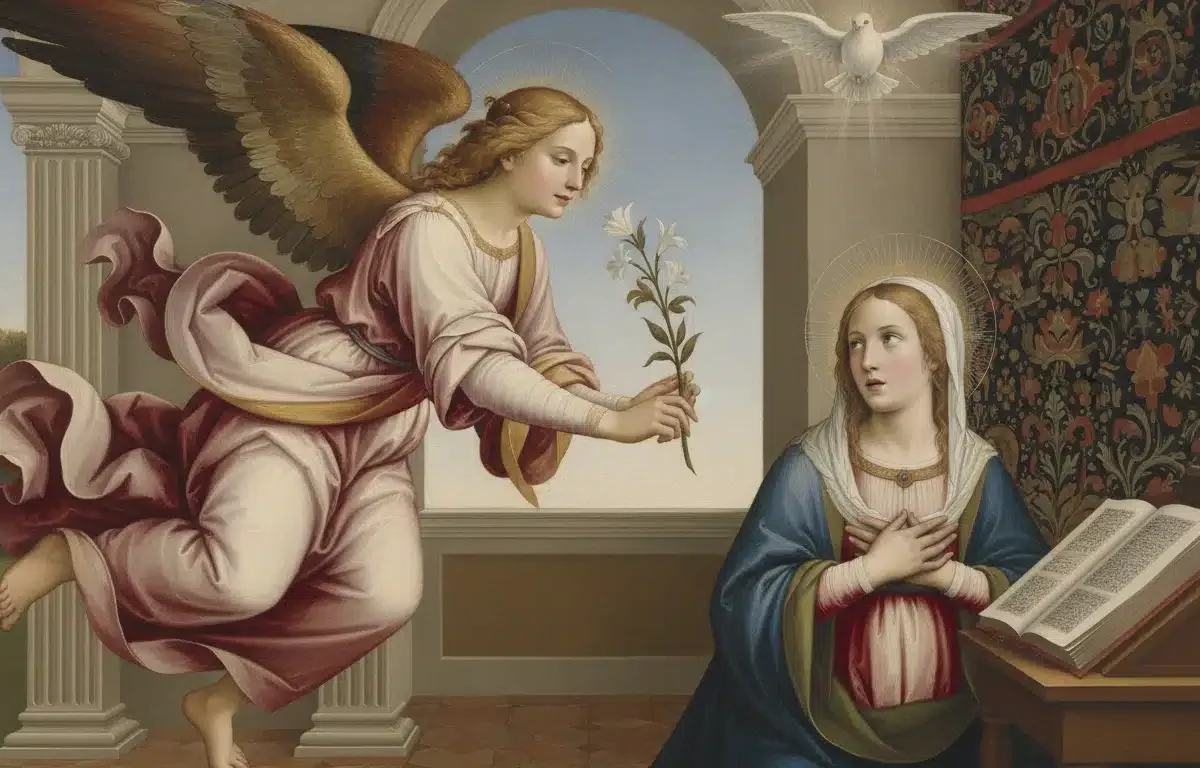
Everyone thinks they know the Angel Gabriel. He is that classic figure from nativity scenes, the bearer of good news who appears on Christmas cards and in Renaissance paintings. But if you take the time to read the original texts, his figure is much more imposing—and sometimes even frightening—than pop culture has led us to believe.
He doesn't just show up to play the harp. When Gabriel He enters the scene, and the history of humanity changes. He dictates the future of nations, announces impossible births, and explains visions that left prophets shaking on the ground. Today, let’s dust off these traditions and take a close look at what the Scriptures say about this heavenly being.
Did you know that he is one of the few angels named in the Bible? And that there’s a major theological debate over whether he’s really an “archangel” or not? Get ready, because what we’re about to explore here might change your view of the spiritual world.
Main conclusions
- Meaning of the Name: Gabriel means “Man of God” or “Strength of God.”.
- Primary Function: He serves as the principal messenger of divine revelations to the chosen people.
- Angelic Status: Although tradition refers to him as an archangel, the Bible explicitly attributes that title only to Michael.
- Omnipresence: He appears in both the Old Testament (Daniel) and the New Testament (Luke).
Who is the Angel Gabriel in the Bible?
The name says it all. In Hebrew, Gabriel (Gavri’el) conveys the meaning “God is my strength” or “Warrior of God.” Unlike the image of chubby babies with wings (the cherubs of Baroque art), Gabriel is described as having the appearance of a man, but with a glory that inspires awe.
He is a created being, a ministering spirit sent to serve. The Bible describes him as one who stands in the direct presence of the Creator. In Luke 1:19, he introduces himself: “I am Gabriel, who stands in the presence of God”. This indicates a position of the highest trust and closeness to the heavenly throne.
Gabriel's Appearance
Many people imagine angels with two huge white wings. Interestingly, the Bible does not describe Gabriel’s wings in detail, specifically in his appearances as a “man,” but in prophetic visions, heavenly beings often have striking features.
The focus of the biblical text is never on the angel's anatomy, but on the message he carries. The impact of his presence is so powerful that people often fall prostrate with fear when they see him.
Apparitions in the Old Testament
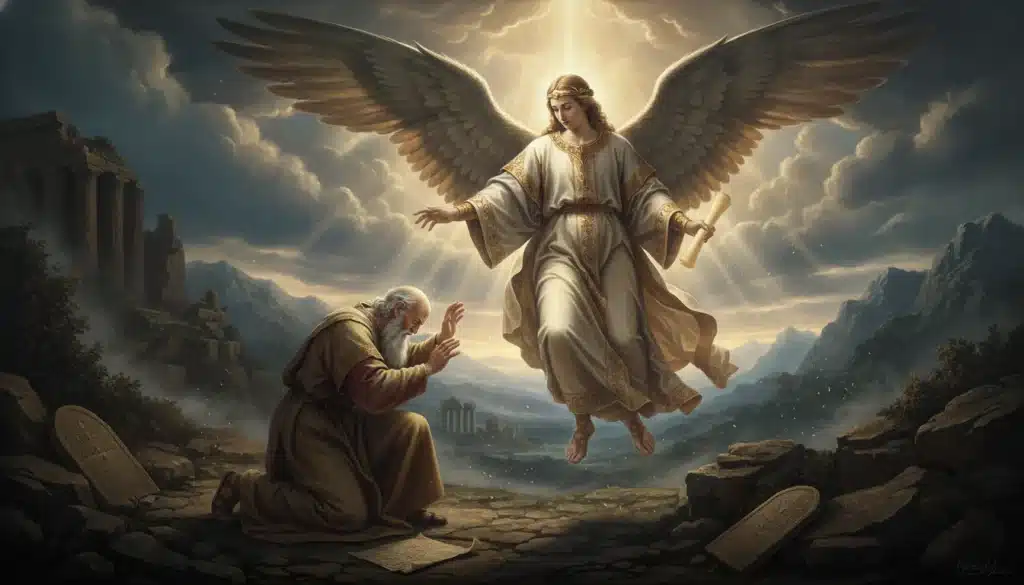
The first time we hear about him is not at the time of Jesus' birth. Centuries earlier, the prophet Daniel He had remarkable encounters with this messenger. Daniel was confused by visions concerning the end times and the fate of Israel.
It was then that Gabriel was sent to provide clarity. In Daniel 8:16, we hear a human voice crying out: “Gabriel, explain this vision to him”. He explained future events concerning the Persian and Greek empires. Later, in Daniel 9, he returns to present the famous “Seventy Weeks” prophecy, which is one of the most complex and fascinating texts about the coming of the Messiah.
Expert Tip:
Note that Gabriel always appears when God’s “prophetic clock” is about to move forward. He does not bring everyday messages. He announces changes of an era. If Gabriel has appeared, it is a sign that the global landscape is about to change drastically.



Mission in the New Testament
After centuries of prophetic silence (the interbiblical period), Gabriel returns. And he returns with twice as much work to do. His mission now was to prepare the way for the Savior’s arrival.
The Announcement to Zechariah
First, he visits an elderly priest named Zacarias. The man was in the temple burning incense when Gabriel appeared to the right of the altar. The message? Elizabeth, Zechariah’s elderly and barren wife, would have a son: John the Baptist, the one who would prepare the way for Jesus.
Zechariah doubted. And here we see Gabriel’s authority. He did not simply accept Zechariah’s disbelief. Because he doubted the message sent from heaven, Zechariah was struck dumb until the baby’s birth. This shows that Gabriel is not merely a heavenly messenger; he carries the authority of the One who sent him.
The Visitation to Mary
Six months later, the most famous encounter in history takes place. Gabriel travels to Nazareth, an obscure little town, to speak with a virgin named Maria. The contrast is striking: he leaves the golden temple in Jerusalem for a simple home in Galilee.
- The Greeting: “Hail, full of grace, the Lord is with you.”.
- Fear: Maria was shaken (who wouldn't be scared?).
- The Promise: He explains how the Holy Spirit would come upon her to conceive the Son of God.
Unlike Zechariah, Mary asked as it would happen, but he didn't doubt that could happen. Gabriel's response contains one of the most powerful phrases in the Bible: “For nothing is impossible with God”.
Gabriel vs. Miguel: What's the Difference?
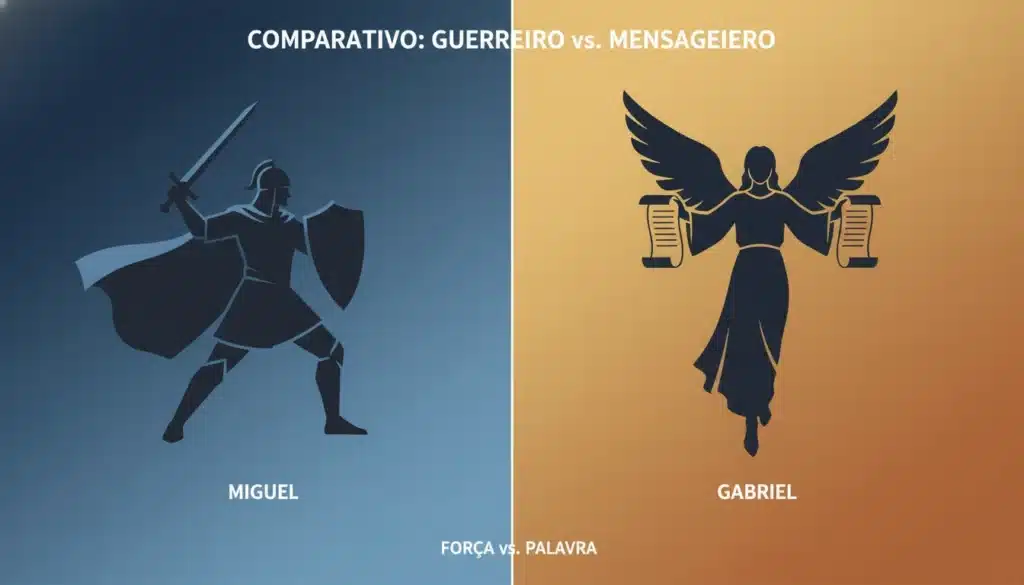
It’s very common to confuse their roles. Both are high-ranking angels, but their functions are quite distinct in Scripture. Let’s compare them side by side to make it easier.
| Features | Angel Gabriel | Archangel Michael |
|---|---|---|
| Meaning of the name | “Man of God” / “Power of God” | “Who is like God?” |
| Main function | Messenger of revelations and good news | Warrior and Protector of Israel |
| Notable Actions | She announced the birth of John and Jesus | The Struggle Over Moses' Body; Battle in Heaven (Revelation) |
| Biblical Title | Angel / Man (in visions) | One of the First Princes / Archangel |
| Association | Prophecies, Wisdom, Communication | Spiritual Warfare, Defense, Judgment |
While Miguel draws his sword to defend God's people against demonic forces, Gabriel brings the word that guides and gives hope to these very people.
Gabriel in Other Cultures
The figure of Gabriel extends beyond the pages of the Christian Bible. In Judaism, he remains a central figure of intercession and power. But it is in the Islam which gives him massive exposure.
Known as Jibril In Arabic, Muslims believe that he was the one who revealed the Qur'an to the Prophet Muhammad. In Islam, Jibril is the chief of the angels, the Spirit of Truth. This shows how this figure permeates the faith of billions of people around the globe, serving as a fascinating link between the three major monotheistic religions.
Common Myths About Angels
There are many ideas floating around that have no basis in the sacred text. Let’s clear up a few things so you don’t fall for folk tales.
- Do we become angels when we die? No. The Bible teaches that humans and angels are different kinds of creatures. Humans are made in God’s image; angels are spiritual beings.
- Does Gabriel have his own authority? No. He makes it clear that he's only saying what he was told to say. He's an agent, not the author of the message.
- Should we pray for Gabriel? The Scriptures show that prayer should be directed to God. Angels may be the ones who carry out God’s answers, but they are never the recipients of worship. Learn more about this and other topics at Bible Phrases Channel.


Conclusion: Angel Gabriel: The Hidden Truth About the Messenger
O Angel Gabriel reminds us that heaven is not disconnected from earth. God breaks the silence of human history by sending His messengers at crucial moments. Whether to explain the end times to Daniel or to announce the beginning of the age of grace to Mary, Gabriel is there, faithful and precise.
He teaches us about readiness and service. We don’t see Gabriel questioning God or trying to outshine the message. He delivers the message and points to the Most High. May we have that same attitude: to be ready to listen and obey when the call comes.
To further your study, I recommend reading the texts directly from reliable sources such as the Bible Gateway or consult the Catholic Encyclopedia at Vatican News to see the historical perspective.
Frequently Asked Questions
The Bible refers only to Michael as an archangel (Jude 1:9). However, historical Christian and Jewish tradition often lists Gabriel as one of the archangels because of his importance and direct access to God, even though the biblical text does not use that exact title for him.
He said, “Hail, full of grace, the Lord is with you; blessed are you among women.” And then he went on to prophesy that she would conceive Jesus, the Son of the Most High (Luke 1:28–33).
His name is not explicitly mentioned in Revelation. John mentions several powerful angels, but does not identify them by name, except for Michael. Some scholars suggest that he may be one of the angels who sound the trumpets, but this is speculation.
In the Catholic liturgical calendar, the feast of the Archangels Michael, Gabriel, and Raphael is celebrated on September 29. In the past, it had its own date in March, but today the celebration is combined with another event.
The Greek word angelos and Hebrew malak literally mean “messenger.” Since Gabriel’s primary role, as recorded in the Bible, was to deliver direct messages from God to prophets and chosen people, he perfectly embodies this title.