

The Importance of Communion in the Church is the central theme of this text and shows why communion transforms your life. faith and community life.
You will see biblical texts in Atos, In the Gospel of John and in 1 Corinthians, which teach this truth, you will understand the church as body of Christ, You will discover spiritual, emotional and moral benefits, and learn about simple practices - worship, supper, prayer and small groups - that strengthen you.
You'll receive practical steps that you can apply right away and you'll learn how unity increases missionary impact and how to overcome conflict and indifference. Everything is explained clearly and closely so that you can grow together.
If you want practical tools to strengthen your faith in community, check out the reflection on how to strengthen your faith and fellowship.
Main conclusions
- You find support and friendship in the church.
- Your faith grows when you participate with others.
- Sharing your gifts strengthens the community.
- Their presence brings meaning and belonging.
- Communion promotes healing and reconciliation.

Biblical basis: importance of communion in the church
Communion has been a central practice since the early church. As Acts 2, The community shares bread, resources and time; this shows that faith lives in real encounters.
When you participate, you are not just present: you contribute to a common life that supports the weak and celebrates the joy of the saints. For a historical introduction, see Acts 2 and the life of the community.
Biblically, communion involves sharing, prayer and doctrine. These three dimensions hold the community together. If you value these practices, the church stops being a building and becomes a family that cares, corrects and encourages.
To better understand the historical context of the nascent church, see also the approach on the early church.
The importance of communion in the Church becomes clear when we see that Jesus wanted his followers to live together and serve one another.
By getting involved, you experience spiritual support and practical growth. Communion is not a luxury; it is a necessity for Christian life.
Key texts that teach communion in Acts, 1 Corinthians and John
- Acts 2:42-47 shows the routine of the church: teaching, fellowship, breaking of bread and prayer - a practical community that shares resources and responsibilities.
- 1 Corinthians 11 and 12 emphasize unity in the body and reverence in the Supper: you are part of the body of Christ and your gifts matter; for more on the celebration of the Supper, see The Lord's Supper.
- John (13; 15) highlights love and abiding in Christ as the origin of communion.
“Remain in me, and I will remain in you.” (John 15:4) - this invitation reminds us that communion begins in our relationship with Jesus and flourishes among you.
| Biblical text | Key teaching | Practical application |
|---|---|---|
| Acts 2:42-47 | Practical community and sharing | Take part in meals and help with local needs |
| 1 Corinthians 11 and 12 | Unity and responsibility in the body | Use your gifts and act reverently at the Supper |
| John 13; 15 | Love and connection in Christ | Serve humbly and abide in Christ |
Note: take on small practices - inviting someone, visiting, contributing, praying together and taking the Supper. These simple actions make communion happen.
Theological foundation: the church as the body of Christ
The metaphor of the body (1 Corinthians 12) shows that each member has an essential function. You are not replaceable; your presence and service add up. When one part suffers, the whole body feels it. This transforms your vision: faith is interdependence, not acting alone.
Theologically, unity is born in Christ and manifests itself in action. Being church involves sharing gifts, taking responsibility and promoting reconciliation. If you live this out, the church begins to reflect the life of Christ - a living, cohesive body.
To understand how the church was formed throughout history and its roots, consult studies on the church history and the transition from the tabernacle to the church. For authoritative theological reflection on the idea of the Church as a body, see also Church as the body of Christ.
What these texts mean to you
Participate with intention: share time, lean towards others and use your gifts. Serve, forgive, receive and confess when you make mistakes. In this way you help to build a community where faith is visible and transformative.



Spiritual benefits of fellowship between brothers in the church
Communion transforms your faith from something individual into a living body. When you get together with others, your faith gains examples, questions and practical support.
The Importance of Communion in the Church appears here: the church stops being a building and becomes a family, where you find strength when you falter and celebrate when you move forward.
In communion you grow in knowledge and intimacy with God. Listening to testimonies, singing together and studying the Bible in a group broadens your vision. It's like a bonfire: each branch brings warmth - alone you cool down, together you warm up more and light up better.
In addition, fellowship generates responsibility and spiritual fruit. Christian friends confront with love, encourage perseverance in prayer and help recognize spiritual gifts. This environment promotes forgiveness, service and obedience in a real and continuous way.
How communion strengthens your Christian life and prayer
Communion strengthens your prayer life because you don't pray alone. Shared requests become chain prayers; answers become collective faith.
When you comment on a request and then see the answer, your trust in God grows - and this fuels a more constant prayer life. For practices and guidelines on community prayer, see suggestions at How the Bible teaches us to pray.
Communion also creates prayer partners who remember you when fatigue hits. In small meetings or after the service, someone can pray for you and with you. This support makes prayer less routine and more relational.
“For where two or three are gathered together in my name, there am I in the midst of them.” - Matthew 18:20
Practices that help your prayer in community: praying in pairs, sharing requests before the service, taking part in weekly prayer groups and reporting answers to encourage others.
Benefits of Christian fellowship for emotional and moral health
Communion reduces loneliness and offers a shoulder to lean on in difficult times. In loss, doubt or error, having brothers by your side lightens the load and offers real consolation.
In contexts of personal or collective crisis, the church can be a place of support - see reflections on how to strengthen faith in times of crisis.
Morally, communion gives you living standards. Seeing others practicing honesty, mercy and service inspires you to do the same. Accountability is not accusation; it is care that corrects with love.
This environment protects against choices that isolate and hurt. The role of social support in mental health is discussed by the WHO; see Social support and mental health.
Real examples of spiritual growth
Imagine a sister who, with the support of the group, started reading the Bible again and today leads a hospitality ministry. Or a young person who learned to forgive after a group Bible study; reconciliation restored family relationships.
Stories like this show that fellowship produces real change. For group study techniques, see materials on how to study the Bible in community.
Practices that strengthen communion in the Christian community
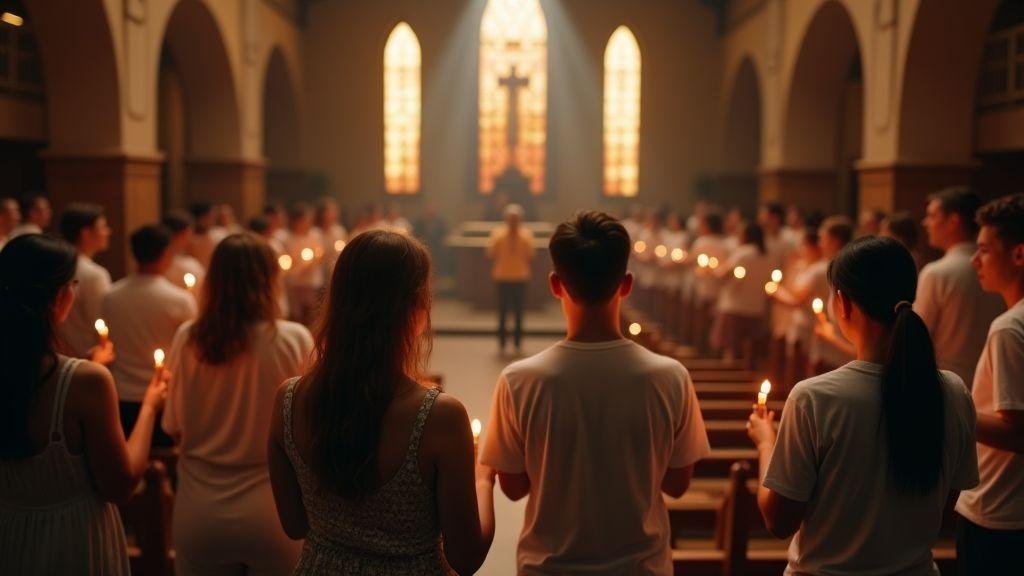
When you practice communion regularly, the church becomes a place of home. The importance of communion in the church comes when brothers and sisters meet to worship, pray and share life. These moments create trust, practical care and a sense of mission.
Simple rhythms maintain this strength. Worship, supper and prayer bring the community together. Discipleship and small groups deepen bonds. Prioritize presence, availability and listening to others.
If you come with an open heart, communion becomes concrete action. For the historical and theological context of the Supper, see also Context and meaning of the Christian Eucharist.
Communion bears fruit: support in crises, celebration in victories and a willingness to serve. Think of the church as a fabric: each meeting is a stitch that strengthens the thread. Value regular meetings and small acts of care.
- Cultivate presence: attend services regularly.
- Practice sharing: get involved in the supper and in times of prayer - reflection on the Lord's Supper can guide you on how to live this moment with reverence.
- Invest in relationships: join a small group or discipleship.
“They devoted themselves to the apostles” teaching, to fellowship, to the breaking of bread, and to prayers." - Acts 2:42
Worship, supper and group prayer as essential practices
Worship is the place where the community breathes together. When you sing, listen to the Word and pray together, faith comes alive. The supper reminds us of Christ's presence and renews our commitment to live in service.
These rites make us family. To deepen the sacramental dimension of the Supper, there is material on the power of the Eucharist at Discover the miraculous power of the Eucharist.
Group prayer expands your personal prayer. Praying together unites hearts; you see needs, celebrations and miracles. Arrive a few minutes early; invite someone new; participate actively. Small gestures make worship more welcoming.
Discipleship and small groups for ongoing fellowship
In small groups, communion happens on a daily basis. You share doubts, joys and difficulties. Discipleship helps you grow in faith with responsibility and care. These environments make faith practical and human.
Practices that strengthen a group:
- Bible study in simple rotations.
- Prayer shared by themes and people.
- Sharing life: testimonies and concrete requests.
- Community service: actions that unite faith and practice.
Practical steps you can take right now
Start with three things: show up at the next service; invite someone for coffee after the meeting; join a small group or propose a short study. Be punctual, listen more than you talk and offer concrete help. Small actions generate great communion.
Unity and communion of the church in mission and service
Unity is like a river that joins streams: when you and other brothers unite, the strength grows. Communion is not just sentimental; it organizes care, expands resources and keeps the mission in focus.
When you take an active part, social work goes beyond paper and becomes real action in the street, at school and in the family.
In practice, communion means sharing pain, gifts and time. Isolated projects become lasting initiatives when there is coordination and commitment. Remember: The Importance of Communion in the Church appears when service is constant and visible.
How unity increases missionary and social impact
Joint action multiplies the effects: an organized group reaches more homes, sets up regular meals and keeps up the monitoring. The mission becomes a collective commitment, reducing failures due to individual wear and tear.
Unity also attracts partnerships. Town halls, NGOs and schools find it easier to talk to those who present a united plan. Your project has a better chance of financial, logistical and volunteer support.
Communion between brothers as a public witness
Communion between brothers and sisters is a testimony that speaks loudly. When they show respect, forgiveness and joy together, people realize that there is something different there.
“By this shall all men know that ye are my disciples, if ye have love one to another.” - John 13:35
Ways to serve together that you can lead
You can lead simple and effective actions that reinforce communion and service:
- Organize monthly work parties (cleaning, painting, small renovations).
- Create rotating teams to visit the elderly and hospitals.
- Set up support groups for families in crisis (food, counseling).
- Coordinating tutoring classes, workshops or professional courses.
- Set up a collection and distribution point for clothes and food.

How to promote fellowship in the church: simple and effective actions
Start with practical steps that anyone can take. Small gestures - greeting someone with a smile, arranging a post-service coffee or calling someone who was absent - build trust.
The importance of Communion in the Church appears more in attitudes than in big events.
Cultivate regular meetings and simple moments of sharing. When you create space for shared stories and prayers, people feel part of something bigger. Train leaders and volunteers to prioritize relationships and give tasks that involve listening and welcoming.
Hospitality, listening and forgiveness as practical tools
Hospitality is the gateway to communion. Welcoming someone is more than just opening the door; it's showing that the person matters. Prepare welcoming environments: chairs nearby, names on the tables, simple language.
Listening is essential. Practice listening without interrupting, ask open questions and validate feelings. Forgiveness closes circles of hurt and rebuilds relationships. Encourage sincere apologies and reconciliation.
Practical tip: when someone asks for help, agree on a concrete and short action (a call, a visit, a meal). Small commitments show real care.
Programs and routines that help strengthen communion
Create routines that bring people together without pressure: weekly small groups, Bible reading cells and family meetings. Combine practical activities with moments of emotional sharing.
Clear programs help maintain continuity. Define simple responsibilities for leaders and promote quick evaluations at the end of each cycle.
- Suggested activities: prayer groups, monthly visits to the sick, rotation of families for meals, groups by age or interest.
Easy and clear tips to encourage communion
Start small: invite three people for coffee, ask someone to tell their testimony at the meeting or organize an emotional roll call. Be consistent and celebrate small steps.
Obstacles to ecclesial communion and how to overcome them
Church communion suffers when people hurt each other, when indifference prevails and when rigid structures stifle participation. The Importance of Communion in the Church appears here: without it, worship loses meaning and mission pales.
Many obstacles have faces: unresolved grievances, leaders who decide without listening and habits that push people out.
These problems create closed circles; outsiders become distant and the church becomes a club instead of a family. Realizing this is the first step to taking action.
“Where two or three are gathered in my name, there I will be.” - a reminder of the value of unity that drives your community.
Conflict, indifference and structures that hinder communion
- Unresolved conflict: rumors and heated discussions generate distance and mistrust.
- Indifference: lack of invitation and little follow-up lead to a loss of belonging.
- Rigid structures: timetables, language and distant leadership exclude new members.
| Obstacle | How it appears | Effect on communion |
|---|---|---|
| Unresolved conflict | Rumors, heated discussions | Distance and distrust |
| Indifference | Lack of invitation, little follow-up | Loss of belonging |
| Rigid structures | Unrevised rules | Exclusion of new members |
Practical solutions: mediation, teaching and servant leadership
Mediation brings a voice to the wounded. Promote meetings with a neutral mediator, clear rules and time to listen. The idea is to turn sharp talk into respectful listening.
Teaching renews hearts: lessons on forgiveness, communication and the purpose of the church. Servant leadership shapes attitudes: leaders who serve facilitate everyone's growth.
- Create spaces for dialog with simple rules: speak without interrupting, listen without judging.
- Offer practical training in Christian coexistence and reconciliation.
- Encourage leaders to practice humility and delegate responsibility.
- Facilitate small groups that integrate new and old people.
- Promote common acts of service that unite mission and relationship.
How you can contribute to restoring communion
Small actions make a difference: apologizing, inviting someone in isolation for coffee, listening without defending yourself and taking on tasks without seeking recognition. These attitudes show active love and open doors to healing.
- Tip: be the bridge - a friendly word or a gesture of service can transform an entire environment.


Summary: The Importance of Communion in the Church
Communion is the heartbeat of Christian life. When you bring presence, service and prayer, the church stops being a building and becomes a family. Simple practices - worship, supper, small groups, listening and inviting - sew bonds.
If there are hurts, practice forgiveness, make room for mediation and model servant leadership. Start today: show up, invite, offer help. Concrete action heals and restores.
Communion heals, strengthens and makes the mission visible. Want to keep growing? Explore other resources on the site, such as studies on Acts of the Apostles and reflections on spirituality in modern society.
Frequently Asked Questions
Communion provides support, prayer and example. The importance of Communion in the Church is precisely to provide this environment that makes your faith firmer.
Go to the meetings and participate actively: talk, pray, serve and get involved in small groups. Being present and available is essential.
It creates bonds through forgiveness, care and mutual responsibility. The church starts to act like a family, with more cohesion for the mission.
You lose support, companionship and opportunities for spiritual growth. Without fellowship, the Christian walk becomes lonelier.
Be kind and listen; share life and pray together. The Importance of Communion in the Church grows with small, consistent acts. For practical ideas for reading and group study, see How to study the Bible.