
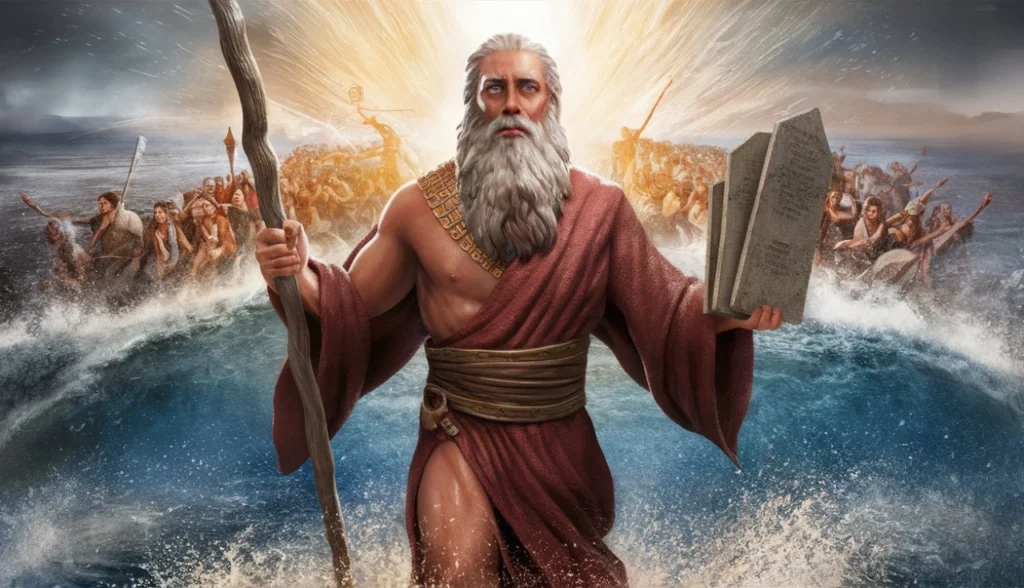
Quem foi Moisés na Bible?: Moses is one of the most important characters in the Bible and a central figure in the history of the Israelites. He was chosen by God to lead his people out of Egypt and on their journey to the Promised Land. His life and mission are recounted in detail in the books of Exodus, Leviticus, Numbers and Deuteronomy. We will explore the main moments in Moses' life and his lasting legacy.
Key Points
- Moses was rescued from the waters of the River Nile by Pharaoh's daughter and raised as a prince in Egypt.
- He fled to Midian after killing an Egyptian and there he met his wife, Zipporah.
- God appeared to Moses in the burning bush and called him to deliver the Israelites from Egypt.
- Moisés liderou os israelitas através do Mar Vermelho e recebeu os Dez Mandamentos no Monte Sinai.
- He died at the age of 120, having seen the Promised Land from afar, but without entering it.
The Birth and Youth of Moses
The Order of Pharaoh and the Rescue on the River Nile
Moses was born in Egypt during a period of great oppression for the Hebrews. Pharaoh had decreed that all Hebrew boys should be thrown into the River Nile. Moses' parents, however, defied this order and hid the baby for three months. When they couldn't hide him any longer, they put him in a reed basket sealed with tar and left him in the river. Pharaoh's daughter found the basket while bathing and, moved, decided to adopt the boy. Moses' sister, who was watching from afar, suggested that a Hebrew nurse take care of him, and so Moses was breastfed by his own mother.
Creation in the Egyptian Palace
Once he had grown up, Moses was taken to Pharaoh's daughter and lived in the Egyptian palace. He was educated like a prince and received instruction in all the Egyptian sciences. Although he was raised as a nobleman, Moses never forgot his Hebrew roots.
The Hebrew Identity of Moses
Even though he lived in the palace, Moses always cared about his native people. One day, when he saw a Hebrew being beaten by an Egyptian overseer, he intervened and ended up killing the aggressor. Moses thought no one had seen what he had done, but the next day, when he tried to break up a fight between two Hebrews, he was accused of murder. Fearing for his life, Moses fled to Midian.
The Flight to Midian and the Divine Call
The Murder of the Egyptian Feitor
When Moses was an adult, he saw the suffering of his people and decided to act. In a moment of anger, he killed an Egyptian overseer who was mistreating a Hebrew. Afraid of being found outMoses fled to the land of Midian.
Life in Midian and the Marriage to Zipporah
In Midian, Moses found refuge and began a new life. He met Jethro, the priest of Midian, and married his daughter, Zipporah. Moses worked as a shepherd for Jethro and had a son called Gershom.
The Burning Bush and the Mission of Liberation
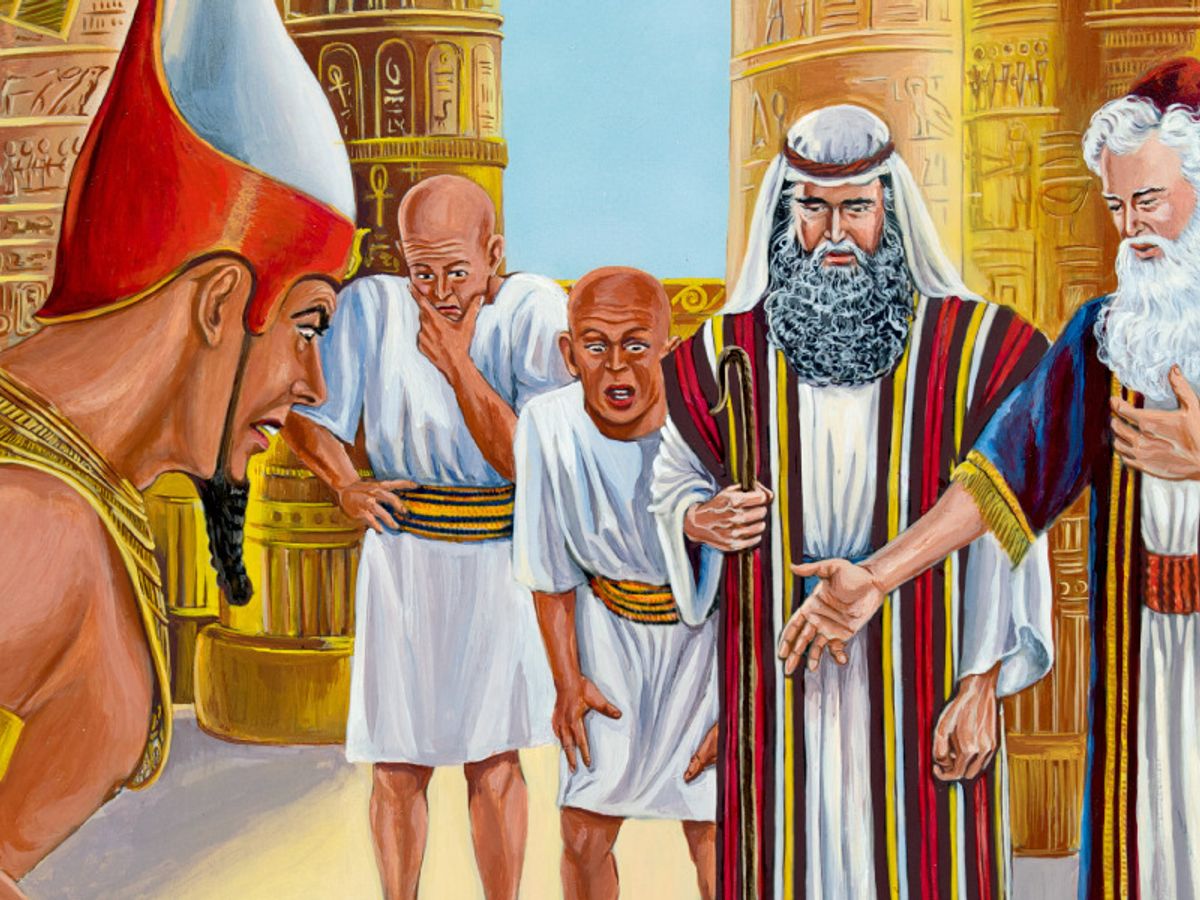
While tending his flock near Mount Sinai, Moses saw a burning bush that would not be consumed. God spoke to him through the bush, revealing himself and giving him the mission of freeing the Israelites from Egypt. Moses, who had speech difficultiesMoses hesitated, but God assured him that he would be with him. Moses accepted the mission, with the help of his brother Aaron.
The Liberation of the Israelites from Egypt
The Ten Plagues of Egypt
God sent ten plagues to Egypt to convince Pharaoh to release the Israelites. The plagues included the turning of the waters of the Nile into blood, infestations of frogs, lice, flies, the death of flocks, purulent sores, hail, locusts, darkness and the death of the first-born. Each plague was a sign of God's power and a warning to Pharaoh to obey God's will.
Passover and the Departure from Egypt
After the tenth plague, which resulted in the death of the Egyptian first-born, Pharaoh finally allowed the Israelites to leave Egypt. Moses instructed the people to celebrate the first Eastermarking the passage from slavery to freedom. That night, the Israelites left, taking all their belongings with them, after 430 years of servitude.
Crossing the Red Sea
Durante a fuga, os israelitas se viram encurralados entre o Mar Vermelho e o exército egípcio que os perseguia. Deus instruiu Moisés a erguer sua vara sobre o mar, dividindo as águas e permitindo que o povo atravessasse em terra seca. Quando os egípcios tentaram seguir, as águas retornaram, afogando o exército inimigo. Este milagre reforçou a fé dos israelitas e demonstrou o poder de Deus em sua jornada para a liberdade.
The Desert Journey
The Provision of Manna and Quails
During the journey through the desert, God provided food for the Israelites in a miraculous way. Manna fell from the sky every morning, and at night quails appeared so that the people could eat. This divine provision was essential for survival during the 40-year pilgrimage.
The Rebellion and the Murmurings of the People
Despite the provisions, the people often rebelled and murmured against Moses and God. On several occasions, the Israelites complained about the lack of water and food, questioning Moses' leadership. In Exodus 17:15Moses even built an altar and called it "The Lord is my banner" after a victory over the Amalekites, showing the constant need to reaffirm the people's faith.
Building the Tabernacle
God gave Moses detailed instructions for the construction of the Tabernacle, a mobile sanctuary that would serve as a place of worship during the journey. The Tabernacle symbolized God's presence among the people and was the center of the Israelites' religious and social activities in the desert.
The Giving of the Law on Mount Sinai
The Ten Commandments
No Monte Sinai, Moisés recebeu de Deus as tábuas contendo os Dez Mandamentos. Esses mandamentos foram dados para guiar o povo de Israel em sua relação com Deus e com os outros. The Ten Commandments are considered the basis of Judeo-Christian morality and were written "by the finger of God". Moses spent forty days and forty nights on the mountain to receive these sacred laws.
Ceremonial and Civil Laws
In addition to the Ten Commandments, Moses also received detailed instructions on ceremonial and civil laws. These laws covered everything from the construction of the tabernacle to the priestly garments and purification rituals. The aim of these laws was to maintain purity and the holiness of the people of Israel.
The Breaking of the Tablets and Moses' Intercession
While Moses was on the mountain, the people of Israel made a golden calf to worship. When Moses came down and saw this, he broke the tablets of the law in his anger. After interceding for his people, he went back up the mountain and received new tablets. This event reinforces the importance of Mount Sinai as a holy place in the Judeo-Christian tradition, as mentioned in Exodus 24:13.
The Death of Moses and his Legacy
The Vision of the Promised Land
Moisés subiu ao Monte Nebo, onde pôde contemplar Canaan, a Terra Prometida, de longe. Ele tinha 120 anos e, mesmo nessa idade avançada, his eyes were not weakened and his strength remained. God showed Moses the land, but informed him that he would not cross over to it.
Death on Mount Nebo
Moses died in the land of Moab and was buried by God himself in an unknown place. The Israelites mourned Moses for thirty days. After his death, Joshua took over the leadership of the people of Israel.
The Impact of Moses on Biblical History
Moisés deixou um legado importante na história do povo de Israel e da humanidade. Ele foi um líder corajoso e fiel a Deus, que conduziu os israelitas durante quarenta anos no deserto. Moisés é lembrado como o grande legislador que trouxe a Lei de Deus ao povo. Seu impacto é sentido até hoje, tanto no judaísmo quanto no cristianismo, onde é visto como uma figura que aponta para Jesus Cristo, o Libertador perfeito.
Moses' death marked the end of an era, but his legacy lives on to this day. He led the Israelites out of Egypt and received the Ten Commandments, which are followed by millions of people around the world. Want to know more about the story of Moses and other biblical characters? Visit our website and explore fascinating content about the Bible and its teachings.
Conclusion
Moisés é uma figura central na Bíblia e sua história é cheia de momentos marcantes e milagres. Ele foi escolhido por Deus para liderar os israelitas para fora da escravidão no Egito e guiá-los até a Terra Prometida. Além disso, Moisés recebeu os Dez Mandamentos, que são fundamentais para a fé judaico-cristã. Sua vida e obra são um exemplo de fé, liderança e obediência a Deus. A história de Moisés continua a inspirar e ensinar lições valiosas sobre coragem, perseverança e a importância de seguir a vontade divina.
Frequently Asked Questions
Who was Moses in the Bible?
Moses was a Hebrew leader chosen by God to free the Israelites from slavery in Egypt and lead them to the Promised Land. He also received the Ten Commandments and is considered the author of the first five books of the Bible.
What is the origin of the name Moses?
The name Moses may have Hebrew origins, meaning 'taken from the waters', or Egyptian, meaning 'son'. The Bible tells us that he was named after the pharaoh's daughter who rescued him from the River Nile.
What was Moses' childhood like?
Moses was born in Egypt, where his people were enslaved. To save his life, his mother put him in a basket in the River Nile, where he was found and adopted by the pharaoh's daughter. He grew up in the Egyptian palace, but always knew his Hebrew origins.
What happened at the burning bush?
In the burning bush, God appeared to Moses and called him to deliver the Israelites from Egypt. This event marked the beginning of Moses' mission as a leader and prophet of the Hebrew people.
What were the Ten Plagues of Egypt?
The Ten Plagues of Egypt were: turning water into blood, invasion of frogs, lice, flies, death of animals, ulcers, rain of stones, locusts, darkness and death of the first-born. They were sent by God to convince Pharaoh to release the Israelites.
How did Moses die?
Moses died at the age of 120, on Mount Nebo, after seeing the Promised Land. He didn't enter the land, but God allowed him to see it from afar before his death. According to the Bible, Moses was buried by God in an unknown location.


