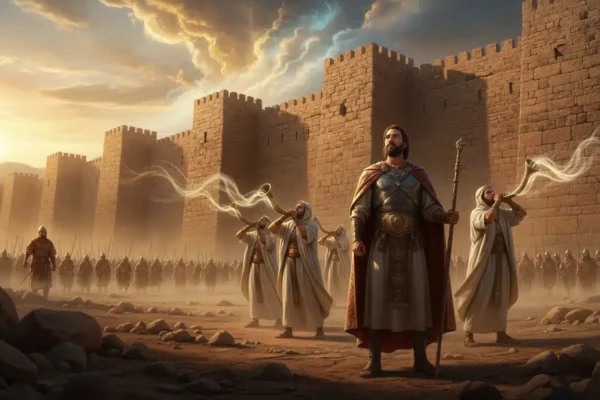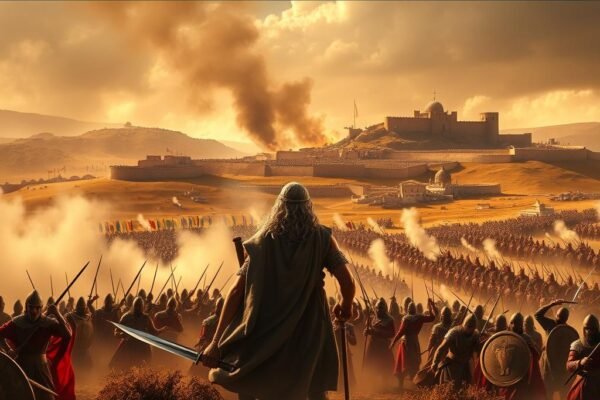

Find out who Antiochus Epiphanius wasDid you know Antiochus Epiphanius was a much-discussed king of Syria? He reigned from 175 BC to 164 BC and caused many conflicts. Let's explore his history and understand who he was.
Antíoco IV Epifânio, antes chamado de Mitrídates, era filho de Antíoco III Magno. Ele se tornou rei após a death of his brother, Seleucus IV Philopator. His rise was full of problems, including a period as hostage in Rome.
After becoming king, Antiochus Epiphanius did some very strange things. This led some to call him "Antiochus Epimanes", the Madman. This was a pun on his title of "Epiphanius", which means "manifest God".
Antiochus IV Epiphanius: The Seleucid King
Antíoco IV Epifânio era da Seleucid dynasty. He was born around 215 B.C. He became king of Syria in 175 B.C., after the assassination of his brother, Seleucus IV Philopator.
His reign, from 175 BC to 164 BC, was full of challenges. He faced disputes with Egypt and the revolt of the maccabees em Jerusalém. Seus atos polêmicos o fizeram ganhar o apelido de “Antíoco, o Louco” (Antiochus Epimhanes).
Despite his negative image, Antiochus IV Epiphanius greatly influenced the Seleucid Empire and the Hellenic world. Its story is full of intrigue and remarkable events.
"Antiochus IV Epiphanius was one of the most eccentric and controversial kings in the Hellenic world, leaving behind a legacy lasting in the region."
Rise to power
After his father, Antiochus the Great, lost to the Romans in 190-189 BC, Antiochus Epiphanius became like hostage in Rome. He stayed there from 189 to 175 B.C. There, he learned to admire Roman laws and governments.
When his brother Seleucus IV was killed in 175 BC by Heliodorus, Antiochus took the throne with the help of Eumenes II of Pergamum. This began his rise to power.
Hostage in Rome
How hostage in Rome for almost two decades, Antiochus Epiphanius saw the Roman Empire up close. This experience changed his worldview. It influenced his actions as ruler of Syria.
Usurpation of the Throne
When Seleucus IV was killed, Antiochus Epiphanius took the throne of Syria. He had the support of Eumenes II of Pergamon. This gave him power and he began his reign full of ambition.
"Antiochus Epiphanius was a cruel, vengeful and oppressive Seleucid despot."
A rise to power of Antiochus Epiphanius was crucial. He went from being hostage in Rome a usurp the throne of Syria. This began his reign full of conflicts.
Conflicts with Egypt
After death of Seleucus IV, there was a lot of uncertainty in Syria. The guardians of Pharaoh Ptolemy VI wanted the HeavenPalestine and Phoenicia. These lands had been conquered by Antiochus III.
Antiochus Epiphanius decided not to invade Palestine directly. He attacked Egypt, defeating the Egyptians between Pelusius and Mount Casion. In 169 BC, Antiochus conquered Egypt, but did not take Alexandria.

Fight for Heaven
A dispute over Celestia was a conflict between Antiochus Epiphanius and Egypt. After his victory in 169 BC, the Roman ambassador Caio Popílio Lenas asked Antiochus to leave Egypt and Cyprus. This publicly humiliated Antiochus in Eleusis, a suburb of Alexandria.
"In Eleusis, a suburb of Alexandria, the Roman ambassador Gaius Popilius Lenas gave Antiochus an ultimatum to evacuate Egypt and Cyprus immediately, publicly humiliating him."
This humiliation in Elysium was a blow to Antiochus Epiphanius. It was an important defeat for him and affected his relationship with Egypt and Rome's influence in the region.
Relations with Rome
At the time of Antiochus Epiphanius, o Seleucid Empire and Roman Republic there were many tensions. Antiochus wanted to ally himself with Kingdom of Macedonia against the Romans. However, the Romans defeated the Macedonians in the Battle of Pidna in 168 BC.
The Romans also interfered in Egypt, causing problems with Antiochus. When Pharaoh Ptolemy VI asked Rome for help, the Romans sent Antiochus an ultimatum. They asked him to leave Egypt and Cyprus. Antiochus had to accept, showing Rome's growing power.
This tension between Antiochus and Rome showed the struggle for power in the region. The defeat of Antiochus in Egypt and his retreat showed the strengthening Roman power about the Hellenistic kingdoms.
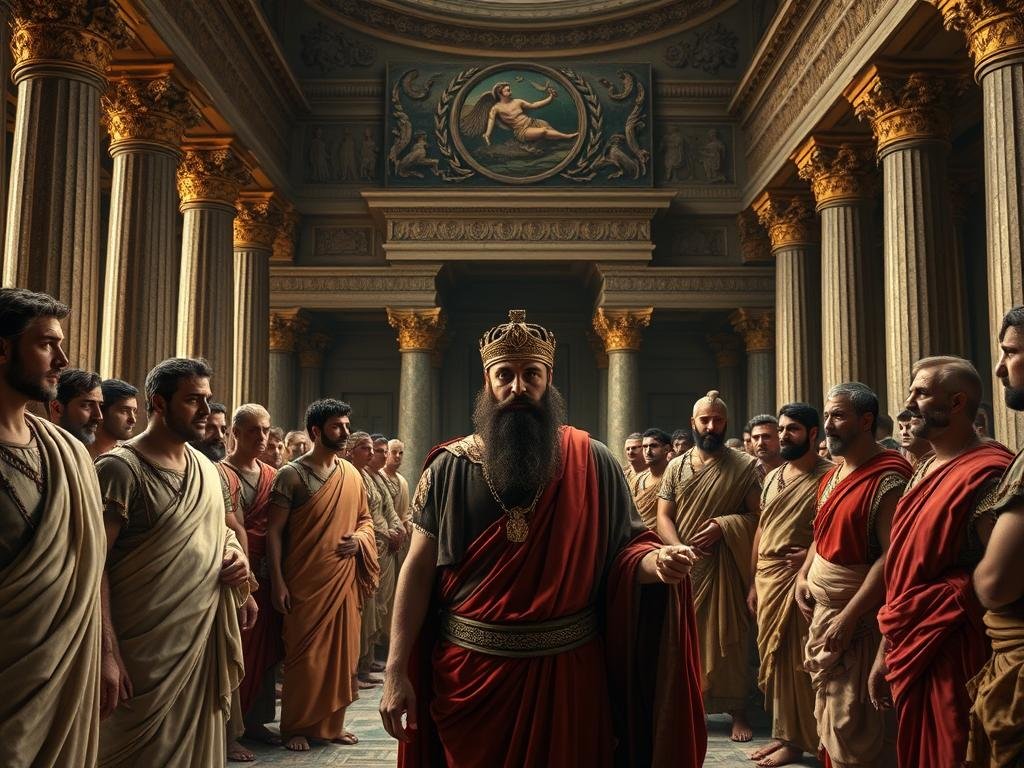
"Roman interference in Egyptian affairs also caused friction with Antiochus. When Pharaoh Ptolemy VI asked Rome for help against Antiochus, the Romans sent an ultimatum to Seleucid kingdemanding that he evacuate Egypt and Cyprus."
Persecution of the Jews
Antiochus Epiphanius, king of Syria, persecuted the Jews in Jerusalem. He wanted to impose his authority and put an end to Jewish traditions. He forbade the worship of God and religious rites.
Forbidding the Worship of God
Antiochus ordered the construction of an altar to Zeus in the Temple of Jerusalem. The Jews had to make sacrifices to this idol. This caused great indignation among them.
Revolt of the Maccabees
Judas Maccabee led a fight against Antiochus. The maccabees They defeated many Greek generals. In December 164 BC, they tore down the altar of Zeus and reconsecrated the Temple.
The struggle of the Maccabees lasted four years. It was a great victory against the persecution of Antiochus Epiphanius. It is celebrated on the feast of Chanukah.
"A revolt of the Maccabees divided the Jews into supporters of Hellenism and defenders of Jewish tradition."
Conquests of Antiochus Epiphanius
Antiochus Epiphanius was a ruler of the Seleucid Empire. He held a great parade at Daphne, near Antioch, in 168 B.C. His army was impressive with 46,000 infantrymen, 8,500 horsemen and 306 armored elephants.
He had conflicts with Egypt and faced a Jewish revolt. But he managed to maintain control over a large part of the empire. This helped him to expand his territory and strengthen his military power.
Your achievements include:
- Dominion over vast regions of the Seleucid Empireincluding Syria, Mesopotamia and parts of Asia Minor.
- Suppression of internal revolts, such as the revolt of Molon in Media.
- Victories in conflicts with Egypt Ptolemaic, despite some initial defeats.
- They imposed their control over Judea, banning Jewish religious practices and desecrating the Temple in Jerusalem.
Antiochus Epiphanius showed his military power e territorial expansion during his reign. He consolidated his rule over much of Seleucid Empire.
| Achievement | Details |
|---|---|
| Mastery over Seleucid Empire | Control over Syria, Mesopotamia and parts of Asia Minor |
| Suppression of internal revolts | Revolt of Molon in Media |
| Victories over Ptolemaic Egypt | Despite some early defeats |
| Imposing control over Judea | Prohibition of Jewish religious practices and desecration of the Temple of Jerusalem |
The achievements of Antiochus Epiphanius showed his military power e territorial expansion. He consolidated his dominance over much of Seleucid Empire.
The nickname "Epimanes"
Antiochus Epiphanius was known for his eccentric behavior. He appeared at public baths and even ran for office. This led some to call him Antiochus Epimanesthe Madman.
His reign was marked by a eccentric personality. Some saw him as a god, others as a cruel tyrant. This left a great impression on his subjects.
- Antiochus Epiphanius was known for his eccentric behaviorappearing in public baths and running for municipal office.
- His contemporaries nicknamed him "Antiochus Epimanes" (the Madman), a play on words with his title of "Epiphanius" (manifest God).
- His extravagant leadership and eccentric personality have fueled legends about his reign, with some revering him as a god and others seeing him as a cruel tyrant.
His bizarre and unpredictable behavior made him a defining character in history. To this day legacy of Antiochus Epiphanius is analyzed and debated.
Death of Antiochus Epiphanius
The reign of Antiochus Epiphanius He died of an illness, perhaps cancer, after a Jewish revolt.
Conflicting reports
The reasons for death of Antiochus Epiphanius are conflicting reports. Alguns dizem que ele morreu como previsto em Daniel 11:45. Outros acreditam que foi em uma guerra contra os partas.
"He will plant the tents of his palace between the seas, in the majestic mountain holy, but it will come to an end, and no one will come to its aid."
The death of Antiochus Epiphanius marked the end of a reign full of conflict. He was especially cruel to the Jews. To this day, his legacy is much discussed.
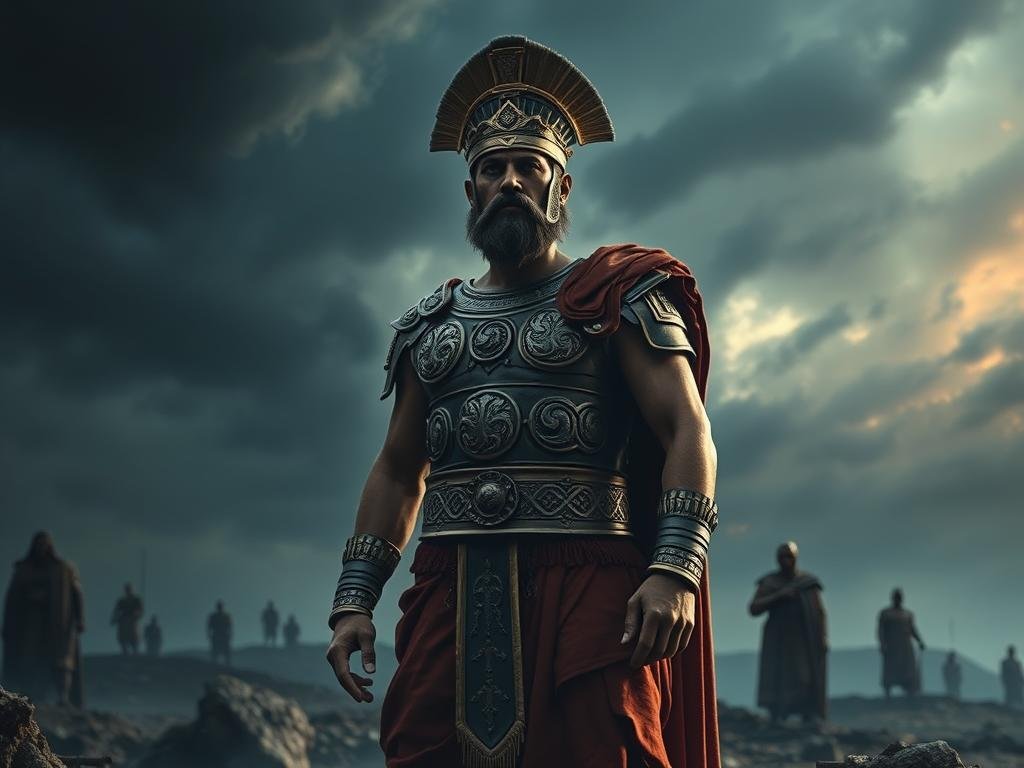
Legacy and Impact
The reign of Antiochus Epiphanius has brought major changes to Seleucid dynasty and the Middle East. He tried to Hellenize the region and persecuted the Jews. This led to revolt of the Maccabees and Jewish independence.
The name of Antiochus Epiphanius is remembered for his eccentric character e controversial actions. Research by the Federal Rural University of Rio de Janeiro shows that his expedition against the Jews in 165 BC failed. This resulted in the Battle of Emmaus and the revolt of the Maccabees.
The revolt, led by Judas Maccabeesis a symbol of courage and resistance. This is mentioned in Apocryphal Book of I Maccabees. The recapture and purification of the Temple of Jerusalem by the Maccabees was very important for the Jews.
The legacy of Antiochus Epiphanius and the response of the Maccabees show a cultural and religious conflict. This period of change and resistance left a legacy that is still felt today.
"In this dissertation we aim to analyze the apocryphal document of I Maccabees, which describes a series of events in history for the religious and political freedom of the Jewish people."
- Fabiano Alves Teixeira, Master in History from the Federal Rural University of Rio de Janeiro.
Antiochus Epiphanius in Daniel's Prophecies
Some scholars think that Antiochus Epiphanius may be the "small end" of Daniel. This applies to chapters 7 and 8. But most Seventh-day Adventists disagree. They say that Antiochus' actions don't match what the prophecy says.
Adventists believe that the "small end" actually refers to another historical power. Perhaps it is the Roman Empire. They think that this interpretation best fits the prophecies Daniel.
| Relevant data | Information |
|---|---|
| Period of rule of Antiochus Epiphanius | 175 to 164 B.C.E. |
| Desecration of the Jewish Temple by Antiochus | 167 AEC |
| Duration of the 2300 Evenings and Mornings Prophecy | Approximately 3 years and 2 months |
| Rededication of the Second Temple by Judas Maccabaeus | December 164 B.C.E. |
The books 1 and 2 Maccabees and Flavius Josephus tell us a lot about this time. Archaeological evidence, such as coins from the Maccabees, also shows the Hellenistic influence in Judea.
"The little horn in Daniel 8 cannot be Antiochus IV Epiphanius, but the little horn that emerged from the ten kingdoms of the Roman Empire."
For Adventists, the little horn symbolizes the Roman Empire. This includes its pagan and papal phase. They believe that this power attacked Jerusalem and threatened the system of salvation. This does not apply to Antiochus Epiphanius.
Antiochus Epiphanius was a tyrant who persecuted the Jews. But for Seventh-day Adventists, he is not the "small end" of Daniel. They believe that this title refers to a later historical power, more appropriate to the prophecies.
Find out who Antiochus Epiphanius was: Conclusion
Antiochus Epiphanius, the eighth monarch of the Seleucid line, left a complex legacy. His reign was marked by attempts to Hellenize and persecution of the Jews. This led to revolt of the Maccabees and Jewish independence.
Some scholars see Antiochus Epiphanius as a prophet of the Book of Daniel. But most Seventh-day Adventists disagree. They argue that the prophecies don't apply to him.
Despite their achievementsThe reign of Antiochus Epiphanius is remembered for its conflicts and atrocities. His figure is studied and debated, often as a kind of Antichrist.
FAQ
Who was Antiochus Epiphanius?
Antiochus IV Epiphanius was born around 215 BC and died in 164 BC. Seleucid dynasty. He ruled from 175 BC until his death. He was the son of Antiochus III the Great and brother of Seleucus IV Philopator.
How did Antiochus Epiphanius come to power?
After his father lost to the Romans, Antiochus Epiphanius was hostage in Rome. He stayed there from 189 to 175 B.C. There, he learned to admire Roman institutions. When his brother Seleucus IV was assassinated, Antiochus took the throne with the help of Eumenes II of Pergamon.
What were Antiochus Epiphanius' main conflicts?
He had conflicts with Egypt through territories such as Celestia and Phoenicia. He also faced tensions with Rome, which asked him to leave Egypt and Cyprus. Antiochus persecuted the Jews, banning the worship of God and building an altar to Zeus in the Temple.
What were Antiochus Epiphanius' conquests?
Despite the conflicts, Antiochus kept the Seleucid empire strong. He expanded his territory and strengthened his army, as shown in a review in Daphne.
Why was Antiochus Epiphanius known as "Epimanes"?
Your eccentric behavior and capricious actions led him to be called Antiochus Epimanes the Mad. This is a play on words with his title Epiphanius, which means manifest God.
How did Antiochus Epiphanius die?
He died in 164 BC, the same year as the revolt of the Maccabees. The cause of death was an illness, possibly cancer. There is conflicting reports about how he died.
What was the legacy of Antiochus Epiphanius?
His reign had a lasting impact on Seleucid dynasty and the Middle East. Attempts at Hellenization and the persecution of the Jews led to the revolt of the Maccabees and Jewish independence.
Is Antiochus Epiphanius mentioned in Daniel's prophecies?
Some think that it is the "small end" of the Daniel's propheciesBut the majority of Seventh-day Adventists disagree, believing that the prophecies do not apply to Antiochus.
Source links
- What is the Bible?
- Who was Antiochus Epiphanes? | GotQuestions.org/Portugues
- Antiochus VI Theos Epiphanius
- ANTHYCO EPIPHANIUS Antichrist Series
- Antiochus IV Epiphanius
- Meet Antiochus IV Epiphanius, Hellenic King
- Seleucid Empire
- Antiochus Epiphanius and Daniel's prophetic specifications - Pastoral Ministry
- Between Traitors and Followers of the Law of Moses: Cultural Interaction
- Antiochus III the Great
- Daniel 8 does not mention Antiochus Epiphanius
- Lesson 12 - A Type of Future Antichrist :: walking by faith
- Daniel 11 - Study for Sunday School
- DAILY LIFE in JESUS' time