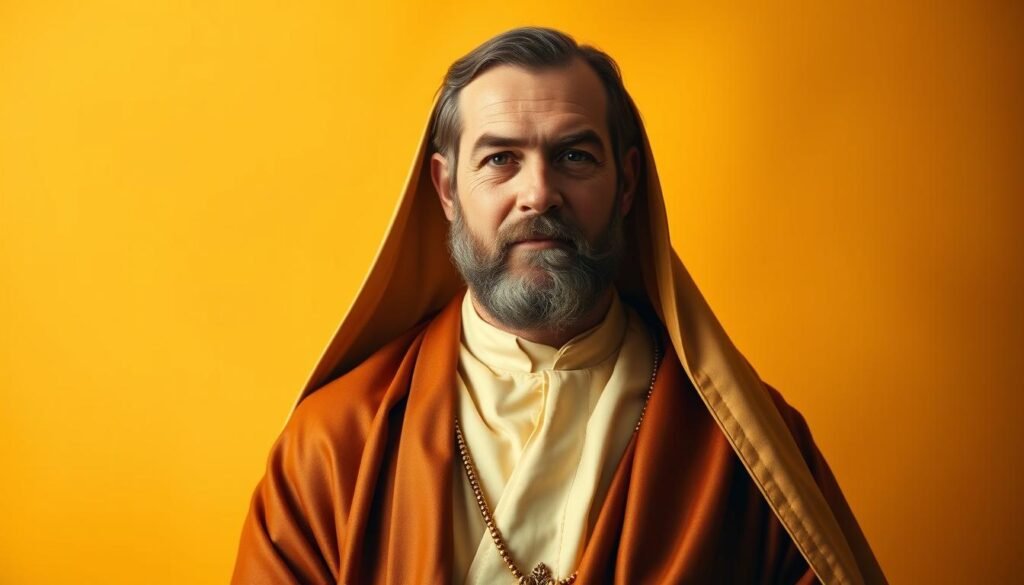
Já parou para pensar como um homem nascido no século XV, em uma pequena cidade da Espanha, se tornou símbolo de fé para milhões de brasileiros? Pedro de Alcântara was not a common name. From a young age, he chose a life of intense prayer and radical simplicity, inspiring even Saint Teresa of Avila with their spirituality.
In 1826, Dom Pedro I made it official as patron saint of BrazilBut his story goes beyond titles. The son of a noble family, he abandoned privilege to live among the poorest. He reformed the Franciscan Order, preaching that true wealth lies in the connection with the divine.
Did you know that many of the miracles attributed to him happened during his journeys through Brazilian territory? His devotion grew not only through written works, but also through gestures that touched hearts. He was called the "confessor of kings", but preferred to listen to peasants.
How about immersing yourself in this journey? Discover how a 16th century friar continues to guide generations and why his humility has stood the test of time. Below, we reveal details that have transformed Pedro de Alcântara as the spiritual pillar of a nation.
Historical Context and Origin of São Pedro de Alcântara
The story of Pedro de Alcântara begins in an influential family, where faith and study were intertwined from an early age. In the 16th century, his name already carried the weight of a noble lineage, but his destiny would follow surprising paths.
Roots and Initial Training
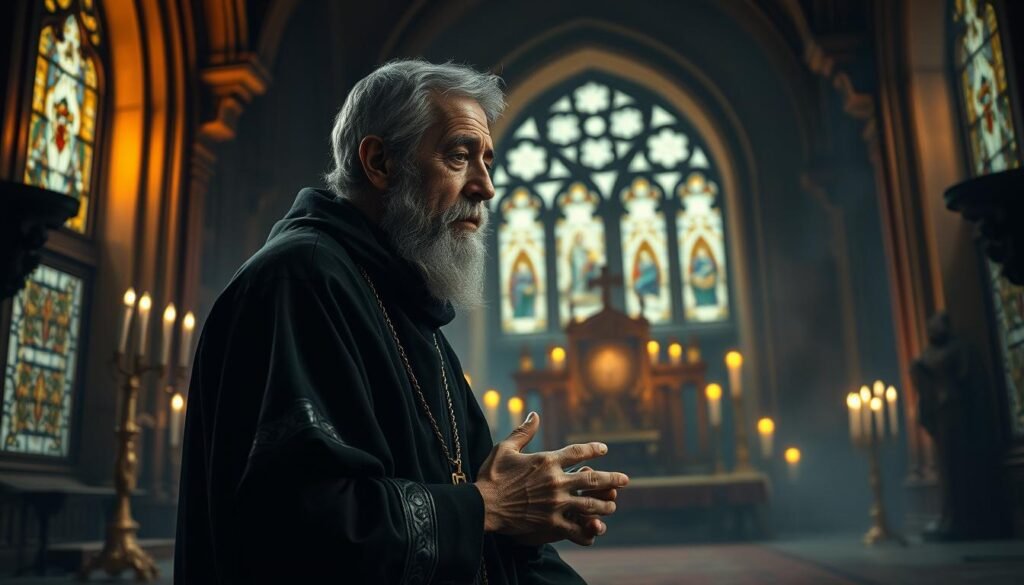
Raised among material privileges, he preferred the books of theology to the luxuries of the court. At the age of 16, he entered the University of Salamanca - an intellectual center that shaped his thinking. There, he stood out not only for his intelligence, but also for his constant search for Christian virtues.
| Aspect | Noble Context | Religious Transformation |
|---|---|---|
| Education | Law and Philosophy | Theology and Asceticism |
| Family influence | Political expectations | Franciscan call |
| Lifestyle | Aristocratic comfort | Penance and prayer |
The influence of family and early education
His mother, a fervent devotee, planted the seed of spirituality in him. His first years in the convent of Majarretes revealed his vocation: he swapped fine clothes for simple habits.
The decision to join the Franciscan Order at the age of 22 was no accident - it was the result of a model family who valued service over status.
The Reformation and the Religious Role of the Franciscan Order
Amid the luxury of the Spanish nobility, a voice echoed through cloisters and hearts. Pedro de Alcântara didn't just want to follow traditions - he sought to rekindle the original spirit of San Francisco. His leadership transformed not only physical structures, but minds and souls.
Joining the Order and priestly life
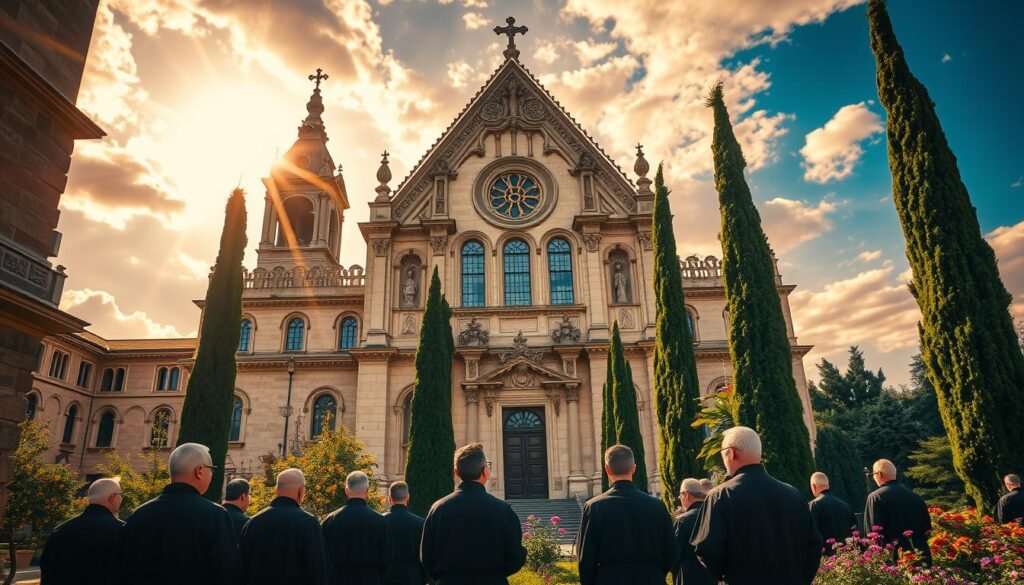
At the age of 22, the young nobleman swapped palaces for cold cells. His entry into the Franciscan Order in 1521 was no simple ritual. It was a radical commitment: he slept on the floor, ate little and devoted hours to prayer. Can you imagine the courage to abandon everything for faith?
Reforms and the quest for extreme compliance
In 1555, the biggest change in the history of the Franciscans began. His retirement demanded a return to his roots: smaller convents, absolute silence and manual labor. See how he revolutionized everyday life:
| Ancient Practice | Peter's move |
|---|---|
| Comfortable clothing | Rough fabric tunics |
| Varied meals | Frequent fasting |
| Prayers at flexible times | Strict discipline |
The relationship with St. Teresa of Avila and other saints
St. Teresa found in him more than a confessor - a friend who understood her. He guided her in the Carmelite reform, showing her that profound changes require partnership.
"Your example gave me strength," she once wrote. Together, they proved that spiritual renewal can be born of genuine friendship.
By 40 years, your model life inspired generations. Even after his death in 1562, the rules he created continued to shape the Order. Isn't it amazing how one person can redesign the course of history?
Legacy and Influence: Brazil's patron saint
What force keeps alive the flame of a man who died more than four centuries ago? The journey of Pedro de Alcântara after his death in 1562 reveals how simple virtues can echo through the ages. His story didn't end at the grave - it became a beacon for nations.
Beatification, canonization and consecration as patron saint
In 1622, 60 years after his death, the Church officially recognized his holiness. A canonization in 1669 was not mere protocol - it was the seal of a life dedicated to the prayer and spiritual reform. But the turning point came in 1826:
| Events | Year | Impact |
|---|---|---|
| Beatification | 1622 | Public recognition of virtues |
| Canonization | 1669 | Universal elevation as a Christian model |
| Declaration as Patron | 1826 | Symbolic unification of the nation |
Dom Pedro I chose him not by chance. In a newly independent Brazil, his figure represented values that transcended borders: humility, firm faith and love for others.
Liturgical and devotional importance
On the 19th OctoberIn the past, churches from north to south resound with songs that he himself taught. His rules of life continue to inspire:
| Tradition | Origin | Current practice |
|---|---|---|
| Morning prayer | Franciscan Rule | Moments of silence at Mass |
| Spiritual fasting | Written teachings | Retreats in October |
Your name became synonymous with inner renewal. His favorite advice is still repeated in the communities: "Pray as if everything depended on God, act as if everything depended on you". Isn't that the essence that remains?

“…Não será de encarecer aos caríssimos diocesanos a devoção fervorosa e confiante a tão excelso e poderoso Patrono. Essa devoção faz parte da mais antiga tradição petropolitana. Nossa cidade nasceu e cresceu sob o signo da celestial proteção desseextraordinário santo. Desde a primeira hora, sua sugestiva imagem ocupou o nicho do altar-mor da antiga Igreja Matriz e começou a amparar nossas súplicas e velar pelos nossos destinos. E quando, através dos anos, as gerações se sucederam no sorridente aconchego de nossos vales, foi sob a invocação piedosa de S. Pedro de Alcântara que Petrópolis perseverou na fidelidade à doutrina da Igreja e às normas da moral cristã.
Conclusion
Throughout the centuries, some stories transcend time and become spiritual beacons. The journey of Pedro de Alcântara - from the Spanish nobility to Franciscan cells - shows how radical choices can inspire nations. His religious reform didn't just change convents: it transformed hearts.
Can you imagine giving up your privileges to live among the simple? That was legacy that he left behind: faith translated into action. His teachings on humility and prayer continue to echo in retreats and Masses, especially in October.
How about carrying on this legacy? Whether through small gestures of solidarity or moments of reflective silence, everyone can honor his example. True devotion, as he proved, does not lie in titles, but in authentic connection with others.
How about starting today? A short prayer, an act of kindness - that's how you keep the flame alive for this holy that united continents. Its history is not the past: it is an invitation to build better futures.
FAQ
Q: Why is St. Joseph considered the patron saint of Brazil?
A: Ele foi escolhido por sua representação de humildade, proteção familiar e trabalho, valores centrais para a fé católica. Em 1930, o Pope Pius IX made this title official, reinforcing its link with the country's religious identity.
Q: How has the family of São Pedro de Alcântara influenced your career?
A: Born into a noble Spanish family, he received a rigorous education and encouragement to follow the religious life. This foundation strengthened his commitment to spirituality from a young age.
Q: What was the impact of the reform he led on the Franciscan Order?
A: Ele promoveu um retorno radical à pobreza e à simplicidade, criando os “Alcantarinos”. Suas regras rigorosas inspiraram renovação espiritual e atraíram fiéis buscando uma vida mais ascética.
Q: What was his relationship with St. Teresa of Avila?
A: They were close friends and spiritual advisors. He supported the Carmelite reform led by her, sharing ideals of discipline and renewal of the Church.
Q: When was he canonized and declared patron saint of Brazil?
A: He was beatified in 1622 and canonized in 1669. The title of patron saint of Brazil came in 1962, by decree of Pope John XXIII, highlighting his relevance to popular devotion.